It’s late-19th century Vienna, and Emperor Franz Joseph I (FJ1) is in charge of the Austria-Hungary dual monarchy. He’s ordered and overseen big changes to the city landscape in Vienna. Problem is his wife Empress Elisabeth (Sisi) isn’t taking any liking to the city. To sweeten the deal (and stay close to Vienna), FJ1 commissions the construction of a quiet hidden “Palace of Dreams” in what is now the forested land near Lainz in western Vienna. It’s his present to his wife in 1886.
Today, the Hermes Villa is a part of the Wien Museum. While the grounds outside are free to walk around, there’s an admission charge to view the interior.
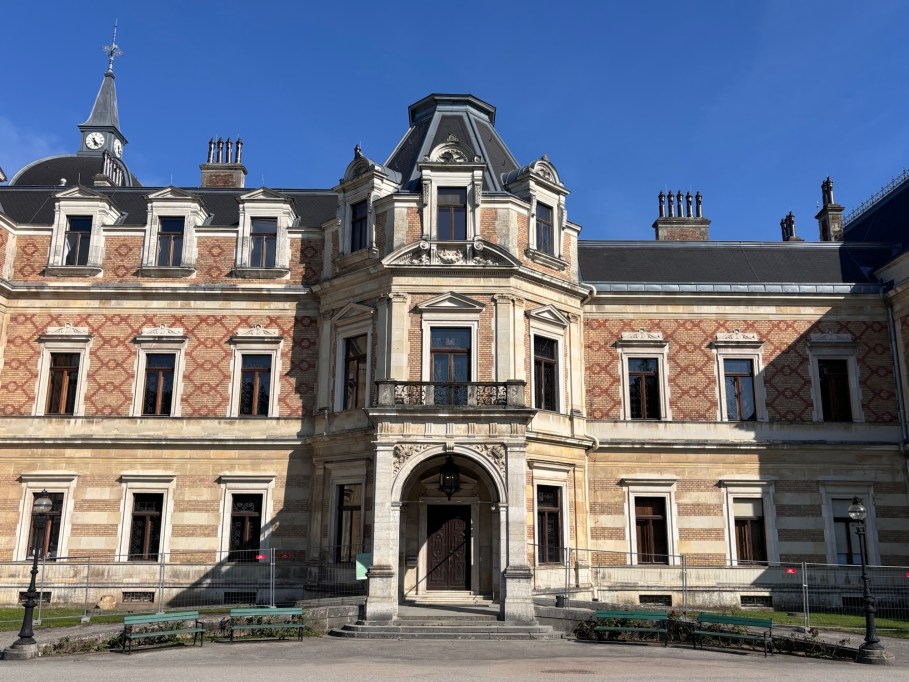
The north or main entrance leads to the museum inside. Emperor Franz Joseph I commissioned the architect Karl von Hasenauer for the design and construction of the villa.
Genovevabrunnen (Genoveva fountain), by Viktor Tilgner, 1885.
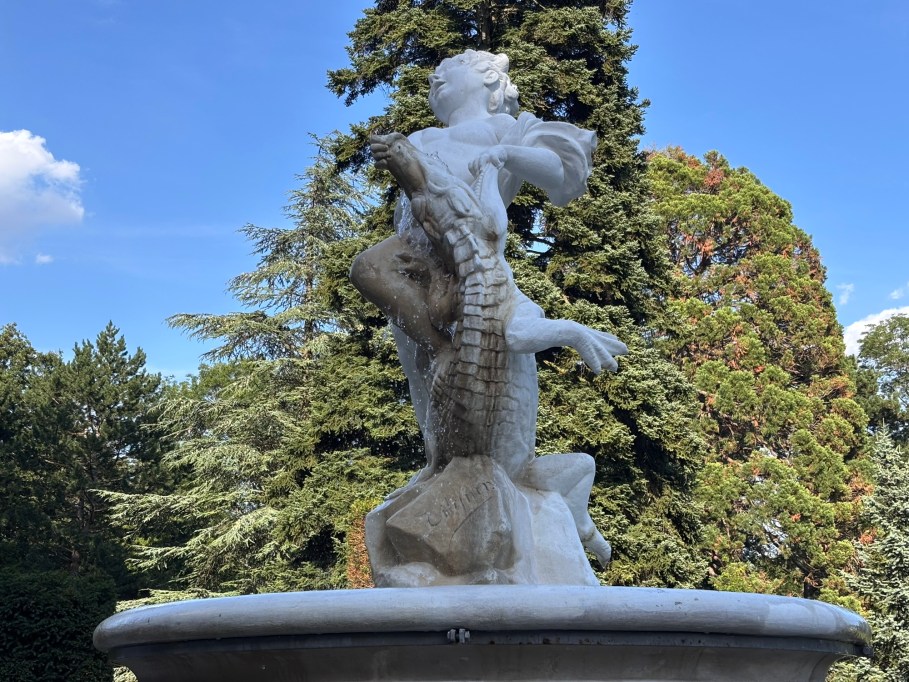
“Putto mit Krokodil” (child with crocodile), by Viktor Tilgner, 1886.
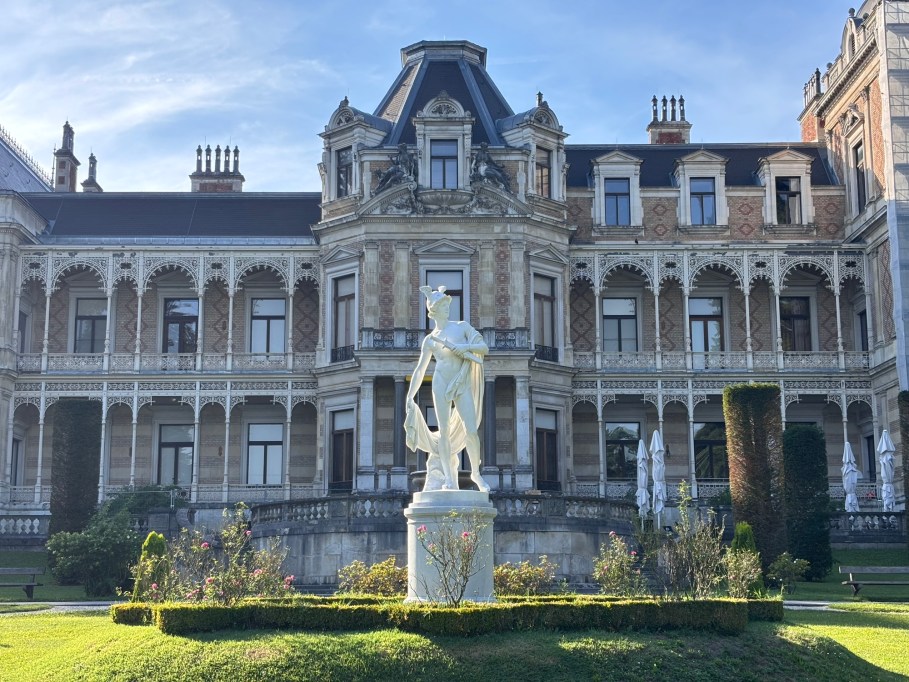
Hermes statue, by Berlin sculptor Ernst Herter, 1888.
The villa is named after this central sculpture.
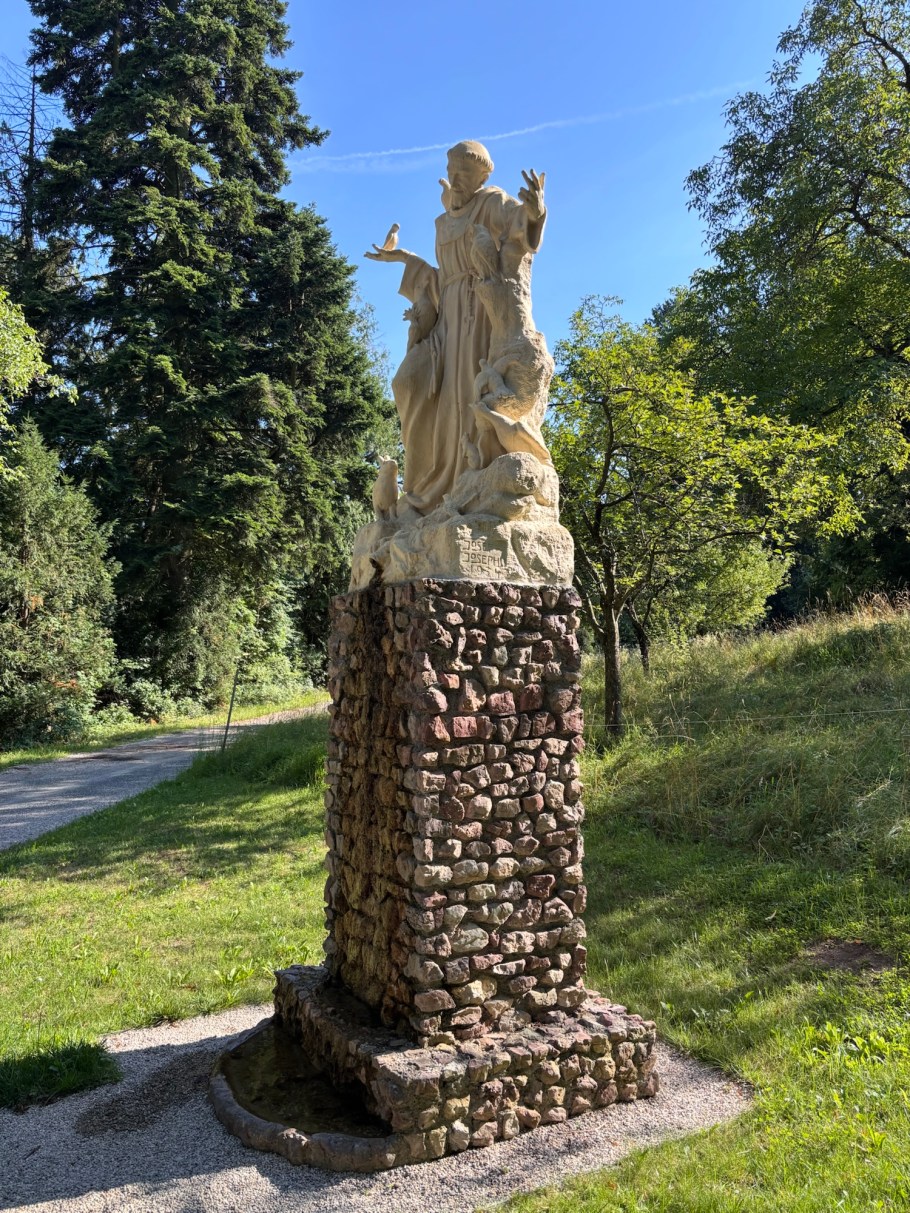
St. Francis of Assisi, by Josef Josephu, 1934. There’s another statue of St. Francis of Assisi behind the Minoritenkirche in central Vienna.
Patron saint of animals, on the 800th anniversary of his birth.
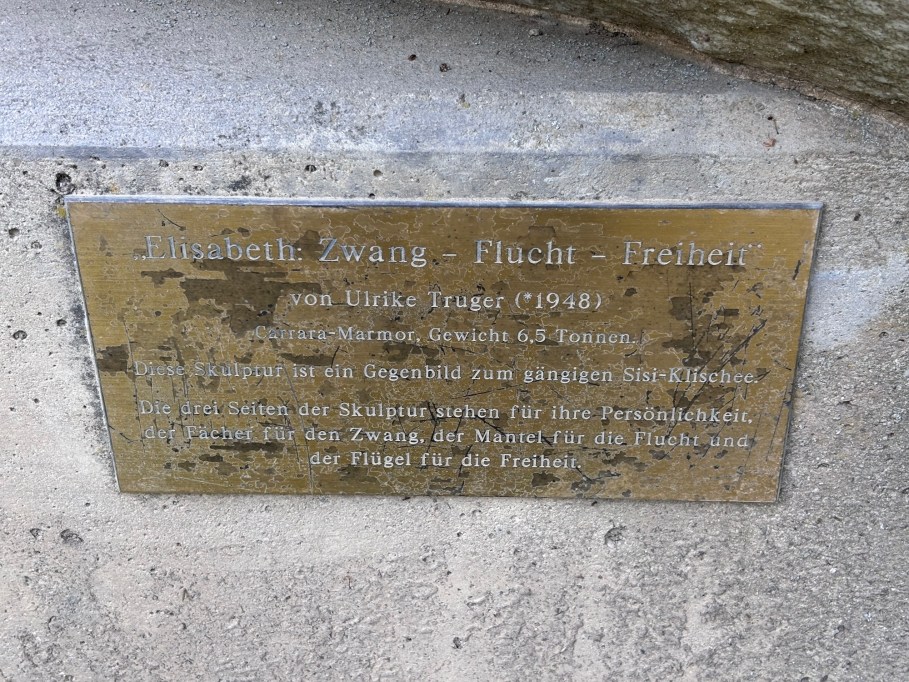
“Elisabeth: Zwang – Flucht – Freiheit”, by Ulrike Truger, 2006, to represent Empress Elisabeth. Wearing a coat, Elisabeth’s face is partly obscured by the fan in her left hand; the wings appear just below the fan.
Truger created this marble sculpture to counter against the Sisi cliché and to comment about how trapped she felt. Three aspects of the sculpture refer to her personality: a fan representing her obligation, a coat for her desire to escape, and wings for her freedom.
I made all images above with an iPhone15 on 20 July 2025. This post composed within Jetpack for iOS appears on Fotoeins Fotografie at fotoeins DOT com.





 Fotoeins Fotografie
2 Responses to “25T74 Sisi got an imperial summer house because she disliked Vienna”
Beautiful!!
Sent from Yahoo Mail for iPhone
LikeLike
Thanks, Susan!
LikeLike