Berlin Döner: Elbis Yaprak Kebap
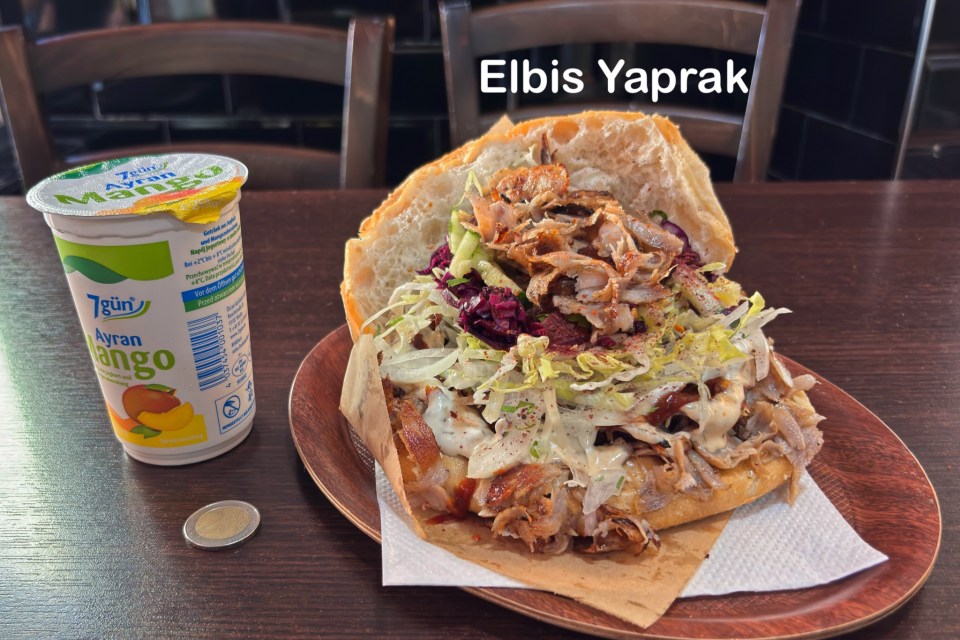
Above/featured: Ayran mango-yogurt drink, Döner Kebap sandwich; 2€ coin for size comparison.
It is not out of the way; it is worth my time and effort to schlep on over to the other side of the city for Döner. For meat-eaters, the Berlin experience is incomplete without a good Döner.
Although hunger might demand immediate satisfaction, resolve remains supreme, and the combination of compulsion and temptation produces enough forward momentum to the goal.
Must.
Have.
Döner.
Look, I know the good ol’ days of good-quality 5€ Döner are long gone, but German friends have taught me well.
Yaprak Döner: seasoned veal, cut into layers of thin slices (“leaf-style”) and stacked onto a giant skewer (“spit”) that’s spun slowly within a vertical grill. The grilled meat is then “shaved” thin top-down into wide slivers that’s got a little bit of crunch on the surface.
Turkish “Pide-Brot” bread covered with caraway and sesame seeds: lightly grilled for that big crunch exterior, warmed to reveal its soft velvet interior. Turkish pide in hand has to be firm and secure, like a steady boat delivering the meaty goods. Although not made in-house, their bread is custom-made to order from a Turkish bakery elsewhere in the city.
There is the Berlin way, to which I’m greatly accustomed after 20-plus years: “Komplett mit allen Sossen”, which consists of diced tomato and cucumber, sliced slivers of red onion, shredded red cabbage and lettuce; garlic sauce, hot sauce.
There is also the Turkish way, of which I should be more mindful: “Tomaten, rote Zwiebeln, Petersilie, Sumach, Zitronensaft; ohne Sosse” (tomato, red onion, parsley, sumac, lemon juice; no sauce).
With a big Berlin Döner on my plate, it is impossible to fit or “get around” this Döner in that first bite. Knife and fork? Blasphemy! No, the method is small bites to manage and savour the majestic beaut that is good Döner in good Brot.
I’m coming back to Berlin for their no-sauce number 12: this must be the way.
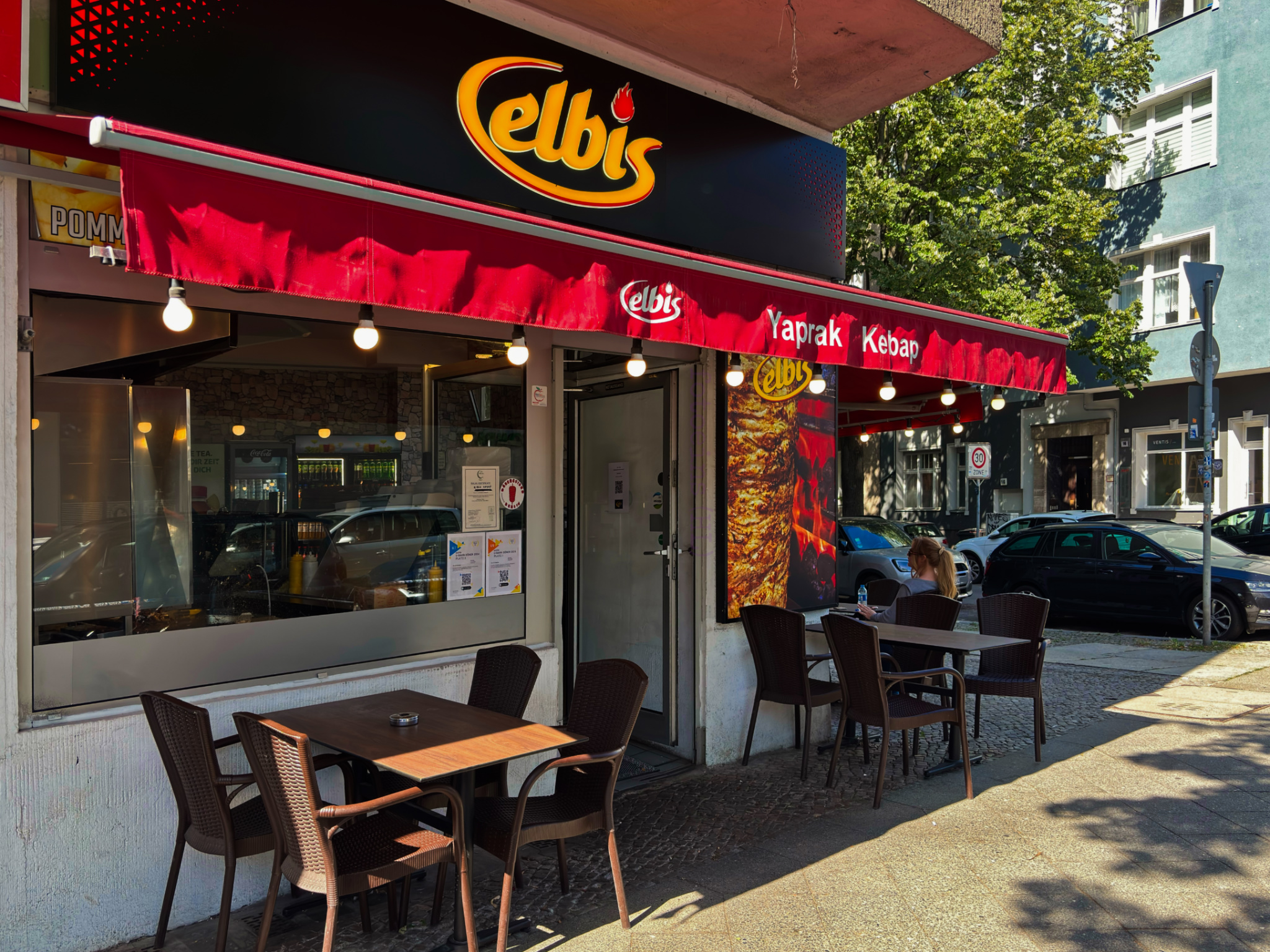
Berliner Strasse in Wilmersdorf, “conveniently” located between 2 U-Bahn stations.
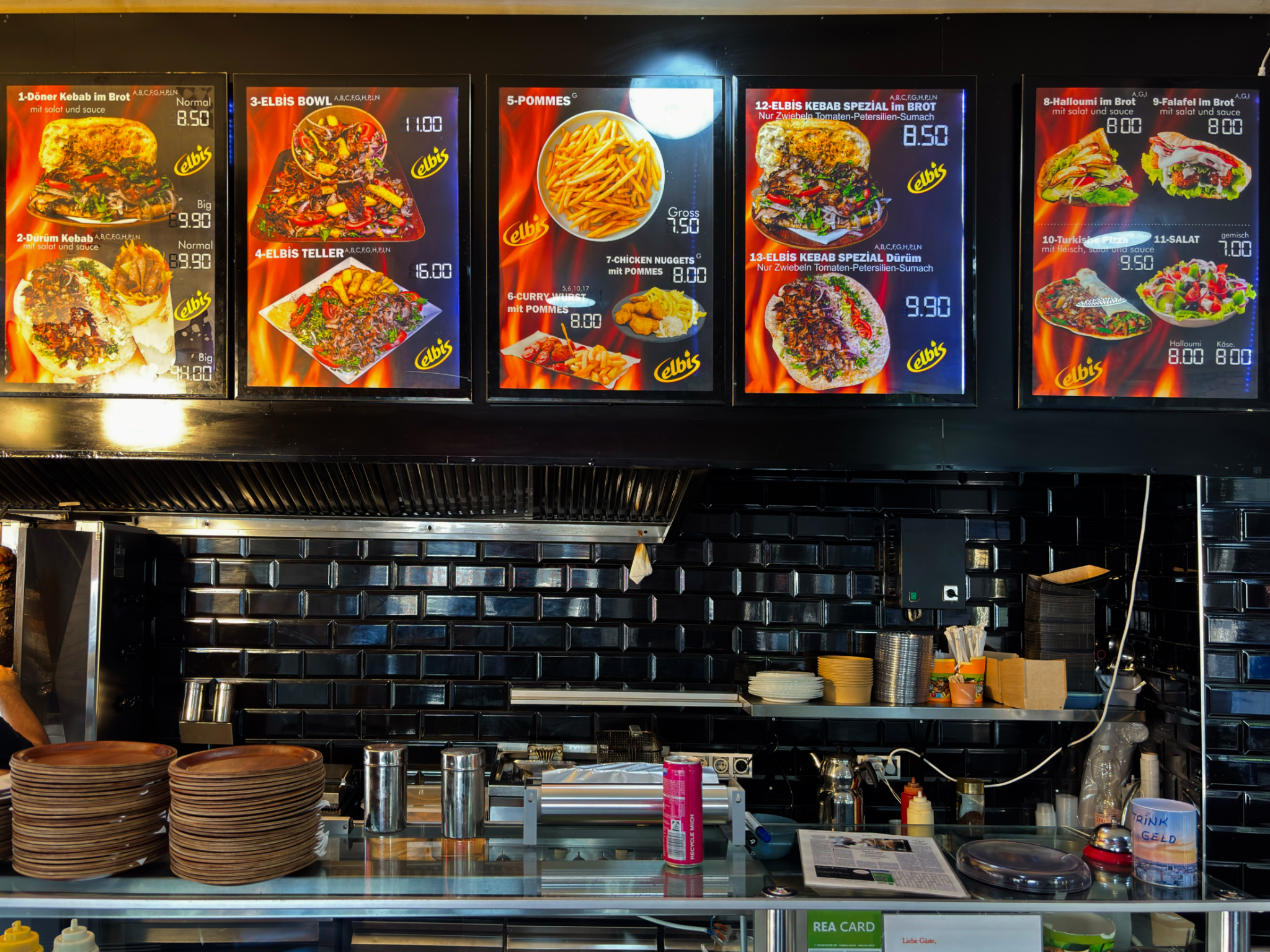
Choices.
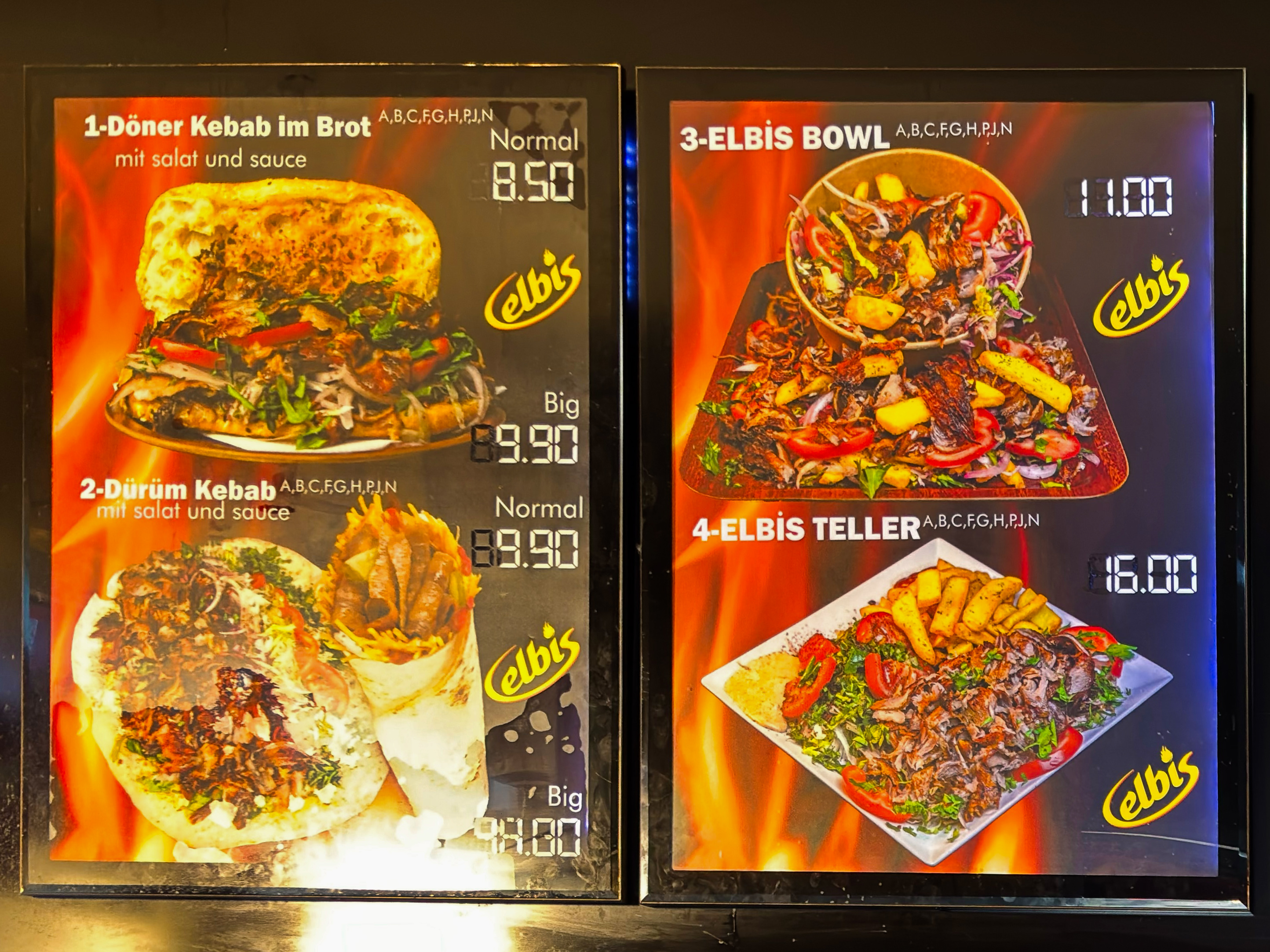
Number 1, the Berlin way or …
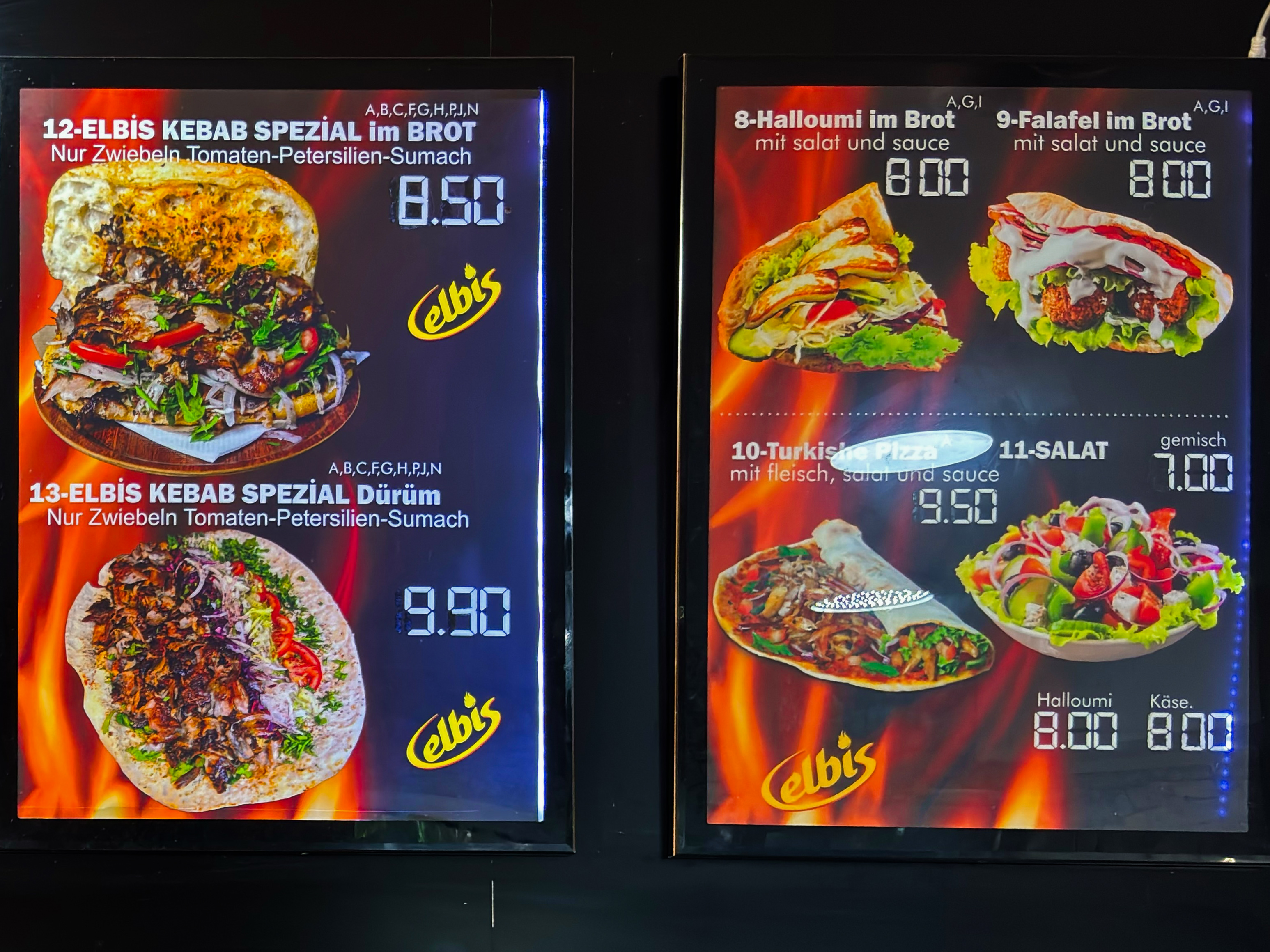
… or number 12, the Turkish way ?
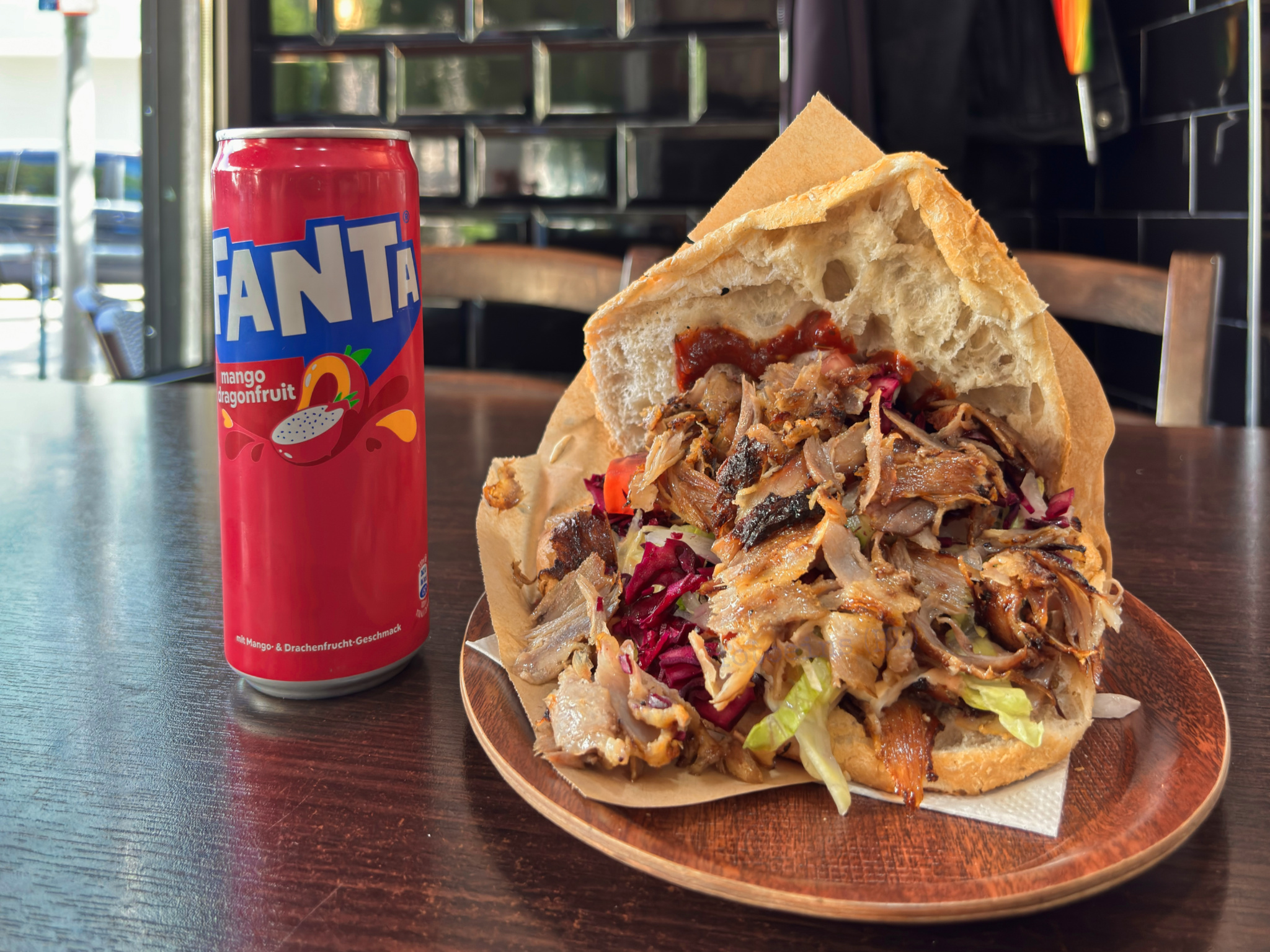
A big number 1 Döner Kebap with a small cold soda on a hot summer day.
Getting there
Public transport with BVG: U-Bahn U7 or U9 line to station “Berliner Strasse”; bus M43 or 143 to stop “Kufsteiner Strasse”. Elbis accepts payment with cash, credit cards, and European debit cards.
Elbis celebrated their 10th anniversary in 2025; video in German.
( View this location on Open Street Map )
I received neither pre-visit support nor post-visit compensation for the deliciousness on display here. I made all images above on 26 May and 24 June 2026. This post appears on Fotoeins Fotografie at fotoeins DOT com as https://wp.me/p1BIdT-z6z. Last edit: 31 Aug 2026.