At the north end of Nuremberg’s Old Town is the Imperial Castle on top of a sandstone mount. An initial structure goes back to the 12th-century CE, but much of the castle appeared in the 15th-century. As an independent Imperial city, Nuremberg had been a safe place to store the jewels of the Holy Roman Empire jewels; these are now in the Hofburg Schatzkammer (Treasury Vault) in Vienna. In ruins after the Second World War, the post-war era saw a rebuild of town and castle, and the 21st-century version of the Kaiserburg is a snapshot of not only about grandeur, but also the importance Nuremberg held in the Empire.
A tunnel into the Old Town.
Tiergärtnertor (zoo gate).
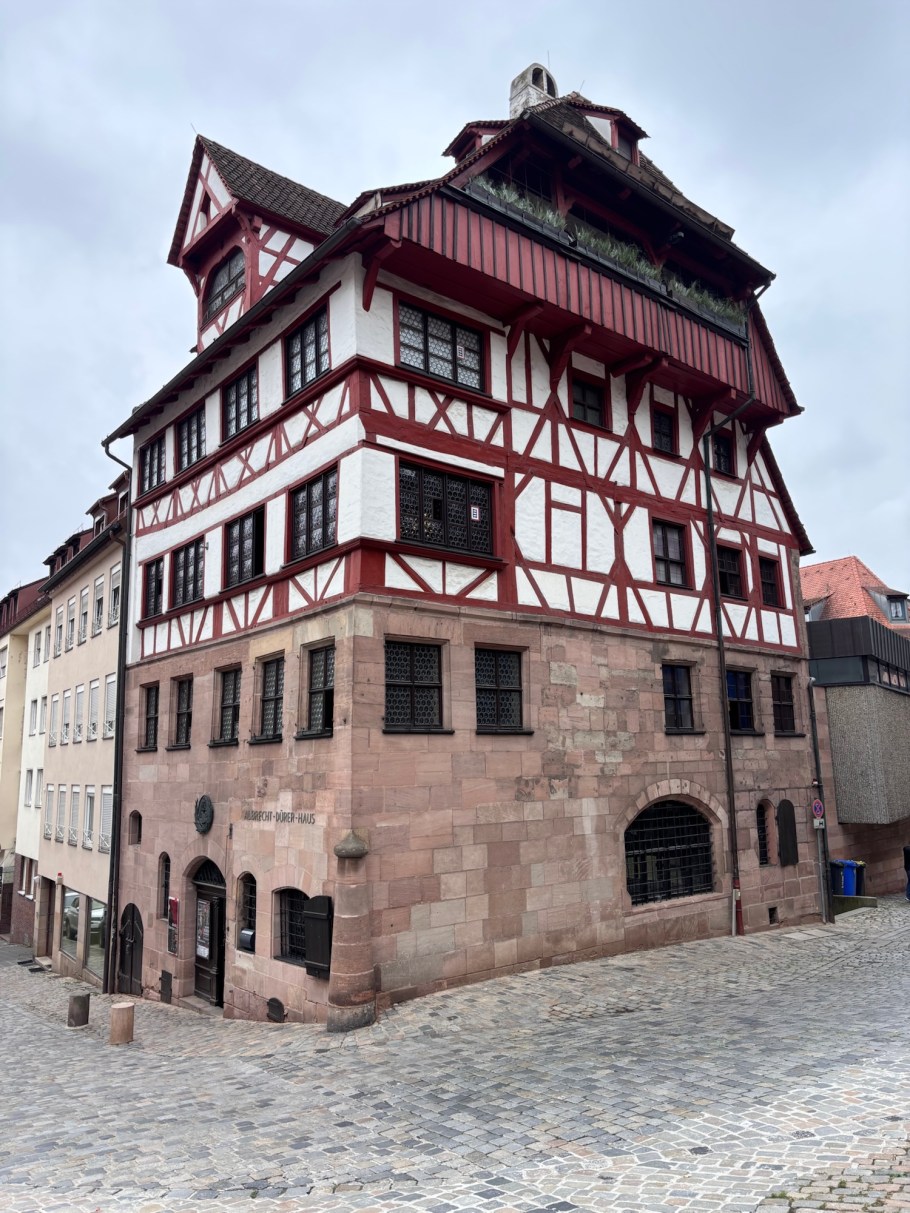
Albrecht Dürer House, a half-timbered building where the famous artist lived and worked from 1509 until his death in 1528.
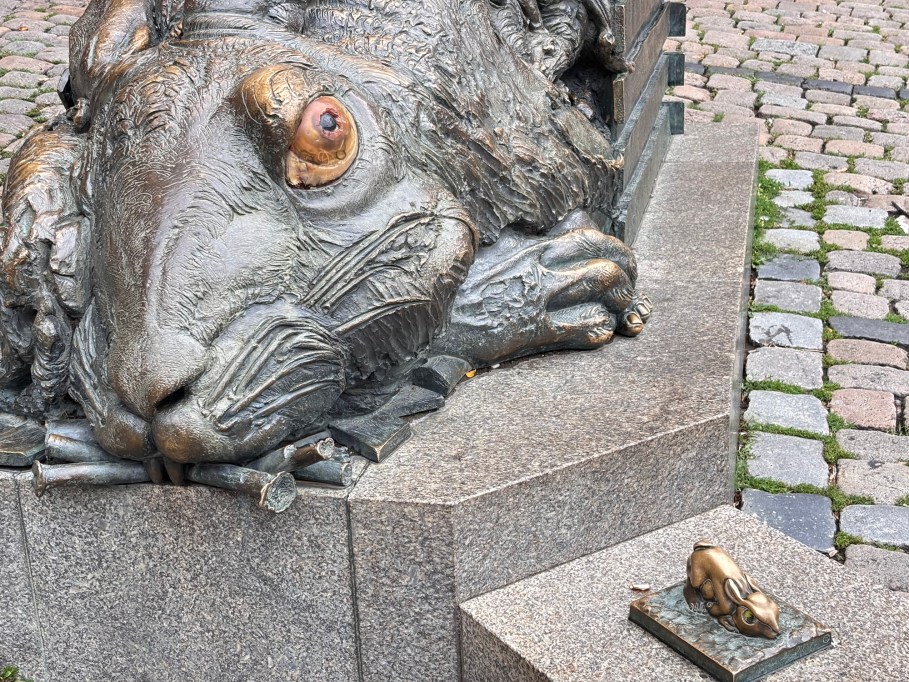
“The Hare: An Homage to Dürer”, 1984 artwork by artist Jürgen Goertz; a modern interpretation of Albrecht Dürer’s 1502 painting “Die Hase” (The Hare).
The path up called Burg.
Passage to Heidenturm (Heathen’s Tower).
Left: Tiefer Brunnen; right: Sinwellturm.
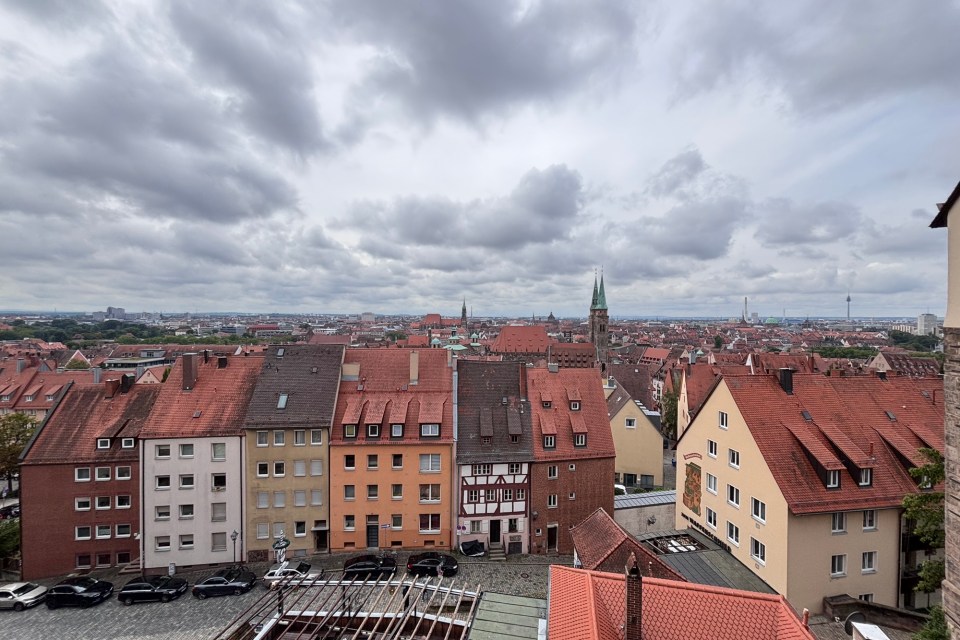
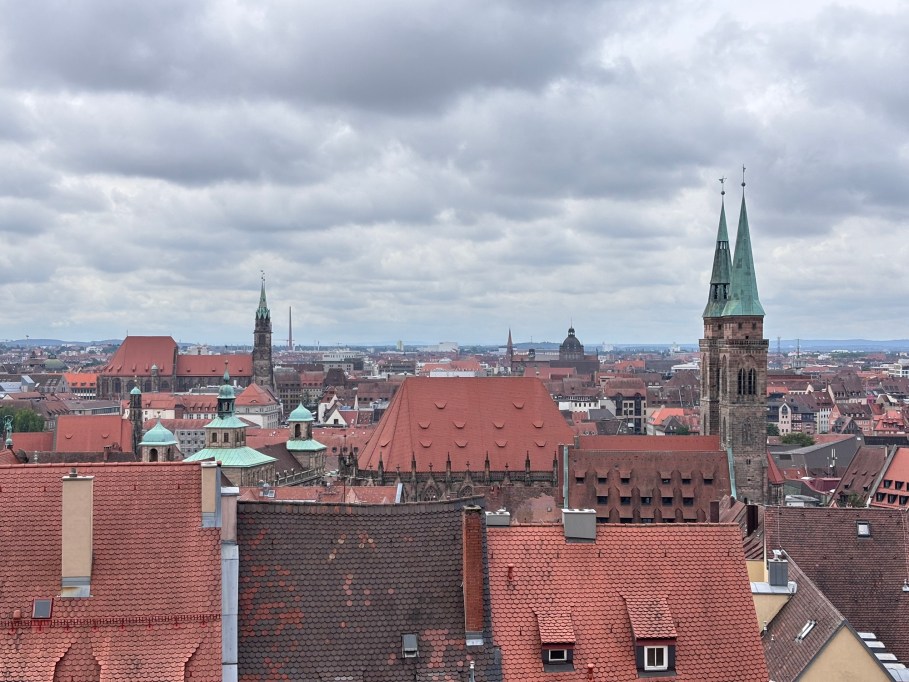
A view of the city from Freiung.
The tower called Sinwellturm.
Kaiserstallung constructed as the city’s Imperial Granary by Hans Beheim in 1495; also subsequently used as imperial stables.
One last look from below at Am Ölberg.
I made all images above with an iPhone15 on 2 August 2025. This post composed within Jetpack for iOS appears on Fotoeins Fotografie at fotoeins DOT com.






 Fotoeins Fotografie
Please leave your comments below