Fotoeins Fotografie

location bifurcation, place vs. home

Posts from the ‘Europe’ category

Augsburg: Fugger, Luther, & water in Germany’s 3rd oldest city

Above/featured: Facing north on Maximilianstrasse: Steigenberger Hotel Drei Mohren (left), Fuggerhäuser (orange) – HL, 12 Mar 2017.

Why Augsburg?

  • Fugger family legacy
  • Martin Luther and the Reformation legacy
  • Water supply management, newly inscribed World Heritage Site

I had come to Augsburg to find and understand traces Martin Luther left behind in the city. What I learned was the extent of the lasting legacy provided by the Fugger family, and how the city has for centuries provided safe clean water to her citizens, and how that water management system has become world-renowned as a piece of cultural heritage, forming the basis of an application for recognition as a World Heritage Site.

( Click here for images and more )

WĂĽrzburg: Röntgen, X-rays, & 1st Nobel Prize in Physics

On my list and map, I placed the museum’s location as a “possible” to visit in the city. If I had time, I’d swing by and have a look, appealing to my fondness for science and the history of science.

Many arrive in Würzburg to visit the Residenz UNESCO world heritage site. On a daytrip from Frankfurt am Main, I duly visited the Residenz, and easily completed my initial visit requirements, as I knew I would. That’s when my inner voice (a.k.a., the spirit of B.Sc. ’90) reminded me insistently the museum was “simply and conveniently” on the return walk to the city’s central train station to fully complete my visit requirements.

I walked north from the Residenz, and followed the signs into the building for the Röntgen-Gedächtnisstätte (Röntgen Memorial) where X-rays were discovered. Standing inside the former laboratory space, I’m surrounded by artifacts, books, papers, tubes, equipment, and photographs.

I also feel a part of my undergraduate physics education has come full circle.

( Click here for images and more )

My Heidelberg: 40+ Highlights from Home

Above/featured: From Philosophenweg: across the Neckar, over the Altstadt, and up to Königstuhl – 21 May 2016 (HL).

Heidelberg is “eine adoptierte Heimatstadt” (an adopted hometown). Some have called this place “scenic, natural, and spectacular”; some call it “boring, provincial, and extortionate”. I could be referring to Vancouver, but that’s a subject for another time.

I’ve long struggled with questions of place: what defines “home”? Can those definitions and qualities change with time? Do people have choice(s) and do they apply their choices in their search? Can people find meaning with “home”? Must “home” be restricted to only one place, or can different needs be met from different places?

Images can provide access to memories of having lived in a new country, experiencing the shock of the new, and settling into the mundane. I remember advice someone once gave me which became constant companion and reminder: that I was inhabiting a place at the same latitude as my birthplace, 8000 km in distance and 9 time zones apart on the other side of the planet, a place that’s seen its compact share of activity with flair and impact.

Most recall is naturally connected to sight. Occasionally, it’s a rush of the senses: the quick breeze on the skin, the ankle-spraining undulations of the cobblestone, how fog clings like a cold clammy cloak, the sing-song of birds among tall trees in the forest on the hill, the smell of grilled sausages in town by day, and the satisfying late-night noms of a spicy Dürüm Döner with a cool Ayran. And other times, human history leaps out and buries its claws, when the unthinkable must be acknowledged and understood in a synapsis of memory and senses.

In the autumn of 2001, I moved to Germany and Heidelberg: both sight unseen and without having learned any of the language. I stayed in town for a little under two years. What’s astonishing is I have no pictorial record of my time in Heidelberg, Germany, and Europe: I had no camera before the dawn of the smart-phone.

I have some great memories, even if time is casting long shadows. What I lost (no, gave away) was some part of me that actually has little to do with the “Schlager” hit song “Ich hab mein Herz in Heidelberg verloren“. It might be a piece of the heart, a part of the soul, or simply a scrap of good sense; but what it is precisely still remains undefined and shapeless. Finding solid answers about what I’ve surrendered might take years. And so, for the sake of clarity, I’ve returned many times since leaving town in 2003. A sharper focus comes through the post-departure blur whenever I step off the train in town.

I couldn’t have possibly known the experience of moving to and living in Heidelberg would be life-changing. Time so far has been kind, because it didn’t take long for me to adopt Heidelberg as “home”.

( Click here for images and much more )

Salzburg Walk of Modern Art (2018)

Above: “Sphaera” by Stephan Balkenhol: Salzburg Kapitelplatz – 22 May 2018.

Salzburg is a well-known historical city in north-central Austria next to the border with Germany. For a different way of examining the city that goes beyond the history of the Habsburgs and the music of Mozart, the Walk of Modern Art allows visitors and residents to walk through parts of the city for a mix of historical and contemporary perspectives at street-level and from the cliffs above. The art pieces are placed throughout the city’s Old Town to coincide with key landmarks and sights. The city of Salzburg also provides information about the walk. UNESCO inscribed Salzburg’s Old Town as World Heritage Site in 1996.

Thankfully, there’s more to Salzburg than “The Sound of Music” ().


( Click here for images and more )

Belvederegarten, Marmorsaal, Oberes Belvedere, Unteres Belvedere, Belevedere Museum, Belvedere Garten, Marble Hall, Upper Belvedere, Lower Belvedere, Vienna, Wien, Oesterreich, Austria, fotoeins.com

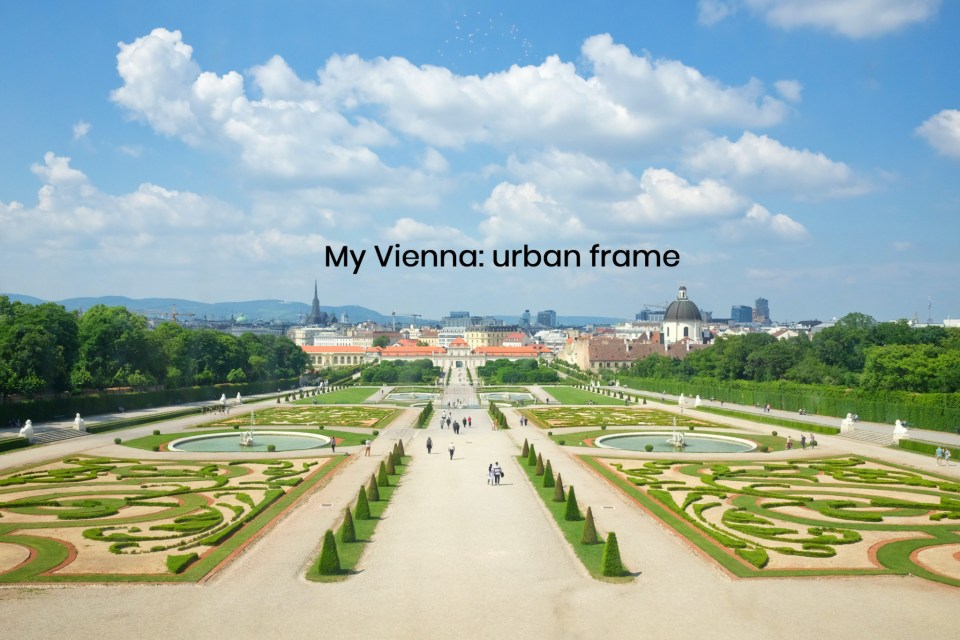
Vienna: urban frame (2018)

Above/featured: Belvedere Garden, north from Marble Hall in Upper Belvedere to Lower Belvedere and beyond to St. Stephen’s Cathedral at left-centre – 19 May.

It’s easy to reduce a city to stereotypes, distilling landmarks to short paragraph summaries designed for easy consumption.

Some might say: you’re making things too complicated; they’ve got to be simpler. That misguided sentiment needlessly and carelessly minimizes the diversity and complexity of a city, her people, and the infrastructure through which citizens reside, navigate, and thrive. Although I chased after traces of Otto Wagner throughout Vienna, I’m also interested in illuminating the city as reflections from past and present and as glimpses of resident and visitor.

Vienna is an exceptional city

( Click here for images and more )