Fotoeins Fotografie

location bifurcation, place vs. home

Posts tagged ‘Weltkulturerbe’

Augustinerkloster, Augustinian Monastery, Erfurt, Thüringen, Thuringia, Germany, fotoeins.com

Erfurt: Martin Luther’s start at the Augustine Monastery

You can almost imagine a 16th-century monk walking these halls, contemplating various aspects of spirituality, and reconciling them with the hardships of everyday living.

In the federal state of Thuringia in central Germany, the Augustinerkloster (Augustine monastery) in Erfurt is a notable place for the history of Martin Luther and the Reformation.

Martin Luther arrived in 1501 and began studies in liberal arts, law, and theology at Erfurt University. In 1505, Luther experienced a big personal event (the scare of his life, as legend goes), and decided to leave his studies by entering the Augustine Monastery to become a monk, much to his father’s displeasure and objections. Built originally around 1300, the Augustine Monastery was home for Martin Luther until 1511, and it’s here where he was ordained as a priest. The site underwent extensive post-war reconstruction after suffering heavy bombing damage in the Second World War. The monastery is now a seminary and a modest hotel: guided tours of the monastery provide a glimpse to Luther’s early years as a monk, and visitors can now reserve rooms for overnight stays in a no-frills technology-free setting and a peaceful comfortable environment.

Erfurt’s Augustinian monastery is listed as one of many additional candidate sites for inclusion into a single UNESCO World Heritage Site under the title Luther memorials in Saxony-Anhalt, Saxony, Bavaria, and Thuringia.

( Click here for images and more )

Wittenberg UNESCO WHS: The Castle Church

In the east German town of Wittenberg, the Schlosskirche (Castle- or All Saints’-Church) is one of four sites as part of the town’s status as UNESCO World Heritage Site since 1996.

Elector Frederick III of Ernestine Saxony (1463-1525, also known as Frederick the Wise, Friederich der Weise) became the first patron of the Protestant Reformation with his support and defence of Martin Luther. On the site of the original city castle, Frederick the Wise authorized in 1489-1490 a renaissance palace with the entire north wing occupied by the Castle Church. The church was consecrated and inaugurated in 1503 as the castle and university church “Allerheiligen” (All Saints); Martin Luther taught theology as professor at the neighbouring university. The first Protestant service at the Castle Church was held in 1524-1525.

A significant portion of the church including the original wooden doors was burned and destroyed in 1760 during Europe’s Seven Years’ War (1754-1763). The 1770 replacement church was subsequently destroyed in the conflict against France’s Napoleon which ended with the town under Prussian control in 1815. With support and backing by Emperor Wilhelm II, a full renovation of the church took place between 1885 and 1892 with the west tower taking the form and shape we see today (see also below). The graves for Martin Luther, contemporary colleague and fellow reformer Philipp Melanchthon, and Frederick the Wise are inside the church. After three years of renovation and restoration work in time for the Reformation quincentenary in 2017, the Castle Church was reopened in the autumn of 2016.

Schlosskirche, Castle Church, Wittenberg, Sachsen-Anhalt, Saxony-Anhalt, UNESCO World Heritage Site, Germany, fotoeins.com

( Click here for images and more )

Wittenberger Marktplatz, Rathaus, Lutherdenkmal, Stadtkirche Sankt Marien, Marktplatz, Lutherstadt Wittenberg, Sachsen-Anhalt, Wittenberg, Saxony-Anhalt, Germany, Deutschland, UNESCO, World Heritage Site, Welterbe, Weltkulturerbe, fotoeins.com

The Saxony-Anhalt 5: Luther & Bauhaus

(October 2016)

As motivation to trace Martin Luther’s footsteps for the 500th anniversary of the Reformation in 2017 and to learn more about the impact of the Bauhaus art and design movement for the centenary in 2019, I embarked on a press-trip in the autumn 2016 to the German federal state of Saxony-Anhalt.

(( The description of this trip would be a continuation of a consecutive annual streak going back to 2001. I’ve set foot inside Germany at least once every year since 2001. I’d already claimed another consecutive year with a short stint at “home” in the HD earlier in the spring, but autumn in-country* solidly confirmed a 16th consecutive year in the country. ))


( Click here for more )

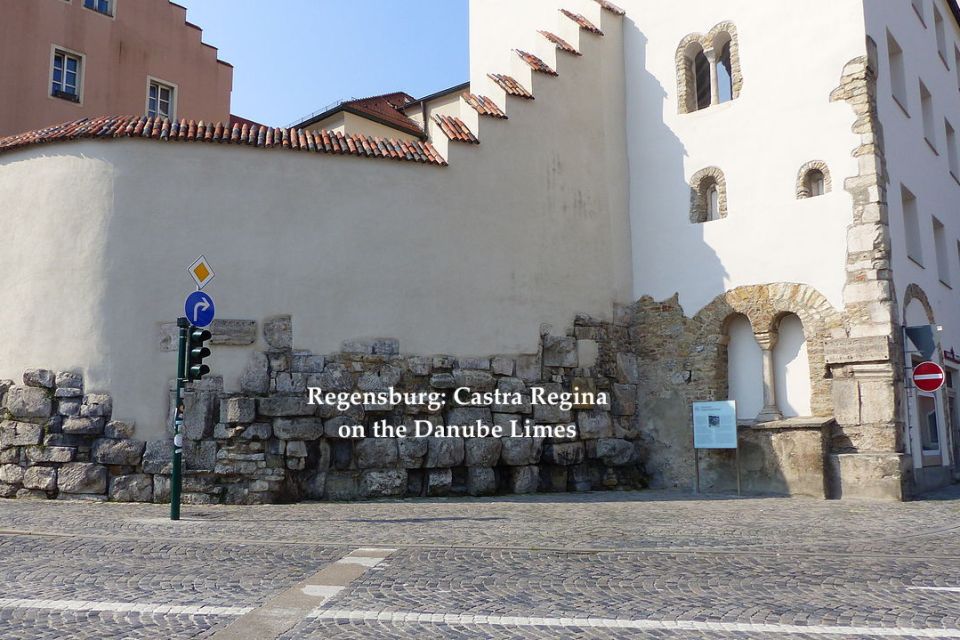
Northeast corner of old Roman fort, Regensburg, photo by Dr. Bernd Gross, Wiki CC3

Regensburg: remnants of Castra Regina on the Danube Limes

Above: former wall at the northeast corner of the Roman fort Castra Regina. Photo by Dr. Bernd Gross (image no. 7, Wiki CC3).

Regensburg is situated in central Bavaria, and is 1 and 1.5 hours from Nürnberg (Nuremberg) and München (Munich), respectively, with the train. While meandering through the Regensburg’s Old Town, it’s easy to forget most of this area was once occupied by a Roman fortress about 1800 years ago.

In 179 AD/CE, the Roman Empire established the fortress “Castra Regina”, or “fortress by the river Regen”, where the Regen enters the Danube river. The Danube became in effect a part of the Roman Empire’s northern frontier (“Danube Limes”). Emperor Marcus Aurelius recognized the need for extra security in the northern imperial province of Raetia where the Danube’s course reached its northernmost point. To ward off incursions by northern Germanic tribes, up to six thousand soldiers from the Third Italic Legion were stationed at the fortress.

At peak operation, the fortress encompassed an area 540 metres by 450 metres (24 hectares, or 60 acres) with a wall up to 10 metres (33 feet) high made of large sandstone blocks, 18 towers, 4 double-tower gates, and a wide trench. Within the grounds were barracks, headquarters building (principia), commanding officer’s own residence (praetorium), a military hospital (valetudinarium), granary (horrea), workshops, and stables. Civilians and support tradesmen built a settlement to the west of the fort. By the 5th-century, constant raids and migrations forced the Romans to abandon the area. A civilian settlement eventually grew over the fortress which is today’s Altstadt (Old Town)1.

The free-of-charge open-air museum includes restored remnants of the old Roman fortress complete with information displays in both English and German. The primary information location is at the parking garage at Dachauplatz (which is closed at night); the other three locations are accessible outdoors at any time.

The Porta Praetoria is one of multiple constituents in the tri-nation (AT DE SK) inscription for “Frontiers of the Roman Empire: Danube Limes” as UNESCO World Heritage Site (new, as of July 2021).

The map below shows the location of the Castra Regina encampment and locations of the “document Legionslagermauer” in the city’s Old Town. Click on the “arrow-window” icon at the upper-left corner of the map for additional details.

( Click here for images and more )

Kölner Dom, Hohenzollernbrücke, Köln, Cologne, Germany, fotoeins.com

Cologne’s two grand landmarks

Give them any excuse, the people in Köln (Cologne) love to party at any time. It’s a wonder but no surprise this is where I find some of the happiest people in the country. As the calendar flips to a new year, the time heralds the annual shenanigans of the Kölner Karneval. For residents and visitors, two of the best-known landmarks in the city are the Kölner Dom (Cologne Cathedral) and the Hohenzollernbrücke (Hohenzollern Bridge).

( Click here for more )