Fotoeins Fotografie

location bifurcation, place vs. home

Posts tagged ‘urban transport’

Vienna: Imperial Court Pavilion Hietzing, by Otto Wagner

Above/featured: Hofpavillon Hietzing in afternoon light, facing east with the departing eastbound U-Bahn U4 train. Photo, 15 May 2022.

Along Vienna’s U4 metro line, a dark-domed white cube-like structure seems to float over the tracks between Schönbrunn and Hietzing stations. Most may not realize the building’s relevance to the history of the city’s first railway, the city’s rapid urban evolution into the 20th-century, and the railway architect’s eventual “break away” transition from historicism to modernism.

Vienna was going to look very different after 1890. The city undertook its second and greatest expansion, absorbing 6 outer districts and ballooning the total population to almost 1.4 million (almost doubled in 10 years). The city’s administration recognized the challenge of efficiently transporting people between its new outer suburbs and the inner city. In 1894, Vienna appointed architect Otto Wagner with the complete design and construction of the new Wiener Stadtbahn metropolitan railway. The railway saw the creation of four new lines: the Danube canal line (Donaukanallinie), the “Belt” line (Gürtellinie), the suburb line (Vorortlinie), and the Vienna river valley line (Wientallinie). Today, the city’s U-Bahn U4 and U6 lines and the S-Bahn S45 line operate electrified over much of the original routing.

The Vienna valley line brought track and construction in front of Schönbrunn, the imperial summer palace for the ruling Habsburgs. The rail line’s new Schönbrunn station was located at the northeast corner of the palace grounds. But at the grounds’ northwest corner, Wagner created two stations: one for the public, and one for the Habsburgs. Built for the inauguration of the city railway on 1 June 1898, the imperial pavilion was set aside for the emperor, family, and staff. Emperor Franz Josef I only used the pavilion twice, as he was reluctant (hostile) to accept rapid changes brought by modernity.

Wagner created a domed-building whose interior was furnished with floral and vegetal elements in the Jugendstil (Art Nouveau) style, a painting with a bird’s eye view of the city over Schönbrunn, a private suite for the emperor; and whose exterior included the uniform green and white colours seen throughout the entire rail network, glass and wrought-iron elements, and a separate portal providing a covered entrance for the imperials. Out of the many station buildings Wagner designed for the entire system, the imperial pavilion at Hietzing is most associated with the “historical” architectural style. The building is now a part of the city’s Wien Museum after successful post-war efforts to save and restore the structure.

The informal name is the “Hofpavillon Hietzing” (Imperial Court Pavilion Hietzing), but the building’s formal name is “Pavillon des kaiserlichen und königlichen Allerhöchsten Hofes” (Pavilion of the Imperial and Royal Highest Court). In the images below are divided sections: “exterior”, “interior”, and “sketches”.


( Click here for images and more )

Munich: Ghost station “Olympic Stadium”

In the vicinity of Munich’s Olympic Stadium is a train station overgrown with brush and weeds. The tracks stretch north and south, but go nowhere.

Munich played host to the Summer Olympics in 1972; physical reminders include the Olympiadorf (Olympic Village), Olympiapark, and the Olympiastadion (Olympic Stadium). In 1988, the train station “München Olympiastadion” closed to train service for the final time. Rail tracks which connected the station with the North Ring freight tracks were cut, isolating the station and leaving it to decay.

Since 2001, the Olympic Village has been listed as part of the heritage Olympiapark ensemble which includes the abandoned station. But will the station be left to decay? Or will the station be refurbished in some way to become a living memorial?

Historical maps of the MVV U- and S-Bahn system show how train service from central Munich to Olympic Stadium was utilized. S-Bahn train service carried passengers along the central trunk to Olympic Stadium via Hauptbahnhof, Laim, and Moosach; check out the system maps for June 1972 and June 1988.


( Click here for images and more )

Innsbruck’s Hungerburgbahn, by Zaha Hadid

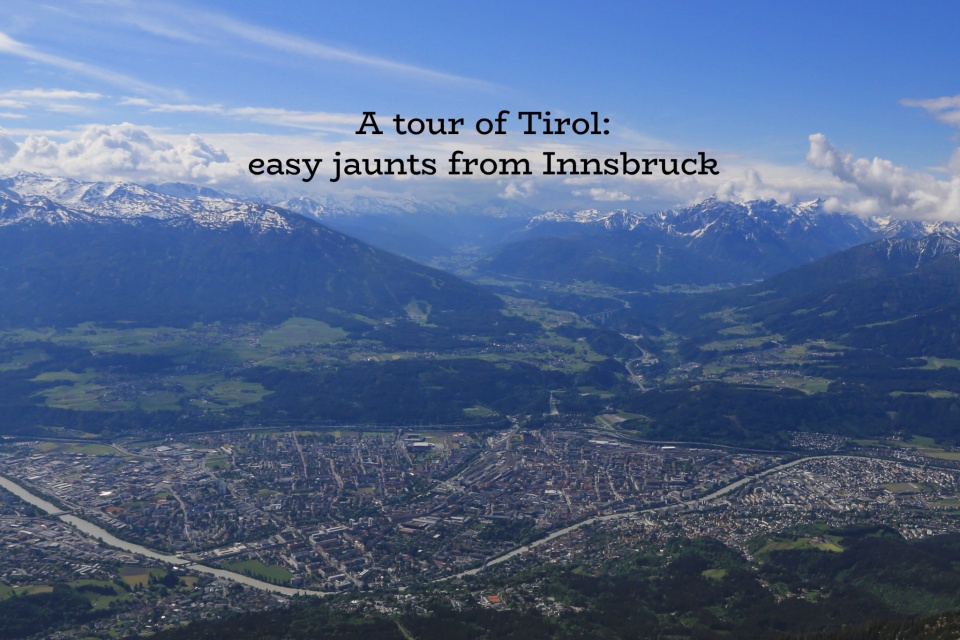
As much as the Austrian federal state of Tirol is about mountains, spending time in the capital city of Innsbruck is also about reaching those very heights. To that end, Iraqi-British architect Zaha Hadid left her mark in Innsbruck with her redesigned Bergisel Ski Jump which opened in 2002, and her “Shell and Shadow” design of the Hungerbergbahn stations which opened in 2007.


( Click here for images and more )

Hafelekar, Nordkette, Nordkette cable car, Nordkettenbahn, Hungerburg funicular, Hungerburgbahn, Innsbruck, Tirol, Tyrol, Oesterreich, Austria, fotoeins.com

My Tirol: day trips from Innsbruck

As one of nine states within the federal republic of Austria, Tirol is well known not only for all-season access to the Alps, but also for a variety of other attractions.

With transport authorities IVB Innsbruck, VVT Tirol, and ÖBB Austria, Tirol state capital Innsbruck was the base from which I travelled to Alpbach (half-day), Brenner (half-day), Hall in Tirol (half-day), Nordkette (half-day), Scharnitz (half-day), Stubaital (half-day), and Wilder Kaiser (full day).


( Click here for more )

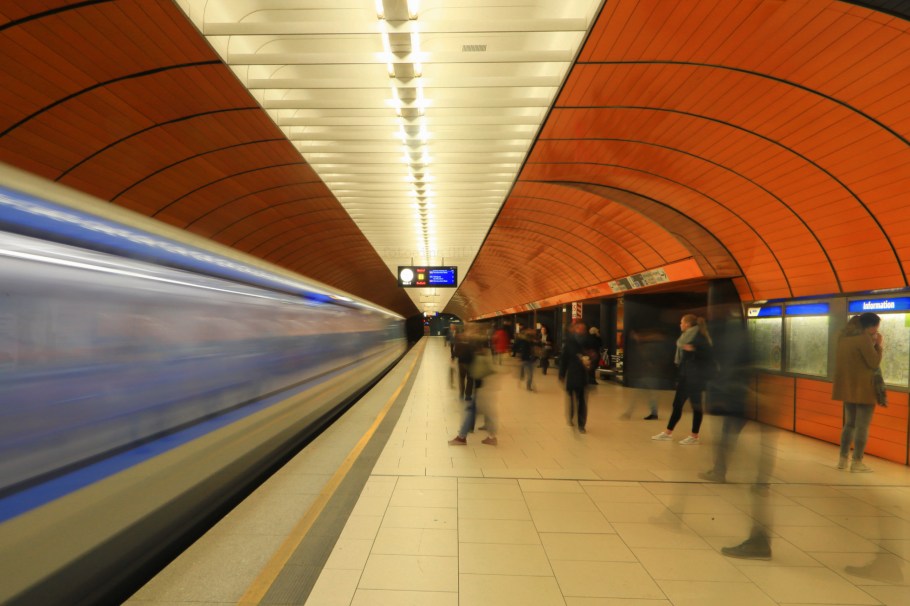
Marienplatz, MVG München, U-Bahn, München, Munich, Germany, fotoeins.com

From the World Outside & Into Munich’s Metro

Above/featured: U-Bahnhof Marienplatz.

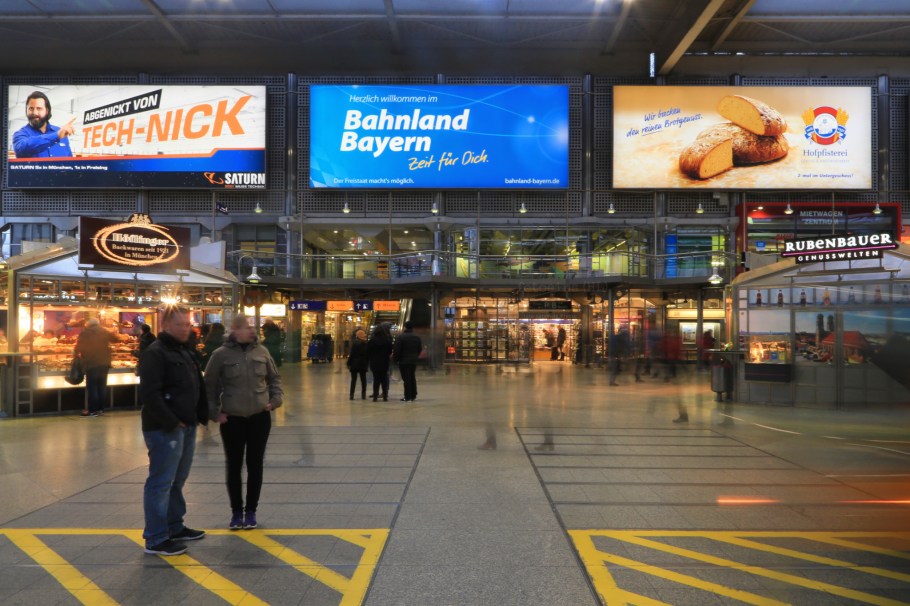
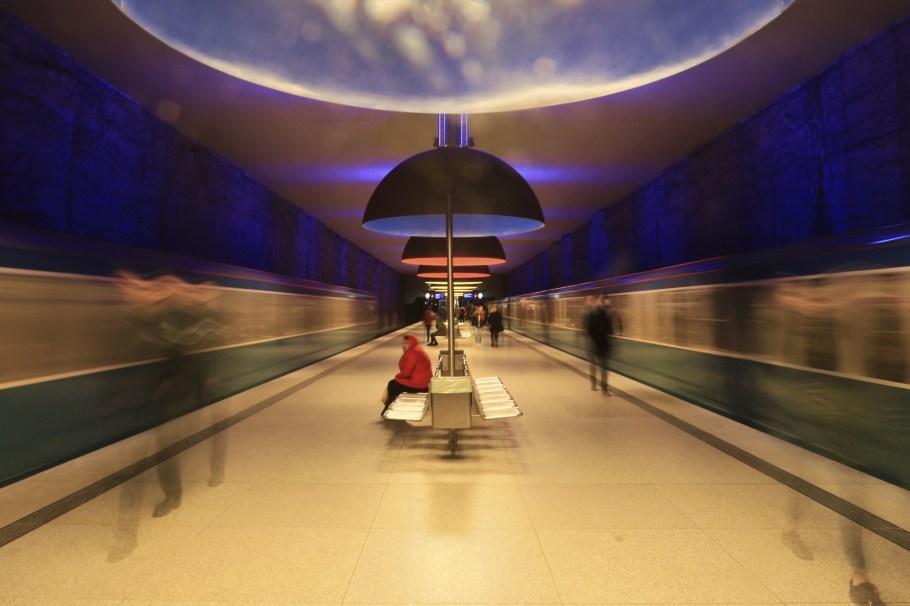
After dozens of visits since 2002 to Germany’s Munich, I’ve become familiar with the city’s transport network. For the city’s residents, the day-to-day work commute from the upside and into below can merge into a monotonous grind. The following images within five U-Bahn or metro sitations might challenge that notion with ghost-like and otherworldly appearances.


Georg-Brauchle-Ring

Georg-Brauchle-Ring, MVG München, U-Bahn, München, Munich, Germany, fotoeins.com

7am morning commute (IG)


Hauptbahnhof

Hauptbahnhof, MVG München, U-Bahn, München, Munich, Germany, fotoeins.com

Bahnland Bayern (IG)


Lehel

Lehel, MVG München, U-Bahn, München, Munich, Germany, fotoeins.com

One foot in front of the other … (IG)


Marienplatz

Marienplatz, MVG München, U-Bahn, München, Munich, Germany, fotoeins.com

U6, nach/to Klinikum Grosshadern (IG1, IG2)


Westfriedhof

Westfriedhof, MVG München, U-Bahn, München, Munich, Germany, fotoeins.com

Comings and goings (IG)


I made all pictures above between 22 and 24 February 2017 inclusive. Alle Fotoaufnahmen sind mit Wasserzeichen versehen worden. This post appears on Fotoeins Fotografie at fotoeins.com as https://wp.me/p1BIdT-buj.