Fotoeins Fotografie

location bifurcation, place vs. home

Posts from the ‘Summer’ category

Vienna Steinhof Church: city- & Wagner-landmark

Above/featured: East side of the church, in afternoon light. Photo on 28 May 2023, X70 with wide-field WCL-X70 lens attachment, image corrected for geometric distortion.

Building: Steinhof church, also St. Leopold Church, 1907 // Kirche am Steinhof, Kirche zum heiligen Leopold.
Address: Baumgartner Höhe 1, in Penzing, the city’s 14th district.

Up on the city’s Baumgartner Heights is an example of Europe’s first modernist church at Steinhof. Dedicated to St. Leopold, the structure is one of the city’s finest examples of turn-of-the-century architecture, and one of the world’s most important churches in the Jugendstil or Art Nouveau architectural style. The church was designed and built by architect Otto Wagner, inaugurated in 1907 for patients and staff within the surrounding hospital complex the Lower Austria state, sanatorium, and nursing home for the mentally ill (Niederösterreichische Landes-, Heil-, und Pflegeanstalt für Geistes- und Nervenkranke) which included over 30 buildings and room for over 2000 beds. The bright, airy, and spacious modern design was met at that time with skepticism and criticism by local church officials. Of utmost importance on Wagner’s mind were the hospital patients: his church design was about gentle solitude, not fire and damnation.

The church was a collaborative effort with other Viennese artists, including mosaics and stained glass by Koloman Moser, angel sculptures by Othmar Schimkowitz, and exterior tower sculptures by Richard Luksch. The church roof is topped with a dome covered in gold-plated copper plates, whose bright yellow appearance in daylight merits the nickname “Limoniberg” (lemon hill) that’s visible in different parts of the city. The Steinhof church is an example of a “Gesamtkunstwerk“, where every detail and fixture contributed to a “total and functional work of art”; an architectural masterpiece of the period; and one of Otto Wagner’s most important creations.

I included this building as part of my description of Otto Wagner’s architectural legacy in Vienna and of the recent centenary celebration in Vienna of the city’s 19th- to 20th-century architectural transition from historicism to modernism.


( Click here for images and more )

25 for 25: fotoeins fotos in 2025

Above/featured: “Göttin” (goddess), by AlfAlfA, also known as Nicolás Sánchez, for One Wall 2017. Photo, 17 Jun 2025 (P15).

In continuation of high spirits and enthusiastic support of leading choices, I’m very grateful to significant time spent:

  • in the Bay Area, to visit mum’s family in Sacramento and long-time friends in the South Bay;
  • in Vienna for the 4th consecutive summer; and
  • in Berlin for the 1st time in 4 years, as set up for a repeat in the new year.


( Click here for images and more )

My Berlin: Wrapped Reichstag after 30 years

Above: “Wrapped Reichstag 1995–2025” light show.

In 1995, the artist duo Christo & Jeanne-Claude carried out a bold but contentious project by covering Berlin’s landmark Reichstag parliament building. Plans for the project had taken over 20 years, even though the artwork had always meant to be temporary and all expenses had been covered without corporate sponsors. Over 5 million visited in a period of 12 days in the summer of 1995 to look at the undulating “silver dream” in the German capital city. The timing was ideal. After reunification of the two Germanys in 1990, the new home of the federal parliament would be Berlin’s Reichstag. Renovations to the building began in the autumn of 1995 with the federal parliament opening in the spring of 1999.

From 9 to 22 June 2025, the Reichstag building was illuminated nightly with a light show in a 30-year anniversary tribute to the famous 1995 artwork. In a 20- to 30-minute cycle, the light-show appeared to first envelop the building in silver fabric. The fabric cover flapped in artificial breeze, before the cover lost its shape and fell onto the ground at the base of the building. The free-of-charge light show began shortly after sunset at about 930pm and continued until 1am. Whatever Christo and Jeanne-Claude chose to cover and transform, their art works posed questions of perception, origins, shape, functionality, and permanence.

•   DW: Germany Arts
•   Visit Berlin


( Click here for images )

Nuremberg: The Landmark Trials in Room 600, 80 years on

Above: In front of the Justizpalast (Palace of Justice) at the corner of Benjamin-Ferencz-Platz and Fürther Strasse in Nuremberg, Germany.

On 20 November 1945, an extraordinary trial got under way in the German city of Nuremberg, only six months after the Nazis surrendered to the Allied nations in World War 2. For the first time in modern history, an assembled tribunal of international judges presided over trials against top leaders of a nation for crimes against peace, war crimes, crimes against humanity, and conspiracy to carry out these crimes.

What is called the “Nuremberg Trials” refers primarily to the “Major War Criminals Trial” where over 20 leaders in German Nazi high command were put on trial before the International Military Tribunal (IMT) from November 1945 to October 1946. The IMT consisted of judges from each of the four Allied nations: Great Britain, France, United States, and the U.S.S.R. Subsequently from late-1946 to 1949, 12 additional trials were held before American military tribunals to uncover and highlight the extent and depth to which additional leaders in German society supported the Nazi dictatorship.

“… The privilege of opening the first trial in history for crimes against the peace of the world imposes a grave responsibility. The wrongs which we seek to condemn and punish have been so calculated, so malignant and so devastating, that civilization cannot tolerate their being ignored because it cannot survive their being repeated. That four great nations, flushed with victory and stung with injury stay the hand of vengeance and voluntarily submit their captive enemies to the judgment of the law is one of the most significant tributes that power has ever paid to reason.”

– Opening statement by Robert H. Jackson, U.S. chief prosecutor, on the second day of the Nuremberg Trials (Major War Criminals Trial), 21 November 1945; see Sources below.


( Click here for images and more )

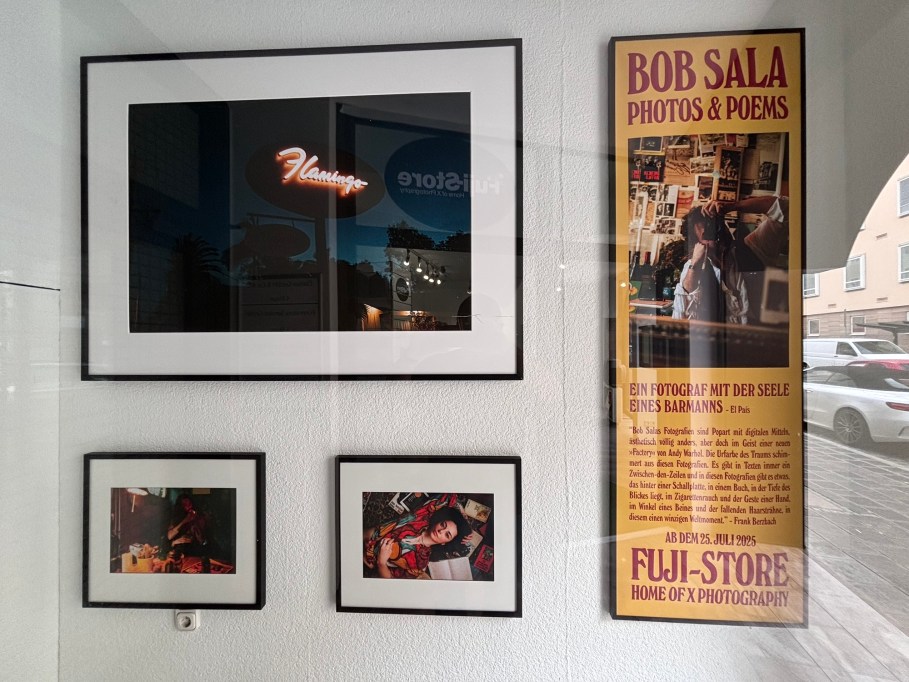
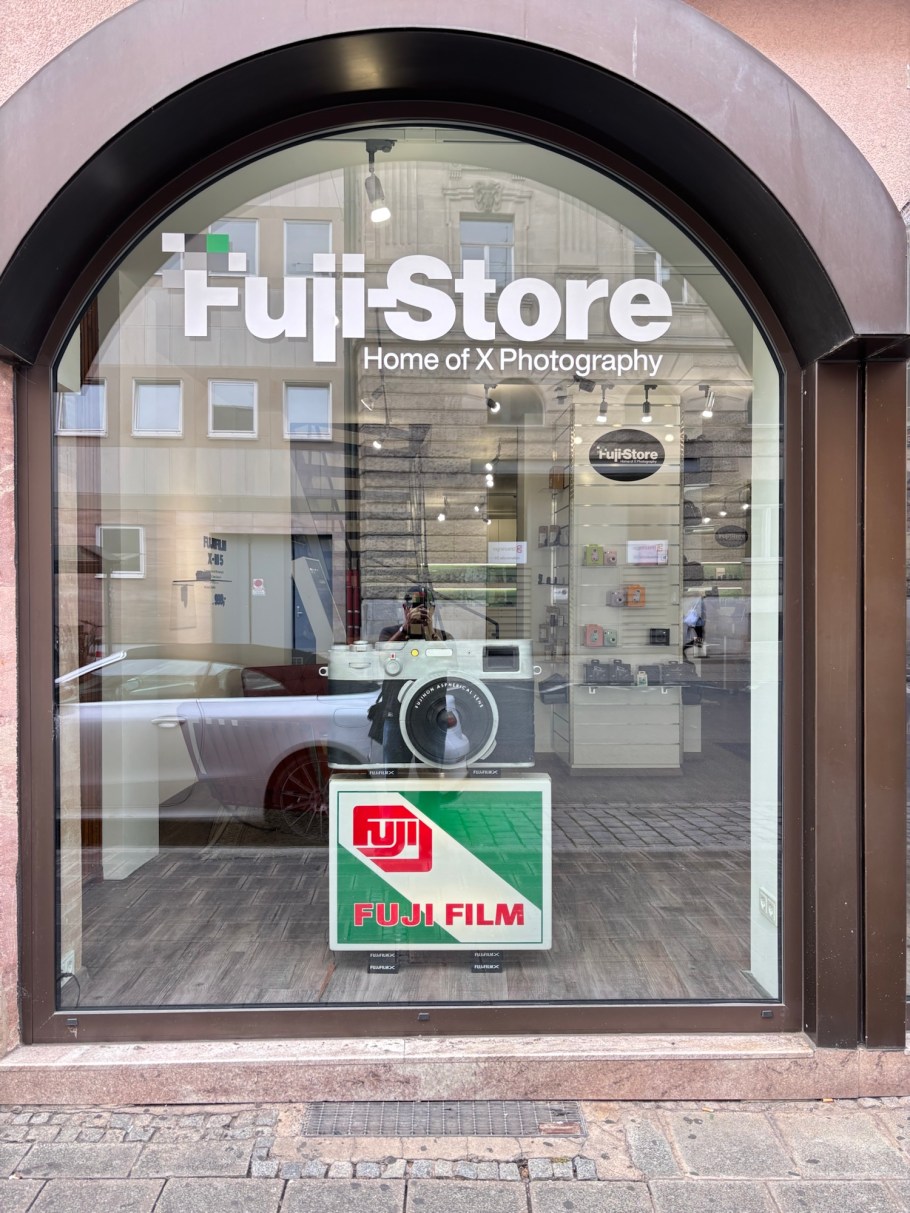
Nuremberg: Fuji(film)-Store

“Home of X Photography”

It’s a busy active crowded Saturday in Nuremberg’s city centre. There’s a big music festival with acts ranging in size from solo artists to 3-piece bands. But as I walk across town, I see a big Fujifilm sign, and as I approach, I can see this is no ordinary camera shop.

I learn there’s been a Fuji shop in the city for a number of years, and only this past February did they move to this new location. Judging by layout and the upstairs gallery, the Fuji shop has a feel similar to aLeica shop. That’s because the owner of Nuremberg’s Fuji-Store created the shop based on their experience operating the city’s Leica shop nearby. I chat with Peter, the gentleman in the shop about what’s out now and what else might be expected. We agree to a common wish: to have Fuji fill a current niche with a compact portable point-and-shoot at the right price point. How about an X80 product variant?

I’ve done my fair share of drooling (but no buying) at Leica shops in Frankfurt and Vienna, and I enjoyed doing the same to available X-models on display at Nuremberg’s Fuji-Store. Did I buy? No. Am I thinking about life after the X70? Yes.

I can also see Fuji X Weekly having some fun here in the shop.
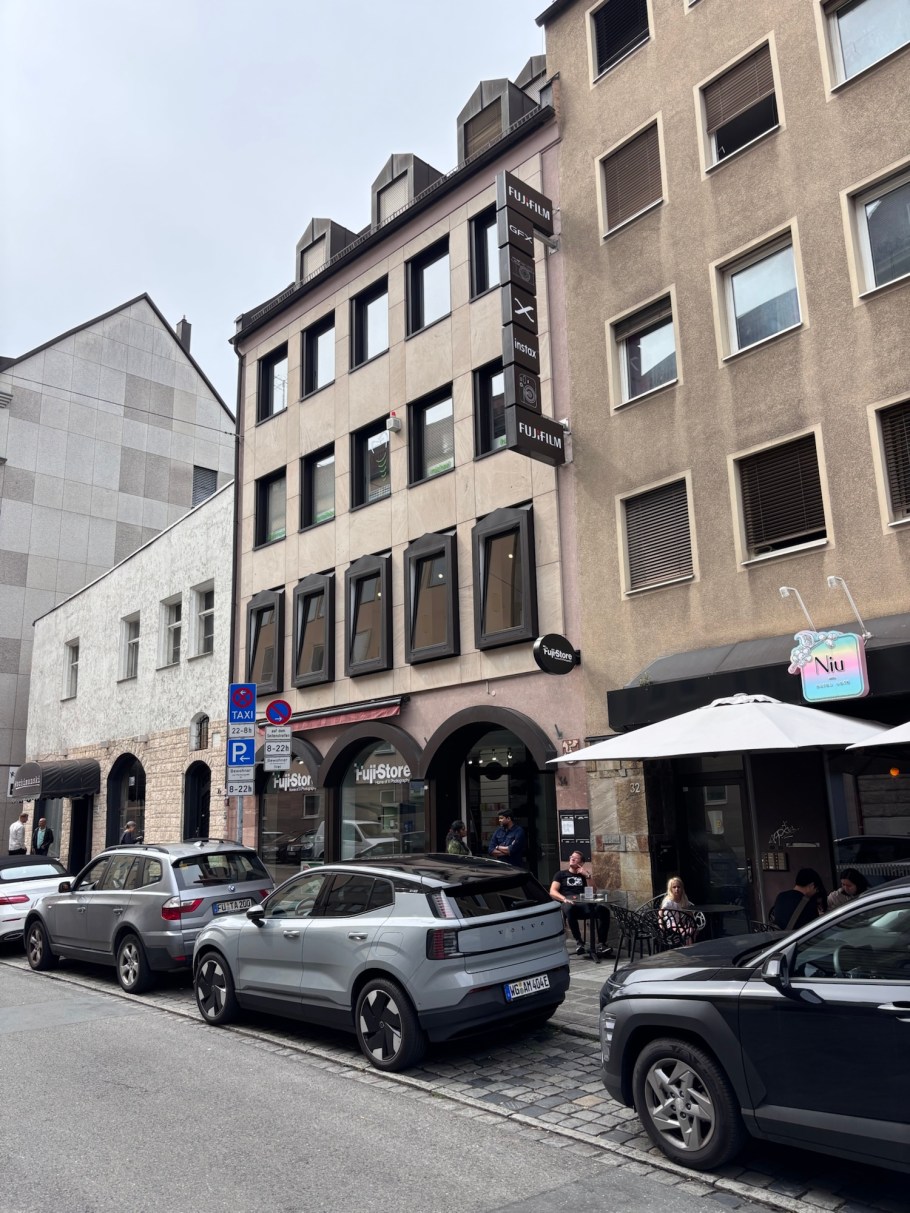


I received neither support nor compensation for this piece. I made all images above with an iPhone15 on 2 August 2025. This post composed within Jetpack for iOS appears on Fotoeins Fotografie at fotoeins DOT com.