Fotoeins Fotografie

location bifurcation, place vs. home

Posts from the ‘Europe’ category

Einöden, Gasthof Hauserwirt, Wörgl, Tyrol, Tirol, Kufstein, Austria, Österreich, fotoeins.com

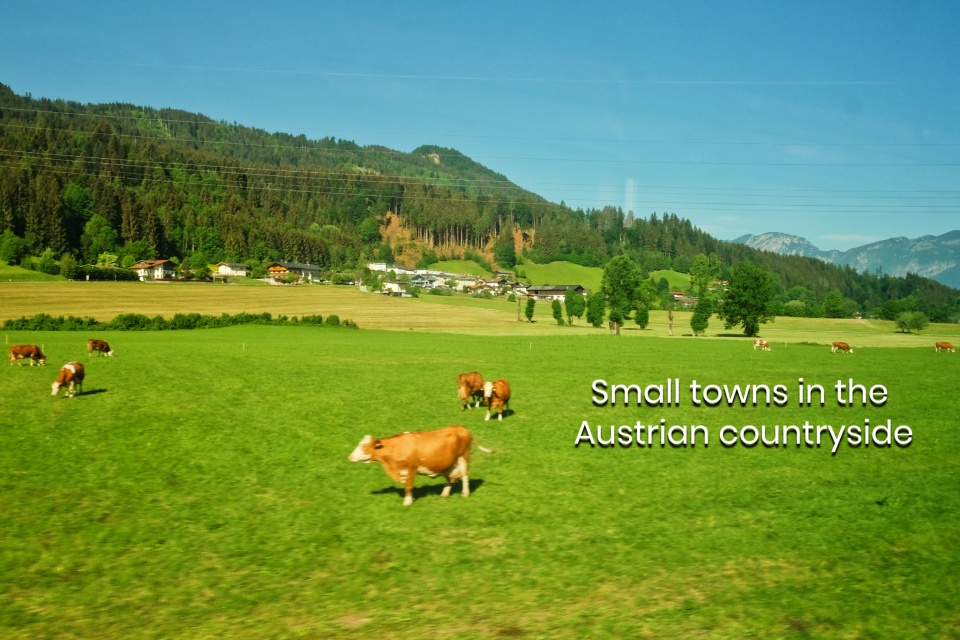
Small towns in the Austrian countryside
Above/featured: Bovine goodness with Gasthof Hauserwirt in the background, in Einöden at the outskirts of Wörgl – 13 May 2018.

Österreichische Dörfer auf dem Land

Spending a few weeks exploring Austria in spring between peak winter and summer seasons got me to examine a variety of artistic and cultural aspects, including:

•   a search for Erwin Schrödinger’s grave,
•   a century of Vienna Modernism,
•   a day-trip from Vienna to Bratislava with a boat on the Danube, and
•   looking for modern Salzburg beyond Mozart and The Sound of Music,

Because I’m all about trains and buses in Europe, there were many towns encountered: some passed by, and others planned and visited. The following examples of small towns in Austria includes a generous portion of mountains from the Austrian Alps.

( Click here for images and more )

Worms: Holy Sand, Europe’s oldest surviving Jewish cemetery

I’m looking for a “thousand-year history” in the city of Worms located in southwest Germany. This has nothing to do helminthology or nematology, as the town’s name is derived from “Warmaisa”, the former Jewish name of the city. This is about an important part of Jewish-German history and peaceful coexistence of the Judeo-Christian communities within Europe. The town’s fame and reputation is also partly derived from Martin Luther; I’ve already visited the site where Luther was on trial to answer charges of heresy, as well as the world’s largest Reformation monument.

This part of the Rhein river area is considered the “cradle of European Jewry”, known also as “little Jerusalem on the Rhine.” In medieval times, flourishing Jewish communities in the cathedral cities of Speyer, Worms, and Mainz facilitated the creation of a common Jewish league with the name ShUM (SchUM), spelled out by the first letters of the Hebrew names for the three cities. As emphasis on the influence of Jewish heritage in Europe and the ongoing process of preservation and education, the Holy Sand cemetery is one of four constituents in the newly inscribed UNESCO World Heritage Site (2021).

On a breezy late-autumn afternoon, light fades quick, casting solemn shadows on this ground. In the town’s old Jewish cemetery, I’m the only person present, and I’ve placed a small stone on top of a number of gravestones. I’m surrounded by apparitions over an millennium’s age and by the remaining physical traces in various shapes, stones, and size.

( Click here for images and more )

Georgengarten, Dessau-Wörlitz Garden Realm, Gartenreich, UNESCO World Heritage Site, Dessau, Saxony-Anhalt, Sachsen-Anhalt, Germany, fotoeins.com

Dessau: George Gardens, Garden Kingdom UNESCO WHS

Above/featured: Guided Bauhaus tour stopping momentarily in the Georgengarten.

How times have changed: I wouldn’t have given Dessau a second thought a time ago. But after speaking with representatives from Saxony-Anhalt and after spending a few days in the city, I’ve better understood the historical and cultural significance, and those who feel strongly about culture and history should give Dessau a chance.

Dessau is a German city of about 80-thousand people in the federal state of Saxony-Anhalt, and is known as the second capital of Bauhaus in the early 20th-century movement of modernism for design and architecture which has been given inscription as World Heritage Site.

If you’re in town to check out various Bauhaus sites, there’s a 2nd heritage setting over a vast green space. East of the Bauhaus Masters’ Houses are a set of Roman ruins marking the edge of Georgengarten (George Gardens); further in the park is the Schloss Georgium (Georgium Palace). Since 2000, both Georgengarten and Schloss Georgium are part of the UNESCO World Heritage Site that’s shared with the neighbouring city of Wörlitz.

( Click here for more )

Albert Einstein, Franz Kafka, Max Brod, Dům U Kamenného beránka, At the stone lamb, Staromestske namesti, Old Town Square, Prague, Prag, Praha, Czech Republic, fotoeins.com

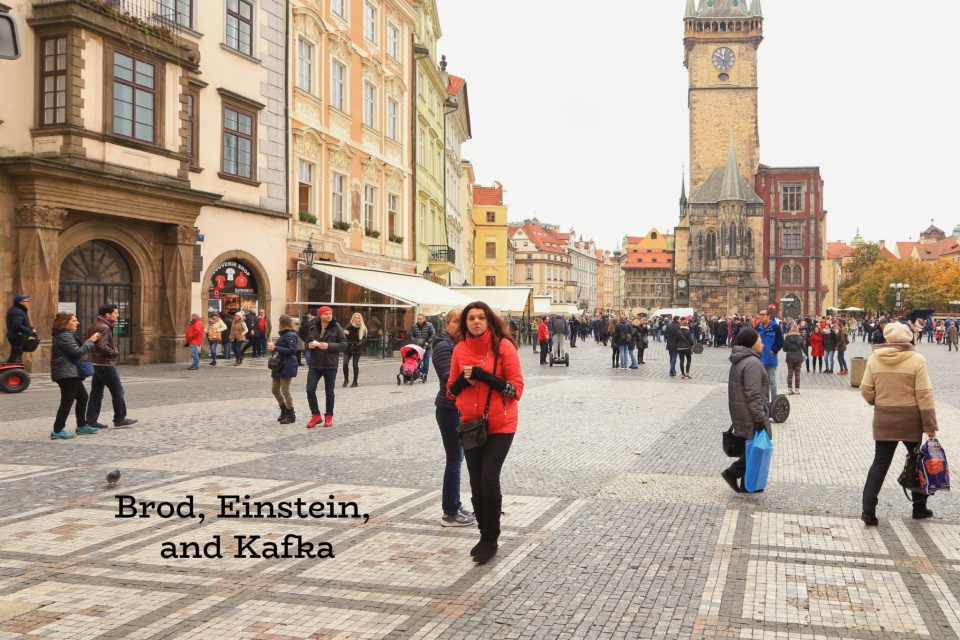
My Prague: Brod, Einstein, & Kafka at Fanta Salon

Above/featured: it’s as if I just pointed out a famous meeting place to her right (left for the reader).

Prague’s Old Town Square is one of the most visited landmarks, dominated by the two tall spires of the Church of our Lady before Týn, Old Town Hall, and a prominent sculpture dedicated to Czech icon Jan Hus at the centre of the square.

At the southeast corner of the square is a building called (Dům) U Kamenného beránka or “At the Stone Lamb” at address StaromÄ›stské námesti 551/17 #. To the right of the building’s main entrance is a memorial plaque with an inscription in both Czech and English. The memorial plaque was created by Czech sculptor ZdenÄ•k Kolářský and unveiled in 1998. Looking closer, you’ll recognize Albert Einstein’s face and his famous physics equation stating mass-energy equivalence and written in cursive script: E = mc2.

Over a 16-month period from 1911 to 1912, Albert Einstein lived in Prague with his family and was full professor of theoretical physics at the German Charles-Ferdinand University. Einstein enjoyed hanging out at a number of cafes for conversations, exchanges, and music, and he was a frequent visitor to this building where Czech liberal and intellectual Berta Fanta operated a literary-philosophical salon or lounge. The salon saw visits by many intellectuals, both domestic and international. “Domestic” writers Franz Kafka and Max Brod would have come here for the discourse as well, but it turns out little is actually known about whether all three arranged to meet or would have met here at the same time.

( Click here for images and more )

My Prague: Jan Hus, Bohemian reformer and Czech icon

Above/featured: Jan Hus Monument, Old Town Square – 4 Jul 2008 (HL, 450D).

Most visitors to the Czech capital city of Prague will pass by and overlook the large sculpture near the middle of Old Town Square. The central figure in the monument is one of the most important historical figures for capital and country.

Although he may not be as well known outside of the European continent, Jan Hus is a massive historical figure within central Europe. Jan Hus was declared the greatest hero of the Czech nation in a 2015 survey by Czech Radio. In Konstanz on 6 July 1415, Jan Hus was sentenced to death on the charge of heresy. I’ve described locations in Konstanz during Hus’ final days.

In recognition of his attempts to reform the Catholic Church and to foster and encourage Bohemian identity, July 6 is commemorated annually as a national holiday in the Czech Republic: the holiday is known as “Den upálení Mistra Jana Husa,” which translates to “day of the burning of Jan Hus.”

( Click here for images and more )