Fotoeins Fotografie

location bifurcation, place vs. home

Posts from the ‘Culture’ category

“Science is an integral part of culture. It’s not this foreign thing, done by an arcane priesthood. It’s one of the glories of the human intellectual tradition.” – S.J. Gould.

BC Shellfish and Seafood Festival, Comox Valley Economic Development Society, Comox Valley, BC, Canada, fotoeins.com

Comox Valley BC Shellfish & Seafood Festival (2015) (IG)

As guests of the Discover Comox Valley (Economic Development Society), fellow travel blogger Megan and I were invited as participating travel media to attend the opening weekend of the BC Shellfish and Seafood Festival. The following visuals highlight a number of the activities in Comox, Courtenay, and Campbell River.

  • ‘Fresh Fest’ public event with food and music, 12 June
  • Gartley Point Hatchery, 13 June
  • Lunch at Kingfisher Oceanside Resort and Spa
  • Mac’s Oysters
  • Flying Fresh lobster extravaganza, industry & public event
  • BC Seafood Expo & Workshop Series, 14 June
  • Cermaq Canada’s Venture Point aquaculture facility, 15 June

‘Fresh Fest’ – 12 June


Site Tours – 13 June


BC Seafood Expo – 14 June

Norway's ambassador to Canada, Her Excellency Mona Elisabeth Brøther, BC Seafood Expo, Courtenay, BC, Canada, fotoeins.com

Via Skype from Ottawa: Her Excellency Mona Elisabeth Brøther, Norway’s ambassador to Canada (HL)


South-central coastline – 15 June
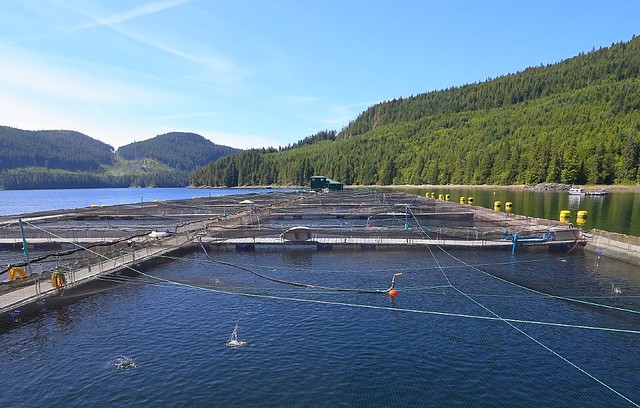
Cermaq, Venture Point, Okisollo Channel, between Quadra Island and Sonora Island, Campbell River, BC, Canada, fotoeins.com

Cermaq’s Venture Point aquaculture farm, Okisollo Channel, BC, Canada (HL)

BC Shellfish and Seafood Festival, Comox Valley, BC, Canada, fotoeins.com


Thanks to Discover Comox Valley, Comox Valley Economic Development Society (EDS), Cermaq, and the BC Salmon Famers Association for supporting and providing access to venues and activities along central Vancouver Island, and to Old House Hotel & Spa for a generous and comfortable stay. The first (featured) and last images are generously provided by the Comox Valley EDS. I made the other photos from 12 to 15 June 2015 inclusive. This post appears on Fotoeins Fotopress at fotoeins.com as http://wp.me/p1BIdT-6Uj.
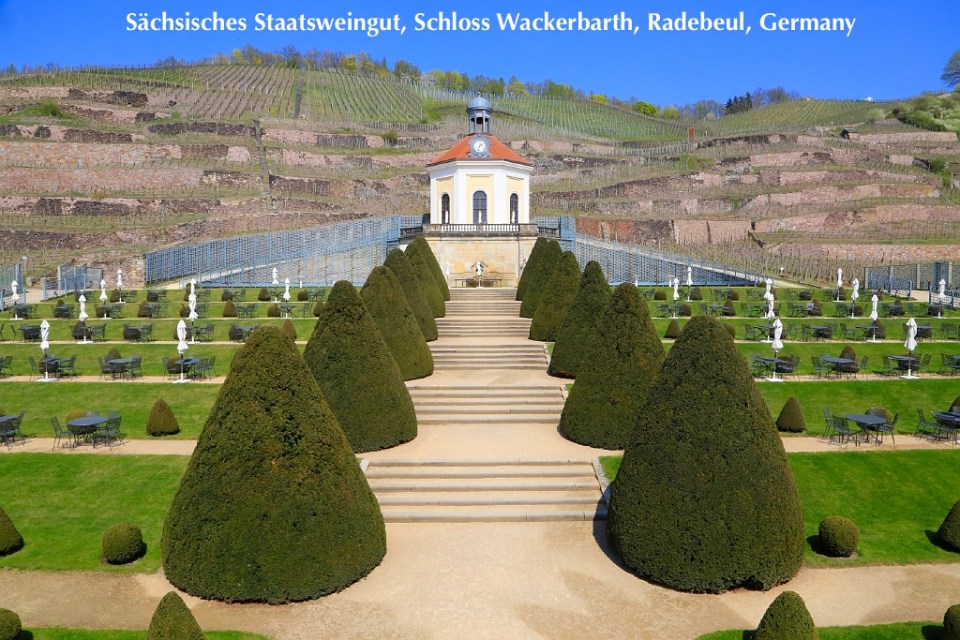
Sächsisches Staatsweingut, Schloss Wackerbarth, Radebeul, Saxony, Germany, fotoeins.com

Celebrating Saxon wine tradition at Schloss Wackerbarth

I have a confession.

Red wines and I have rarely gotten along.

With the exception of the Chilean Carménère, reds generally feel I’ve been pouring scarlet poison down my gullet, burning and tearing the esophageal lining on the way down to my stomach, into a slow boil, scalding and churning with fury.

Dear crimson nectar, you’re all hot and alluring dressed in your tannins, but I cannot have you any more. The subsequent days of post-red churning-gut syndrome are over. I’ve left you for the clean, smooth, sharp, sexy blondes, because frankly, I’m having a lot more fun with the whites. I admit I’ll occasionally stray to the familiar Carménère, but I will always bring white wine back home.

( Click here for images and more )

Weimar: Duchess Anna Amalia Library, UNESCO WHS

As one of over ten buildings, residences, and properties making up what is called “Classic Weimar”, the Duchess Anna Amalia Library (Herzogin Anna Amalia Bibliothek) has been a UNESCO World Heritage Site since 1998.

To consolidate her love of books into a larger holding space, Duchess Anna Amalia commissioned in 1761 the State Architect to rebuild and convert the Renaissance-style French (Green) Castle into a library, which opened in 1766. Becoming one of the most important libraries in the country, the collections included some of the finest written and produced in German literature, art and culture, history, and architecture. Johann Wolfgang von Goethe himself was Library Director between 1797 and 1832.

The library has had its fair share of names: initially called the Ducal Library (Herzogliche Bibliothek); in 1815 renamed as the Grand Ducal Library (Großherzoglichen Bibliothek); in 1918 renamed as the Thuringia State Library (Thüringische Landesbibliothek); in 1969 renamed as the Central Library of German Classics (Zentralbibliothek der deutschen Klassik); and in 1991, renamed as Duchess Anna Amalia Library (Herzogin Anna Amalia Bibliothek) in honour of the library’s founder.

An electrical short from aging damaged wiring sparked a fire on 2 September 2004; the fire held on for over two days before the final hotspot was put out. Over 100 thousand books were damaged or destroyed by fire, water, and smoke. The fire was the largest to strike a German library in post-war history. Subsequent donations and volunteers poured into Weimar from throughout Germany and Europe to help with rescue and preservation efforts. After conclusion of extensive restoration work to the building, the interior Rococo Hall, and to thousands of rescued books, the library was reopened on 24 October 2007, the birthday of the library’s namesake (Anna Amalia born 24 October 1739).

( Click here for more )

UNESCO World Heritage Sites (WHS) Worldwide

Since 1995, I’ve been fortunate to experience significant travel: first as green graduate student on my first (of many) trips to Chile; followed by the opportunity to live and work in 3 countries on 3 continents inside a span of 10 years. I didn’t give much thought about their relative importance at the time, but I’m lucky to have visited a number of UNESCO World Heritage Sites (WHS).


( Click here for images and more )

My Prague: the night watch

With visits to the city numbering well into the double digits, Prague started me on a different path, and eventually, to a change in my life.

According to legend, the city’s name, Praha, is derived from the Czech word, “práh” for “threshold” or “steps”. With the city’s geographic location within the European continent, it’s hard to recount the chronicles of Central Europe without mentioning Praha. History and significance permeates the city in the cobbled stonework, centuries of architecture, and stories of struggle and change.

I believe the city is one step of many on my journey and transition from my past as research scientist to a future that remains under continuous construction. Prague has been and continues to be an important part of this process. I’ve fallen in love with Praha – she means a lot to me.

As day passes to night, many parts of the city become quiet and empty, with only the yellow glow of the street lamps for company. Many are taught not to go into areas unknown, poorly lit, or vacant.

But I know Praha enough to see her differently.

I’ve done the legwork by day, scouting out and noting various locations around the city, and imagining their appearance in the dark. With a newly crafted road map in my head, I stand in the hotel lobby. I close my eyes in a mental walkthrough of my map, breathing deeply, slowly. I open my eyes again and step out into the night, guided by the lights of Staré MÄ›sto, and across the Vltava over to Mal´ Strana.

I’m on the “night watch” with Rembrandt’s painting high in mind. The city and its streets don’t care who we are or from where we come. They lie still, in wait around the next corner.

In this place I’m always on the verge of something new; it’s a set of new ideas, much of them extraordinary, romantic, and meaningful. The meanings signify truth on a personal level for those willing to listen and heed the signs.

Prague never lets go of you … this little mother has claws.
— Franz Kafka (1883-1924).

( Click here for images and more )