Fotoeins Fotografie

location bifurcation, place vs. home

Posts tagged ‘UNESCO’

Wittenberger Marktplatz, Rathaus, Lutherdenkmal, Stadtkirche Sankt Marien, Marktplatz, Lutherstadt Wittenberg, Sachsen-Anhalt, Wittenberg, Saxony-Anhalt, Germany, Deutschland, UNESCO, World Heritage Site, Welterbe, Weltkulturerbe, fotoeins.com

The Saxony-Anhalt 5: Luther & Bauhaus

(October 2016)

As motivation to trace Martin Luther’s footsteps for the 500th anniversary of the Reformation in 2017 and to learn more about the impact of the Bauhaus art and design movement for the centenary in 2019, I embarked on a press-trip in the autumn 2016 to the German federal state of Saxony-Anhalt.

(( The description of this trip would be a continuation of a consecutive annual streak going back to 2001. I’ve set foot inside Germany at least once every year since 2001. I’d already claimed another consecutive year with a short stint at “home” in the HD earlier in the spring, but autumn in-country* solidly confirmed a 16th consecutive year in the country. ))


( Click here for more )

Fraser River, Port Mann Bridge, Coquitlam, Port Coquitlam, BC, Canada, fotoeins.com

World Rivers Day: 50+ rivers from around the world

Above: Fraser River, east from Port Mann Bridge, between Coquitlam and Surrey, BC (HL).

The fourth Sunday in September is World Rivers Day. The University of Oxford’s Dictionaries defines ‘river‘ as:

“a large natural stream of water flowing in a channel to the sea, a lake, or another river.”

A river has always been water supply and demand: daily use and consumption; farming and agriculture; and where the waste goes, often back into the same supply. A river has always been about transport: trade and delivery of goods; shuttling people between places; and with people travelling, the exchange of language and culture. Throughout history, the establishment of towns and cities and the subsequent development of rivers have been about a mix of urban and rural elements, and about the relationship and interactions between people and their waterways.


( Click here for images and more )

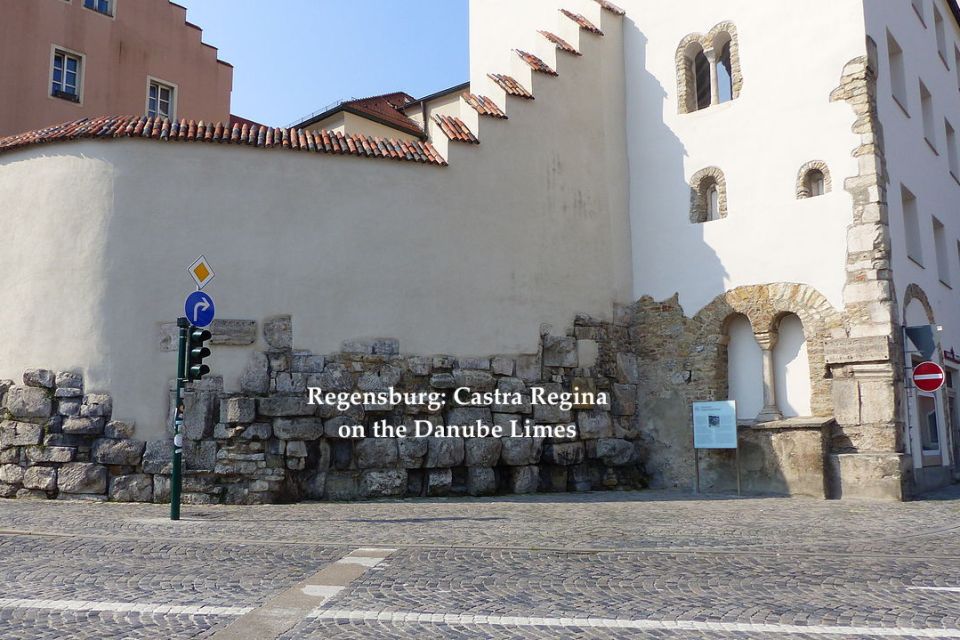
Northeast corner of old Roman fort, Regensburg, photo by Dr. Bernd Gross, Wiki CC3

Regensburg: remnants of Castra Regina on the Danube Limes

Above: former wall at the northeast corner of the Roman fort Castra Regina. Photo by Dr. Bernd Gross (image no. 7, Wiki CC3).

Regensburg is situated in central Bavaria, and is 1 and 1.5 hours from Nürnberg (Nuremberg) and München (Munich), respectively, with the train. While meandering through the Regensburg’s Old Town, it’s easy to forget most of this area was once occupied by a Roman fortress about 1800 years ago.

In 179 AD/CE, the Roman Empire established the fortress “Castra Regina”, or “fortress by the river Regen”, where the Regen enters the Danube river. The Danube became in effect a part of the Roman Empire’s northern frontier (“Danube Limes”). Emperor Marcus Aurelius recognized the need for extra security in the northern imperial province of Raetia where the Danube’s course reached its northernmost point. To ward off incursions by northern Germanic tribes, up to six thousand soldiers from the Third Italic Legion were stationed at the fortress.

At peak operation, the fortress encompassed an area 540 metres by 450 metres (24 hectares, or 60 acres) with a wall up to 10 metres (33 feet) high made of large sandstone blocks, 18 towers, 4 double-tower gates, and a wide trench. Within the grounds were barracks, headquarters building (principia), commanding officer’s own residence (praetorium), a military hospital (valetudinarium), granary (horrea), workshops, and stables. Civilians and support tradesmen built a settlement to the west of the fort. By the 5th-century, constant raids and migrations forced the Romans to abandon the area. A civilian settlement eventually grew over the fortress which is today’s Altstadt (Old Town)1.

The free-of-charge open-air museum includes restored remnants of the old Roman fortress complete with information displays in both English and German. The primary information location is at the parking garage at Dachauplatz (which is closed at night); the other three locations are accessible outdoors at any time.

The Porta Praetoria is one of multiple constituents in the tri-nation (AT DE SK) inscription for “Frontiers of the Roman Empire: Danube Limes” as UNESCO World Heritage Site (new, as of July 2021).

The map below shows the location of the Castra Regina encampment and locations of the “document Legionslagermauer” in the city’s Old Town. Click on the “arrow-window” icon at the upper-left corner of the map for additional details.

( Click here for images and more )

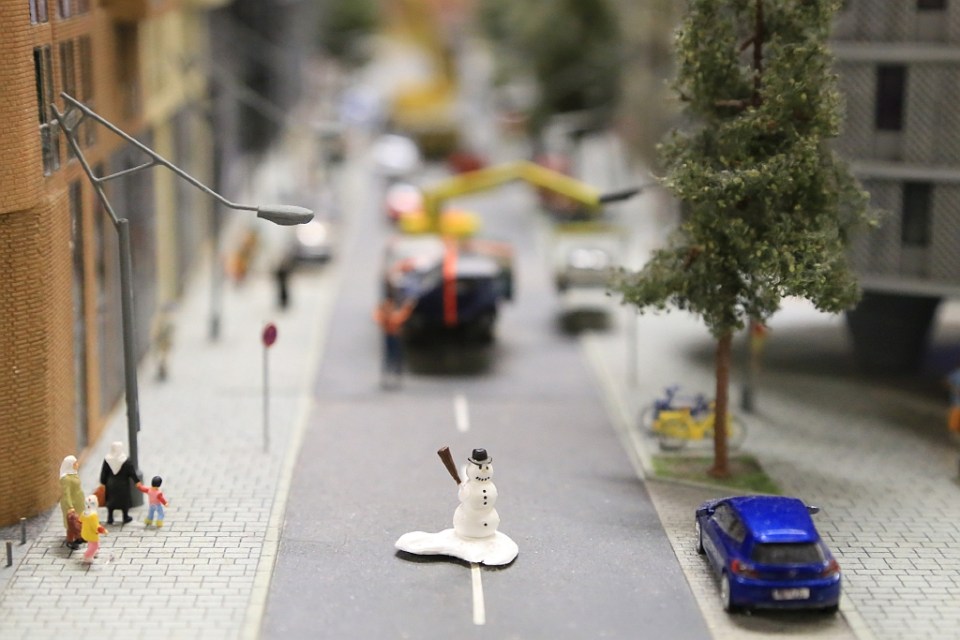
Easter (Xmas) eggs, Miniatur Wunderland, Speicherstadt, Hamburg, Germany, fotoeins.com

Hamburg: Miniature Wonderland’s Christmas eggs

Above/featured: “Stranded.”

Since 2001, Miniatur Wunderland has been delighting children of all ages in the northern German city of Hamburg with the world’s largest miniature railway set, attracting a total of 12 million visitors so far. After many visits to the city over the last decade, I’ve somehow managed to stay away, but it’s finally high time curiosity wins the day.

The Urban Dictionary describes “easter eggs” as: “hidden items placed in a movie, television show, or otherwise visual media for close watchers”; see also here. Plenty of details in the form of “easter eggs” await visitors at various sections in the museum. With a few shorts weeks before Christmas, the designers have cleverly inserted many Santa Claus and other Christmas- or winter-related figures throughout the entire venue.


( Click here for more )

Wurstkuchl, Regensburg, Bayern, Germany, fotoeins.com

Regensburg: Wurstkuchl, historic sausage kitchen

It must be midday, and time for lunch. There’s a queue more than twenty deep for the takeaway- or takeout-counter, as people walk away with a long thin grilled sausage sitting snug in an undersized oval bun. Next to the Döner, I’m also fond of the “Bratwurst”, or grilled pork sausage.

Along the Danube promenade in Regenburg’s Old Town is the historical sausage kitchen, formally “Die Historische Wurstkuchl zu Regensburg”, better known as “Wurstkuchl”. The Wurstkuchl is known as the oldest running grilled-sausage stand in the world, with the presence of a stand serving food to labourers from town and visitors from the river since the 12th-century (A,B).


( Click here for images and more )