Fotoeins Fotografie

location bifurcation, place vs. home

Posts tagged ‘Oesterreich’

Vienna: Disrupting Historicism with Modernism (1918-2018)

Above/featured: Modernism at Steinhof Church: building by Otto Wagner, angels by Othmar Schimkowitz, stained glass by Koloman Moser (HL).

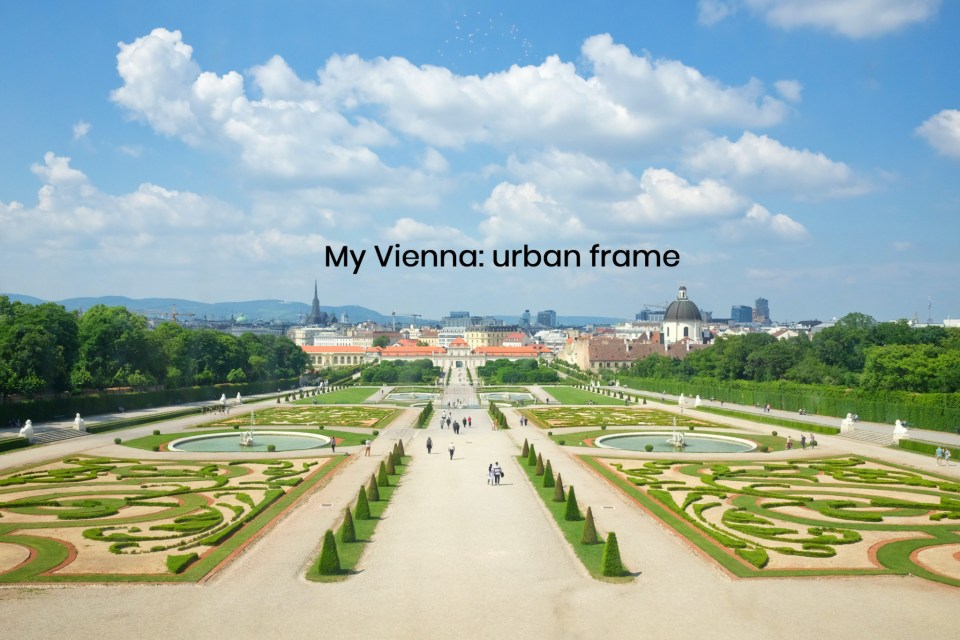
Vienna is as much a present-day cultural capital city as she was for decades and centuries. Many will get a peek and taste of long-established aspects of the city by walking the streets of the Old Town for the atmosphere, chatting in cozy cafés with coffee and cake for the ambience, and swaying to the rhythms of the waltz under the spell ofOlbr the (blue) Danube.

The early years of the 20th-century were troubled by greater calls for more autonomy from multiple ethnic groups within the patchwork of the Austro-Hungarian empire, by destruction and loss of life from The Great War (World War I), and by subsequent dissolution of the Empire. The capital city became an open theatre for socioeconomic and political changes across all class divisions within an environment where rebellion and revolution were the big talking points against the dogma of long-held traditions. Deep longing for the stability of the old and familiar mingled with equally enthusiastic desire for the radical of the new and mysterious.

Many in the arts, design, and cultural scene were questioning the excessive persistence of past styles, and were seeking something new to better represent changes happening all around them in Vienna. In 1897, a group of artists and architects resigned from the established Künstlerhaus to form the Vereinigung Bildender Künstler Österreichs (Union of Austrian Artists), known also as the Vienna Secession. Architecture moved towards a sharper focus to geometry and abstraction, and art flowed to the decorative with organic floral-like designs in the Jugendstil, Art Nouveau’s chapter in German-speaking lands. To promote their new ideas, the Secession group produced an official magazine called Ver Sacrum (“sacred spring” in Latin, 1898) and constructed the Secession building (1897) as an exhibition hall to display their work. The Wiener Werkstätte (Vienna Workshops) was created in 1903 as an association of artists whose thinking and applied arts creations were a precursor to the Bauhaus movement. Members of the Werkstätte worked with Vienna’s architects to broaden and unite the various concepts for a complete artwork, or Gesamtkunstwerk, as applied to a living space: the house, its rooms and furnishings, the interplay of light and space, and the tools and utensils for every day aspects of living.


( Click here for images and more )

Innsbruck’s Hungerburgbahn, by Zaha Hadid

As much as the Austrian federal state of Tirol is about mountains, spending time in the capital city of Innsbruck is also about reaching those very heights. To that end, Iraqi-British architect Zaha Hadid left her mark in Innsbruck with her redesigned Bergisel Ski Jump which opened in 2002, and her “Shell and Shadow” design of the Hungerbergbahn stations which opened in 2007.


( Click here for images and more )

Hafelekar, Nordkette, Nordkette cable car, Nordkettenbahn, Hungerburg funicular, Hungerburgbahn, Innsbruck, Tirol, Tyrol, Oesterreich, Austria, fotoeins.com

My Tirol: day trips from Innsbruck

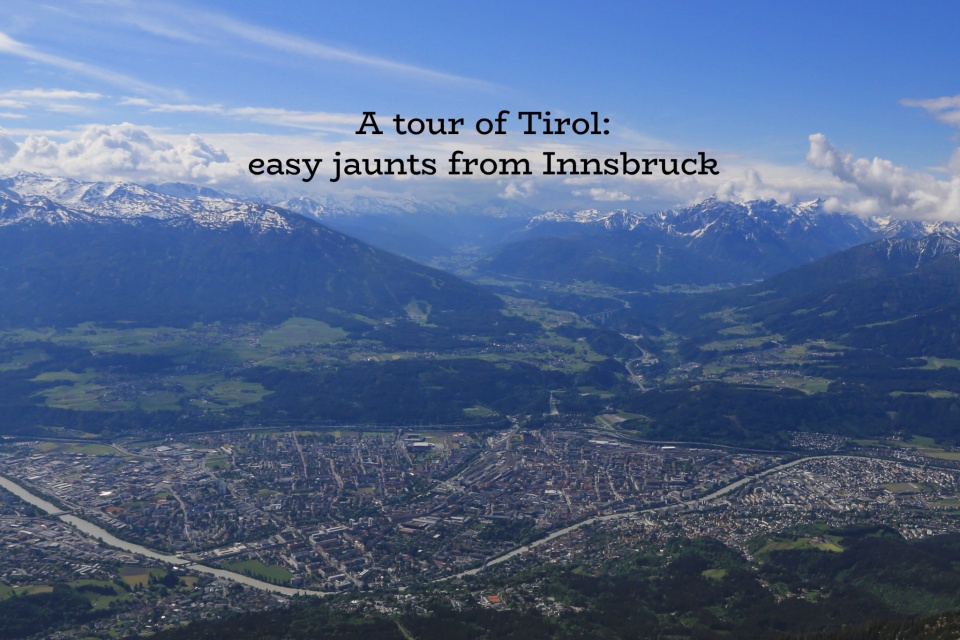
As one of nine states within the federal republic of Austria, Tirol is well known not only for all-season access to the Alps, but also for a variety of other attractions.

With transport authorities IVB Innsbruck, VVT Tirol, and ÖBB Austria, Tirol state capital Innsbruck was the base from which I travelled to Alpbach (half-day), Brenner (half-day), Hall in Tirol (half-day), Nordkette (half-day), Scharnitz (half-day), Stubaital (half-day), and Wilder Kaiser (full day).


( Click here for more )

Austria’s Silent Night: 200+ years, 300+ languages

One of my early childhood memories surrounding Christmas is learning and singing “Silent Night”. This humble melodic carol is known around the world and sung in over 300 languages and dialects. 2018 is the 200th anniversary of the hymn’s first public performance, and that’s why I’m on a train traveling north from Salzburg to the Austrian town of Oberndorf.

With over 5000 residents, Oberndorf lies opposite the German town of Laufen along the winding flow of the Salzach river. Laufen-Oberndorf was once a single community whose people derived their greatest business and wealth with salt carried on barges from upstream in Hallein and transferred onto larger ships for transport downstream to the Inn river and Passau. After the arrival (and departure) of Napoleon’s French troops, the river became a border, and the town was split in two after over 1000 years as a single community#. Although Oberndorf and Laufen remain in separate countries, the European Schengen treaty has helped reforge their common bonds with the abolishment of border controls.

Short History

Between 1817 and 1819, Joseph Mohr lived and worked in Oberndorf as curate, minister, and schoolteacher for the salt-barger community. The organist for Oberndorf’s St. Nicolas Church was Franz Gruber, a fellow schoolteacher and sexton at a parish in nearby Arnsdorf. Mohr and Gruber tended to spiritual and education needs for their towns, and with their common zeal for music, they quickly became friends. On Christmas Eve 1818, Mohr brought his song to Gruber who added the melody. That very evening after evening mass at Oberndorf’s St. Nicholas Church, Mohr’s completed song, “Stille Nacht, Heilige Nacht” was performed for the first time with Gruber on his guitar as the only accompaniment.

Over years and decades, the song had generally been considered to be Tirolian in origin, but handwritten letters show Joseph Mohr composed the song by 1816 when he lived in Mariapfarr, a town 120 kilometres southeast from Salzburg. The original German-language version of the song has six verses; the English version has three which are translations of verses 1, 6, and 2.

At Oberndorf’s Stille-Nacht-Platz (Silent Night Square), the two key elements are the Stille-Nacht-Kapelle (Silent Night memorial chapel) and the Stille Nacht Museum. The original St. Nicholas church was in bad shape and torn down in 1906. To maintain the memory of the first performance of the Christmas song, construction began in 1928 for a chapel at the same location, and the townspeople celebrated the chapel’s inauguration in 1937. With the museum’s opening in November 2016, exhibits describe the history of how the song came to be, highlight the lives of Mohr and Gruber, explain the context of culture and place of the times in the late-18th to early-19th century, illuminate the importance of the salt trade on the neighbouring Salzach river, and celebrate the song’s longevity and popularity around the world.

Every year, evening mass on Christmas Eve from the Silent Night memorial chapel is broadcast to the world on webcam.

# The 1814-1815 Congress of Vienna enforced the Salzach river as the border and separation between the nation-state of Bavaria (Laufen) on one side and the Austrian Empire (Oberndorf) on the other side.


( Click here for images and more )

Christian Doppler, Doppler birth house, Dopplers Geburtshaus, Salzburg, Austria, Oesterreich, fotoeins.com

My Salzburg: Christian Doppler’s birth house

In crossing the pedestrian bridge over the Salzach river, every step takes me away from the famous view of the fortress over Old Town classics of steeples and baroque in Salzburg. Before I get to where I want to be, I have to cross a busy street in the afternoon rush which has come to a halt. Wailing sirens approach and recede as red and white “Rettungswagen” race to the emergency situation somewhere in the city. The cyclical lights are in my favour, and upon turning the corner, I see the sign that tells me I’ve arrived.

One self-assigned goal during three weeks of travel within Austria was the search for places associated with physicists and mathematicians of my youth. And by youth, I mean the tender twenties when all I cared about was a succinct explanation of the natural world through various equations1. In Alpbach, I found Erwin and Annemarie Schrödinger’s grave. In Vienna, I found Ludwig Boltzmann’s grave. Here in Salzburg across the street from the Mozart family house, I found Christian Doppler after whom the Doppler effect is named.


( Click here for more )