The chair or couch on which you sit.
The table on which you’re resting your mobile or pad.
The desk on which your laptop or desktop resides.
The light fixture on your desk or above your head.
The windows in your room, your house, or in the café where you’re reading this.
The “universal” idea of living in a house or apartment with the furnishings we all take for granted from bathroom to bedroom and kitchen to living room is a relatively young idea by historical standards. It’s easy to imagine a time where only the rich upper-class could afford and were allowed to have and live in heated furnished residences, and the poor lower-class lived in unheated homes under damp dirty squalid conditions. Past designs with its heavy stone, porcelain, and ornate decorative components gave way to steel, glass, lightness of space, to favouring function over form. Simpler designs were meant to provide universal access: to the home, and to the essentials which furnished the home.
You can almost imagine a 16th-century monk walking these halls, contemplating various aspects of spirituality, and reconciling them with the hardships of everyday living.
Martin Luther arrived in 1501 and began studies in liberal arts, law, and theology at Erfurt University. In 1505, Luther experienced a big personal event (the scare of his life, as legend goes), and decided to leave his studies by entering the Augustine Monastery to become a monk, much to his father’s displeasure and objections. Built originally around 1300, the Augustine Monastery was home for Martin Luther until 1511, and it’s here where he was ordained as a priest. The site underwent extensive post-war reconstruction after suffering heavy bombing damage in the Second World War. The monastery is now a seminary and a modest hotel: guided tours of the monastery provide a glimpse to Luther’s early years as a monk, and visitors can now reserve rooms for overnight stays in a no-frills technology-free setting and a peaceful comfortable environment.
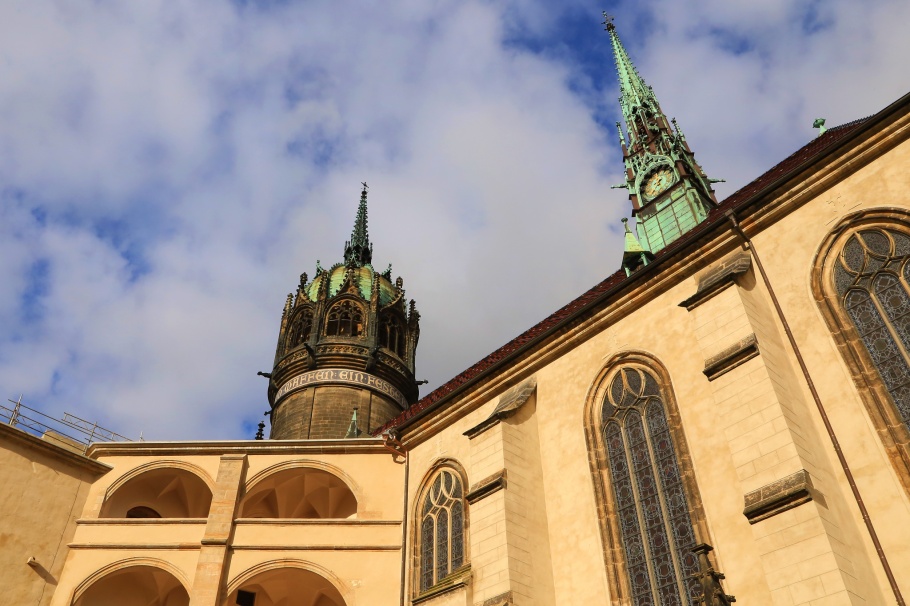
Elector Frederick III of Ernestine Saxony (1463-1525, also known as Frederick the Wise, Friederich der Weise) became the first patron of the Protestant Reformation with his support and defence of Martin Luther. On the site of the original city castle, Frederick the Wise authorized in 1489-1490 a renaissance palace with the entire north wing occupied by the Castle Church. The church was consecrated and inaugurated in 1503 as the castle and university church “Allerheiligen” (All Saints); Martin Luther taught theology as professor at the neighbouring university. The first Protestant service at the Castle Church was held in 1524-1525.
A significant portion of the church including the original wooden doors was burned and destroyed in 1760 during Europe’s Seven Years’ War (1754-1763). The 1770 replacement church was subsequently destroyed in the conflict against France’s Napoleon which ended with the town under Prussian control in 1815. With support and backing by Emperor Wilhelm II, a full renovation of the church took place between 1885 and 1892 with the west tower taking the form and shape we see today (see also below). The graves for Martin Luther, contemporary colleague and fellow reformer Philipp Melanchthon, and Frederick the Wise are inside the church. After three years of renovation and restoration work in time for the Reformation quincentenary in 2017, the Castle Church was reopened in the autumn of 2016.
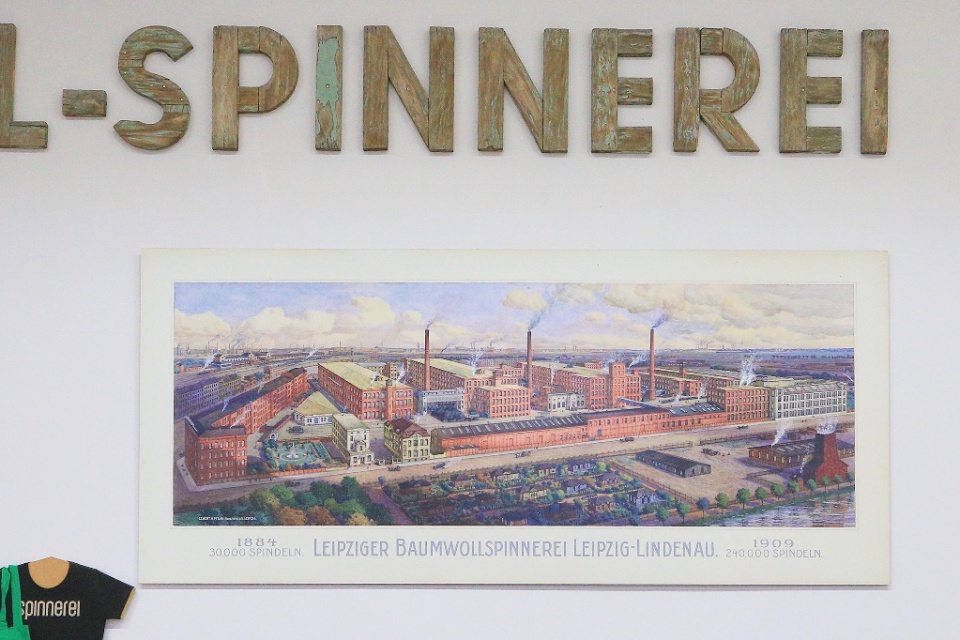
The Leipzig Spinnerei is a former cotton mill (Baumwollspinnerei) in the western industrial suburb of Plagwitz. The massive site at an area of 10 hectares (over 1 million square feet) with rows of factory buildings began operation in 1884 and eventually became the largest cotton mill in Europe with thousands working and living on-site. After the site ceased to produce spools of cotton thread shortly after reunification, artists took advantage of the cheap empty space, and transformed the area into studios, galleries, and exhibition halls. Much has been written about the impact and examples of art and space on Leipzig as the “new Berlin” as well as the “New Leipzig School.” The site as art and culture space opened its doors in 2005.
When I lived in Germany, I remembered the ads for Radeberger Pilsner, and I wondered about some of the venues shown. I realized the buildings were in the famous city of Dresden on the Elbe river in southeast Germany, and the city of Radeberg was only 15 kilometres from Dresden. Images of the Dresden’s landmarks have been an important part of Radeberger brewery’s advertising campaign to show the beer’s exceptional quality and to associate that very same quality by (physical) proximity with the symbolism of Dresden’s historic landmarks.
Dresdner Wahrzeichen (Dresden Landmark)
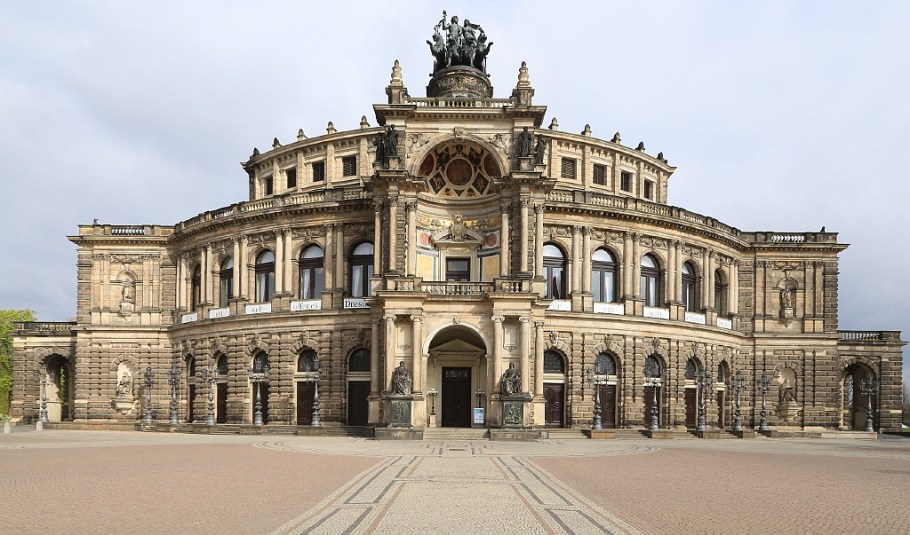
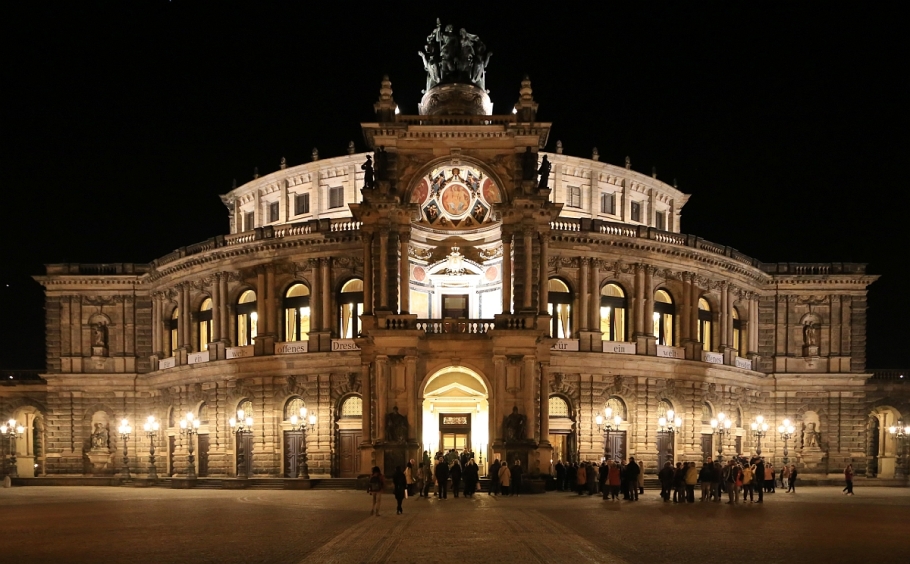
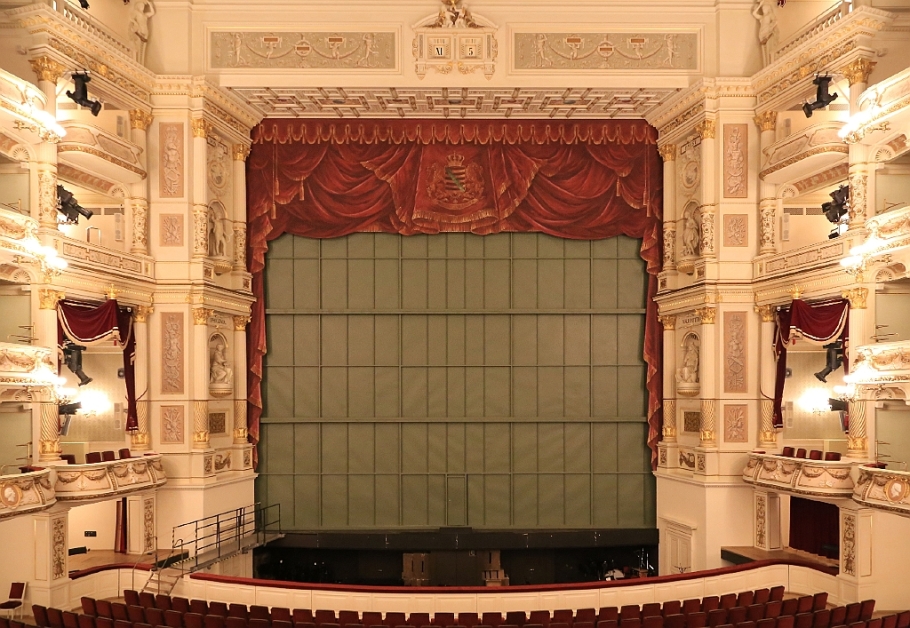
As one of the city’s most well-known landmarks, the Semperoper (Semper Opera House) appears in countless images representing Dresden. The Semperoper is the showpiece structure at Theaterplatz (Theater Square) looking over the river Elbe in the city’s Altstadt (Old Town). The first version of the building opened in 1841 with the design provided by Gottfried Semper. After destruction by fire in 1869, the second version of the building, also to Semper’s design, was completed in 1878. Only the Semperoper’s outer facade remained in 1945 during the final stages of the Second World War. Built once again to Semper’s original designs, the third and present version of the Semperoper opened to great acclaim on 13 February 1985. The interiors were reconstructed according to original plans and designs, whereas stage machinery and technical and engineering requirements are all updated to the best standards in audio quality.
With the leading title “Sächsische Staatstheater-Staatsoper und Staatsschauspiel Dresden”, the opera house is home to the Saxon State Opera, the Saxon State Theatre, the Semperoper Ballet, and one of the world’s oldest orchestras, the Staatskapelle Dresden, founded by Prince Elector Moritz von Sachsen in 1548.
The Semper Oper is a natural part of any walking tour of Dresden, as Theaterplatz is minutes from the Zwinger, Residenzschloss, and the Frauenkirche. I’m awed by the night tour, a chance to see up close the building’s Baroque style exterior and the classic ornate interior. Everybody speaks in calm hushed voices, the unspoken agreement to be mindful and respectful of this venue. Despite the presence of other people in other tour groups, it feels like I have the Opera House to myself at 11pm.
Classic shot of the front by day
Classic shot of the front at night; also featured on the “night watch”
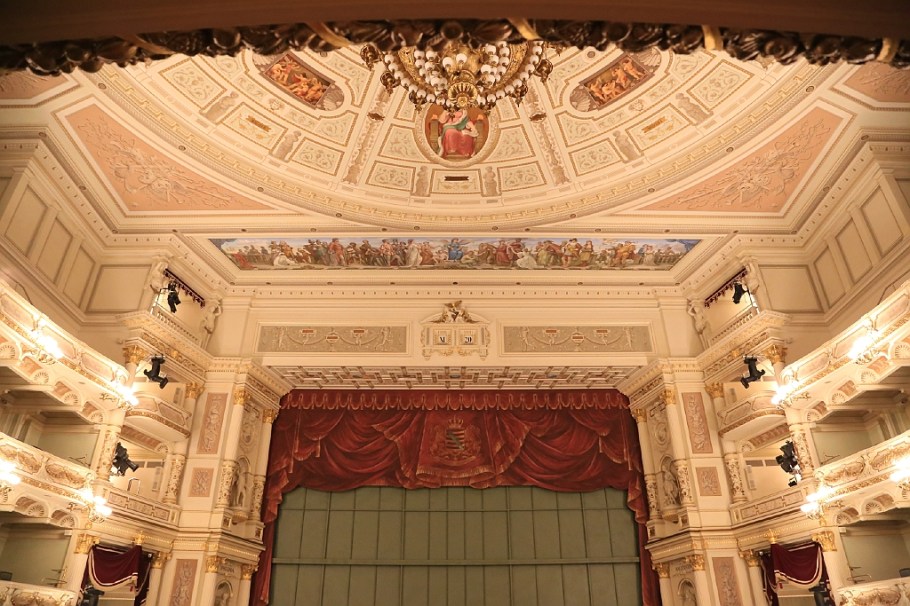
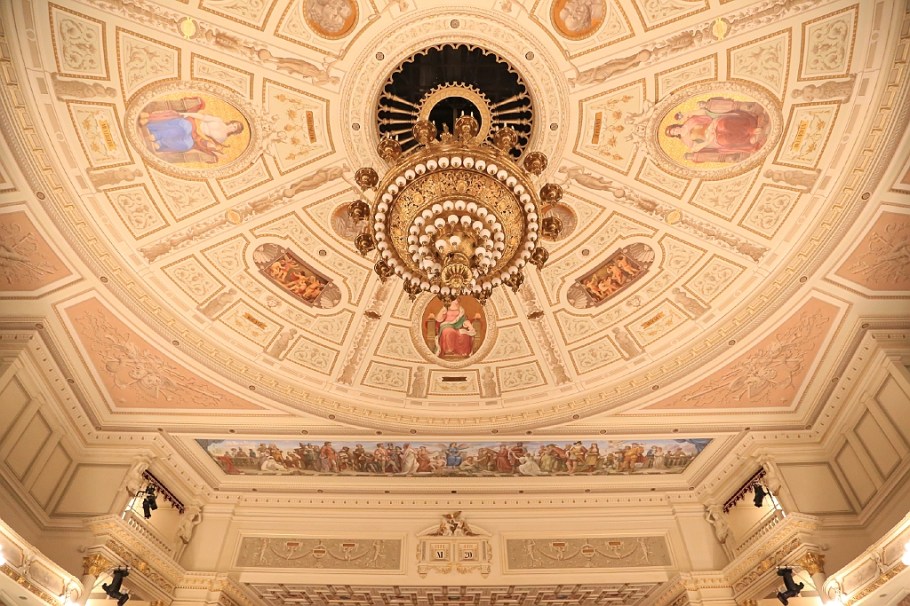
Ceiling mural
Some columns real marble (cool to touch); some faux-marble plaster (warm to touch). Full replacements were too expensive for the GDR/DDR at the time
S. Kurpiers, one of the stage managers and our guide for the evening
Main stage & orchestra, from central box section in the 1st balcony (Loge, 1. Rang). Clock at top-centre reads “XI 5”, or 1105pm
“Box” seats normally reserved for representatives and guests of the German federal state of Saxony
Separate guided tour to our left; there are 4 balconies
Another tour to the right
Looking up; lip of the 2nd balcony appears at top
Massive central chandelier light-fixture overhead; clock reads “XI 20” (1120pm)
Thanks to Semperoper for opening their facility to the public at night, and thanks to S. Kurpiers who kindly guided our tour of the venue. Thanks also to Germany Tourism, Saxony Tourism, and Dresden Tourism for their support and hospitality. I made all of the photos above on 22 April 2015 with the Canon EOS6D. This post appears on Fotoeins Fotopress at fotoeins.com as http://wp.me/p1BIdT-7sx.
The following is an advertisement for Radeberger brewery from 2014. The advert for their Pilsener ends with an image of Dresden’s Semper Oper at night and the slogan “schon immer besonders” (always special).





 Fotoeins Fotografie