Fotoeins Fotografie

location bifurcation, place vs. home

Posts tagged ‘Baden-Wuerttemberg’

Martin Luther: tracing his steps in 16 German cities

Above/featured: “Luther war hier. (Luther was here.)” Eisleben, Germany. Photo, 27 Oct 2016.

In pre-teen years, I attended a Catholic elementary school by weekday, and a missions-oriented Protestant church by weekend. I already had multiple questions running around my pre-scientist brain, like electrons appearing and dissipating in a fuzzy halo. When various disparate elements began to settle with few satisfying answers, I left behind the churches and their respective religions. But one thing that’s remained is my love of history. History has never been boring, because I carry the past (as offspring of immigrants), and I’m determined to bring history’s lessons into the present.

Even in youth, I had to ask: why was one set of churches called “Protestant”? What was under protest? How did one man help spark a movement that would help merge and create a version of a language that continues today, that would bring accessible means to literacy for the public, and that would begin to change rule by religion to rule by law?


Martin Luther: Luder’ name at birth

From his birth in Eisleben; to formative years in Mansfeld, Magdeburg, and Erfurt; to the bulk of his working and teaching years in Wittenberg; to his death in Eisleben, Martin Luther set upon a course that helped change language, education, culture, religion, and governance. In many ways, Luther had much to thank Jan Hus for the latter’s efforts to reform the Catholic Church in Bohemia one hundred years earlier.

Every year on the 31st of October, a number of cities, regions, and federal states in Germany mark an important event in this movement. It’s widely understood Martin Luther walked up to the Castle Church in Wittenberg and pinned his 95 Theses to the church doors on 31 October 1517. Even if direct evidence Luther actually posted papers to the doors is debatable, what’s not is that 2017 marks the 500th anniversary of the Reformation in Germany.

Martin Luther, Reformation, German Reformation, Wittenberg, Marktplatz, Saxony-Anhalt, Sachsen-Anhalt, Germany, Deutschland, fotoeins.com

The illuminated Luther memorial stands tall in front of Wittenberg’s town hall at Market Square. As UNESCO World Heritage Site, the town hosts 4 sites: Luther House, Melanchthon House, St. Mary’s Town Church, and the Castle Church. 2017 is the 500th anniversary of Luther’s Reformation in Germany. Various German federal states, regions, and cities will mark the quincentenary throughout the year. Photo at Wittenberg Marktplatz on 30 Oct 2016.


( Click here for images and more )

Karlsruhe: Fächerstadt (fan-shaped city) in Baden-Württemberg

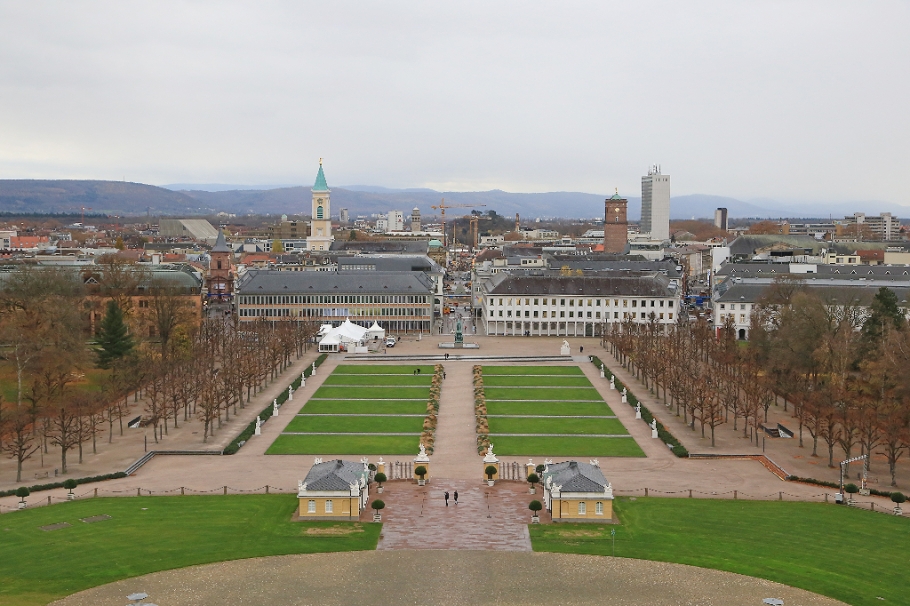
Above/featured: Karlsruhe Palace.

You won’t likely find another German city in the shape of a fan.

Sitting pretty near the Rhine river in southwest Germany, Karlsruhe is known as the “Fächerstadt” (“fan city”) for its very specific shape.

On 17 June 1715, Margrave1 Karl Wilhelm (Charles William) of Baden-Durlach celebrated breaking ground and the first laid stone for his new residence, palace, and seat of power. The story goes that after a vivid dream, Karl Wilhelm decided to build his new home of “rest and relaxation” (“Karls Ruhe”) in the middle of a nearby forest. A planned city would surround the palace, an appropriate symbol for the question of “who ruled whom.” The palace sat at the central hub of 32 “rays” or streets radiating outwards: 9 streets to make up the new city, and 23 for the palace gardens. Emerging from the palace was the “Via Triumphalis,” the north-south central axis road into the city. Karl Wilhelm moved the margraviate seat from nearby Durlach to the “new shiny city” of Karlsruhe upon completion of the new palace in 1718.

In the spring of 1788, Thomas Jefferson, while serving as America’s chief of mission (Minister Plenipotentiary) in France, embarked on a tour of Holland and the Rhine river in what is now Germany. He stayed in “Carlsruh”2 on 15 and 16 April 1788. Impressed by what he saw throughout his trip, he sent a letter and sketches3 to Pierre Charles L’Enfant4 who was charged by George Washington with the design and construction of a new American capital city. Jefferson wrote to L’Enfant on 10 April 1791:

“…in compliance with your request I have examined my papers and found the plans of Frankfort on the Mayne, Carlsruhe, Amsterdam Strasburg, Paris, Orleans, Bordeaux, Lyons, Montpelier, Marseilles, Turin and Milan, which I send in a roll by this post. They are on large and accurate scales, having been procured by me while in those respective cities myself. …”

With copies of European city plans in hand, these plans provided inspiration for L’Enfant’s eventual design for Washington, DC.

The Badisches Landesmuseum has occupied the palace since 1921, and the city of Karlsruhe celebrated its 300th anniversary5 in 2015.


What would Thomas Jefferson have seen?

Dated between 1739 and 1779, the following four maps from Stadt Karlsruhe city archives would have been representative of the young city at the time of Thomas Jefferson’s 1788 visit.
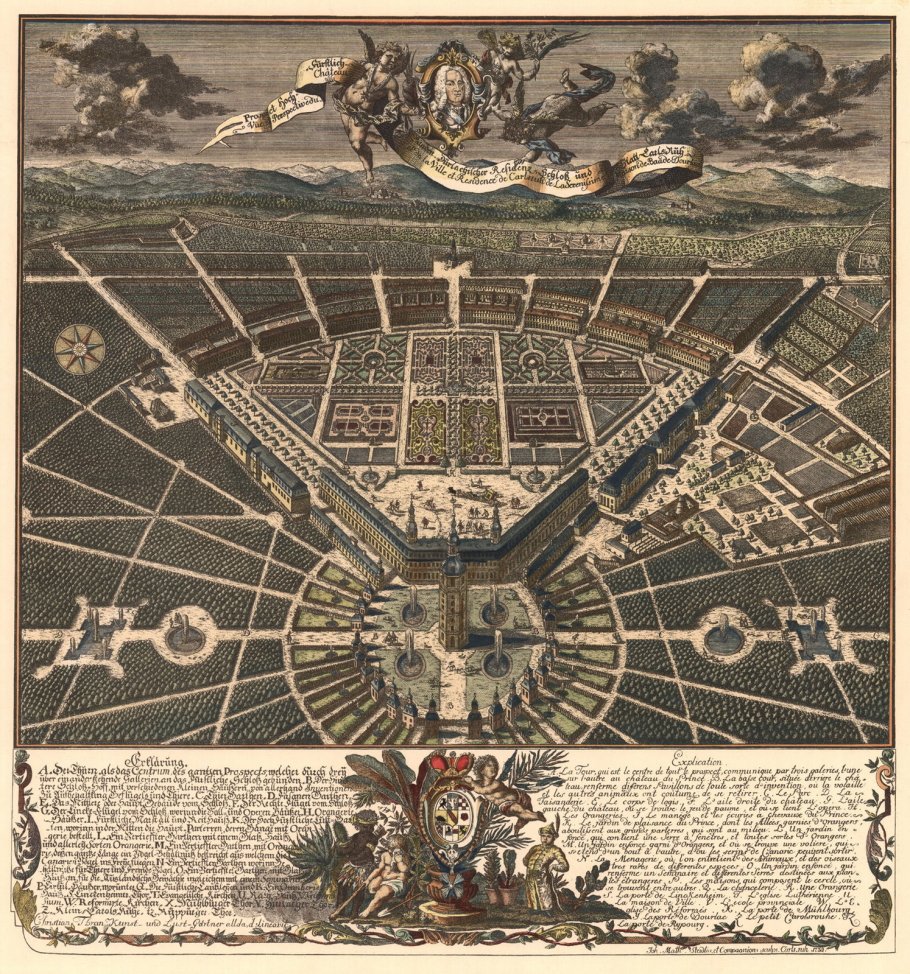
Historische Stadtpläne, Bilderbogen, Stadt Karlsruhe

1739 city view with south at top; coloured copper engraving by Christian Thran.

Historische Stadtpläne, Bilderbogen, Stadt Karlsruhe

1739 city view with north at top; the “fan” consists of 9 streets; coloured copper engraving by Christian Thran.
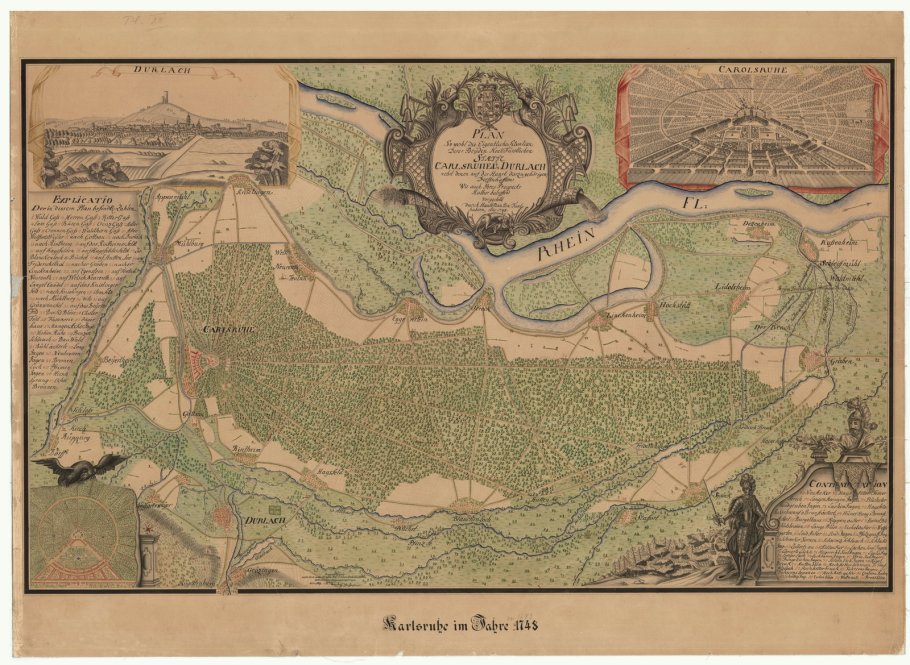
Historische Stadtpläne, Bilderbogen, Stadt Karlsruhe

Map dated 1745 of “Carlsruhe” (Karlsruhe), Durlach, and surroundings, with west at top, towards the Rhine river (Rhein Fl.).
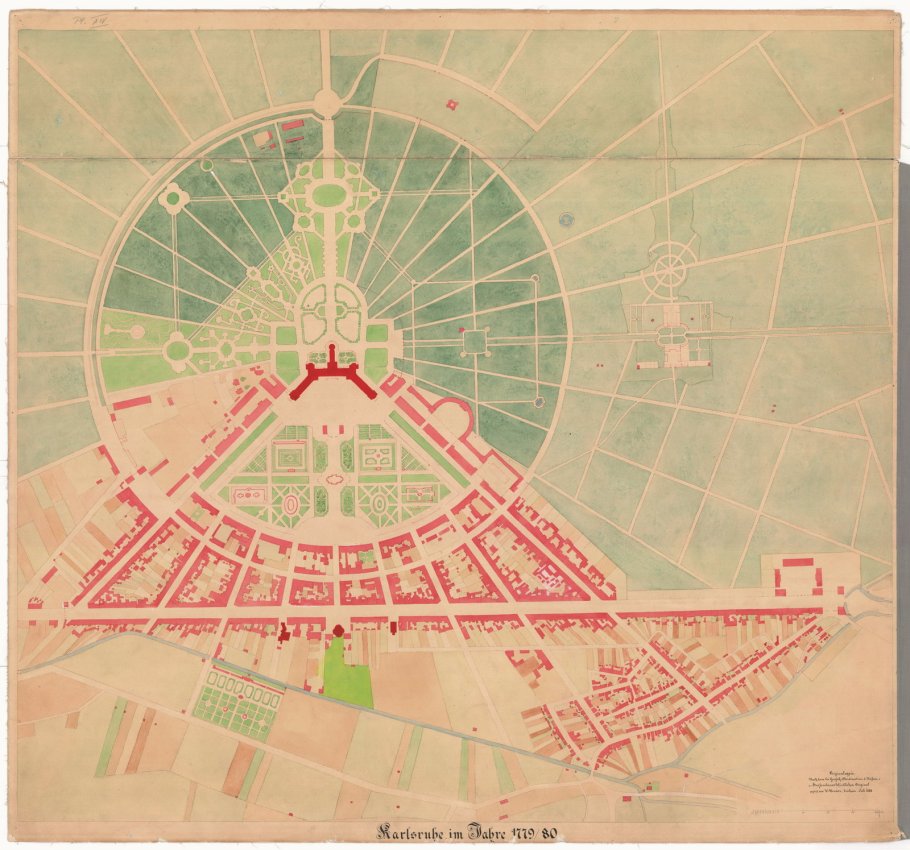
Historische Stadtpläne, Bilderbogen, Stadt Karlsruhe

1779 city map: north at top, Schloss (palace) at circle’s centre. Note how palace “wings” extend south into a “fan” of 9 streets into the young city.


Panorama from the Palace Tower

Even in the dreary days of late-fall and early-winter, there are sweeping views of the city and surrounding area from the top of the Schlossturm (Palace Tower); even the tower’s stairs are themselves a highlight of geometry. It’s also important to realize 14 kilometres to the German-French border isn’t far at all.

Schloss Karlsruhe, Badisches Landesmuseum, Karlsruhe, Baden-WĂĽrttemberg, Germany, fotoeins.com

Up the palace tower (HL).

City view, Schlossturm, Schloss Karlsruhe, Karlsruhe, Baden-Wuerttemberg, Germany, fotoeins.com

South view, along Via Triumphalis through Schlossplatz (palace square). The hills in the background are about 10 kilometres distant (HL).
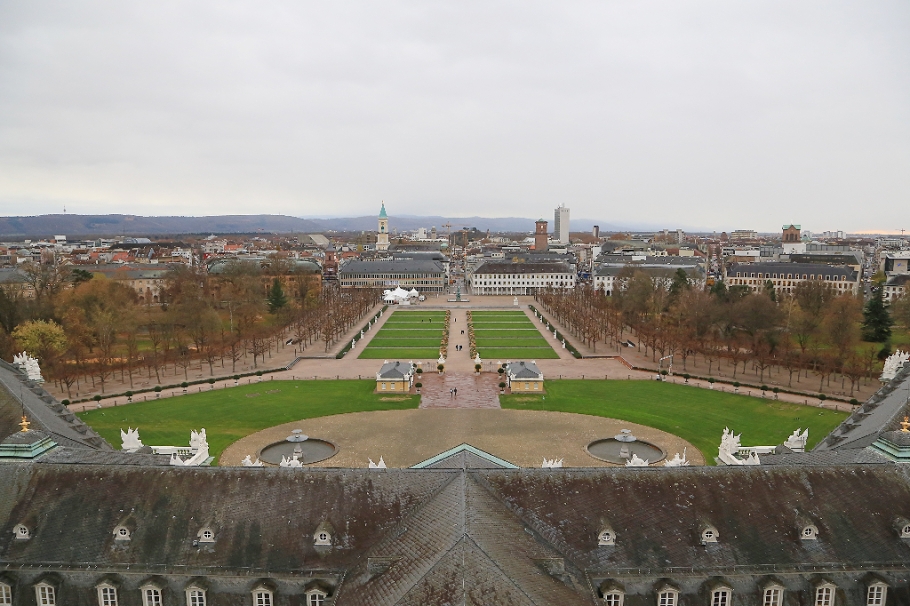
City view, Schlossturm, Schloss Karlsruhe, Karlsruhe, Baden-Wuerttemberg, Germany, fotoeins.com

Wide south view with the Via Triumphalis north-south axis at centre. Note palace “wings” at far-left and -right, making the “fan” into the city (HL).
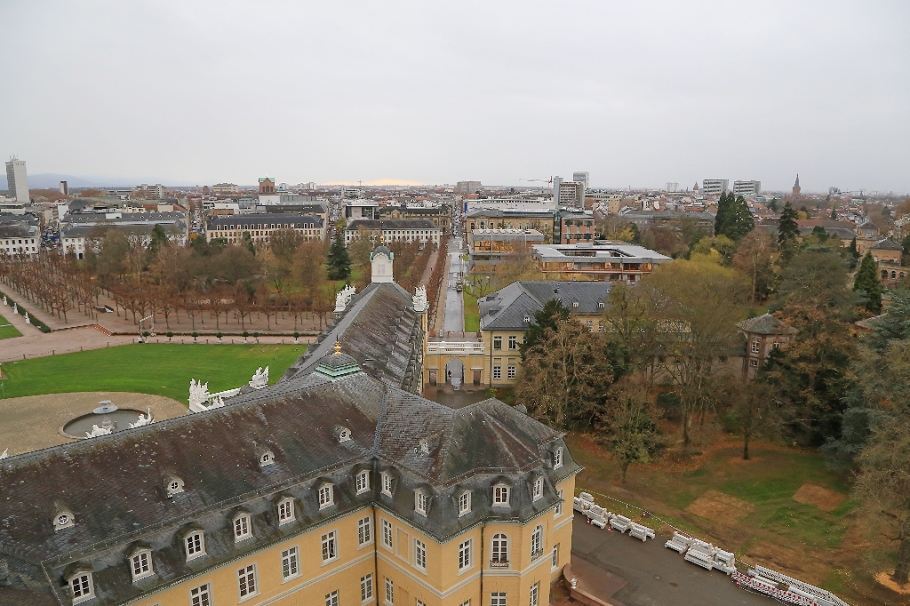
City view, Schlossturm, Schloss Karlsruhe, Karlsruhe, Baden-Wuerttemberg, Germany, fotoeins.com

Southwest, to Bundesverfassungsgericht (Federal Constitutional Court) at centre-right, just beyond the palace (HL).
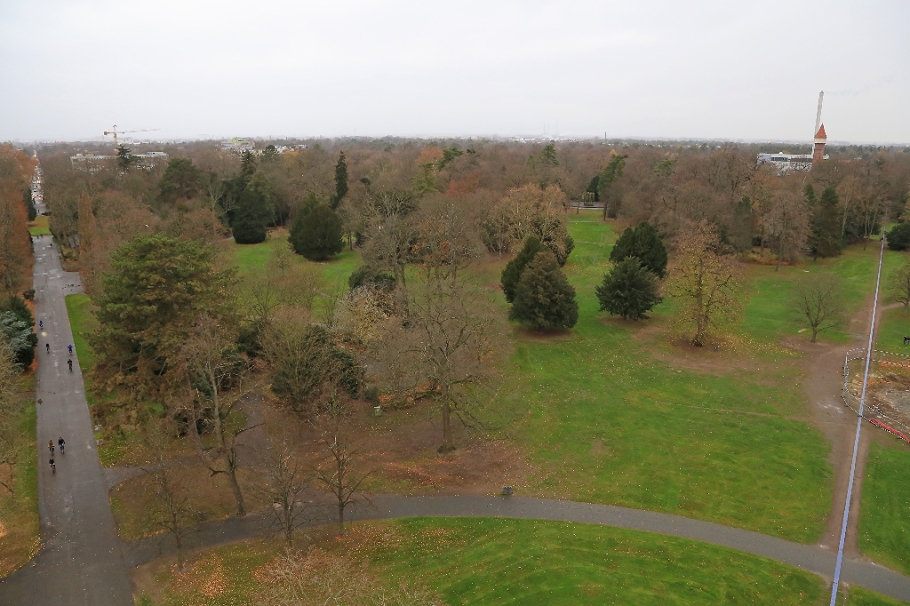
City view, Schlossturm, Schloss Karlsruhe, Karlsruhe, Baden-Wuerttemberg, Germany, fotoeins.com

Northwest, towards Majolika Manufaktur Karlsruhe at upper right (HL).
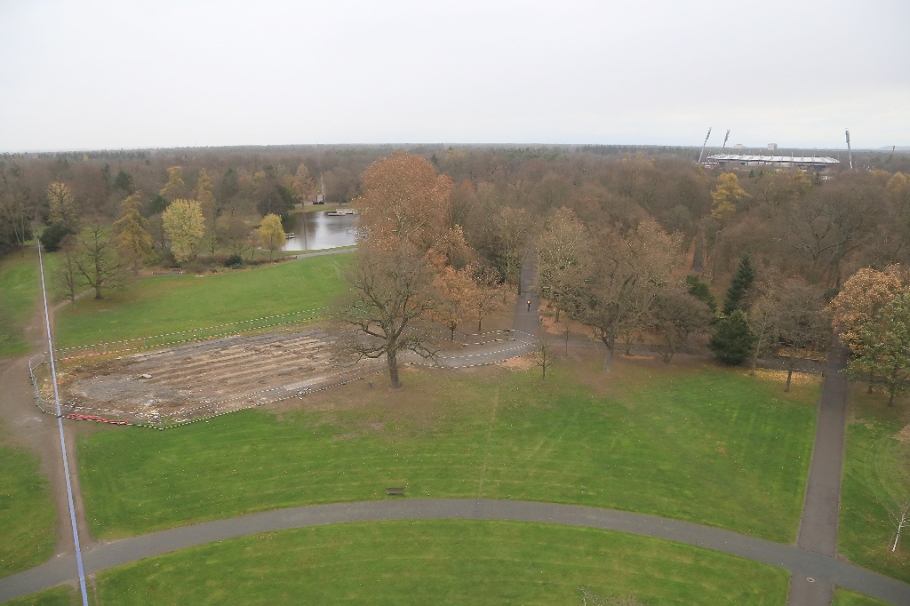
City view, Schlossturm, Schloss Karlsruhe, Karlsruhe, Baden-Wuerttemberg, Germany, fotoeins.com

North-northeast to Schlossgartensee (palace garden lake) at centre-left and Wildparkstadion (stadium) at right (HL).
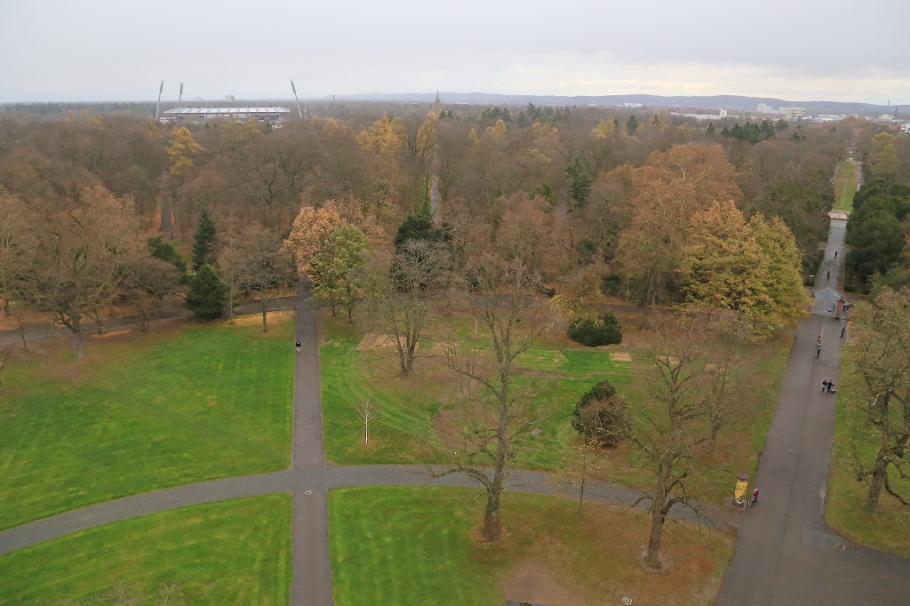
City view, Schlossturm, Schloss Karlsruhe, Karlsruhe, Baden-Wuerttemberg, Germany, fotoeins.com

Northeast: Wildstadion at left, Grossherzogliche Grabkapelle at centre in the distance (HL).
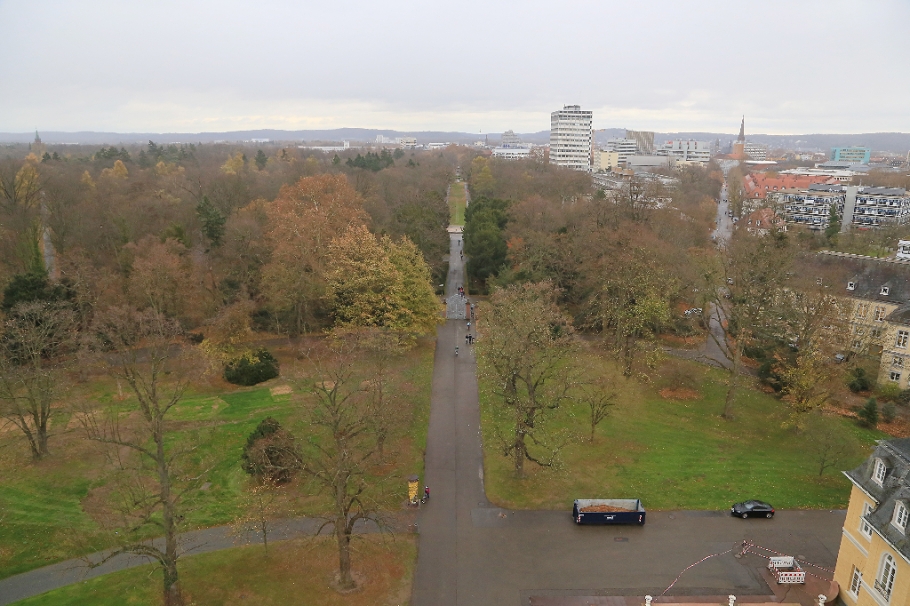
City view, Schlossturm, Schloss Karlsruhe, Karlsruhe, Baden-Wuerttemberg, Germany, fotoeins.com

Facing east; Grossherzogliche Grabkapelle at far left in the distance, Kirche St. Bernhard at right to the southeast (HL).

City view, Schlossturm, Schloss Karlsruhe, Karlsruhe, Baden-Wuerttemberg, Germany, fotoeins.com

Facing southeast; Kirche St. Bernhard at left, and beyond Schlossplatz at centre is Karlsruhe Institute of Technology (KIT) Campus Süd (HL)

City view, Schlossturm, Schloss Karlsruhe, Karlsruhe, Baden-Wuerttemberg, Germany, fotoeins.com

Return to the south-facing view of Schlossplatz, or palace square (HL).
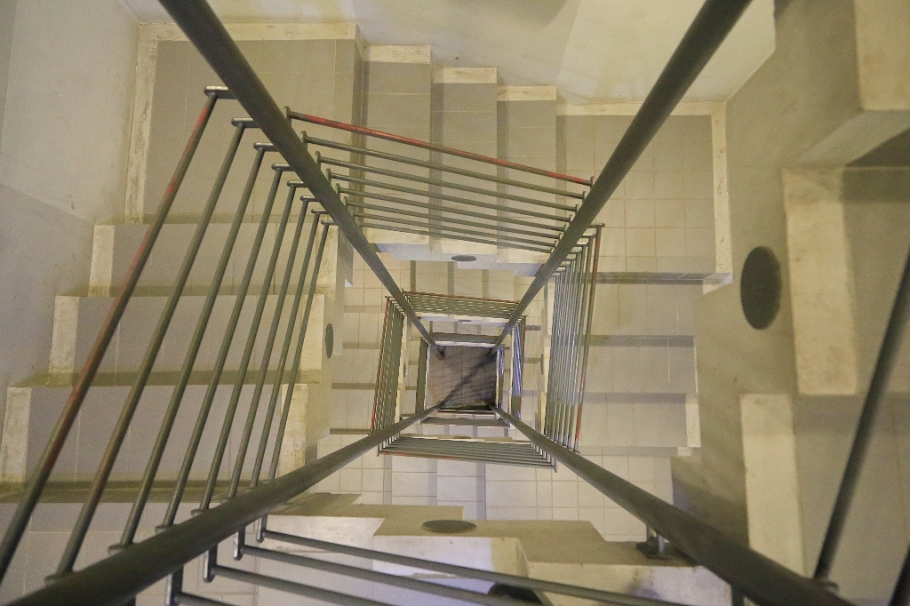
Schloss Karlsruhe, Badisches Landesmuseum, Karlsruhe, Baden-WĂĽrttemberg, Germany, fotoeins.com

Down the palace tower (HL).


Notes

1 A “margrave” was a hereditary title for a prince in the Holy Roman Empire; their territory was called a “margraviate” (Markgrafschaft). Margraviate Baden-Durlach and neighbouring Margraviate Baden-Baden reunited in 1771 to form the Margraviate of Baden. After dissolution of the Holy Roman Empire in 1806, the Grand Duchy of Baden was created as a member state within Napoleon’s Confederation of the Rhine.

2 “Notes of a Tour through Holland and the Rhine Valley, 3 March–23 April 1788,” Founders Online, National Archives, http://founders.archives.gov/documents/Jefferson/01-13-02-0003. [Original source: The Papers of Thomas Jefferson, vol. 13, March–7 October 1788, ed. Julian P. Boyd. Princeton: Princeton University Press, 1956, pp. 8–36.]

3 “XII. Thomas Jefferson to Pierre Charles L’Enfant, 10 April 1791,” Founders Online, National Archives, http://founders.archives.gov/documents/Jefferson/01-20-02-0001-0015. [Original source: The Papers of Thomas Jefferson, vol. 20, 1 April–4 August 1791, ed. Julian P. Boyd. Princeton: Princeton University Press, 1982, pp. 86–87.]

4 More about Pierre Charles L’Enfant appears at the US Library of Congress.

5 Wulf Rüskamp wrote this article for the Badische Zeitung (in German).

Thanks to Karlsruhe Tourismus and Hotel Rio Karlsruhe for a warm welcome and access to venues and services. Old city maps are from Stadt Karlsruhe’s archives. I made all remaining photographs on 17 November 2015 with a Canon EOS6D mark1. This post appears on Fotoeins Fotografie at fotoeins DOT com as http://wp.me/p1BIdT-8Cv.

Wochenmarkt, Saturday farmers market, Neuenheimer Markt, Markplatz, Neuenheim, Heidelberg, Germany, fotoeins.com

My Heidelberg: Saturday farmers’ market in Neuenheim

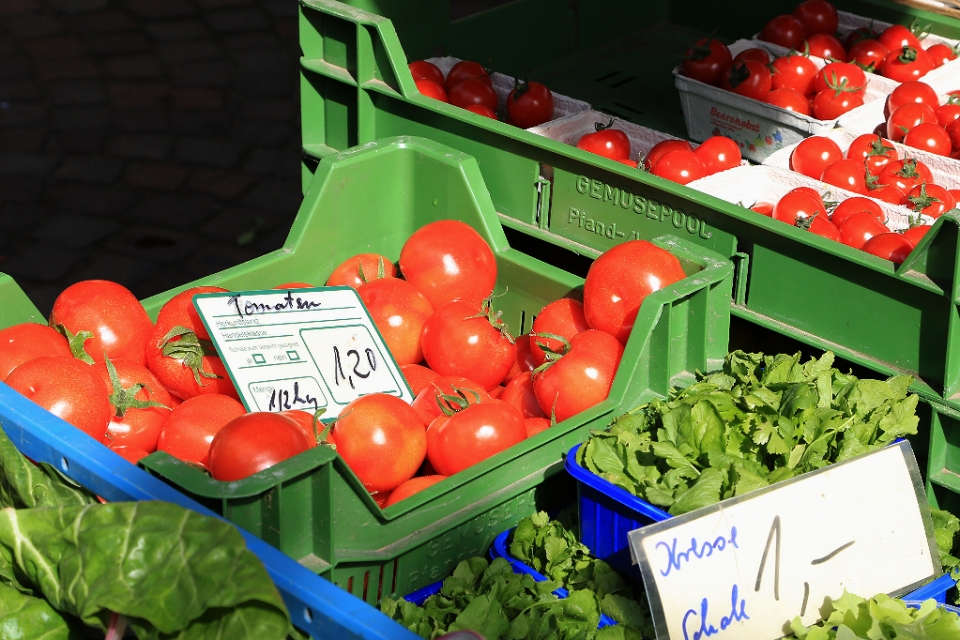
In Heidelberg, the farmers’ markets are held regularly throughout the week at a number of locations throughout the city and region. One of six Saturday markets takes place across the Neckar river in Neuenheim. Most visitors in town will visit the Saturday market in Heidelberg’s Marktplatz, which leaves the other five Saturday markets pretty much “clear and free” to residents. And as I arrive at the market square in Neuenheim, it’s clear I’m in the minority, literally and figuratively. This is not criticism and it’s not a negative, as I used to come here occasionally when I lived here. I say as much to the various vendors, when I buy a cup of coffee, some cherry tomatoes, a piece of cake, and three empanadas.

Fresh fruit and vegetables, grown locally and imported from around Europe. Fresh bread and baked goods from a regional bakery. Fresh herbs, grown locally; fresh flowers, grown locally. Honey harvested from bees at a regional apiary. “Empanadas Argentinas”, by a woman from Córdoba who’s lived in Germany for over ten years. And there are fresh cuts of meat, tubs of olives, and glorious varieties of cheese from around Europe.

It’s time to stop eating and leave, when the vendors begin to pack. Another market, another day.

When I leave Heidelberg, no small measure of wistful longing remains; these are my streets, and this is one of my markets.

( Click here for more )

Cafe Burkardt, Heidelberger Altstadt, Germany, fotoeins.com

My Heidelberg: Cafe Burkardt in the Old Town

I’m often “home” in Heidelberg to visit friends who are in the city to work for the university or one of the many institutes in town. An important component for any visit to Heidelberg is Untere Strasse in the Altstadt (Lower Street in the Old Town). The narrow cobblestone street includes cafes, pubs, and shops with a neighbourhood feel attracting not only university students for “pub crawls” but also city residents for their favourite hangout spots.

( Click here for more )