Fotoeins Fotografie

location bifurcation, place vs. home

Posts from the ‘Travel’ category

Two vs. two volleyball, Spanish Banks East, Spanish Banks, English Bay, Salish Sea, Vancouver, BC, Canada, fotoeins.com

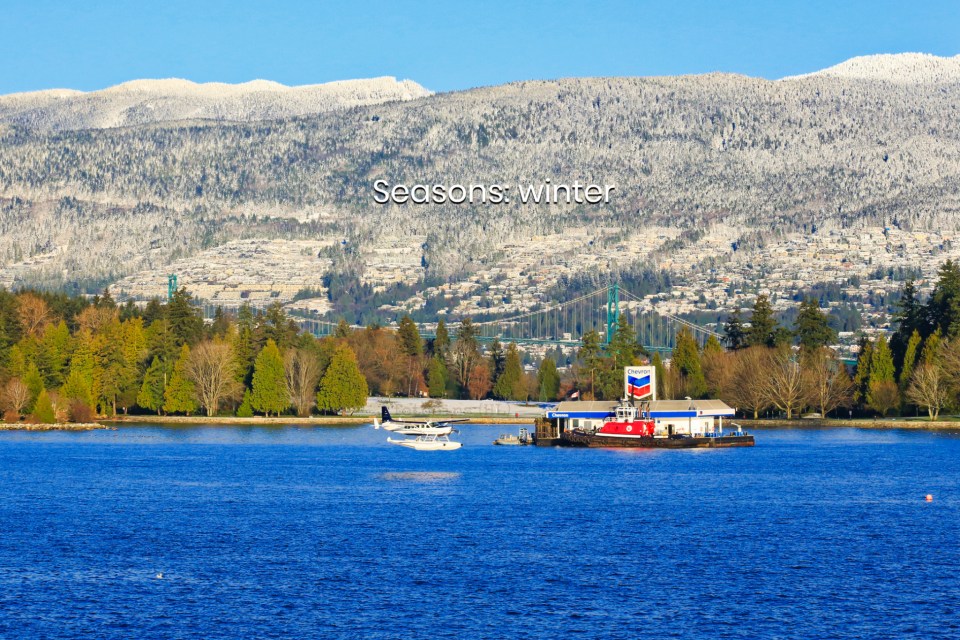
Seasons: summer

Above/featured: Beach volleyball at Spanish Banks: Vancouver, Canada – 18 Jul 2013.

So then, July 2020 is the month of “seasons” for LAPC, and the theme begins in current (northern) summer.

For me, summer largely represents deep blues and greens, a time of year with long hot days and short comfortable nights. It’s an opportunity to observe early sunrises to the northeast, and relatively late sunsets to the northwest. In languages with which I’m most familiar, the word “summer” also appears as:

  • Chinese: 夏季
  • French: l’été
  • German: der Sommer
  • Spanish: el verano

( Click here for images and more )

My Konstanz: Jan Hus’ last stand

Above/featured: Old Town from the Bodensee (Lake Constance): visible from left-to-right are respectively the broad-roofed Konzilgebäude (Council Building), Münster (tall Cathedral spire behind sailboat), and the Dominikanerinsel (Dominicans Island). Photo on 23 Sep 2017.

6 July is a national holiday in the Czech Republic; the formal name is “the day Jan Hus was burned at the stake” (Den upálenĂ­ mistra Jana Husa).

I wrote previously about medieval Bohemian theologian and reformer Jan Hus (John Huss) whose teachings in the relatively novelty of the Czech language and criticisms about abuse and injustice within the Catholic Church predated Martin Luther’s own revolution for change by almost 100 years. Hus’ place within Czech history is fixed onto the nation with a giant memorial sculpture at the centre of Old Town Square in the capital city of Prague. His place is also assured in the European Reformation as seen in full display at the world’s largest Reformation Monument in the German city of Worms. Hus’ conviction and execution and the resulting armed conflicts would give rise not only to the concept of European unity (see also the prominent Czech historical figure George of PodÄ›brady), but would also give way to the European continental wars of religion.

As key historical aspects for creating unique Bohemian and subsequent Czech identity, Hus’ life, final days, and death are also a part of the historical record in the southern German city of Konstanz (Constance in English, Kostnice in Czech).


How Hus got here

The backdrop was the one of the largest conferences in the Middle Age. The Council of Constance met from 1414 to 1418, during which one key directive of the synod was to decide once and for all a single pope from three candidates. With the Council’s election of Pope Martin V in 1417, the Papal Schism which began in 1378 effectively came to an end; this would also be the one and only time a pope was elected on German soil. As the only meeting of its kind held north of the Alps, this massive medieval assembly gathered tens of thousands of people, including religious, political, civic, and social leaders; scholars and other civic officials; as well as traders and merchants from around the continent.

Constance had become a free Imperial city in the late 12th-century, allowing the city to prosper by trade of many goods around the European continent and onto the Mediterranean to destinations in Africa and the Middle East. The city was chosen to host the 15th-century conference, because the city as bishopric had sufficient space and resources to host, house, and feed a very large number of conference guests. Constance has the nickname “Stadt des Konzils” or the “Council City”, and has been included as part of the Hussite Cultural Route (Hussitische Kulturroute), which traces Hus’ final journey from Prague to Konstanz.

As follower of English philosopher John Wycliffe, Hus spoke out on flagrant abuse and corruption, especially on the sale of indulgences with the act of forgiveness for sin being used as a tool to increase church income. At a time when the church claimed complete spiritual, moral, and civic authority, Hus was an obvious troublemaker, and the central church authority punished him with censure and excommunication. Hus was called to travel from Prague to Konstanz and answer charges of heresy at the Council of Constance. He ignored the pleas of friends and colleagues to stay put (“it’s a trap!”), and armed with an apparent imperial promise of safe passage and conduct, he set off on his journey to Konstanz. Upon arrival in November 1414, the promise was naught and the betrayal complete; Hus was promptly arrested, imprisoned, and tortured in various places throughout the area for several months. In refusing to recant over his criticisms against the church, he was never given a fair trial. The Council convicted him of heresy inside the city’s cathedral on 6 July 1415. Hus was immediately handed over to the civil authority, who condemned him to death by burning at the stake on the same day. Jan Hus is revered as a key historical figure for Czechs and the Bohemian Reformation, just as Martin Luther would be for his role to kick off the German Reformation almost 100 years later.


( Click here for images and more )

“Iconic Black Women”, by Seattle artist Hiawatha D

(Best you view these images NOT on a tiny mobile screen, but from your desktop or laptop.)

As part of an ongoing journey to learn more about Seattle’s black community and their ongoing story, I visited the city’s Northwest African American Museum (NAAMNW) in March 2020. The museum’s permanent collection casts a spotlight on black migration within the United States, and the contributions by blacks to the nation and to the American Pacific Northwest. Also timely was the simultaneous visit of the NHL’s Black Hockey History mobile museum as part of their 14-city tour throughout North America.

I was especially moved by the museum’s special exhibition “Iconic Black Women: Ain’t I A Woman“, by Hiawatha D, an artist based in Seattle. His work and paintings highlight his story as a black man and black artist in America. His series of paintings “Iconic Black Women” shines a positive light on black women throughout past and contemporary American history: the important places they’ve occupied, and the important contributions they’ve made to human rights, music, literature, and sport. On sight of the paintings, the context, clothing, and body language may be immediately familiar. But many of the people painted don’t have faces, which allows viewers, especially young women, to see themselves in these figures, sparking and strengthening a connection between viewer and iconic black women.

I would love to see another name added to this list of iconic black women: African-Canadian Viola Desmond.

In 1940s Nova Scotia, Viola was a successful black businesswoman in the city of Halifax. In 1946, Viola Desmond was jailed, convicted, and fined for refusing to leave a whites-only area of a movie theatre. She fought unsuccessfully to have the conviction overturned. In 2010, the Lieutenant Governor of Nova Scotia, Mayann Francis (1st black person to serve in that post), posthumously pardoned Viola Desmond, removing her conviction from the historical record. In honour of her struggle, the Canadian Mint put Viola Desmond onto the face of Canada’s 10-dollar bill in 2018; she is the first black person and first Canadian woman to appear on Canadian currency in active circulation.


( Click here to see images )

1-day drive, US: Flagstaff to Vermilion Cliffs

Above/featured: Vermilion Cliffs loom over the new and old Navajo Bridge at left and right, respectively (X70).

The following takes place on the first half of travel day 10 in the American Southwest. From Flagstaff, we’re heading north on highway US-89, past Cameron, through the northern limit of the Painted Desert, and next to the Echo Cliffs. At Bitter Springs, the highway splits, and we head northwest on US-89A to Marble Canyon, where Navajo Bridge crosses over the Colorado River. The highway continues west into the Arizona Strip, below Vermilion Cliffs, past Cliff Dwellers, and into House Rock Valley.


( Click here for images and more )

1-day drive, US: Santa Fe to Flagstaff

Above/featured: Continental Divide. Rising to the north are red Entrada sandstone cliffs (Iyanbito member) from the middle Jurassic period about 170 million years ago. The cliffs are part of a geologic formation extending from northwest New Mexico into northeast Arizona, southeast Utah, and west-central Colorado.

The following takes place entirely on travel day 9 (12 Oct 2018) in the American Southwest. From Santa Fe, New Mexico to our destination Flagstaff, Arizona, the day-long drive began on the short leg I-25 south to Albuquerque. This stretch of I-25 is along a part of the colonial road El Camino Real and parallel to the pre-1937 alignment of the now-famous highway US route 66 (US-66). In Albuquerque, we turned right onto I-40, heading westbound for the New Mexico-Arizona state border and beyond. The total distance was a little over 650 kilometres (400+ miles).

•   Historic Route 66 (US DoT Federal Highway Administration)
•   New Mexico US-66 Association
•   Historic Route 66 Association of Arizona
•   Why Route 66 became America’s most famous road, Vox on YouTube, 16 Aug 2019.


( Click here for images and more )