Fotoeins Fotografie

location bifurcation, place vs. home

Posts from the ‘Summer’ category

BC Shellfish and Seafood Festival, Comox Valley Economic Development Society, Comox Valley, BC, Canada, fotoeins.com

Comox Valley BC Shellfish & Seafood Festival (2015) (IG)

As guests of the Discover Comox Valley (Economic Development Society), fellow travel blogger Megan and I were invited as participating travel media to attend the opening weekend of the BC Shellfish and Seafood Festival. The following visuals highlight a number of the activities in Comox, Courtenay, and Campbell River.

  • ‘Fresh Fest’ public event with food and music, 12 June
  • Gartley Point Hatchery, 13 June
  • Lunch at Kingfisher Oceanside Resort and Spa
  • Mac’s Oysters
  • Flying Fresh lobster extravaganza, industry & public event
  • BC Seafood Expo & Workshop Series, 14 June
  • Cermaq Canada’s Venture Point aquaculture facility, 15 June

‘Fresh Fest’ – 12 June


Site Tours – 13 June


BC Seafood Expo – 14 June

Norway's ambassador to Canada, Her Excellency Mona Elisabeth Brøther, BC Seafood Expo, Courtenay, BC, Canada, fotoeins.com

Via Skype from Ottawa: Her Excellency Mona Elisabeth Brøther, Norway’s ambassador to Canada (HL)


South-central coastline – 15 June
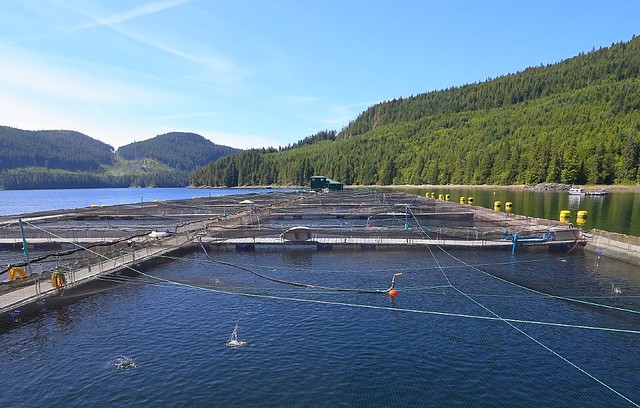
Cermaq, Venture Point, Okisollo Channel, between Quadra Island and Sonora Island, Campbell River, BC, Canada, fotoeins.com

Cermaq’s Venture Point aquaculture farm, Okisollo Channel, BC, Canada (HL)

BC Shellfish and Seafood Festival, Comox Valley, BC, Canada, fotoeins.com


Thanks to Discover Comox Valley, Comox Valley Economic Development Society (EDS), Cermaq, and the BC Salmon Famers Association for supporting and providing access to venues and activities along central Vancouver Island, and to Old House Hotel & Spa for a generous and comfortable stay. The first (featured) and last images are generously provided by the Comox Valley EDS. I made the other photos from 12 to 15 June 2015 inclusive. This post appears on Fotoeins Fotopress at fotoeins.com as http://wp.me/p1BIdT-6Uj.

Vancouver: the forgotten’s fireworks from St. Paul’s

2 August 2014.

I’m in one of the city’s hospitals, visiting my father who’s in very bad shape.

I’ve helped feed him dinner of roast pork, peas, and gravy, a direct sensory reminder of his past as ‘line cook’ in a downtown diner nearby. He eats with great enthusiasm, the most I’ve seen him eat in weeks. Dinner’s done, and he’s worn out. I suggest we go “around the corner” with him in a wheelchair to watch the evening’s fireworks, but he gently declines. A twinge reflects the growing reality of him never seeing fireworks again, but the feeling is moderated by resolved acceptance and mild resignation.

I go out into the corridor where people have already gathered by the windows next to the elevators. From the heights of the hospital, there are spectacular views of the downtown peninsula, towards Burrard Inlet, English Bay, and the waters of the Salish Sea. What sacred spirits have come and gone, then and the now.

Waiting patiently to catch a brief glimpse of fireworks are other hospital patients, their family, and various hospital staff taking breaks in their work schedule. It’s a four-day holiday weekend here in the province of British Columbia, and early August weather is summertime hot under the dome of clear blue skies.

Judging by the look in some people’s eyes, I empathize with feelings which must remain unspoken: “I’d rather be outside, laughing and having a good time, surrounded by family and friends.”

I thought about making a few photographs of the fireworks through the large windows, but something pulls me back, and I decide not to image the fireworks directly.

My thinking about this situation quickly clarifies. What I’ll do is record people watching the fireworks through the windows of the hospital’s upper floors.

They are not forgotten. It’s my promise to capture with a camera’s all-seeing eye an elemental and universal desire for something beyond the ephemeral and temporal, something that approaches a kind of eternity.

( Click here for images )

Tian Tan Buddha, Ngong Ping, Ngong Ping 360, Lantau Island, Hong Kong, fotoeins.com

My Hong Kong: above on the Ngong Ping 360

If you’re in Hong Kong and you’re thinking about visiting the “Big Buddha” on Lantau Island, you should consider the 6-kilometre Ngong Ping 360 cable-car high above the island.

From the Tung Chung lower station to the Ngong Ping upper station, the 25-minute cable car ride offers a 360-degree view of the Tung Chung development, Tung Chung Bay, the HKG international airport at Chep Lap Kok, and the forested parklands of Lantau North Country Park. At Ngong Ping village, most will head out on foot to visit the nearby Po Lin Monastery and the Tian Tan Buddha (known also as the “Big Buddha”), hike across North Lantau back towards Tung Chung, or hop on a bus to any number of villages along the island’s coastline.

From central Hong Kong, hop onto the MTR Tung Chung transport-line to the western terminus station in the town of Tung Chung. Located across from the MTR station is the lower station for the “Ngong Ping 360“, labeled ‘T’ (for Tung Chung) in the map below. ‘N’ marks the upper station at Ngong Ping. As of June 2014, adult fares for the standard cabin are $105 HKD one-way (about $14 USD) and $150 HKD return (about $19 USD); private cabins or “crystal” cabins with glass floors cost extra. The 360 operates weekdays 10am to 6pm, and weekends/holidays 9am to 630pm.

( Click here for more )

Hong Kong: almost China at the Lo Wu gateway

I’m at the turnstiles, off to the side from the steady stream of people going through to the other side.

I’m standing on the one side in Hong Kong (香港).

The other side is the city of Shenzhen in the People’s Republic of China’s province of Guangdong (Kwangtung | 廣東 | 广东).

MTR trains come in from Hong Kong and stop here at the end of the line. People pour out of the trains, and head for Shenzhen. There are occasional lulls in between frequent arrivals and departures of the trains, reminding me I’m in the middle of the countryside and at the frontier section separating between what most people know as Hong Kong and China.

Over on the “other” side, Shenzhen is a strong economic force, helped along by its special designation as a Special Economic Zone (SEZ), but there’s still a special allure for many to working inside Hong Kong’s Special Administrative Region. MTR rail passengers depart Hong Kong and enter Shenzhen at either the Lo Wu or Lok Ma Chau (Spur Line) crossings. The average cross-border passenger traffic numbers are 220,000 and 80,000 people per day, at Lo Wu and Lok Ma Chau, respectively (Source 1, Source 2).

From an economic, urban planning, and logistics point of view, it’s no surprise there’s a push to amalgamate Shenzhen with Hong Kong to create a super-metropolis here at the mouth of the Pearl River. Hong Kong has over 7 million people, whereas the population of neighbouring Shenzhen exceeds 13 million. Many would like to see easier and faster movement of goods and people between the two cities, but many in Hong Kong fear an exacerbation of existing problems with overcrowding and overburdened resources.

But what of the people going back and forth? How many from China and/or Shenzhen enter Hong Kong for work or school, and reverse course at the end of every day? How many from Hong Kong go to work in Shenzhen?

I wonder what the daily routine is for someone going back and forth between Shenzhen and Hong Kong. I watch patiently, and I wonder what it’s like on the other side. I have no doubt there’s someone on the other side in Shenzhen who’s wondering the same thing.

( Click here for images and more )

Berlin Gleisdreieck: winter vs. summer

Gleisdreieck (“railway triangle”, “triangular junction”) is a U-Bahn train- and junction-station at the western end of the Kreuzberg district in the German capital city of Berlin.

The station has both upper-level and lower-level platforms serving lines U1 and U2, respectively, although both sets of track are raised above ground. At Gleisdreieck, the U1 line runs west-east, whereas the U2 line runs perpendicularly and temporarily “north-south”.
( Click here for more )