Fotoeins Fotografie

location bifurcation, place vs. home

Posts from the ‘Photography’ category

Imperia, Bodensee, Lake Constance, Konstanz, Constance, Baden-Württemberg, Germany, Deutschland, fotoeins.com

Fall colours in 8 German federal states

Above/featured: Misty autumn morning on Lake Constance (Bodensee): Konstanz, BW – 23 Sep 2017.

Sometimes on travel, I’m focused on achieving learning goals that I forget simply to stop and take in the surroundings. It’s a frequent error I’ve made in the past, and I’ll continue making that mistake. Fortunately, there’ve been a number of occasions where I stopped myself in time to soak in the scene and drink in the colours.

During the northern autumns of 2015, 2016, and 2017, I travelled through various parts of the German federal states of Baden-Württemburg (BW), Bavaria (BY), Brandenburg (BB), Hesse (HE), Lower Saxony (NI), Rheinland-Palatinate (RP), Saxony (SN), and Saxony-Anhalt (ST). You might ask about Berlin where I’ve visited countless times and accumulated months in total. I’ve dedicated a separate post to Berlin’s autumn colours with images from 2006 to 2017.

As for the rest, I hope you enjoy the following moments of autumn colour.

( Click here for more images)

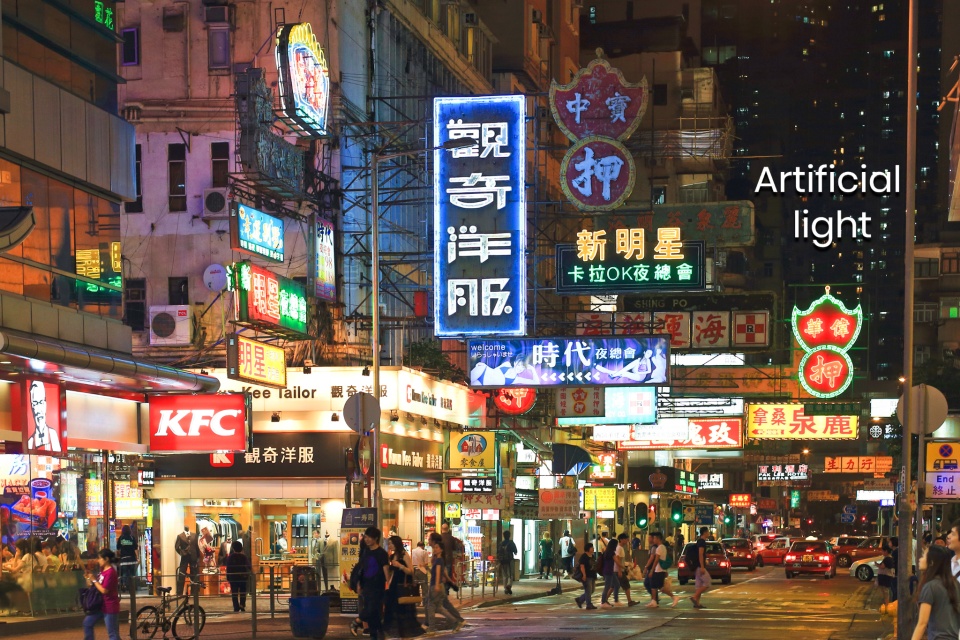
Shantung Street, Portland Street, Mong Kok, Kowloon, Hong Kong, fotoeins.com

Artificial light

Above/featured: Shantung St. at Portland St., in Mong Kok, Kowloon: Hong Kong – 12 Jun 2012 (450D).

Like many, my preference in photography is for as much natural light as possible. However, there are always exceptions, and a big one is the introduction and/or necessity of artificial light within a scene or picture. Over the course of my photographic journey, I’ve come across some wonderful examples of artificial lighting. I hope you enjoy the examples I’ve provided below, including (my love of) neon signage.

( Click here for more images)

Lions Gate Bridge, Seawall, Stanley Park, First Narrows, Salish Sea, Vancouver, BC, Canada, fotoeins.com

The wide field

Above/featured: Vancouver landmark: two towers of the Lions Gate Bridge – 17 Jan 2014 (6D1).

Some time ago, I wrote about my photographic journey which has included a point-and-shoot camera, an introductory crop-frame camera, a consumer-model full-frame camera, and a compact mirrorless camera.

The way people see the world is best encapsulated at focal lengths typically around 35mm. Portraits of people start at about 50mm, and go as “long” or “tight” at 80mm. With larger zoom glass and longer focal lengths, “action at a distance” becomes accessible; examples include “close-up” views or moments at sports events or bird-watching from afar to avoid spooking the birds. At focal lengths below 35mm, the accessible field of view becomes much larger; for example, one of the “widest” fields can be found with a super-wide piece of glass at around 16mm.

I’ve made photographs across a wide variety of focal lengths: from wide (16mm) to long (480mm). I once imagined I would spend most of my time photographing “long”, at focal lengths beyond 100mm. I soon learned I prefer photographing (well-)below 50mm, with the lion’s share of my images in the “wide field” at focal lengths in the range 24 to 28mm.

( Click here for more images)

Salzburg city views from Mönchsberg

In Salzburg, I’m motivated by a search for Mozart and for signs of modernity. I’ve already examined part of the city through its art: what more can Salzburg offer?

Excellent views of the city and surroundings.

The Mönchberg hill on which the Hohensalzburg fortress sits provides many viewpoints over the city. You can walk along the entire length of Mönchberg for varying perspectives, or you can approach a number of the viewpoints separately.

I ascended and traversed the hill on foot from southeast to northeast, beginning from Kapitelplatz to the viewpoints just north of the Museum der Moderne. I returned to the Old Town below with the MönchsbergAufzug elevator which is a part of Salzburg’s public transport.


( Click here for images and more )

My Fuji X70: Ektachrome 100SW (XTrans2 recipe)

Above/featured:False Creek east, from Cambie Bridge – 12 Jul 2021.

A variety of film simulations in the form of recipes with different settings are applicable to Fujifilm cameras to create uniquely historical and/or vintage look to images. Fortunately, a number of recipes are available to apply onto Fuji cameras with X-Trans II sensors.

That’s where my Fuji X70 has entered the fun fray. Previously, I showed examples of images made with the Kodachrome 64 recipe, simulating images made with the Kodak analog colour film produced from the mid-1970s to its final run in 2009.

I wanted to try another film-simulation recipe: the Ektachrome 100SW (SW for ‘saturated warm’) described by Ritchie Roesch in Fuji X Weekly. Historically, the Kodak company produced the ‘Ektachrome’ line of colour transparency or slide films. From its introduction in 1996 to its termination in 2002, the ‘Ektachrome 100SW’ film with increased ISO sensitivity produced images with deeper colours and warmer colour balance.

At locations throughout metropolitan Vancouver over a period of four weeks in July and August 2021, here are images below straight-out-of-the-camera (SOOC) with the following settings:

  • ‘Velvia’ built-in film-sim
  • Dynamic Range: DR200
  • Highlight: +2 (High)
  • Shadow: +1 (Medium-High)
  • Color: -1 (Medium-Low)
  • Sharpness: 0 (Medium)
  • Noise Reduction: -2 (Low)
  • White Balance: Auto; +1 Red, -2 Blue
  • ISO: Auto up to 3200 (or fixed to 1000)

All recipes sorted by specific sensor are found here.


( Click here for images )