Fotoeins Fotografie

location bifurcation, place vs. home

Posts from the ‘Mountains’ category

Grand Canyon National Park: The North & South Rim

Above/featured: West-northwest from Mohave Point – 15 October 2018.

The Grand Canyon National Park has very different timescales: over 100 years of human inscription as a national park, but almost 2 billion years of geologic history.

European colonizers and settlers recognized protection was required for the big dramatic landscape. On 26 February 1919, U.S. Congress passed legislation “An Act to Establish the Grand Canyon National Park in the State of Arizona” which was signed by President Woodrow Wilson. With its official designation, the country’s 15th National Park encompasses over 1-million acres (almost 405-thousand hectares) in surface area and several thousand years of history of human habitation by indigenous peoples, including the Havasupai, Hualapai, Hopi, Navajo, Paiute, and the Zuni, who consider the Grand Canyon as their ancestral birthplace. UNESCO inscribed the Grand Canyon National Park as World Heritage Site in 1979.

The park also includes over a billion years of geologic history. By geologic standards, the Grand Canyon itself is relatively “young” with the Colorado River carving into the rock about 5 to 6 million years ago. However, the Vishnu basement rock in the Grand Canyon is over 1.7 billion years old, even though that age is only 38 percent as old as the Earth’s oldest rocks at 4.5 billion years.

Over three days in October 2018, we explored parts inside Grand Canyon National Park. After our drive from Flagstaff to Vermilion Cliffs, we pushed forward to the North Rim and the winding scenic drive through the Kaibab National Forest took us to Point Imperial and Cape Royal in time for the day’s final illumination.

With a night spent at the beautifully serene Cliff Dwellers Lodge, we retraced our drive back to Cameron, then heading west to Desert View to the eastern section of the South Rim. After establishing our new ‘base’ in Flagstaff, we drove the following day to the main entrance of the Grand Canyon National Park (via Valle and Tusayan), and we spent the day in the western and central sections of the South Rim. The 1126 km (700 mi) we covered over the three days made up 22 percent of the entire 5049 km (3138 mi) driving distance accumulated in New Mexico and Arizona.


( Click here for images and more )

The Nature of Living Things

Above/featured: A warm summer afternoon on Grouse Mountain: North Vancouver, BC – 1 August 2016 (450D).

It’s a play on the title of a long-running documentary series on science and technology: “The Nature of Things” airs on Canada’s national broadcaster, the CBC. “Nature” can mean different things to different people, but I’ve three words in mind: flora, fauna, and mountains. Having begun photography as an active interest relatively late from 2005, it’s been a wondrous journey of non-stop discovery. Between 2007 and 2018, the following locations provided backdrops and venues to photographs about “nature.”


( Click here for images and more )

Innsbruck’s Hungerburgbahn, by Zaha Hadid

As much as the Austrian federal state of Tirol is about mountains, spending time in the capital city of Innsbruck is also about reaching those very heights. To that end, Iraqi-British architect Zaha Hadid left her mark in Innsbruck with her redesigned Bergisel Ski Jump which opened in 2002, and her “Shell and Shadow” design of the Hungerbergbahn stations which opened in 2007.


( Click here for images and more )

Hafelekar, Nordkette, Nordkette cable car, Nordkettenbahn, Hungerburg funicular, Hungerburgbahn, Innsbruck, Tirol, Tyrol, Oesterreich, Austria, fotoeins.com

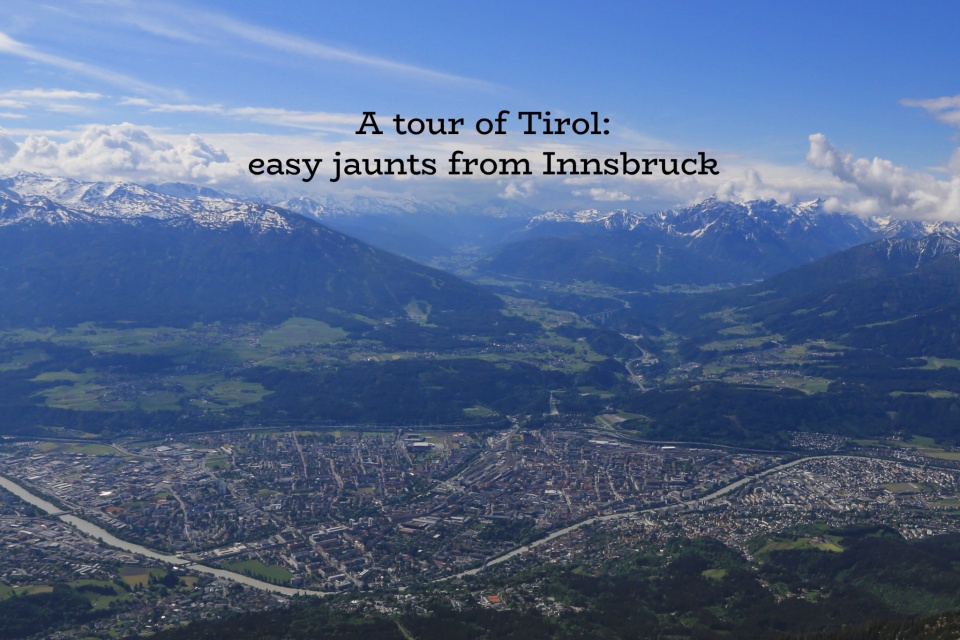
My Tirol: day trips from Innsbruck

As one of nine states within the federal republic of Austria, Tirol is well known not only for all-season access to the Alps, but also for a variety of other attractions.

With transport authorities IVB Innsbruck, VVT Tirol, and ÖBB Austria, Tirol state capital Innsbruck was the base from which I travelled to Alpbach (half-day), Brenner (half-day), Hall in Tirol (half-day), Nordkette (half-day), Scharnitz (half-day), Stubaital (half-day), and Wilder Kaiser (full day).


( Click here for more )

Kea, alpine parrot, Homer Tunnel, Milford Road, South Island, Te Waipounamu, Aotearoa, New Zealand, fotoeins.com

Waitangi Day (6 Feb): 15 images from Aotearoa

Above/featured: The kea is the world’s only alpine parrot and on the endangered list; on Milford Road near Homer Tunnel.

On the 6th of February, I’ll be humming “E Ihowa Atua” and “Pokarekare Ana”.

Waitangi Day is a national holiday in New Zealand to commemorate the signing of the Treaty of Waitangi on 6 February 1840. As the founding document of the country, the Treaty of Waitangi (Te Tiriti o Waitangi) is an accord agreed upon by representatives of the Crown (British Empire) and of indigenous Māori iwi (tribes) and hapū (sub-tribes). The agreement is named after the name of the location in the Bay of Islands where the Treaty was first signed. Despite continuing disagreements between the two parties about contemporary extent and redress, I think the conversation and interactions between the communities are at a more advanced stage of integration within the nation’s fabric by comparison with Australia and Canada.

For Aotearoa, the New Zealand government approved in October 2013 formal names of the two main islands in Māori and English:

•   Te Ika a Māui (“the fish of Māui”) for the North Island, and
•   Te Wai Pounamu (“the waters of greenstone”) for the South Island.

I highlight Aotearoa with 15 images of the following locations:

  1. Akaroa
  2. Auckland
  3. Dunedin
  4. Franz Josef Glacier *
  5. Greymouth
  6. Hapuku (Seaward Kaikouras)
  7. Homer Tunnel *
  8. Lake Matheson *
  9. Milford Sound *
  10. Queen Charlotte Sound
  11. Queenstown
  12. Southern Alps *
  13. Waimakariri River
  14. Wellington City
  15. Wellington Harbour

Asterisks identify locations within the Te Wāhipounamu area in South West New Zealand which was inscribed in 1990 as UNESCO World Heritage Site that includes four national parks: Aoraki/Mount Cook, Fiordland, Mount Aspiring, and Westland Tai Poutini.

( Click here for images and more )