Fotoeins Fotografie

location bifurcation, place vs. home

Posts from the ‘Germany’ category

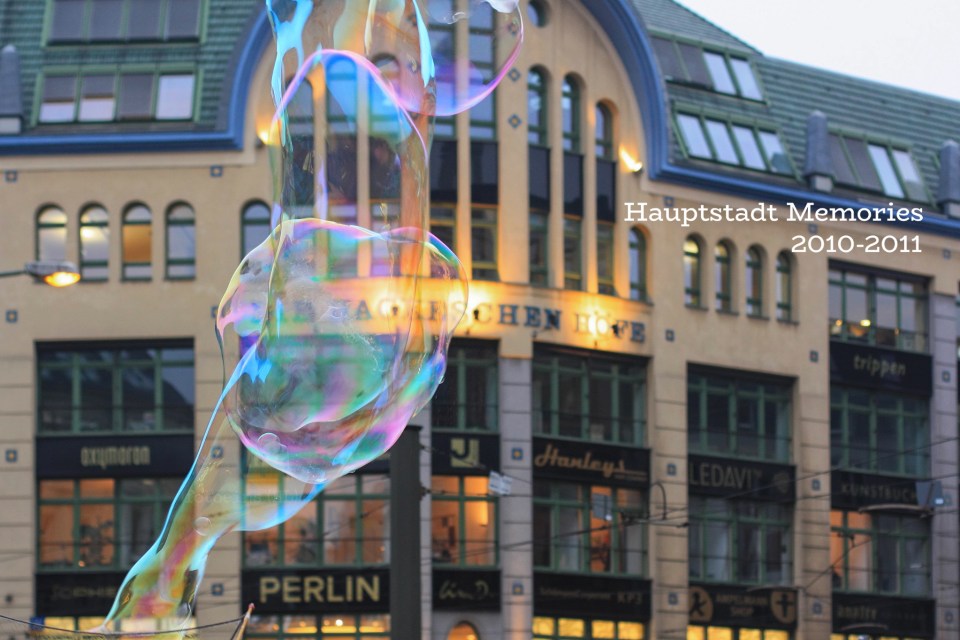
Perlin, Hackesche Höfe, Hackescher Markt, Berlin, Germany, fotoeins.com

My Berlin: Hauptstadt Memories, 2010-2011

Featured: “Pe(a)rlin’ in Berlin”, Hackescher Markt – 16 March 2011 (HL).

Berlin is one of my favourite cities in the world. From the moment I stepped foot inside the German capital city for the first time in 2002, it’s been an ongoing love story. I’m convinced the “Hauptstadt” will always be worth photographing; it’s my “long game.” Naturally, there are a massive number of sights throughout Berlin, and I’ve always combined public transport with plenty of walking. In fact, traveling 10 to 20 kilometres per day throughout the city is pretty much the norm. These photographs are personal observations and measurements of location, geometry, and motion.

The pictures and memories may be from years past, but all of the them retain their contemporary nature: images which include quiet snowy Christmas, an important memorial, and pieces of architectural design.

( Click here for images and more )

Halle an der Saale, Halle, Saale river, Saale, Sachsen-Anhalt, Saxony-Anhalt, Cultural Heart of Germany, Germany, fotoeins.com

My Halle (Saale): 12 highlights in the Händelstadt

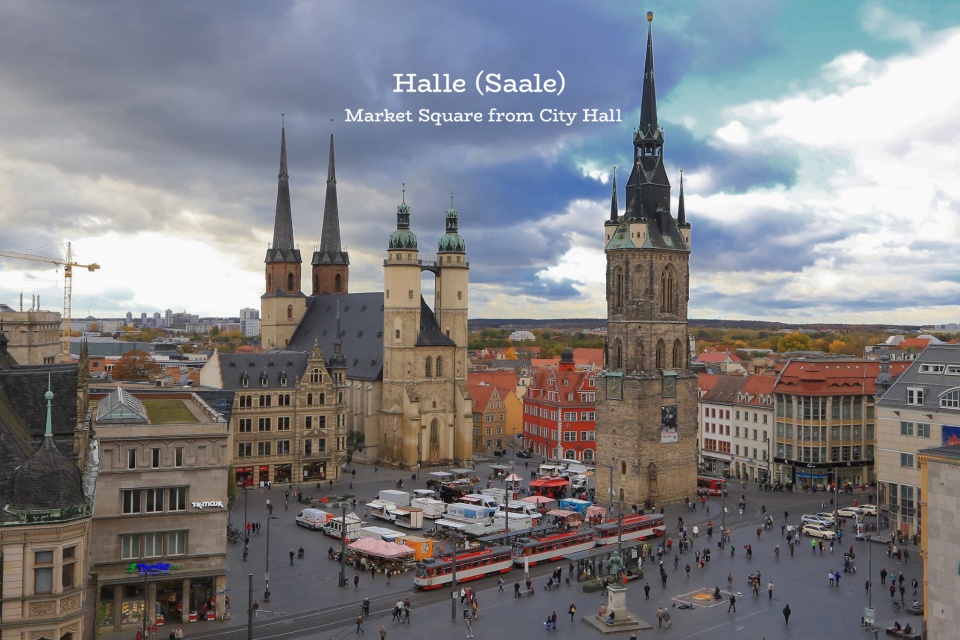
Featured: “5 towers” with 4 (spires) from St. Mary’s Church (left-centre) and 1 from the Red Tower (right-centre). Händel monument is at lower centre.

You’re visiting Halle to learn and discover:

  • why salt also known as “white gold” was critical to the city’s development;
  • how Martin Luther and the Reformation left their mark in the city;
  • composer Händel’s birth house, his upbringing, and how he learned the organ;
  • the oldest German chocolate factory continues producing “Halloren Kugeln”; and
  • how the Museum of Prehistory houses the world’s oldest depiction of the night sky.

Located in the present German federal state of Saxony-Anhalt, the city of Halle along the Saale river is one of the larger cities in east-central Germany. Making salt was of great historic and economic importance that the name of the city “Halle” is derived from the old Celtic/Brythonic word hal, meaning “salt”. The name of the river “Saale” is derived from the old German word for “salt”1. With salt bringing wealth to the city through trade, Halle became a trade city or “Handelsstadt.” With the birth and upbringing of composer Händel in the city, Halle also became a cultural city or “Händelstadt.”

Halle’s present-day population at 240-thousand people is neck and neck with the 241-thousand people in the the state capital city of Magdeburg, 75 kilometres to the north. But proximity means Halle is also connected with Leipzig, only 31 kilometres to the southeast in the state of Saxony. Halle and Leipzig are connected with the S-Bahn Mitteldeutschland train service, and the two cities share an airport located about halfway in-between.

1 The Welsh word for salt is “halen”, and the German word for salt is “Salz”. See also “Celtic culture: a historical encyclopedia,” Volume IV (M—S), pg. 1555. Editor J. T. Koch (ABC-CLIO, 2006).


( Click here for images and more )

Eisleben: Luther’s birth and death sites, UNESCO WHS

Above/featured: Luther monument by Rudolf Simmering at Eisleben’s market square. The monument was inaugurated in 1883 to mark the quatercentenary of Luther’s birth year (1483). At left and upper-right are the Hotel Graf von Mansfeld and St. Andrew’s Church, respectively.

With a population over 25-thousand people, Eisleben is a quiet town in central Germany in the federal state of Saxony-Anhalt. But the South Harz region holds a special place in German and European history: Martin Luther came into the world in Eisleben in 1483, spent his childhood years in Mansfeld, and, on a trip home from Wittenberg to negotiate a local dispute in Mansfield, died in Eisleben in 1546. As shown in the map below, a number of important locations in Eisleben are associated with Luther and the Reformation, including the Luther monument in the town’s market square, St. Peter’s Church, St. Andrew’s Church, and St. Anne’s Church. Specifically, two sites in town constitute a part of the inscription for UNESCO World Heritage Site since 1996: (1) the house where Luther was born, and (2) the museum on Luther’s death.


( Click here for more )

My Germany: 47 (of 55) UNESCO World Heritage Sites

Above: Cologne at dusk: that Dom (cathedral) again, at left; Colonius telecommunications tower at centre, and the Hohenzollern rail and pedestrian bridge at right. Photo, 26 May 2016 (6D1).

Every year UNESCO-Welterbetag (UNESCO World Heritage Day) in Germany is celebrated on the first Sunday in June. Highlighted below are my visits to 47 of 55 UNESCO World Heritage Sites (WHS) in Germany for a modest completion rate of 85%.

UNESCO DE, UNESCO, Germany

( Click here for images and more )

Hamburg: Miniatur Wunderland, where tiny rules large

Above/featured: Miniature Hamburg with Heinrich Hertz tower at left, and Dammtor station at lower-centre.

Our family couldn’t afford the purchase of (or the space for) miniature railway sets. Christmas was a special time and with my nose pressed against shop windows, I’d dream of the world of the railroad set.

Hamburg’s Miniature Wonderland is big on wonder, has plenty of extensive miniature sets, and does not skimp on discoveries for people of all ages. Very little on the outside tells anybody passing by that there’s another world inside. Many aren’t fooled nor are they turned away. Miniature Wonderland was voted the most popular of 100 attractions in Germany in 2016, after 40-thousand international visitors were polled by the German National Tourist Board.

Built from 1883 to 1927, Hamburg’s Speicherstadt or Warehouse District was an important place in an increasingly busy port for the storage of dry goods from around the world. The Miniature Wonderland museum opened in the building called Block D on 16 August 2001. The historical Speicherstadt was inscribed as UNESCO World Heritage Site in 2015.

Miniatur Wunderland, MiWuLa, Miniature Wonderland, Speicherstadt, UNESCO World Heritage Site, Welterbe, Weltkulturerbe, Hamburg, Germany, fotoeins.com

Modelleisenbahn Wunderland (model railway wonderland); Block D, from street-level at Kehrwieder 2-4.


( Click here for images and more )