Fotoeins Fotografie

location bifurcation, place vs. home

Posts from the ‘Culture’ category

“Science is an integral part of culture. It’s not this foreign thing, done by an arcane priesthood. It’s one of the glories of the human intellectual tradition.” – S.J. Gould.

London Bridge Studio: Pearl Jam, Temple o.t. Dog

Pilgrimage is a noun, defined as “a journey to a place of particular interest or significance.”

There are three things you need to know about this particular personal music pilgrimage.

One: the music that’s stayed with me came about because I was tuned to `70s radio; I learned I liked the sonic combination of guitars and drums. Some of those musical memories came from Seattle.

Two: sharing the same space where your favourite bands and songs were recorded hits a lot different than intersecting at your favourite band’s concert while seated waaaay up in the upper deck.

And three: on a recent visit to Seattle, I spent the morning in a recording studio just outside city limits. Little outside suggests some important music history was made here.

The two-storey building looks like a cross between a warehouse and ordinary office space. The surroundings include a small commercial complex and a storage-unit facility. Within a quarter-mile, there’s a gas station, some fast-food joints, and a shopping mall. This is the modest setting where London Bridge Studio resides in the city of Shoreline, WA, about 14 km (9 mi) north of downtown Seattle.

It’s unassuming and it’s also important to note how out of the way this location is from other popular places to visit. A little more effort is required to visit this place of living music history.

I’m more than curious, but there’s music that’s meant a great deal and stayed with me over the decades. Recorded in this studio are two important albums on personal playlist and timeline: Temple of the Dog’s 1991 self-titled album as tribute to Mother Love Bone’s Andrew Wood; and “Ten”, Pearl Jam’s 1991 debut album. Much of the credit goes to Rakesh “Rick” Parashar: born and raised in Seattle, first owner and co-founder of the studio, and producer for “Ten” and “Temple of the Dog”.
( Click here for images and more )

Vancouver: summer cricket at Stanley Park

Above/featured: Grouse Mountain looms over a cricket match at Upper Brockton, with the bowler delivering from the mountain end to the pavilion end.

It’s not typical 21st-century sport in North America, but it is Canada’s first summer sport. Many of cricket’s practitioners in Vancouver’s picturesque Stanley Park have roots from India and Pakistan; among them the shouts of “shabash” are heard often during play.

In childhood, I was enamored with baseball. With its similar origins, I discovered cricket with time spent in Australia, New Zealand, the Bahamas, and South Africa. The natural connection is the former British Empire. I began with T20, the shortest format of the game; with curiosity and time, my hunger encompassed the 50-over one-day format (ODI). It’s my start with the short white-ball format that I’ve developed an appreciation for the long format of the game with red-ball Test cricket.

But is the cricket ground at Vancouver’s Stanley Park “the most beautiful cricket ground in the world”? (With Table Mountain as the backdrop, some might proclaim Newlands Cricket Ground in Cape Town, South Africa as the most beautiful/scenic.)


( Click here for images and more )

Vienna Hietzing Cemetery: F.Grillparzer, G.Klimt, K.Moser, O.Wagner

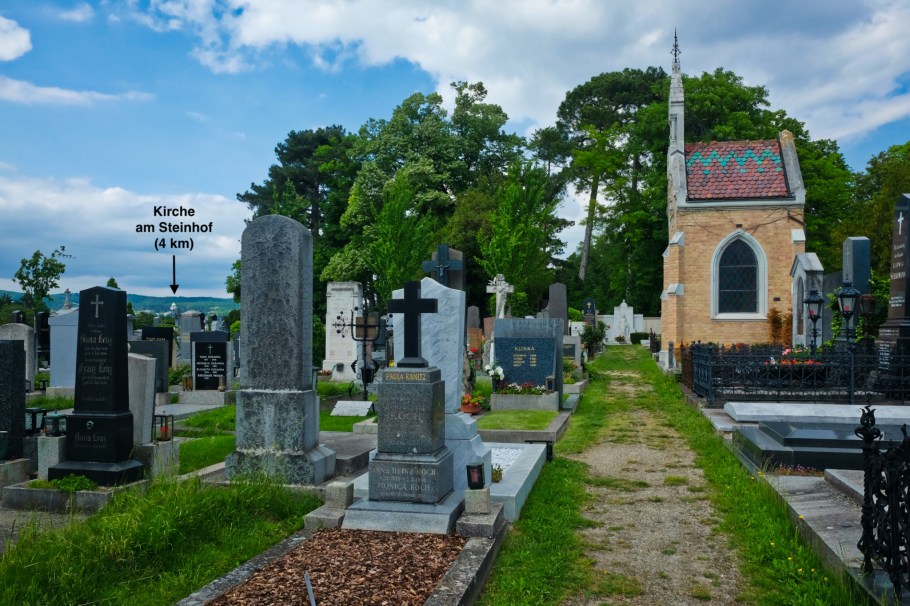
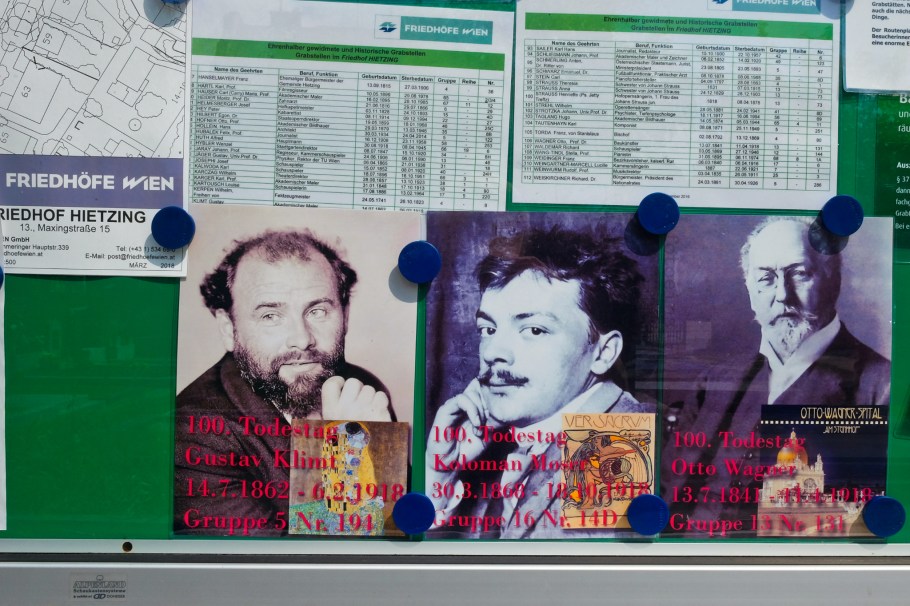
Previously, I provided short biographies for artist Gustav Klimt, artist and designer Koloman Moser, and architect Otto Wagner, and why they are important figures to the arts and culture scene in early 20th-century Vienna. These three figures are buried in Hietzing Cemetery in the 13th district of Hietzing at the city’s western periphery.

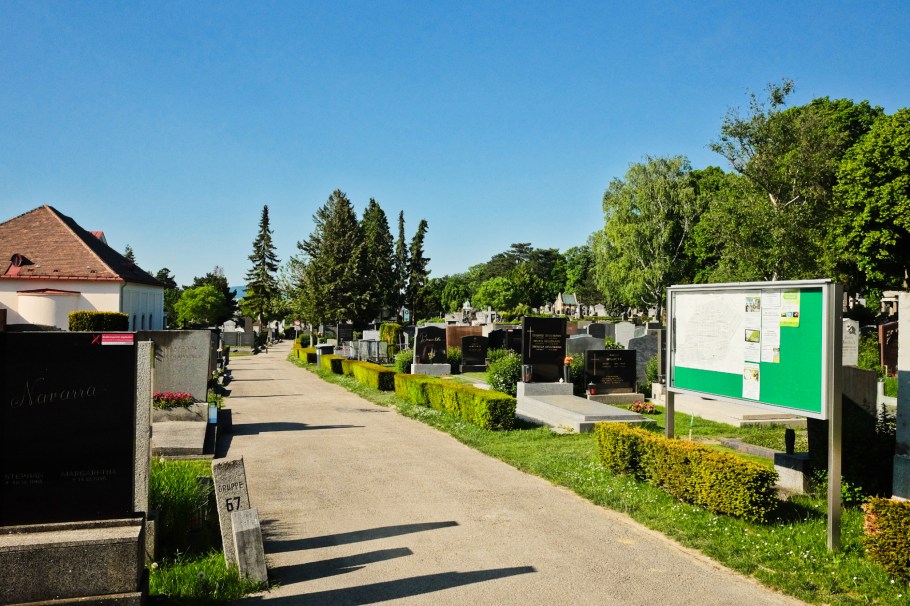
Located to the southwest of the former imperial summer residence Schönbrunner Schlosspark, Hietzing Cemetery is modest in size with an area of over 10 hectares (25 acres) and containing over 11-thousand graves. With the present site inaugurated in 1787, the cemetery has seen several expansion phases and survived damage from the Second World War.

I highlight the final resting places for Alban Berg, the Fröhlich sisters, Franz Grillparzer, Hans Hollein, Gustav Klimt, Koloman Moser, Strauss women, and Otto Wagner.

Friedhof Hietzing, Hietzing Cemetery, Friedhoefe Wien, Hietzing, Wien, Vienna, Austria, Oesterreich, fotoeins.com

2018 was the 100th anniversary of the deaths of Gustav Klimt (1862–1918), Koloman Moser (1868–1918), and Otto Wagner (1841–1918). Photo, 16 May 2018.

13. Bezirk, Hietzing, Friedhof Hietzing, Hietzing Cemetery, Friedhoefe Wien, Hietzing, Wien, Vienna, Austria, Oesterreich, fotoeins.com

Inside the front entrance – 15 May 2022.

Friedhof Hietzing, Hietzing Cemetery, Friedhoefe Wien, Hietzing, Wien, Vienna, Austria, Oesterreich, fotoeins.com

Visitors to the cemetery can look northwest to see the glowing golden dome of Otto Wagner’s Steinhof Church at a distance of 4 km (2.5 mi). Photo, 16 May 2018.


( Click here for images and more )

Seattle’s 1st Starbucks, 1971–1976

Above/featured: Exhibition “Edible City: A Delicious Journey” at MOHAI – Seattle, 8 Jan 2017 (6D1).

What: 1st Starbucks, in the Rhode Island building at the corner of Virginia & Western.
Where: A restaurant now, but no historical plaque or sign.
Why: 1st location between 1971 to 1976, as historical exercise.

Many write about and refer to the “original Starbucks” location in downtown Seattle. If they’re referring to the present location in Pike Place, that Starbucks outlet while the world’s oldest is not the first or original location.

So, what happened to Starbucks’ very first shop from 1971 to 1976?


( Click here for images and more )

Seattle: living black history in the C.D.

Oh Seattle: how is your black history defined?

With the city’s proximity to Vancouver, my time in or any understanding of Seattle was incomplete without an examination of the city’s non-white communities. I had questions about the black community and in particular why the city remains racially segregated. People of color, including black people, were once forbidden from buying houses in specific neighbourhoods because of their skin colour. The Central District (CD) thrived as a black community in the 2nd-half of the 20th-century, but now, citizens struggle with gentrification, displacement, and economic racism. There’s much more I need to ask and learn, but for now, I describe below a selection of landmarks highlighting contributions by and the historical impact of the black community to city and nation.


( Click here for images and more )