Fotoeins Fotografie

location bifurcation, place vs. home

Posts from the ‘Industrial History’ category

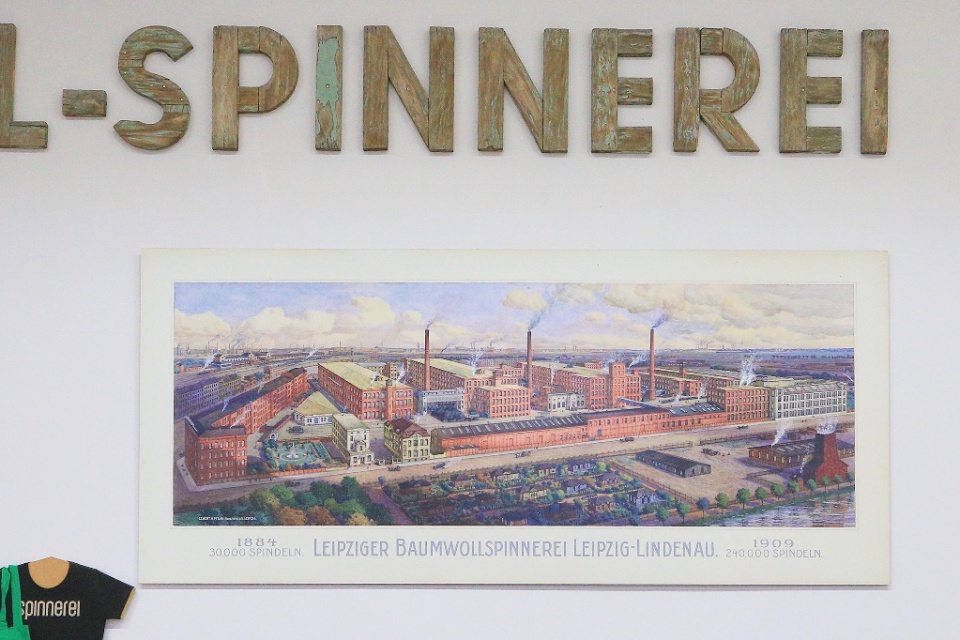
Spinnerei, Leipzig, Sachsen, Saxony, Germany, fotoeins.com

Leipzig Spinnerei: from cotton mill to arts centre

The Leipzig Spinnerei is a former cotton mill (Baumwollspinnerei) in the western industrial suburb of Plagwitz. The massive site at an area of 10 hectares (over 1 million square feet) with rows of factory buildings began operation in 1884 and eventually became the largest cotton mill in Europe with thousands working and living on-site. After the site ceased to produce spools of cotton thread shortly after reunification, artists took advantage of the cheap empty space, and transformed the area into studios, galleries, and exhibition halls. Much has been written about the impact and examples of art and space on Leipzig as the “new Berlin” as well as the “New Leipzig School.” The site as art and culture space opened its doors in 2005.

( Click here for images and more )

Haus Meissen, Meissener Porzellan, Staatliche Porzellan-Manufaktur Meissen, Meissen, Sachsen, Saxony, Germany, fotoeins.com

Meissen: centuries of porcelain-making tradition

In a present-age of speed, screens, and instant gratification, there are reasons to hold onto something tangible in your hands, something as simple as a cup, a plate, a bowl; all high-quality products made in the slow time-honoured way developed over centuries as an important local and, now national, cultural tradition.

First time porcelain production began in China going back at least 1000 years BCE with the subsequent centuries yielding hard durable highly-valued products in white, blue-and-white, and green. With European naval powers reaching Asia in the 16th and 17th-centuries, porcelain found new customers and high demand as “white gold” on par with gold and silver. Admiration and envy got many in Europe to thinking: all we need are some chalky deposits, some water, and some big hot ovens, and we’ll be rich … apart from chemistry, the correct firing or curing temperatures, experimentation, and skill. Until the early 18th-century all porcelain came from China, which is how the present-day phrase “(fine) china” arises.

The European debut to porcelain-making began in 1710 in Albrechtsburg castle in Meissen. When the big guy (who pays your wages or is holding you prisoner) says: “go ye therefore and make me some ‘gold'”, one tends to heed those orders. Frequently in need of funds, Augustus the Strong imprisoned and ordered the alchemist Johann Friedrich Böttger to produce “gold”, but with mathematician and physicist Ehrenfried Walther von Tschirnhaus’ guidance, the two gentlemen did the next best thing and produced Europe’s first “white gold.” Porcelain manufacturing moved from the castle to the present location outside of Meissen’s old town in 1863.

We enter the Meissen Couture and its porcelain museum for a look behind the scenes. Why worry about modern techniques like 3-d printing when you’ve got motivated people willing to put in the hours; their hearts, minds, and souls into their craft? The basic creative instinct and personal touch live on in the town of Meissen in Germany’s Saxony.


( Click here for images and more )

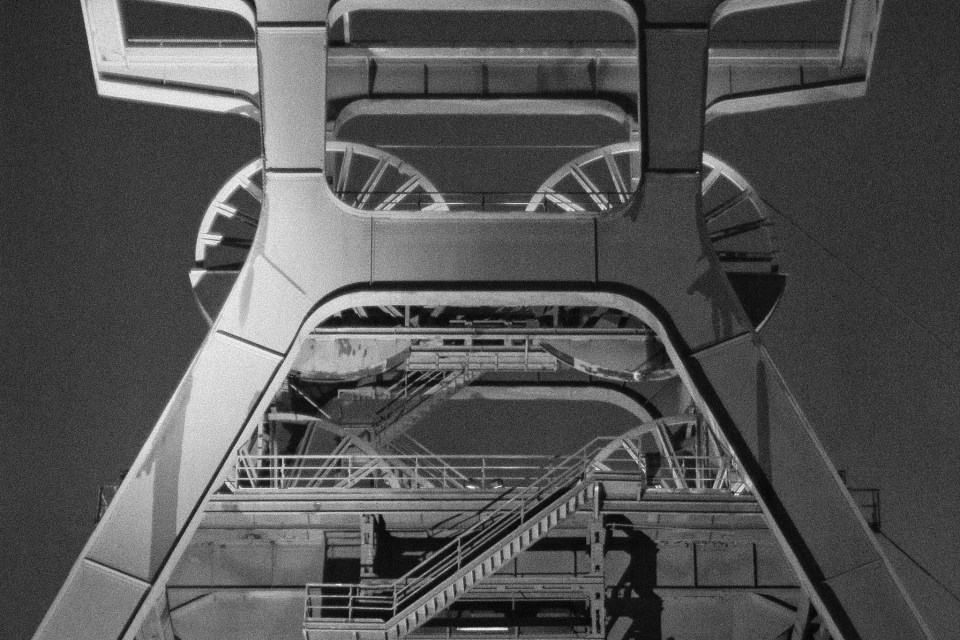
Zollverein Colliery, Essen, Ruhrgebiet, Germany, Deutschland, Welterbe Weltkulturerbe, UNESCO, World Heritage, fotoeins.com

Essen UNESCO WHS: Zollverein and Coal-Mining History

A desolate former coal-mining industrial region isn’t a usual candidate for a place to visit. However, the Zollverein coal mine in Essen, Germany provided the impetus to seek out aspects of industrial photography. There’s something special about the way light strikes metal which brings out various aspects of shape, form, and texture.

I’m beginning to understand the historical significance of coal-mining to the people and to the economy in the Ruhrgebiet (Ruhr river region). Over decades, a cloud of “grey” hung over the region, as air- and water-pollution took its toll, and the economic influence of coal began to diminish.

To mark its importance to the modern industrial development and history of the region, the Zollverein Coal Mine Industrial Complex was listed as a UNESCO World Heritage Site in 2001. The entire refurbished complex now houses space for art, design, and cultural exhibitions, and is also home to the Ruhr Museum, shedding light on the industrial history of the Ruhrgebiet, providing historical accounts of the economic importance of coal mining and its consequent decline, as well as descriptions of existing and future economic redevelopment plans for the Ruhr region.

Essen was designated as one of three European Capital Cities of Culture for 2010; a number of projects, sites, and monuments throughout the Ruhrgebiet were on display, including the Zollverein.

( Click here for images and more )