Fotoeins Fotografie

location bifurcation, place vs. home

Posts from the ‘Australia’ category

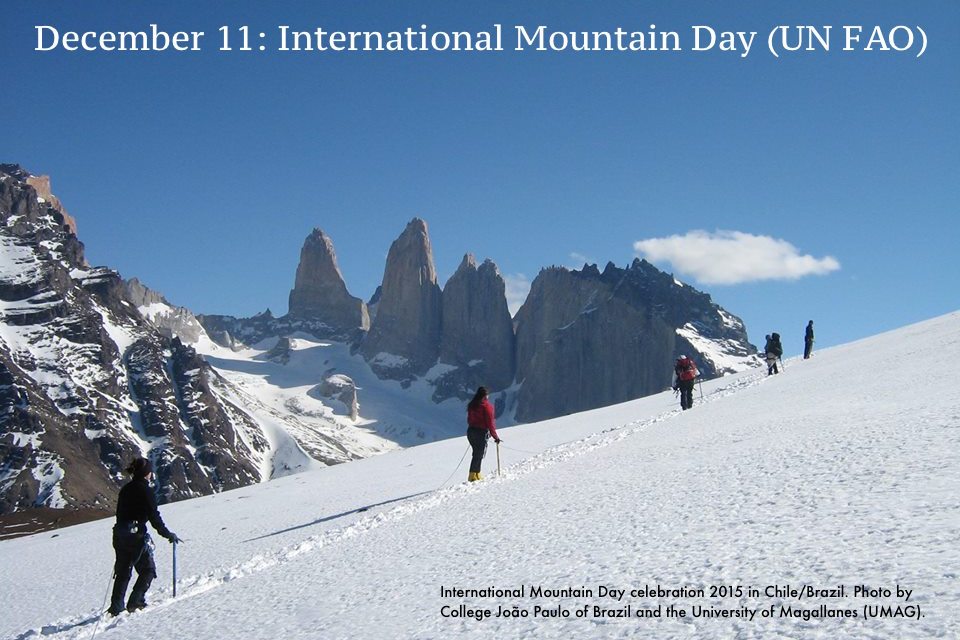
UN FAO International Mountain Day. International Mountain Day celebration 2015 in Chile/Brazil: photo by College João Paulo of Brazil and the University of Magallanes (UMAG).

11 December: International Mountain Day

Since 2003, December 11 is International Mountain Day as designated by the United Nations General Assembly. Annually, the Food and Agriculture Organization of the United Nations (FAO) observes the day:

… to create awareness about the importance of mountains to life, to highlight the opportunities and constraints in mountain development and to build alliances that will bring positive change to mountain peoples and environments around the world.

•   Mountains cover almost one-quarter (22 percent) of the Earth’s surface.
•   Mountains host about 50 percent of the world’s biodiversity hotspots.
•   Up to 80 percent of the world’s freshwater supply comes from mountains.
•   One in eight people (13 percent) around the world lives in the mountains.
•   Mountain tourism accounts for almost 20 percent of the worldwide tourism industry.

The following provides a glimpse to the mountain environments around the world and to the challenging conditions our ancestors would have faced and endured.

( Click here for images and more )

Fraser River, Port Mann Bridge, Coquitlam, Port Coquitlam, BC, Canada, fotoeins.com

World Rivers Day: 50+ rivers from around the world

Above: Fraser River, east from Port Mann Bridge, between Coquitlam and Surrey, BC (HL).

The fourth Sunday in September is World Rivers Day. The University of Oxford’s Dictionaries defines ‘river‘ as:

“a large natural stream of water flowing in a channel to the sea, a lake, or another river.”

A river has always been water supply and demand: daily use and consumption; farming and agriculture; and where the waste goes, often back into the same supply. A river has always been about transport: trade and delivery of goods; shuttling people between places; and with people travelling, the exchange of language and culture. Throughout history, the establishment of towns and cities and the subsequent development of rivers have been about a mix of urban and rural elements, and about the relationship and interactions between people and their waterways.


( Click here for images and more )

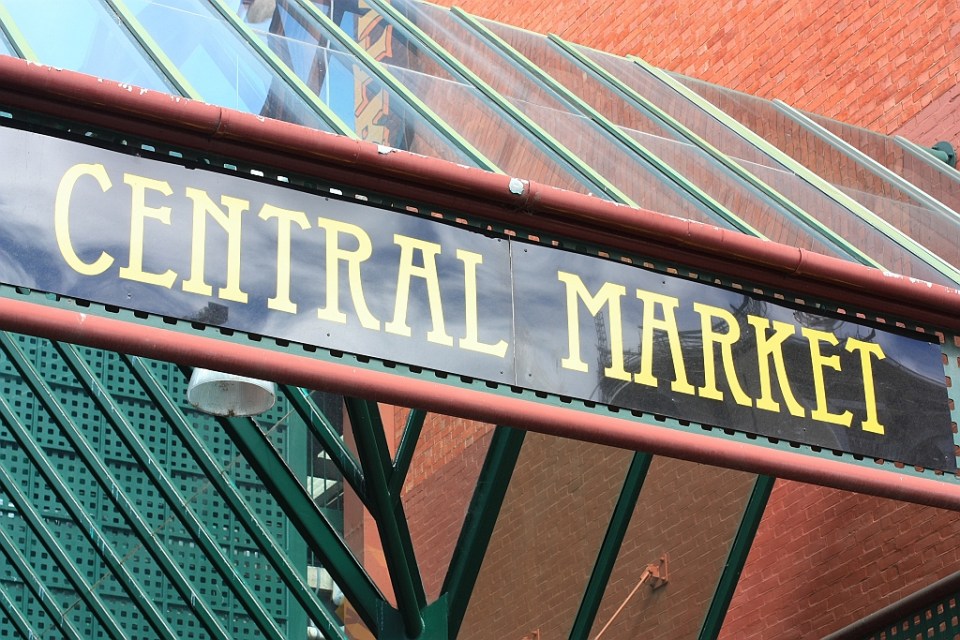
Central Market, Adelaide, SA, Australia, fotoeins.com

Adelaide Central Market: sweet, savoury, books!

Ah, the importance of correctly using the Oxford comma …

In the midst of my year-long around-the-world walkabout, it might be the middle of winter in Australia, and the weather is perfect for both a stroll and a coffee. I’m in the South Australian capital city of Adelaide, and my friend, Emily, insists we stroll through the Central Market. No surprise, then, my arm is sufficiently twisty and rubbery for the …

Bacon.
Colourful fruit and veg.
Assorted of used books.
Chicken hearts and livers.
A chocolate fountain.

But not all at the same time. Please …

( Click here for more )

Canberra: Remembering Gallipoli at the Atatürk Memorial Garden

In Canada, places like Ypres, Vimy Ridge, Passchendaele, and Flanders Field resonate in the collective national history.

For Australia and New Zealand, it is Gallipoli, known in modern Turkish history as the battle of Çanakkale.

On 25 April 1915, Australian and New Zealand (ANZAC) troops stormed the Turkish Gallipoli peninsula in support of the British Empire’s efforts to secure the high ground over the narrow Dardanelles strait and approach from the eastern Mediterranean into the Sea of Marmara and beyond to the Black Sea. The Turks repelled the advance and the British retreated from the region eight months later after suffering great losses. In total on all sides, there were up to 400-thousand casualties.


( Click here for images and more )