Fotoeins Fotografie

location bifurcation, place vs. home

Posts by HL fotoeins

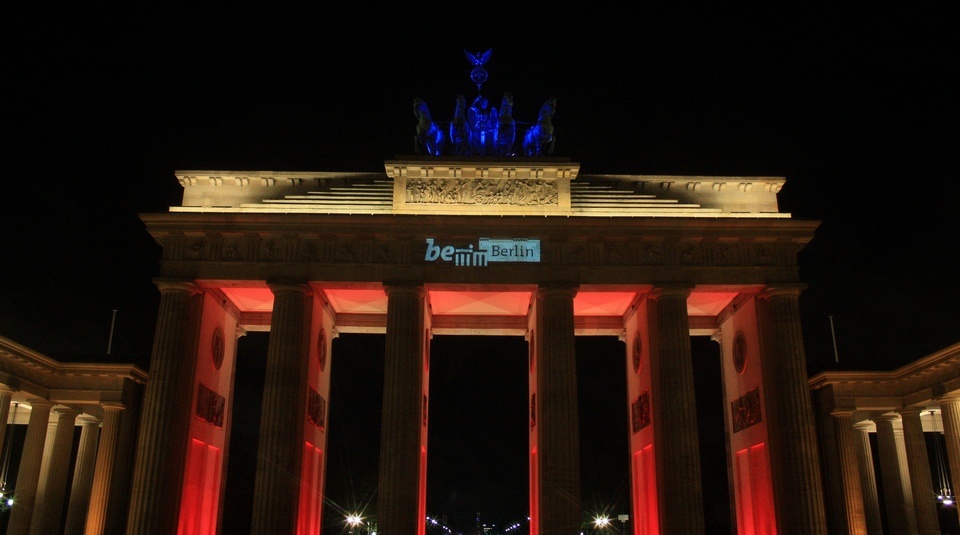
My Berlin: autumn colours in the German capital

Above/featured: A swath of “Mitte” colour in the fog – 16 Nov 2012 (450D).

Berlin doesn’t have the easy natural landmarks of mountains or open waters immediately adjacent to the city. But there’s plenty more urbanity in Berlin which includes countless green spaces inhabited by deciduous trees whose leaves reveal their colours as temperatures drop with the change in season. The colour change by day gives way to night-time illuminations of colour and pattern onto buildings and landmarks during October’s annual Festival of Lights. I found myself absorbing and remembering the colours to tie me through the subsequent cold dark grey doldrums.

I made all photos on multiple visits to the German capital between 2006 and 2021 with the following devices: Canon PowerShot A510 (A510), Canon EOS450D/Rebel XSi (450D), Canon EOS6D mark1 (6D1), and Fujifilm X70 fixed-lens prime (X70). This post appears on Fotoeins Fotografie at fotoeins DOT com as http://wp.me/p1BIdT-LK.

( Click here for images and more )

My Stockholm: finding Greta Garbo in Skogskyrkogården

The Skogskyrkogården, or Woodland Cemetery, is located about 15 minutes by metro, south from central Stockholm in Sweden. For its unique design, aesthetic character, and expanse both vertically and horizontally, the forest cemetery was declared a UNESCO World Heritage Site in 1994.

I had read that Greta Garbo was buried here, and I wanted to find out for myself.

Skogskyrkogarden Stockholm

North entrance.

Resurrection Statue, Monument Hall

Resurrection Statue, by John Lundqvist (1930), in Monument Hall.
Skogskappellet, Woodland Chapel, Skogskyrkogarden, Woodland Cemetery, Stockholm, Sweden, fotoeins.com

Skogskappellet (Woodland Chapel), with golden copper “angel of death”.

Skogskyrkogarden, Woodland Cemetery, Stockholm, Sweden, fotoeins.com

Skogskyrkogarden (Woodland Cemetery).

Skogskappellet, Woodland Chapel, Skogskyrkogarden, Woodland Cemetery, Stockholm, Sweden, fotoeins.com

Lead up to Greta Garbo’s grave.

Skogskyrkogarden Stockholm

Modest marker for Garbo’s final resting place.

Greta Garbo

Born Greta Lovisa Gustafsson in Stockholm in 1905, Greta Garbo was discovered at the age of 17. She was honoured with four Academy Award nominations for her work which transitioned successfully from silent-films to “talkies” in what is now considered the “Golden Age” of filmmaking. Even now, she is considered one of the most beautiful women and one of the most important actresses ever to appear on the big screen. After only 27 films between 1924 and 1941, she retired to private life, away from celebrity spotlight. After her death in 1990 and subsequent legal issues, her cremated remains were buried in 1999 at SkogskyrkogÃ¥rden in the city where she was born.

In the 1955 biography “Garbo” by John Bainbridge, Garbo is quoted as saying:

I never said, ‘I want to be alone.’ I only said, ‘I want to be left alone.’ There is all the difference.

To reach the forest cemetery from Stockholm’s city centre, take the Tunnelbana green metro line 18 southbound in the direction “Farsta strand” to the stop called “SkogskyrkogÃ¥rden”. There is no charge or fee to enter SkogskyrkogÃ¥rden. Garbo’s grave is located south of the Skogskappellet (Woodland Chapel).


More from Stockholm

•   The colours of Gamla Stan, Stockholm’s Old Town
•   Say “Hej!” (and to food) at Lisa Elmqvist in Östermalm’s Saluhall market hall
•   Daytrip to Vaxholm in Stockholm’s archipelago

The publicity photo above of Greta Garbo is by Clarence Sinclair Bull for MGM in 1939 (Wiki). I made the remaining photos above on 25 June 2008. This post is published on Fotoeins Fotografie at fotoeins DOT com as http://wp.me/p1BIdT-vP.

Currywurst, noxoss, Bernd Petrikat, Pixabay

My Berlin: the humble currywurst

Above/featured: Image by noxoss (Bernd Petrikat) on Pixabay.

In Germany’s capital city, Berlin is populated by countless venues for Döner, falafel, and currywurst. For the latter, I highlight two examples: Curry 61 (Hackescher Markt) and Curry 36 am Zoo (Zoologischer Garten), both of which are easily accessible with the city’s U- or S-Bahn.


Curry 61 – Hackescher Markt

(17 March 2011.)

Walking around Berlin’s Mitte district on a wet March afternoon, I found myself in the area around Hackescher Markt. I stepped briefly into the quiet Hackesche Höfe courtyard complex to pick up some postcards (at Schönhauser Design). I’d already subjected myself to the sights and scents emanating numerous cafés, bakeries, and snack shops. I hadn’t had lunch, and with food possibilities reaching my eyes, the grumbling belly meant time to feed.

The ubiquitous yet humble currywurst came to the rescue. I retraced my steps back towards Hackescher Markt, and I arrived at the street-side counter for Curry 61.

A short history of Berlin’s claim to currywurst’s origins goes something like this. In 1949, Herta Heuwer, who ran a snack counter in Berlin, mixed curry powder and Worcestershire sauce with ketchup, and when she served grilled pork sausage with the new sauce to her customers, they loved the new concoction. She patented the sauce as “Chillup” years later. Today, currywurst is ubiquitous, challenging even the Döner as the champion of street-food throughout Berlin.

Currywurst at Curry 61, Curry 61, Berlin Mitte, Germany, Hauptstadt, Deutschland, fotoeins.com

Curry 61 – 17 Mar 2011.

Bratwurst mit Darm, Currywurst at Curry 61, Curry 61, Berlin Mitte, Germany, Hauptstadt, Deutschland, fotoeins.com

Grilled sausage, with casing. Curry 61 – 17 Mar 2011.

Bratwurst ohne Darm, Currywurst at Curry 61, Curry 61, Berlin Mitte, Germany, Hauptstadt, Deutschland, fotoeins.com

Grilled sausage, without casing. Curry 61 – 17 Mar 2011.

A short conversation in German with the owner went something like this:

•   Was hätten Sie gern? — Einmal mit (Darm) und Pommes rot; scharf, bitte.
•   Woher kommen Sie? — Kanada, doch ich arbeite zurzeit in Chile.
•   Was machen Sie hier in Berlin? — Urlaub, ein paar Freunden besucht.
•   Wie sprechen Sie so gut Deutsch? — Schon 2. Jahre hier gewohnt, und viele Mass Bier getrunken.

Which roughly translates in English as:

•   What would you like? — An order with (casing), and fries ‘red’; spicy, please.
•   From where do you come? — Canada, but I work presently in Chile.
•   What are you doing in Berlin? — Vacation, visiting friends.
•   How did you come to speak German? — 2 years in the country, and many litres of beer.

The owner seemed to like my answer to his last question.

Although the owner asked if I really wanted the spicy (Scharf) version, I got a good dose of spice; my serving had a good sharp edge.

Currywurst mit Pommes, Curry 61, Berlin Mitte, Germany, fotoeins.com

Pork bratwurst with fries doused in ketchup and topped with curry and chili powders. Curry 61 – 17 Mar 2011.


Curry 36 – Zoologischer Garten

(9 Dec 2014.)

In subsequent visits to Berlin, I’m passing through the train station near the city’s zoo more frequently. Next to the station at Hardenbergerpltaz is a satellite of Curry 36. While their key location is near Mehringdamm station, Curry 36’s location next to Zoologischer Garten station gets its fair share and flow of people streaming in and out of the station serving U-Bahn, S-Bahn, and regional trains.

I order a Doppel (double-order), both “ohne Darm” (no casing) and sliced into bite-sized pieces, accompanied by “Pommes rot-weiss” (red white) that’s a portion of fries slathered with ketchup and mayo and topped with curry powder.

Curry 36, currywurst, Zoologischer Garten, Hardenbergplatz, Berlin, Hauptstadt, Germany, Deutschland, fotoeins.com

Curry 36 am Zoo – 9 Dec 2014.

Curry 36, currywurst,  Zoologischer Garten, Hardenbergplatz, Berlin, Hauptstadt, Germany, Deutschland, fotoeins.com

Curry 36 am Zoo – 9 Dec 2014.


Many have written about and swear by these currywurst joints in Berlin: Curry 36 and Konnopke’s Imbiss. I’ve also visited the German Currywurst Museum to learn about the history and evolution of the snack. Come to think of it, every time I’m in Berlin, I’ll seek out the currywurst, from one “Imbiss” stand to the next, in my perpetual search for the ultimate taste of the city.

I made all photos with a Canon EOS450D/Rebel XSi on 17 Mar 2011 and 9 Dec 2014. This post appears on Fotoeins Fotografie at fotoeins DOT com as http://wp.me/p1BIdT-pr.

Pavement marker Niederkirchnerstrasse, between Martin-Gropius Bau & Topographie des Terrors, Berlin, Germany - 2. Okt. 2009

The Berlin Wall, 1961-1989

Some view East Germany (GDR/DDR) with great fondness, if it’s a comparison made between today with the “good old days.” I’m not interested in the “Ostalgie” (nostalgia for the former east). I’m interested in learning how a system in place does a gradual creep, takes over a country and her people. Before they realize what’s happening, their own government has locked them inside the borders to prevent them from leaving; get caught trying to escape near the border, and you’ll be shot for your trouble.

“No intention to build a wall …”

On 15 June 1961, when asked at a press conference if a wall would be erected between west and east Berlin, Walter Ulbricht, leader of the GDR’s only recognized political party, the Socialist Unity Party of Germany (Sozialistische Einheitspartei Deutschlands), answered:

“Die Bauarbeiter unserer Hauptstadt beschäftigen sich hauptsächlich mit Wohnungsbau, und ihre Arbeitskraft wird dafür voll eingesetzt. Niemand hat die Absicht, eine Mauer zu errichten.”

“Construction workers in our capital city are fully engaged in residential construction, and the labour force is deployed for that purpose. No one has any intention of putting up a wall.”

(Chronik der Mauer | YouTube )

Privately, Ulbricht had already been pushing hard to build a wall to stop the increasing number of people leaving East Germany for the West. Building a wall would also strengthen the (buffer) position of East Germany within the developing Soviet satellite-empire.

Two months later at midnight on August 13, work began quietly on a wall, and orders were given for additional troops to guard and “protect” the border. Berliners awoke at daybreak to a divided city.


( Click here for more )

Taxi in Chile, image by GatoOH on Wikipedia, CC3 license

How I spent $400 USD for a taxi in Chile

Imagine a cold foggy day in early-June, which is close to the end of fall here in the southern hemisphere. In the southeastern Pacific region along the Chilean coastline on which the town of La Serena lies, a wave of moist air can descend quickly from the ocean to sit snugly over town as a thick white puffy blanket.

On Friday, June 6, 2008, I was on my way from La Serena, Chile to a week-long meeting in Cambridge, England. I awoke on that Friday morning, puzzled by the unusually “dark” morning light. I pushed the drapes aside, and I was in a world of trouble.


I opened the front door and stepped outside onto the front porch – the fog was so thick I couldn’t see beyond about 10 metres (30 feet). I knew no airplanes would either land at or depart from La Serena airport in the thick grey soup, because at the time, the airport operated only under visual flight rules (VFR).

I asked around for possible options: taking a bus, driving a rental car to Santiago airport, or getting a taxi. The fog wasn’t budging by noon, and I made my decision. Instead of heading out to the airport in time for the scheduled early-afternoon flight, I asked a friend to drive me to the town’s bus station.

Throughout the country, long-distance transportation by bus is relatively inexpensive, is used by many, and works well. Although there are rail carriages carrying coal or other minerals, there are no longer any passenger train service between Santiago and the northern reaches of the country. Travel from La Serena to Santiago means plane, car, or bus.

I arrived at the La Serena bus station at about 1215pm. Through fault only of my own, this turned out to be about 15 minutes too late, because I had waited until the last possible minute to leave for the bus station.

I went around to the booths for various bus companies, asking when the next bus would leave La Serena to Santiago. Unfortunately, buses were leaving at either 130pm or 145pm, which was too late. Depending on the traffic on the Panamerican highway and through the outer suburbs of the capital region, the bus typically takes 6 to 7 hours to the terminus in downtown Santiago. With my flight from Santiago leaving at about 9pm, the math didn’t add right for me; I didn’t have enough time to go cross-town from downtown to the airport in time for check-in.

I was in a quandary, because I needed to catch my departing flight that evening from Santiago. The distance between La Serena and Santiago is about 475 kilometres on the highway. What to do, what to do … and I walked out the front-entrance of the bus station, considering my options.

Three vacant taxis were parked in front, their drivers in conversation. I then asked in broken-Spanish: “Excuse me, how much is a fare to the airport in Santiago?”

You know that moment when time slows down and you can see an individual leaf fluttering in a tree, or the up and down flap of a bird passing by. There’s also the moment where you can clearly see the thought bubbles go up over people’s heads, the words within the bubbles which are roughly translated as: “!!!”

In real time, only a few seconds had passed. One of the three gentlemen answered: “200 thousand mille (pesos)”, which at the time was about 400 US dollars. Without hesitation, I replied: “Great, let’s go!”

You know that moment when time slows down and … I can see the gears turning in their heads, and the bubbles in their heads suddenly popped, as they were clearly surprised that I’d been “silly enough” to take one of them up on their offer to drive me the 400 kilometres to Santiago.

At 1245pm, I stepped into one of the taxis, and we soon made our way south on the Panamerican highway. I offered to pay half of the fare up-front, and the other half upon arrival in Santiago. I have to admit that for about a minute I thought I was going to get robbed, and then dumped out of the taxi in the middle of nowhere.

About an hour south, the fog cleared, and it was crystal clear on the highway. Through most of the drive, I occasionally looked out the window to see if there was a plane with LAN-colours flying overhead on its way from La Serena to Santiago.

The taxi-ride itself was uneventful, I sat in the backseat, looked out at the scenery, dozed here and there, but I didn’t converse much with the driver. However, he received two interesting calls on his mobile in the first couple of hours.

I think his wife called first, because I imagined the first conversation to have gone something like this:

“Hi, honey … yeah, I’m not going to be home later tonight … yeah, I’m taking a gringo to Santiago … I’m taking him to the airport there … yeah, he’s paying me 200 thousand mille, can you believe it? … I’ll be okay … I’ll drive back tomorrow … love you …”

I think his drinking buddies called next, as I imagined the translation of the subsequent conversation to have gone something like this:

“Hey there … yeah, I can’t go out for a beer tonight … I’m taking a gringo to Santiago airport … yeah, the fog really messed things up … the guy’s paying me 200 thousand mille, can you believe it? … yeah, I know I’m buying a few rounds when we’re out for a beer … I’ll be back tomorrow night … yeah, talk to you later.”

I’ve taken the bus many times before, but the signage all state a maximum speed-limit of 100 kilometres per hour for buses on the highway, but the taxi’s crushing that limit in the middle stretches of the highway. From previous visits, I’m familiar with the scenery, the beautiful coast-hugging highway, weaving around the cliffs, saying hello to the waves crashing against the rocks from the Pacific.

Apart from a short break to tap a kidney, I stepped out of the taxi at the departures level of Santiago airport at 545pm – not bad for a brisk 5-hour taxi-ride. I hope the guy got back home to his wife okay, and bought many rounds for his buddies.

After check-in and clearing both passport-control and security, I walked into the American Airlines lounge, and connected the laptop to the internet. One of my colleagues was logged onto Skype, and I had to ask, I had to know : did the fog ever clear over La Serena?

She replied: no, still thick as ever, nothing got through the thick grey soup.

For the first time in hours, I exhaled a deep sigh of relief. Finally, I was on my way.

This really did happen on 6 June 2008 and I forked over 400 American dollars for a 5-hour 475-kilometre taxi ride. The top (featured) photo is from Wikipedia with the CC3 license. This post appears on Fotoeins Fotopress at fotoeins.com as http://wp.me/p1BIdT-as.