Fotoeins Fotografie

location bifurcation, place vs. home

Posts by HL fotoeins

I-25, El Camino Real, US-66, Rosario, Budaghers, New Mexico, USA, fotoeins.com

US Southwest drive: road trip numbers & memories (2018)

Above/featured: NM I-25 southbound, between Rosario and Budaghers – 5 Oct 2018 (X70).

In October 2018, we embarked on a modest 2-week driving trip through parts of New Mexico and Arizona. We began in Santa Fe and Albuquerque, drove west towards Flagstaff and the Grand Canyon, south to Tucson, and finally, northeast on the return to Santa Fe. With our first-time attendance at the Balloon Fiesta and first-time visit to the Grand Canyon accomplished, we’d like to examine further the Grand Staircase geographical formation beyond the Utah-Arizona border region and the historical remnants from old highway US route 66.

( Click here for more )

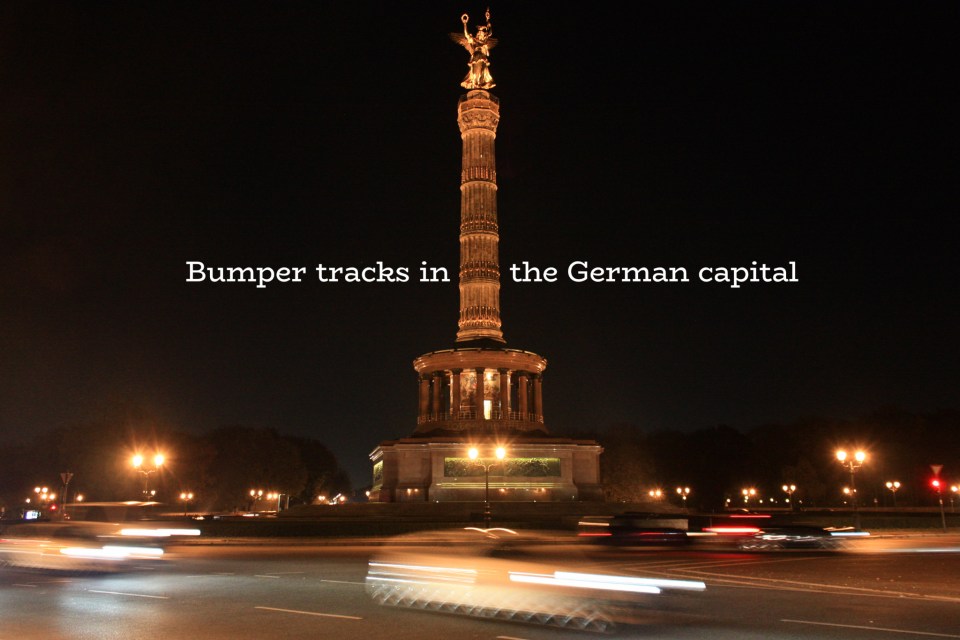
Siegessäule, Grosse Stern, Tiergarten, Berlin, Germany, fotoeins.com

My Berlin: 30 tracks for the German capital

Above/featured: Siegessäule & Grosse Stern, at night – 13 Nov 2012 (HL).

I compiled a list of songs accompanying my travel, a soundtrack that’s full of meaning and memories. This is another set, a listing of tracks I associate with Germany’s capital city. Music is always about personal selection, and every track fires a specific memory of time and place within Berlin. For example, watching “Lola rennt” (Run Lola Run) in a movie theatre in Toronto in the fall of 1998 planted the seeds for a move to Germany three years later. My first visit to Berlin soon after marked the beginning of a deep love affair with the “grand lady of BAER’leen.”


( Click here for more )

Vienna: Disrupting Historicism with Modernism (1918-2018)

Above/featured: Modernism at Steinhof Church: building by Otto Wagner, angels by Othmar Schimkowitz, stained glass by Koloman Moser (HL).

Vienna is as much a present-day cultural capital city as she was for decades and centuries. Many will get a peek and taste of long-established aspects of the city by walking the streets of the Old Town for the atmosphere, chatting in cozy cafés with coffee and cake for the ambience, and swaying to the rhythms of the waltz under the spell ofOlbr the (blue) Danube.

The early years of the 20th-century were troubled by greater calls for more autonomy from multiple ethnic groups within the patchwork of the Austro-Hungarian empire, by destruction and loss of life from The Great War (World War I), and by subsequent dissolution of the Empire. The capital city became an open theatre for socioeconomic and political changes across all class divisions within an environment where rebellion and revolution were the big talking points against the dogma of long-held traditions. Deep longing for the stability of the old and familiar mingled with equally enthusiastic desire for the radical of the new and mysterious.

Many in the arts, design, and cultural scene were questioning the excessive persistence of past styles, and were seeking something new to better represent changes happening all around them in Vienna. In 1897, a group of artists and architects resigned from the established Künstlerhaus to form the Vereinigung Bildender KĂĽnstler Ă–sterreichs (Union of Austrian Artists), known also as the Vienna Secession. Architecture moved towards a sharper focus to geometry and abstraction, and art flowed to the decorative with organic floral-like designs in the Jugendstil, Art Nouveau’s chapter in German-speaking lands. To promote their new ideas, the Secession group produced an official magazine called Ver Sacrum (“sacred spring” in Latin, 1898) and constructed the Secession building (1897) as an exhibition hall to display their work. The Wiener Werkstätte (Vienna Workshops) was created in 1903 as an association of artists whose thinking and applied arts creations were a precursor to the Bauhaus movement. Members of the Werkstätte worked with Vienna’s architects to broaden and unite the various concepts for a complete artwork, or Gesamtkunstwerk, as applied to a living space: the house, its rooms and furnishings, the interplay of light and space, and the tools and utensils for every day aspects of living.


( Click here for images and more )

Innsbruck’s Hungerburgbahn, by Zaha Hadid

As much as the Austrian federal state of Tirol is about mountains, spending time in the capital city of Innsbruck is also about reaching those very heights. To that end, Iraqi-British architect Zaha Hadid left her mark in Innsbruck with her redesigned Bergisel Ski Jump which opened in 2002, and her “Shell and Shadow” design of the Hungerbergbahn stations which opened in 2007.


( Click here for images and more )

Munich: Memorials to the 1972 Olympics Massacre

Above/featured: Munich’s Olympic Park: Olympic Tower and the tent roof structure.

In my hockey-mad nation of birth, September 1972 is defined by the epic hockey Summit Series between Canada and the Soviet Union; the games and individual stories are stuff of legends. But high on my mind since childhood have been the tragic events that same month in Munich: the worst terrorist act in modern Olympics history.

The 20th Summer Olympics were under way in Munich, Germany, and “Die heiteren Spiele” (The serene Games) as they were called were the first summer games held in post-war Germany since the 1936 Berlin Olympics. Both Munich and Germany wanted to show a different peaceful and prosperous side to the world with the generation born after the Second World War.

However, the 1972 Games will also carry the stain of the “Munich Massacre” on 5-6 September. By crisis’ end, the 17 dead included eleven members of the Israeli Olympic team, one German police officer, and five Palestinian kidnappers. Many questions remained about pre-Game preparations and warnings about a possible attack, security measures, crisis management, and the failed attempt to liberate the hostages. Complete details of events remain murky even after 40 years. The disaster would damage the reputations of city, state, and country as well as international relations for years to come.


( Click here for images and more )