Fotoeins Fotografie

location bifurcation, place vs. home

Posts tagged ‘station’

Munich: Ghost station “Olympic Stadium”

In the vicinity of Munich’s Olympic Stadium is a train station overgrown with brush and weeds. The tracks stretch north and south, but go nowhere.

Munich played host to the Summer Olympics in 1972; physical reminders include the Olympiadorf (Olympic Village), Olympiapark, and the Olympiastadion (Olympic Stadium). In 1988, the train station “München Olympiastadion” closed to train service for the final time. Rail tracks which connected the station with the North Ring freight tracks were cut, isolating the station and leaving it to decay.

Since 2001, the Olympic Village has been listed as part of the heritage Olympiapark ensemble which includes the abandoned station. But will the station be left to decay? Or will the station be refurbished in some way to become a living memorial?

Historical maps of the MVV U- and S-Bahn system show how train service from central Munich to Olympic Stadium was utilized. S-Bahn train service carried passengers along the central trunk to Olympic Stadium via Hauptbahnhof, Laim, and Moosach; check out the system maps for June 1972 and June 1988.


( Click here for images and more )

Marienplatz, MVG München, U-Bahn, München, Munich, Germany, fotoeins.com

From the World Outside & Into Munich’s Metro

Above/featured: U-Bahnhof Marienplatz.

After dozens of visits since 2002 to Germany’s Munich, I’ve become familiar with the city’s transport network. For the city’s residents, the day-to-day work commute from the upside and into below can merge into a monotonous grind. The following images within five U-Bahn or metro sitations might challenge that notion with ghost-like and otherworldly appearances.


Georg-Brauchle-Ring

Georg-Brauchle-Ring, MVG München, U-Bahn, München, Munich, Germany, fotoeins.com

7am morning commute (IG)


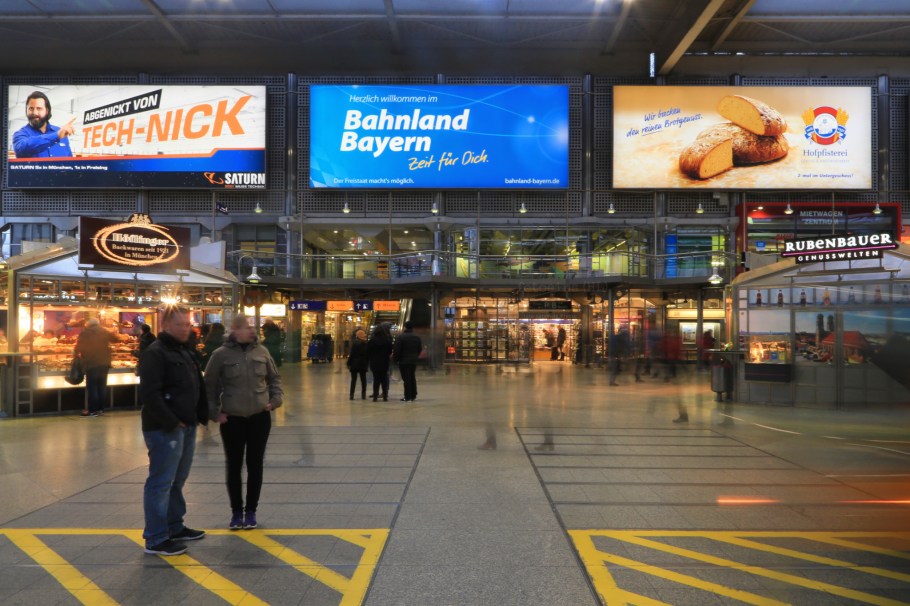
Hauptbahnhof

Hauptbahnhof, MVG München, U-Bahn, München, Munich, Germany, fotoeins.com

Bahnland Bayern (IG)


Lehel

Lehel, MVG München, U-Bahn, München, Munich, Germany, fotoeins.com

One foot in front of the other … (IG)


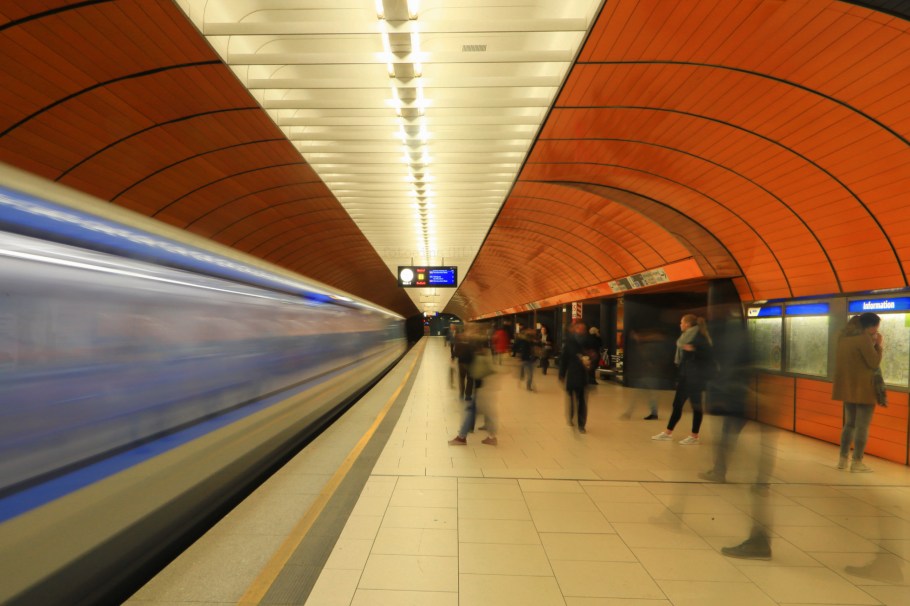
Marienplatz

Marienplatz, MVG München, U-Bahn, München, Munich, Germany, fotoeins.com

U6, nach/to Klinikum Grosshadern (IG1, IG2)


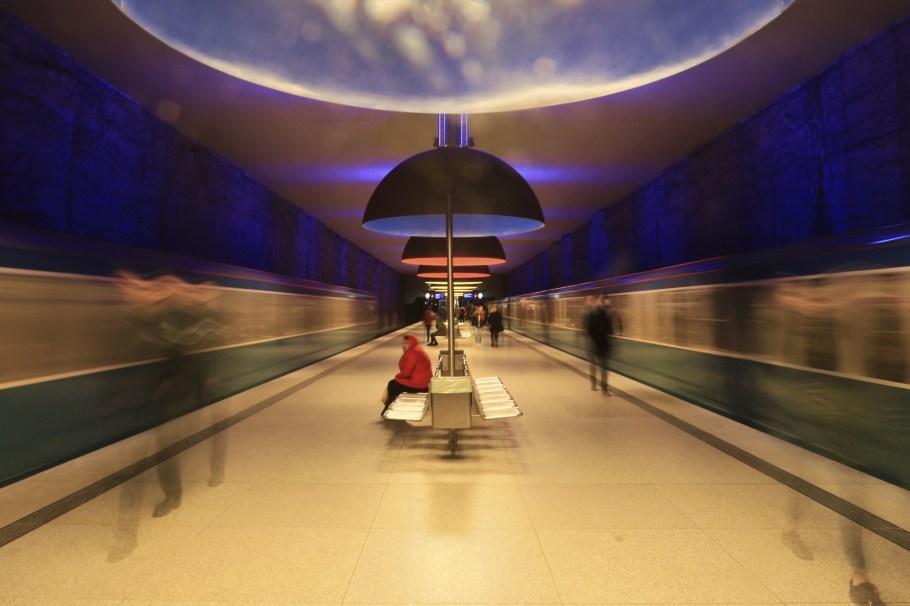
Westfriedhof

Westfriedhof, MVG München, U-Bahn, München, Munich, Germany, fotoeins.com

Comings and goings (IG)


I made all pictures above between 22 and 24 February 2017 inclusive. Alle Fotoaufnahmen sind mit Wasserzeichen versehen worden. This post appears on Fotoeins Fotografie at fotoeins.com as https://wp.me/p1BIdT-buj.

Hong Kong: almost China at the Lo Wu gateway

I’m at the turnstiles, off to the side from the steady stream of people going through to the other side.

I’m standing on the one side in Hong Kong (香港).

The other side is the city of Shenzhen in the People’s Republic of China’s province of Guangdong (Kwangtung | 廣東 | 广东).

MTR trains come in from Hong Kong and stop here at the end of the line. People pour out of the trains, and head for Shenzhen. There are occasional lulls in between frequent arrivals and departures of the trains, reminding me I’m in the middle of the countryside and at the frontier section separating between what most people know as Hong Kong and China.

Over on the “other” side, Shenzhen is a strong economic force, helped along by its special designation as a Special Economic Zone (SEZ), but there’s still a special allure for many to working inside Hong Kong’s Special Administrative Region. MTR rail passengers depart Hong Kong and enter Shenzhen at either the Lo Wu or Lok Ma Chau (Spur Line) crossings. The average cross-border passenger traffic numbers are 220,000 and 80,000 people per day, at Lo Wu and Lok Ma Chau, respectively (Source 1, Source 2).

From an economic, urban planning, and logistics point of view, it’s no surprise there’s a push to amalgamate Shenzhen with Hong Kong to create a super-metropolis here at the mouth of the Pearl River. Hong Kong has over 7 million people, whereas the population of neighbouring Shenzhen exceeds 13 million. Many would like to see easier and faster movement of goods and people between the two cities, but many in Hong Kong fear an exacerbation of existing problems with overcrowding and overburdened resources.

But what of the people going back and forth? How many from China and/or Shenzhen enter Hong Kong for work or school, and reverse course at the end of every day? How many from Hong Kong go to work in Shenzhen?

I wonder what the daily routine is for someone going back and forth between Shenzhen and Hong Kong. I watch patiently, and I wonder what it’s like on the other side. I have no doubt there’s someone on the other side in Shenzhen who’s wondering the same thing.

( Click here for images and more )