Fotoeins Fotografie

location bifurcation, place vs. home

Posts tagged ‘Saechsisches Elbland’

Haus Meissen, Meissener Porzellan, Staatliche Porzellan-Manufaktur Meissen, Meissen, Sachsen, Saxony, Germany, fotoeins.com

Meissen: centuries of porcelain-making tradition

In a present-age of speed, screens, and instant gratification, there are reasons to hold onto something tangible in your hands, something as simple as a cup, a plate, a bowl; all high-quality products made in the slow time-honoured way developed over centuries as an important local and, now national, cultural tradition.

First time porcelain production began in China going back at least 1000 years BCE with the subsequent centuries yielding hard durable highly-valued products in white, blue-and-white, and green. With European naval powers reaching Asia in the 16th and 17th-centuries, porcelain found new customers and high demand as “white gold” on par with gold and silver. Admiration and envy got many in Europe to thinking: all we need are some chalky deposits, some water, and some big hot ovens, and we’ll be rich … apart from chemistry, the correct firing or curing temperatures, experimentation, and skill. Until the early 18th-century all porcelain came from China, which is how the present-day phrase “(fine) china” arises.

The European debut to porcelain-making began in 1710 in Albrechtsburg castle in Meissen. When the big guy (who pays your wages or is holding you prisoner) says: “go ye therefore and make me some ‘gold'”, one tends to heed those orders. Frequently in need of funds, Augustus the Strong imprisoned and ordered the alchemist Johann Friedrich Böttger to produce “gold”, but with mathematician and physicist Ehrenfried Walther von Tschirnhaus’ guidance, the two gentlemen did the next best thing and produced Europe’s first “white gold.” Porcelain manufacturing moved from the castle to the present location outside of Meissen’s old town in 1863.

We enter the Meissen Couture and its porcelain museum for a look behind the scenes. Why worry about modern techniques like 3-d printing when you’ve got motivated people willing to put in the hours; their hearts, minds, and souls into their craft? The basic creative instinct and personal touch live on in the town of Meissen in Germany’s Saxony.
( Click here for images and more )

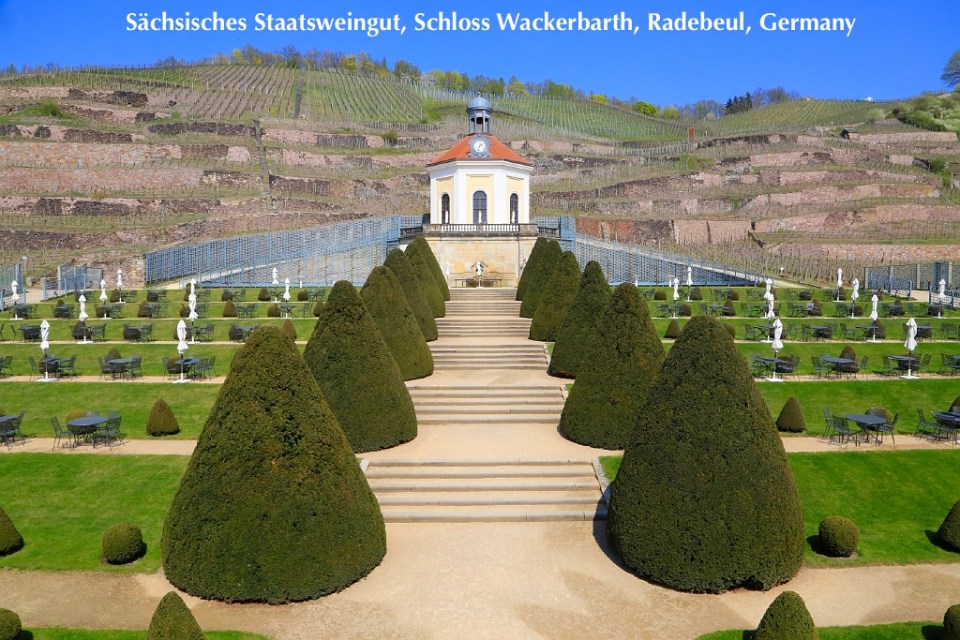
Sächsisches Staatsweingut, Schloss Wackerbarth, Radebeul, Saxony, Germany, fotoeins.com

Celebrating Saxon wine tradition at Schloss Wackerbarth

I have a confession.

Red wines and I have rarely gotten along.

With the exception of the Chilean Carménère, reds generally feel I’ve been pouring scarlet poison down my gullet, burning and tearing the esophageal lining on the way down to my stomach, into a slow boil, scalding and churning with fury.

Dear crimson nectar, you’re all hot and alluring dressed in your tannins, but I cannot have you any more. The subsequent days of post-red churning-gut syndrome are over. I’ve left you for the clean, smooth, sharp, sexy blondes, because frankly, I’m having a lot more fun with the whites. I admit I’ll occasionally stray to the familiar Carménère, but I will always bring white wine back home.

( Click here for images and more )

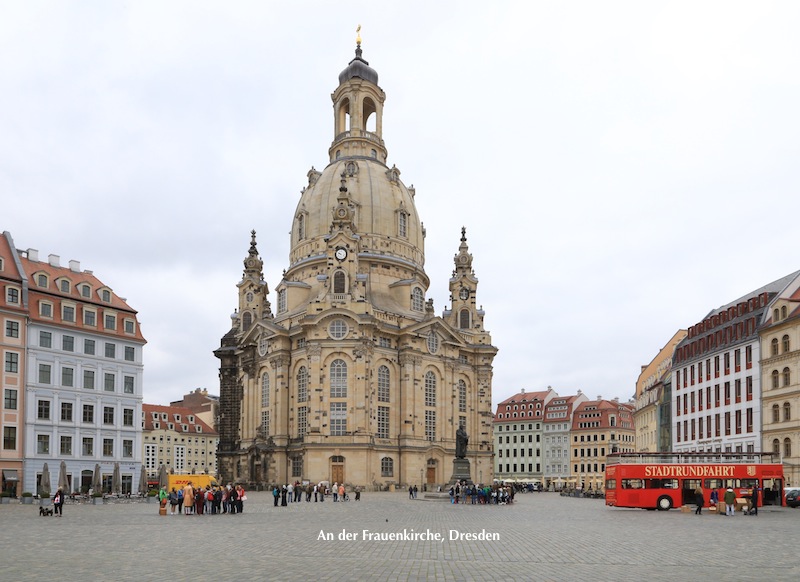
An der Frauenkirche, Dresden, Germany, fotoeins.com

The bright side of Dresden (IG)

It’s 6am in southeast Germany, and I’d like to know how this city will look on a spring morning. Unfortunately, there’s mid-level cloud and there won’t be any direct sun this morning. I’m no longer in a rush, and by 7am, I’m on the Carolabrücke over the Elbe river for the following view of the Dresden skyline.


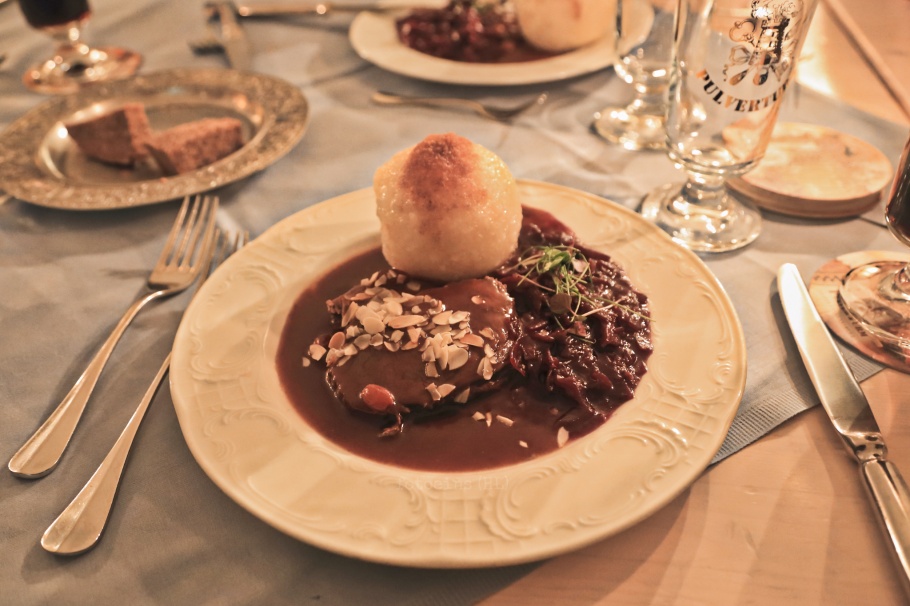
Later that evening I’m in Pulverturm Restaurant near the Frauenkirche, and I’m among about two dozen other travel-trade and -press representatives from around the world. I have a Saxon version of the Sauerbraten, accompanied by red sauerkraut and a big potato dumpling: the right combination of sweet, savory, and sour, representing Saxony.

Pulverturm, Frauenkirche, Dresden, Saxony, Sachsen, Germany, Deutschland, fotoeins.com

At Pulverturm: Saxon Sauerbraten with apple red-cabbage slaw with raisins and a King-size potato dumpling. Photo on 22 Apr 2015.


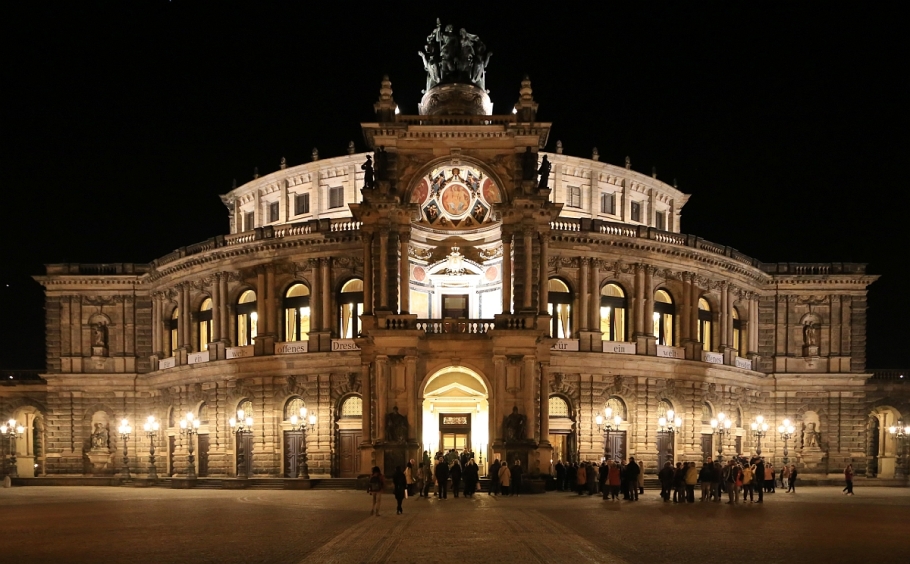
The evening ends with a guided-tour of the interior to the city’s famous Semperoper opera house. Other groups outside are waiting to enter the opera house to have a look inside; we’re fortunate to leap ahead and have a look inside.

Semper Oper, Theaterplatz, Dresden, Sachsen, Germany, fotoeins.com

Classic night shot of the Semperoper – 22 Apr 2015.


I made all of the photos above on 22 April 2015 with a Canon EOS6D mark1. I’m grateful to Germany Tourism and Dresden Marketing for supporting and providing the activities. This post appears on Fotoeins Fotografie at fotoeins DOT com as http://wp.me/p1BIdT-6L3.