Fotoeins Fotografie

location bifurcation, place vs. home

Posts tagged ‘river’

Worms: world’s largest Reformation Monument

Arriving by German rail or on Rhine river cruises, visitors to the city of Worms (pronounced ‘VOHRmz’) will likely sample the crisp wine from the surrounding Rheinhessen region; learn about the 5th-century Nibelung saga; see important religious symbols including the “crown” that is St. Peter’s Cathedral, and remaining structures from the once-thriving Jewish community which along with Speyer and Mainz formed a medieval league of Jewish communities. Many will retrace Martin Luther’s steps in the city.

In April 1521, Luther was ordered to appear at the Diet (Imperial Parliament) convening in Worms. In the presence of Holy Roman Emperor Charles the Fifth, Luther held firm against charges of heresy and refused to recant. What’s amazing is that Luther survived the triumphant journey from Wittenberg to Worms and, with his subsequent status as “outlaw” from the imperial edict following the Diet, Luther survived departure from Worms because his benefactor, Friedrich III, secretly arranged for Luther to be “kidnapped” and brought to safety at the Wartburg Castle in Eisenach.

( Click here for images and more )

street art, mural, Herakut, Metropolink, Heidelberg, Germany, fotoeins.com

My Heidelberg: Herakut street art for Metropolink

It’s amazing what gets discovered after going the wrong way.

I head straight for a full city-block before realizing my error, that I should’ve turned right about 5 minutes ago. I bow my head, and release a deep breath in frustration. I raise my head to the sky, when I catch sight of something out of the corner of my eye.

What’s that across the street?

I have to reach my destination which I know isn’t far.

But I am coming back here to get the shot.


( Click here for images and more )

Fraser River, Port Mann Bridge, Coquitlam, Port Coquitlam, BC, Canada, fotoeins.com

World Rivers Day: 50+ rivers from around the world

Above: Fraser River, east from Port Mann Bridge, between Coquitlam and Surrey, BC (HL).

The fourth Sunday in September is World Rivers Day. The University of Oxford’s Dictionaries defines ‘river‘ as:

“a large natural stream of water flowing in a channel to the sea, a lake, or another river.”

A river has always been water supply and demand: daily use and consumption; farming and agriculture; and where the waste goes, often back into the same supply. A river has always been about transport: trade and delivery of goods; shuttling people between places; and with people travelling, the exchange of language and culture. Throughout history, the establishment of towns and cities and the subsequent development of rivers have been about a mix of urban and rural elements, and about the relationship and interactions between people and their waterways.


( Click here for images and more )

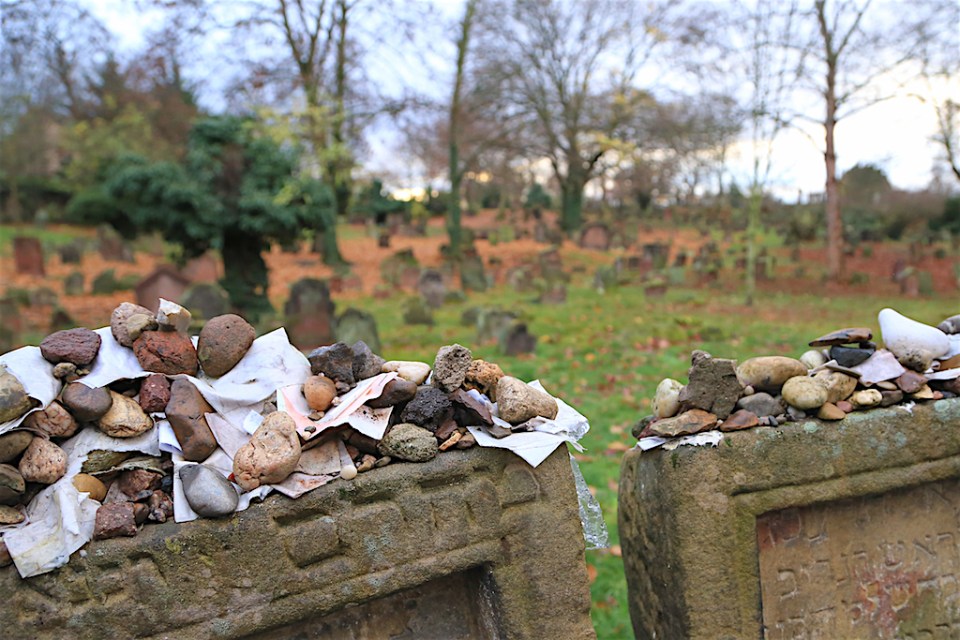
Juedischer Friedhof, Heiliger Sand, Jewish Cemetery, Holy Sand, Worms, Rheinland-Pfalz, Rhineland-Palatinate, Germany, fotoeins.com

Worms’ Holy Sand: The Rabbi and the Patron

From Worms to Rothenburg, and back to Worms.

Located near the entrance to Worms’ old Jewish cemetery are gravestones of two important figures in medieval Jewish-German history. The cemetery is also called “Holy Sand”1, and is one of many places of interest in the medieval ShUM league of Jewish cities. The gravestones for Rabbi Meir ben Baruch (centre) and Alexander ben Salomo (right) are shown in the picture below.

( Click here for more )

ShUM, SchUM, medieval Jewish cities, Speyer, Shpira, Worms, Warmaisa, Mainz, Magenza, Germany, Ashkenaz, Rheinland-Pfalz, Rhineland-Palatinate, fotoeins.com

ShUM, Jerusalem on the Rhine: Speyer, Worms, Mainz

When threats of destruction to property and life follow and linger over a group of people through no fault of their own over centuries, there’s something to be said about an eternal need to keep a watchful eye. Words like Verfolgung, Vernichtung, and Vertreibung1 have been etched into memory. I have all this in mind as I explore Jewish history in Germany as part of my need to answer the following question:

How did a nation of people which fostered composers Bach, Beethoven, Handel, Mendelssohn-Bartholdy, Strauss; and writers Goethe, the Brothers Grimm, Heine, Hesse, Heinrich and Thomas Mann, and Schiller sink to the worst depths of human atrocity and depravity in the first half of the 20th-century?

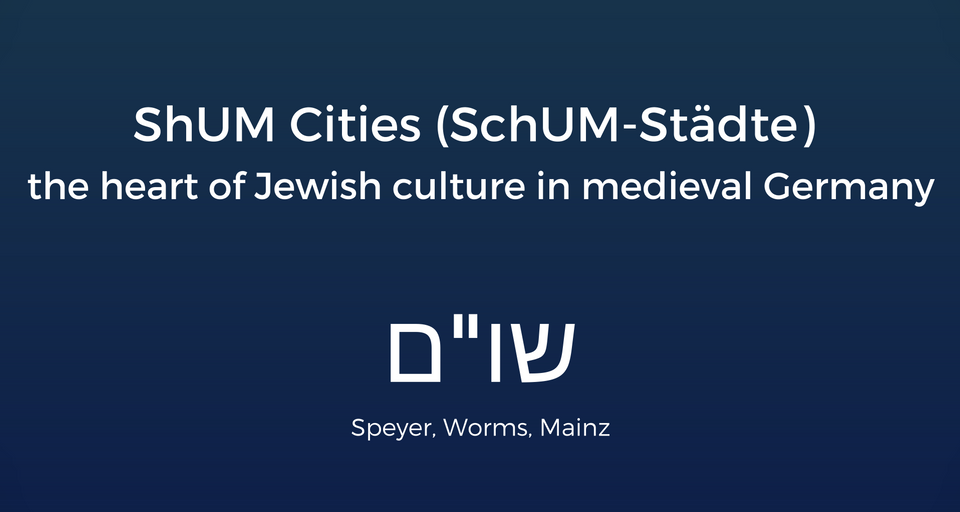
It’s easy to forget Jewish people have lived in what is now Italy and southern Europe since the middle of the 2nd-century BCE and inhabited southern Germany from the late 10th-century AD/CE2. During the High Middle Ages, three important bishopric (and cathedral) cities of Speyer, Worms, and Mainz along the Rhine river formed an important league or federation of Jewish communities (Kehillot) from the end of the 10-century to about the mid-to-late 14th-century. The word שו”ם or ShUM (SchUM in German)4 is an acronym consisting of the first letters of the Hebrew names for the three cities:

•   Shin (ש), Sh for Shpira (שפירא) → present-day Speyer;
•   Waw or Vav (ו), U for Warmaisa (וורמש) → present-day Worms;
•   Mem (ם), M for Magenza (מגנצא) → present-day Mainz.

The ShUM cities became centres for learning, training, religion, culture, and trade within medieval Germany (Ashkenaz3) and throughout Europe. Today, the three ShUM cities establish key destinations for historical travel, provide rich examples for continuing research on medieval Jewish life, and add up to a comprehensive project in recognizing an important chapter of the history of Jews in Germany.

The ShUM/SchUM was inscribed as World Heritage Site by UNESCO at the 44th meeting of the World Heritage Committee in July 2021. ShUM is Germany’s 1st all-Jewish world heritage site, a big acknowledgement to the centuries-long presence of the Jewish community along the Rhine river.


( Click here for more )