Fotoeins Fotografie

location bifurcation, place vs. home

Posts tagged ‘park’

Georgengarten, Dessau-Wörlitz Garden Realm, Gartenreich, UNESCO World Heritage Site, Dessau, Saxony-Anhalt, Sachsen-Anhalt, Germany, fotoeins.com

Dessau: George Gardens, Garden Kingdom UNESCO WHS

Above/featured: Guided Bauhaus tour stopping momentarily in the Georgengarten.

How times have changed: I wouldn’t have given Dessau a second thought a time ago. But after speaking with representatives from Saxony-Anhalt and after spending a few days in the city, I’ve better understood the historical and cultural significance, and those who feel strongly about culture and history should give Dessau a chance.

Dessau is a German city of about 80-thousand people in the federal state of Saxony-Anhalt, and is known as the second capital of Bauhaus in the early 20th-century movement of modernism for design and architecture which has been given inscription as World Heritage Site.

If you’re in town to check out various Bauhaus sites, there’s a 2nd heritage setting over a vast green space. East of the Bauhaus Masters’ Houses are a set of Roman ruins marking the edge of Georgengarten (George Gardens); further in the park is the Schloss Georgium (Georgium Palace). Since 2000, both Georgengarten and Schloss Georgium are part of the UNESCO World Heritage Site that’s shared with the neighbouring city of Wörlitz.

( Click here for more )

The Sphere and Circle of Life

The sport called “soccer” (association football) in North America is known as “football” in the United Kingdom, “Fussball” in Germany, “fútbol” in Spanish-speaking countries, and 足球, literally “foot ball”, in China.

It may sound glib to some, but to many in Brazil, for example, “football is life, and life is football.” The game can be cruel when one side dominates the balance of play only to lose a match. But so too can life, when a turn of events can suddenly make a good-run into bad.

I played soccer when I was a lad; unfortunately, I played the game poorly. I remained a fan, remembering how the Vancouver Whitecaps won their championship in 1979 as their popularity peaked and stretched into the early 1980s.

I’ve always thought about how this relatively simple game is important to people around the world. Football in Africa and Latin America is a way of life, and football also offers a way to a better life. Moving to Germany in 2002 meant learning a lot about how significant the sport was to people within Germany and Europe, and about how integrated “Fussball” was in people’s lives. By comparison to season-dependent sports, the relatively low-cost to play and the versatility of playing in- and outdoors the entire year is attractive to many North Americans looking to pick up a game or sport.

The football pitch below is located at a former race-track in a neighbourhood park, not far from where I was raised in Vancouver’s Strathcona neighbourhood. In late-spring and summer, the pitch is used frequently for local league matches.

I found the same pitch empty at 630pm on a late-spring Saturday evening, and I liked how the goalposts lay long shadows on the grass below. In the setting sun, the shadows seem to reach out towards the centre-circle, and I felt the “pull” towards the centre of the field. Was this a buried memory, of what it was like to run up and down the pitch?

The shadows’ stretch struck a chord, and I thought next about the diurnal rising and setting of the sun. The daily cycle occurs without exception around the world. Soccer/football is one of the few games played universally around the world. Language might be an obvious hindrance, but put a ball down, and the boundaries come down in smiles and laughter.

Called by different names, a world game with a round ball seems to defy borders very well, judging by what I’ve seen on travel.

Strathcona Park, Vancouver, BC, Canada

I made the photos above in East Vancouver, Canada on 22 June 2013. This post appears on Fotoeins Fotopress at fotoeins.com.

My Stockholm: finding Greta Garbo in Skogskyrkogården

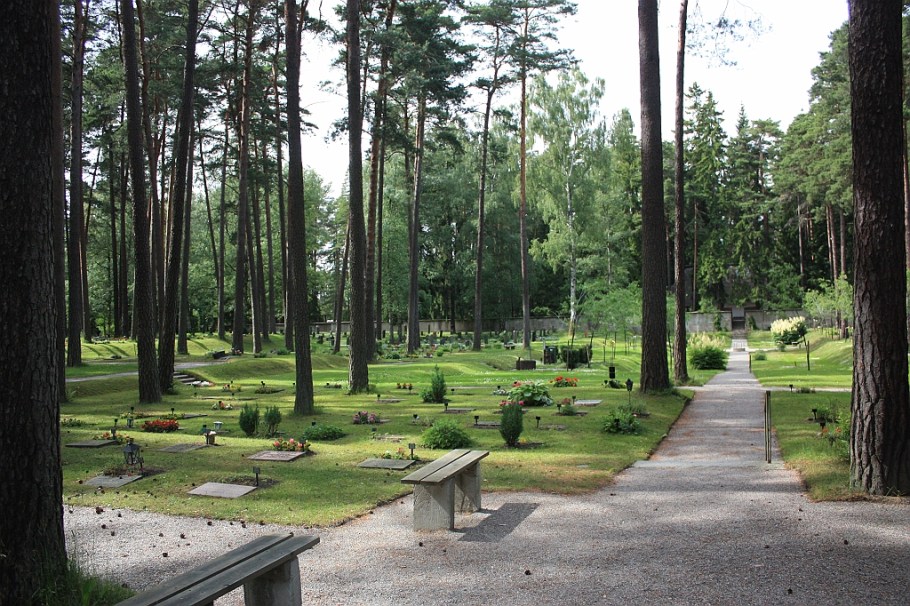
The Skogskyrkogården, or Woodland Cemetery, is located about 15 minutes by metro, south from central Stockholm in Sweden. For its unique design, aesthetic character, and expanse both vertically and horizontally, the forest cemetery was declared a UNESCO World Heritage Site in 1994.

I had read that Greta Garbo was buried here, and I wanted to find out for myself.

Skogskyrkogarden Stockholm

North entrance.

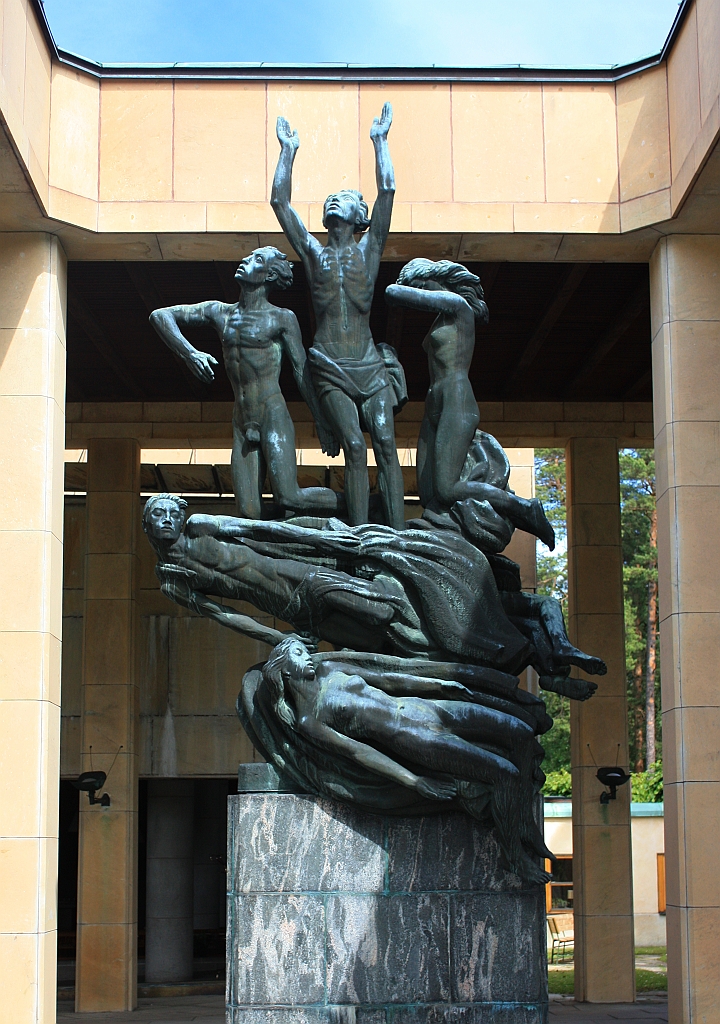
Resurrection Statue, Monument Hall

Resurrection Statue, by John Lundqvist (1930), in Monument Hall.
Skogskappellet, Woodland Chapel, Skogskyrkogarden, Woodland Cemetery, Stockholm, Sweden, fotoeins.com

Skogskappellet (Woodland Chapel), with golden copper “angel of death”.

Skogskyrkogarden, Woodland Cemetery, Stockholm, Sweden, fotoeins.com

Skogskyrkogarden (Woodland Cemetery).

Skogskappellet, Woodland Chapel, Skogskyrkogarden, Woodland Cemetery, Stockholm, Sweden, fotoeins.com

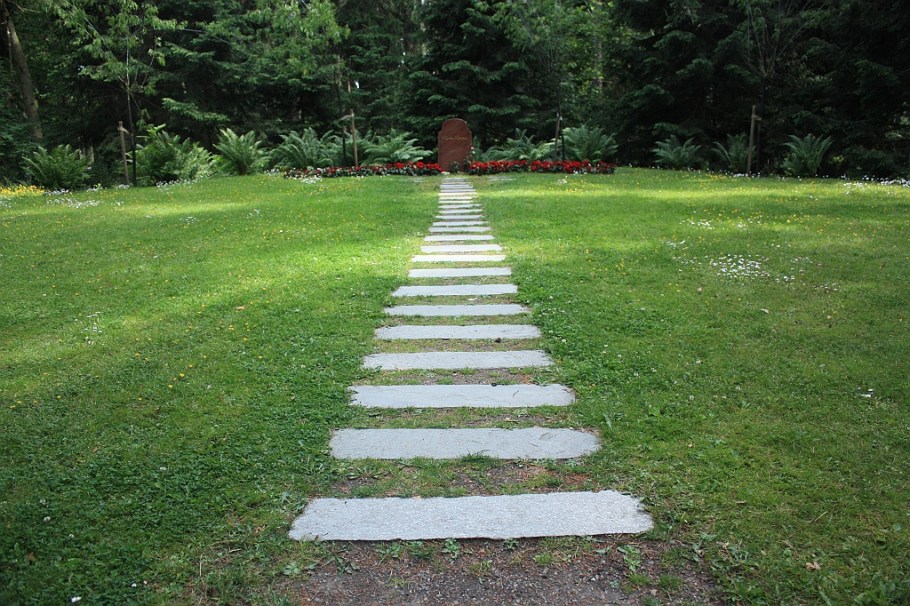
Lead up to Greta Garbo’s grave.

Skogskyrkogarden Stockholm

Modest marker for Garbo’s final resting place.

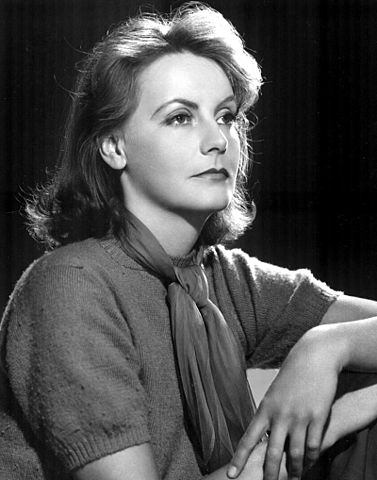
Greta Garbo

Born Greta Lovisa Gustafsson in Stockholm in 1905, Greta Garbo was discovered at the age of 17. She was honoured with four Academy Award nominations for her work which transitioned successfully from silent-films to “talkies” in what is now considered the “Golden Age” of filmmaking. Even now, she is considered one of the most beautiful women and one of the most important actresses ever to appear on the big screen. After only 27 films between 1924 and 1941, she retired to private life, away from celebrity spotlight. After her death in 1990 and subsequent legal issues, her cremated remains were buried in 1999 at Skogskyrkogården in the city where she was born.

In the 1955 biography “Garbo” by John Bainbridge, Garbo is quoted as saying:

I never said, ‘I want to be alone.’ I only said, ‘I want to be left alone.’ There is all the difference.

To reach the forest cemetery from Stockholm’s city centre, take the Tunnelbana green metro line 18 southbound in the direction “Farsta strand” to the stop called “Skogskyrkogården”. There is no charge or fee to enter Skogskyrkogården. Garbo’s grave is located south of the Skogskappellet (Woodland Chapel).


More from Stockholm

•   The colours of Gamla Stan, Stockholm’s Old Town
•   Say “Hej!” (and to food) at Lisa Elmqvist in Östermalm’s Saluhall market hall
•   Daytrip to Vaxholm in Stockholm’s archipelago

The publicity photo above of Greta Garbo is by Clarence Sinclair Bull for MGM in 1939 (Wiki). I made the remaining photos above on 25 June 2008. This post is published on Fotoeins Fotografie at fotoeins DOT com as http://wp.me/p1BIdT-vP.