Fotoeins Fotografie

location bifurcation, place vs. home

Posts tagged ‘Oesterreich’

My Fuji X70: CineStill 800T (XTrans2 recipe)

Above/featured: Archangel Michael dispatching the devil: St. Michael’s Church, Vienna – 1 Jun 2023.

The Fujifilm X70 mirrorless fixed-lens prime camera has added a lot to my approach to photography for projects in domestic and international scope. To satisfy my curiosity about Fujifilm’s analog-film simulation (film-sim) recipes for varying “looks” and “palettes” applied to images, I’ve provided examples of X70 images with these recipes:

•   Ektachrome 100SW (saturated warm)
•   Fujichrome Slide
•   Kodachrome 64
•   Kodacolor
•   Kodak Platinum 200

Here I show images made with the “CineStill 800T” recipe, which Ritchie Roesch describes in Fuji X Weekly:

… CineStill 800T is Kodak Vision3 500T motion picture film that’s been modified for use in 35mm film cameras and development using the C-41 process. Because it has the RemJet layer removed, it is more prone to halation. The “T” in the name means tungsten-balanced, which is a fancy way of saying that it is white-balanced for artificial light and not daylight. … Even though the film that this recipe is intended to mimic is Tungsten-balanced, the recipe can still produce interesting pictures in daylight. It’s a versatile recipe, but it definitely delivers the best results in artificial light.

The recipe is for the X-Trans II sensor; the settings on my X70 are:

  • “Pro Neg Std” built-in film-sim
  • Dynamic Range: DR400
  • Color: -1 (Medium-Low)
  • Sharpness: 0 (Medium)
  • Highlight: +2 (High)
  • Shadow: +1 (Medium-High)
  • Noise Reduction: -2 (Low)
  • White Balance: 4300K; -3 Red, -3 Blue
  • ISO: Auto, up to 3200

I assigned this recipe for the “nighttime” setting as 1 of the 7 camera’s custom presets, but I also experimented in daylight at a variety of locations. The following JPG images are “almost” straight-out-of-the-camera; only adjustments to brightness level and a crop to a predefined image size have been applied, with no corrections to colour, contrast, geometric distortion, or rotation. I agree with Roesch’s statement about getting “best results” after dark in artificial light, but I got some interesting images in daylight as well.

( Click here for images )

Vienna: Lichtzeichen testament to Jewish presence

Above/featured: Lichtzeichen number 10 (Stumperschul) in the city’s 6th district. Photo, 28 May 2022.

From a distance, the light seems suspended in mid-air.

Closing the distance widens my realization: it’s an illuminated sculpture that has a curved warped shape on top. That’s also when understanding narrows into sharp focus when I stand directly underneath: the shape “straightens” out, revealing itself as a Star of David.

Lichtzeichen Wien (LZ) consists of 26 structures in the Vienna region, marking former locations of synagogues, schools, temples, and prayer rooms destroyed by the Nazis in the pogrom of November 1938. During the night of 9–10 November 1938, the Nazi regime organized and carried out a systematic attack against the Jewish population in Germany and Austria. The rampage in Vienna continued for several days; most of the city’s synagogues, temples, and prayer-halls were destroyed.

Launched by the Jewish Museum Vienna and Austrian artist Brigitte Kowanz, an urban memorial project by joint collaboration of the Jewish Museum Vienna and the University of Applied Arts Vienna consists of identical columns, designed by artist Lukas Kaufmann. The commemorative project is called “Ot” (אות), which means “symbol” in Hebrew. Each “light column” sculpture stands about 5-metres high with a star of David, and includes the name of the former Jewish structure and an accompanying QR-code. Official unveiling of the memorial project occurred in 2018 on the 80th anniversary of the 1938 pogrom.

I visited and photographed all 26 Lichtzeichen locations in Vienna over a period of three summers in 2022, 2023, and 2024.


( Click here for images and more )

Vienna: Dr. Olga Ehrenhaft-Steindler, trailblazer & women’s advocate

In examining the history of the University of Vienna, I discovered Olga Ehrenhaft-Steindler was the first woman to receive a doctoral degree in physics from the university in 1903. Who was she? How did she become the first? How did society of the time view the education of young women?

I’m starting a series on women who left their mark on Vienna and Austria, and some of the traces they left behind in the Austrian capital city. With educators, inventors, writers, and scientists, my serial includes: Dr. Marietta Blau; Marianne Hainisch; Hedwig Kiesler, a.k.a. Hedy Lamarr; Dr. Lise Meitner; Dr. Gabriele Possanner; Dr. Elise Richter; and Bertha von Suttner.


Who: Dr. Olga Ehrenhaft-Steindler: b/✵ 28 Oct 1879, d/✟ 21 Dec 1933.
PhD: 1st woman with doctoral degree in physics from University of Vienna, 1903.
Educator: Early 20th-century teacher & advocate for better access to education for young women.

In late 19th-century and early 20th-century Austria and Vienna, Olga Steindler was one of countless women who faced difficulties and challenges by young women who wanted to expand their education and improve employment, all of which were viewed by society at the time as undesirable. Feminism or anything similar did not exist.

Born and raised in Vienna, Olga Steindler departed her home for Prague to complete and pass her final high-school examinations in 1899, because young women were not permitted to do so within Austria at the time. She subsequently enrolled at the University of Vienna to study physics and mathematics within the Faculty of Philosophy. Only two years earlier in 1897 had the University of Vienna finally accepted the enrolment of women, although they were initially allowed only into the Faculty of Philosophy. In 1903, Steindler became the first woman to receive a Ph.D. in physics from the University of Vienna after successfully completing her research dissertation.

Completing qualifications for teaching at secondary (high) schools in the same year, she joined the “Athenäum” where she taught young women about experimental physics; she also taught at Vienna’s first girls’ secondary school established by Marianne Hainisch in the city’s 1st district. In 1907, she founded two new schools in Vienna: a girls’ public secondary school in the city’s 2nd district, and a business school for young women in the city’s 8th district. Steindler married her physicist colleague Dr. Felix Ehrenhaft in 1908; she became known as Dr. Olga Ehrenhaft-Steindler. She championed the cause for educating girls and young women, and creating new opportunities in science, business, and society at large. For her dedicated service to the public, Austria awarded her in 1931 the title of “Hofrat” as a new member of the imperial court advisory council, an honour uncommon among Austrian women at the time. At the age of 54, Dr. Olga Ehrenhaft-Steindler died in December 1933 from complications after having contracted pneumonia.


( Click here for images and more )

Vienna’s St. Marx Cemetery, Biedermeier style

Above/featured: Morning visit to the city’s Biedermeier cemetery – 20 May 2022.

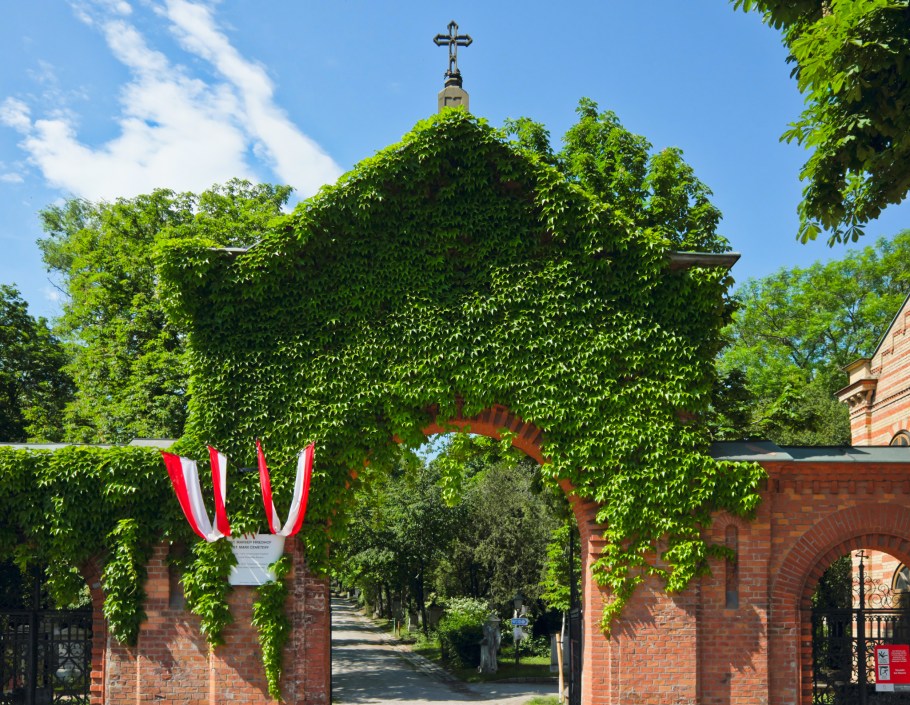
In Vienna’s 3rd district, the St. Marx cemetery is the only surviving Biedermeier cemetery in the city. A visit now is a jump into the frozen past. The cemetery opened with its first burial in 1784. Closure of the city’s multiple neighbourhood cemeteries began in 1873 with the final burial at St. Marx taking place in 1874. Subsequent funerary functions were transferred to the newly constructed Zentralfriedhof located farther out from the city centre. The very leafy avenues and “leafy gate” are what’s left of the city’s only remaining 18th-century cemetery that is now open to the public as a city-administered park.

Why Biedermeier

Biedermeier in Vienna corresponds to a cultural period during the first half of the 19th-century marked by increased industrialization in rapidly urbanized areas and strict censorship with the elimination of dissenting political voices. Instead of looking outward to change, the artist and design community moved to safer spaces in nature or to their homes. While innovation might have given way to a modest yet graceful and functional style, Biedermeier architecture in its neoclassical spin provided inspiration for subsequent Art Nouveau (Jugendstil) and Secession movements. An important Viennese architect of the period was Josef Kornhäusel who designed many buildings in the city. Important music from this period was composed by, for example, Beethoven, Chopin, Liszt, Schubert, Schumann. One of the largest collections of Viennese Biedermeier art is in the Belvedere’s collection. St. Marx cemetery is a reflection of both city and age from the 19th-century.

St. Marxer Friedhof, St. Marx cemetery, Biedermeier cemetery, 3. Bezirk, Landstrasse, Wien, Vienna, Austria, Österreich, fotoeins.com

Cemetery entrance. Photo, 5 Jun 2023.

St. Marxer Friedhof, St. Marx cemetery, Biedermeier cemetery, 3. Bezirk, Landstrasse, Wien, Vienna, Austria, Österreich, fotoeins.com

Main gate. Photo, 20 May 2022.

St. Marxer Friedhof, St. Marx cemetery, Biedermeier cemetery, 3. Bezirk, Landstrasse, Wien, Vienna, Austria, Österreich, fotoeins.com

Address: Leberstrasse 6–8. Photo, 20 May 2022.

St. Marxer Friedhof, St. Marx cemetery, Biedermeier cemetery, 3. Bezirk, Landstrasse, Wien, Vienna, Austria, Österreich, fotoeins.com

Information stone with visiting hours by month. Photo, 20 May 2022.


( Click here for images and more )

Vienna Heiligenstadt: Beethoven’s despair, deafness, & 6th Symphony

Above/featured: Memorial statue in Vienna’s Heiligenstadt Park; more details below.

Composer Ludwig van Beethoven spent a total of 35 years in Vienna, from 1792 with his arrival from Bonn until his death in 1827. Every summer, he would leave Vienna to stay in a country- or farm-house in Heiligenstadt which at the time was rural; a stagecoach trip from the inner city required several hours. Today, urban development and expansion have reached and overtaken the once verdant fields right up to the flanks of the city’s northern heights.

By 1802, Beethoven’s hearing loss was almost complete. With his doctor’s recommendation, Beethoven had hoped time away from the noisy city would help recover some of his healing, but after the summer had passed, his initial fears had come true: his hearing would not return. In desperation, Beethoven wrote to his brother a letter, known as the “Heiligenstadt Testament“. He never sent the letter to his brother; the letter would only be discovered 25 years later with Beethoven’s personal effects, shortly after his death in 1827.

I’m tracing out some of Beethoven’s footsteps in Heiligenstadt wrapped inside the present-day city’s 19th district of Döbling. All locations can be visited comfortably on foot in a single day. The following description is part of a larger overview of my search for Beethoven in the Austrian capital city.


( Click here for images and more )