Fotoeins Fotografie

location bifurcation, place vs. home

Posts tagged ‘Karlsplatz’

25T81 Vienna: former railway station pavilions at Karlsplatz

E80, V28.

In 2018, I returned to Vienna for the first time in 16 years. One of the first places I saw and visited was the Wien Museum Otto Wagner Pavilion at Karlsplatz. That started a journey of discovery: about the architect, about his building designs which remain a part of the urban landscape, and about the city’s first railway network which is now part of the modern public transport framework.

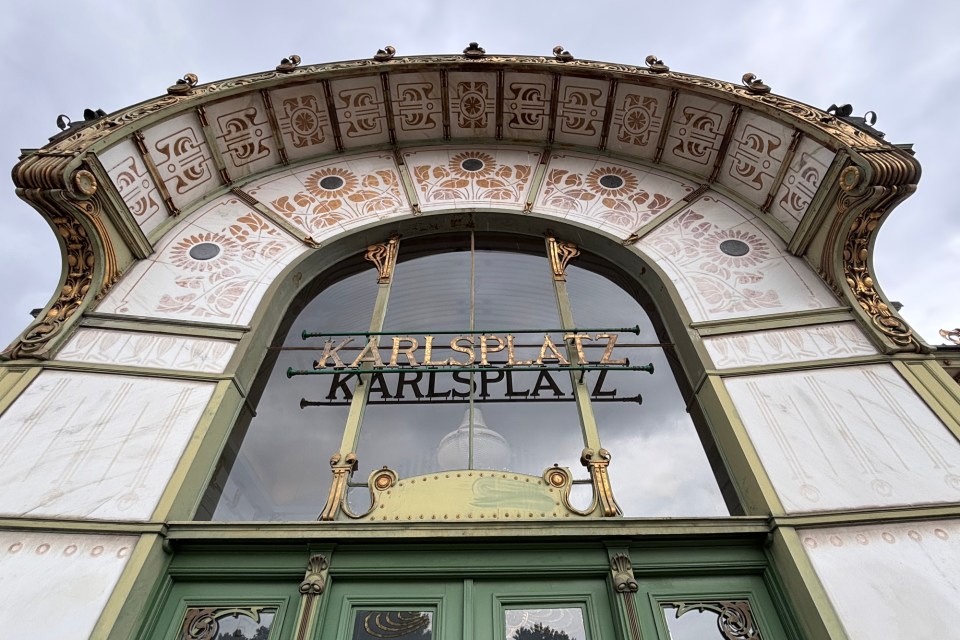
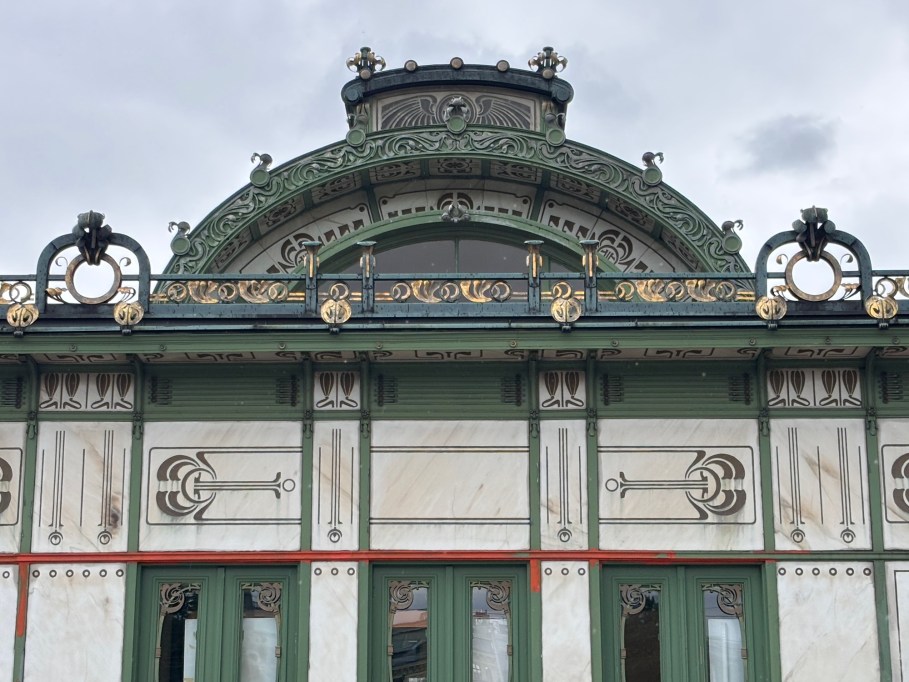
It’s summer 2025: my 5th visit to Vienna in 7 years. What’s “old and familiar” from repetition has become “fresh and new”. That means I said “hello” again to the former railway station pavilions at Karlsplatz, completed in 1898-1899 and shining examples of Vienna Art Nouveau (Wiener Jugendstil).

While the east pavilion has found new life as a bar, the west pavilion is home to the Wien Museum Otto Wagner Pavilion at Karlsplatz, which has a permanent exhibition about Otto Wagner and his direct involvement with the design and construction of the city’s first urban railway.

West pavilion, west side: at left is the entrance underground to U-Bahn lines U1 (red), U2 (purple), and U4 (green). Karlsplatz station is a junction for these 3 U-Bahn lines.
Detail of the western side.
West pavilion, east side: main entrance to the Wien Museum Otto Wagner Pavilion at Karlsplatz. At the surface, the museum is isolated from the U-Bahn junction station below ground.
Detail of the eastern face. For a civic construction of steel and concrete, there are plenty of floral and leafy motifs. For as much of the current U-Bahn signage solid in Helvetica or Sans-Serif font, there’s still life in the “old” lettering, bold and proud in Serif font.

I made all images above with an iPhone15 on 27 July 2025. This post composed within Jetpack for iOS appears on Fotoeins Fotografie at fotoeins DOT com.
25T71 Vienna’s city museum: permanent collection

E70, V18.

The Wien Museum at Karlsplatz extends its opening hours on Thursdays to 9pm, which gives everyone a better appreciation for its permanent collection in the examination of the city’s history that spans almost 8 centuries. The museum’s permanent collection is free of charge, but there is a charge to view the museum’s temporary exhibitions. The collection includes paintings, sculptures, posters, photographs, metalwork, various kinds of mementos and documents, and other forms of human keepsakes.


“The city of Vienna’s historical museum”
“Young Mother”, by Egon Schiele (1914). Schiele was a key figure in the early 20th-century Vienna Modernism cultural movement.
“Emilie Flöge”, by Gustav Klimt (1902). Klimt was another key figure in the early 20th-century Vienna Modernism cultural movement.
From 1904 to 1938, the three Flöge sisters operated their fashion and clothing shop in the Casa Piccola building on Mariahilfer Straße.
“Lady in Yellow”, Max Kurzweil (1899). The bright blue dot is a reflection of floor lighting.
The model for the painting was the painter’s wife Martha Kurzweil.
Poster: “A cry for help: read Bettauer’s weekly newsletter”. Writer Hugo Bettauer (1872-1925) fought against Article 144 of the Criminal Code which at the time made termination of pregnancy punishable with jail time of up to 5 years. He also fought against anti-Semitism and for the decriminalizing of same-sex couples.
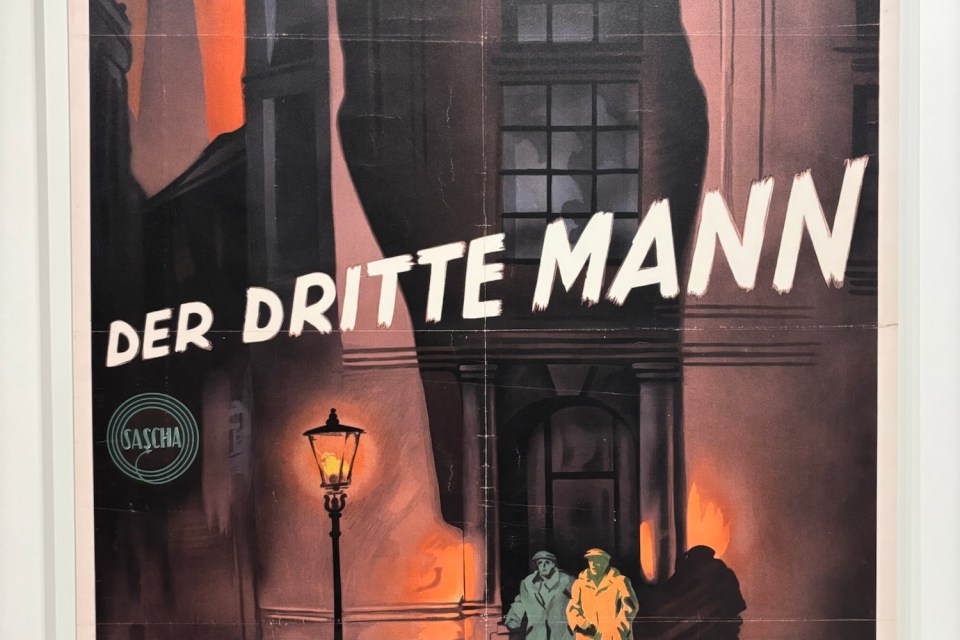
Poster for the classic movie “Der Dritte Man” (The Third Man) which was filmed in post-war Vienna. I saw this movie in a small room at Vienna’s Burg Kino cinema house in 2022.
The people: they come, they work, and no surprise, they want to stay. (Re. post-war labour requirements to boost productivity and the economy.)
In 2000, the City of Vienna officially unveiled its memorial to Jewish victims of the Holocaust with a sculpture by British artist Rachel Whiteread. Situated at Judenplatz, the memorial takes on the form of an “inverted library” whose books are placed spine facing inwards. The image shows a “row of books” in detail (1996) as a model for the memorial.
“Closing time … take me home.”

I made all images above with an iPhone15 on 17 July 2025. This post composed within Jetpack for iOS appears on Fotoeins Fotografie at fotoeins DOT com.

24T52 Vienna’s new-old City Museum at Karlsplatz

E51 V18

After a few years of expansion and renovation, Vienna’s city museum at Karlsplatz reopened to the public in late-2023. With more exhibition space, their permanent exhibition about the city’s origins and evolution over the past millennium is free to the public; there’s now even more room for temporary exhibitions. The city’s history including art, architecture, and archaeology are some of my sweet spots, and I’m more than happy to spend a few afternoons exploring their permanent exhibition: an obvious advantage of an extended stay.


North side.
Wien Museum.
Entry hall.
Historisches Museum der Stadt Wien / Vienna City History Museum (1x).
Foyer: ticketing to the right, gift shop to the left (0.5x).
A modern mash-up of Max Kurzweil’s famous painting which is in the museum’s permanent collection.
Six floors: permanent exhibition on the ground floor, 1st floor, and 2nd floor; temporary exhibitions on the top or 4th floor.
One of my favourite paintings is about bold colour, intensity, and defiance. “Dame in Gelb” (Lady in Yellow), by Max Kurzweil, 1899. Wien Museum permanent exhibition.
Museum entrance.
South side.
West side.
The “new” city museum from Karlskirche, at Karlsplatz.

I made the photos above with an iPhone15 on 27 and 28 Jun 2024. This post composed with Jetpack for iOS appears on Fotoeins Fotografie at fotoeins DOT com.