Fotoeins Fotografie

location bifurcation, place vs. home

Posts tagged ‘Atacama Desert’

Ruta 5, Carretera Panamericana, Panamerican Highway, Region de Antofagasta, Chile, fotoeins.com

Under the desert sun

Above/featured: Ruta 5 (highway 5), a ribbon-like cut through the desert in Región de Atacama, Chile – 24 Nov 2009 (450D).

It’s an interesting question: how does one consider, view, or photograph what’s under the sun? There’s a lot of room for interpretation. Modifying the theme for the desert sun, I examine the “quality of sunlight” within the Atacama Desert in northern and north-central Chile, and within the Sonoran Desert in southwest United States.


( Click here for images and more )

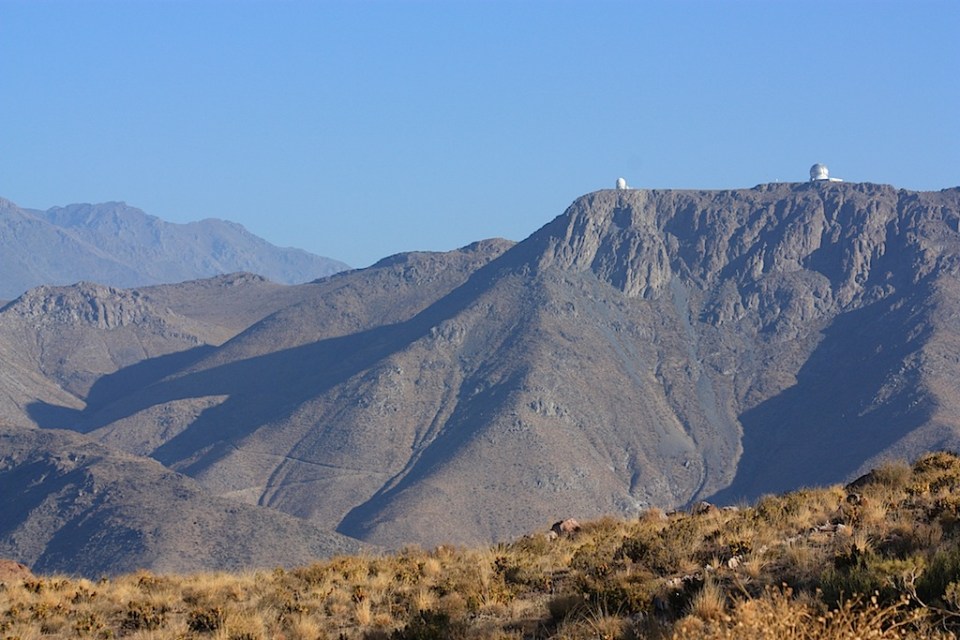
Cerro Tololo Interamerican Observatory, CTIO, Cerro Tololo, Región de Coquimbo, Chile, fotoeins.com

Chilean Andes: morning send-off with Atacama minions

Above/featured: Morning fog in the valleys below, facing north-northeast from Cerro Tololo Observatory – 9am CLDT (12pm UTC), 22 Sept 2011.

Late-2011: Cerro Tololo Observatory, Región de Coquimbo, Chile.

The morning creeps gently forward, up and over the desert sky. Sounds? What sounds? What scarce sounds there are, they pierce the silence with soft whistles and drawn-out wails. Alternating light and dark horizontal streamers, known also as “the rays of God,” mark the first light of dawn. Small clumps break loose, as the overnight shroud of valley fog pulls back slowly from view.

The sun climbs higher, the shadows grow shorter, the cotton patch dissolves. It isn’t long until a spectacular sight is revealed. This is what you get from a height of 7500 feet above sea level.

Dry river beds twist and sweep and stretch along canyon floors. Cactus and desert scrub carpets the surrounding hills in faded greens and dusty browns. To the east rise jagged rocky teeth capped with white frosting, fixing the location of the Andes along the Chilean spine.

In this desolate and isolated part of the world, I’ve often wondered about the few brave souls who make this place their home. They’re prospectors, miners, even some farmers, all of whom carry their burden for financial endeavour. People have been digging around in these parts for centuries, whether it’s plant, mineral, or some kind of monetary paydirt.

But there’s another human enterprise with different rewards, a quest that asks questions on a much larger scale.

How do planets take shape?
How do stars form?
How are galaxies assembled?
Is there life elsewhere in the universe?

These issues occupy astronomers from all over the world. Many astronomers go up onto mountains, just like this one, onto the summit of Cerro Tololo, peering into the skies. The telescopes point straight up, reaching out like outstretched hands, wanting more.

( Click here for images and more )

Embalse Puclaro, Puclaro, Rio Elqui, Elqui river, Region de Coquimbo, La Serena, Chile, fotoeins.com

My Chile: Elqui River, Puclaro Dam

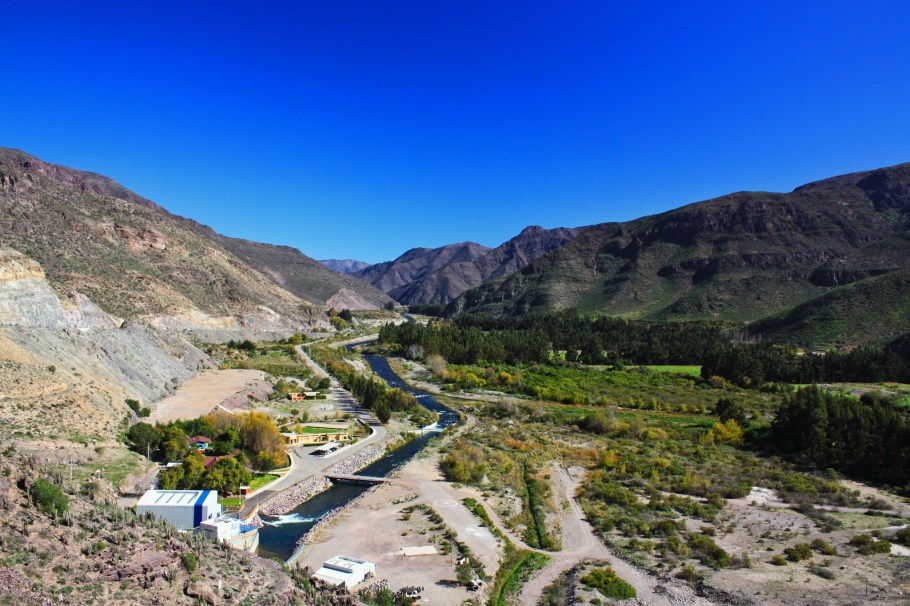
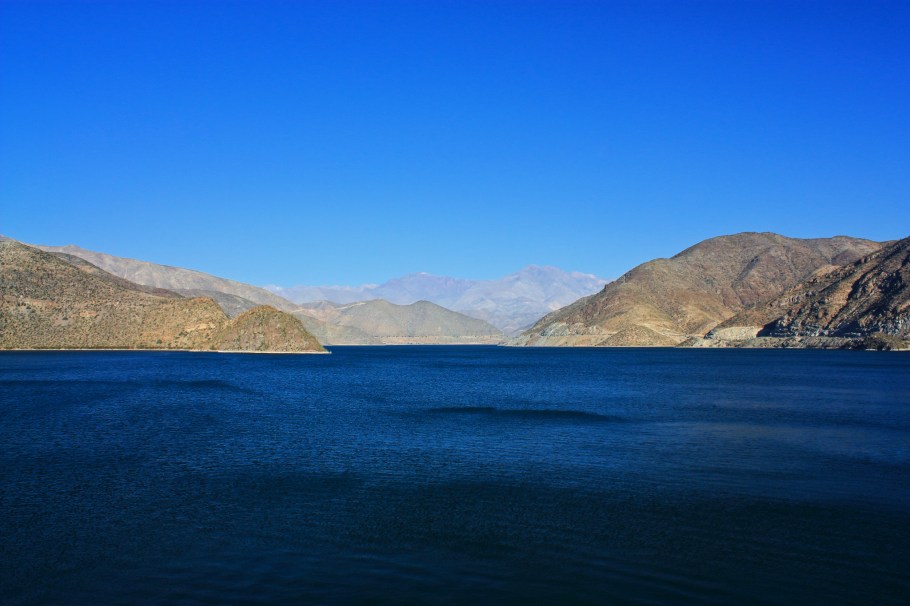
Above/featured: Upstream and east to Andes – 9 August 2008.

27 September has been earmarked by the United Nations World Tourism Organization (UNWTO) as “World Tourism Day”. The following is a tweet by the United Nations for World Tourism Day in 2013.

The Elqui River in north-central Chile begins in the mountains of the lower Andes, and flows west to the Pacific along the southern edge of the Atacama desert through the towns of Vicuña and La Serena. The average annual total rainfall in La Serena is 10 to 13 cm (4 to 5 inches), less than one-tenth of the total for Vancouver, Canada.

The Elqui was dammed by 1999 to control water usage by farms in the lower valley and by pisco vinyards in the upper valley; however, construction of the dam displaced people in small low-lying towns on both sides of the river. Behind the dam in the Embalse or reservoir Puclaro (photo above), the water level has declined with lower annual snowfall in the mountains above and higher usage by farms and the increasing population below. The price for water continues to rise due to competition from mines, farms, and the growing population. Numerous research visits and five years living in La Serena emphasized the contrast of the importance of water to people’s lives in the region with the dominant presence of the neighbouring Atacama.


Embalse Puclaro, Puclaro, Rio Elqui, Elqui river, Region de Coquimbo, La Serena, Chile, fotoeins.com

Rio Elqui, downstream and west from the Embalse Puclaro – 9 Aug 2008.

Embalse Puclaro, Puclaro, Rio Elqui, Elqui river, Region de Coquimbo, La Serena, Chile, fotoeins.com

Retaining wall – 13 Sep 2009.

Embalse Puclaro, Puclaro, Rio Elqui, Elqui river, Region de Coquimbo, La Serena, Chile, fotoeins.com

Flags for the upcoming Fiestas Patrias national holiday – 13 Sep 2009.

Embalse Puclaro, Puclaro, Rio Elqui, Elqui river, Region de Coquimbo, La Serena, Chile, fotoeins.com

View east into the Andes – 13 Sep 2009.


I made all photos above with a Canon EOS450D/Rebel XSi on 9 Aug 2008 and 13 Sept 2009. This post appears on Fotoeins Fotografie at fotoeins DOT com as http://wp.me/p1BIdT-3PS.