Fotoeins Fotografie

location bifurcation, place vs. home

Posts tagged ‘4. Bezirk’

25T81 Vienna: former railway station pavilions at Karlsplatz

E80, V28.

In 2018, I returned to Vienna for the first time in 16 years. One of the first places I saw and visited was the Wien Museum Otto Wagner Pavilion at Karlsplatz. That started a journey of discovery: about the architect, about his building designs which remain a part of the urban landscape, and about the city’s first railway network which is now part of the modern public transport framework.

It’s summer 2025: my 5th visit to Vienna in 7 years. What’s “old and familiar” from repetition has become “fresh and new”. That means I said “hello” again to the former railway station pavilions at Karlsplatz, completed in 1898-1899 and shining examples of Vienna Art Nouveau (Wiener Jugendstil).

While the east pavilion has found new life as a bar, the west pavilion is home to the Wien Museum Otto Wagner Pavilion at Karlsplatz, which has a permanent exhibition about Otto Wagner and his direct involvement with the design and construction of the city’s first urban railway.


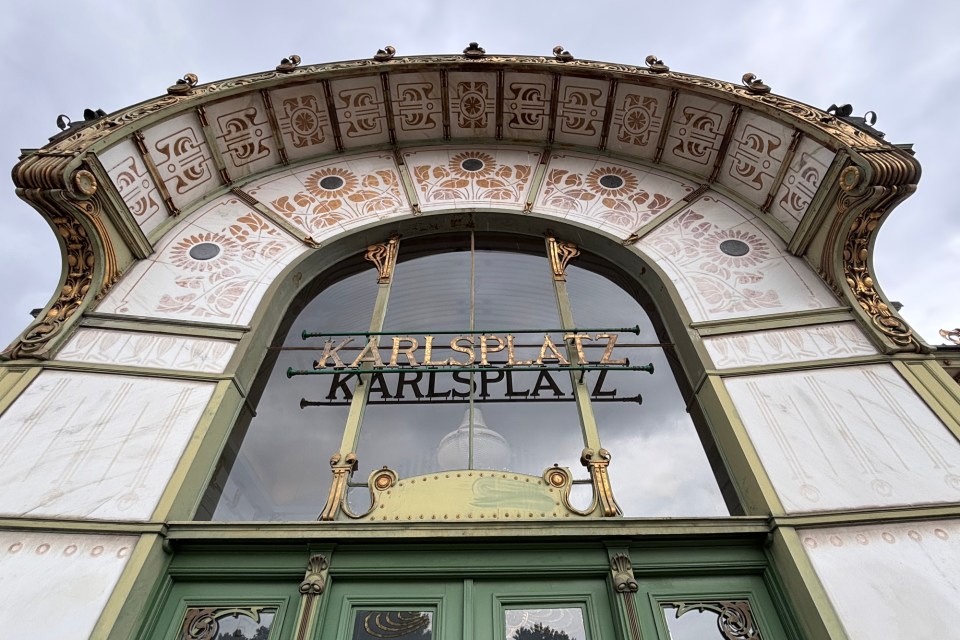
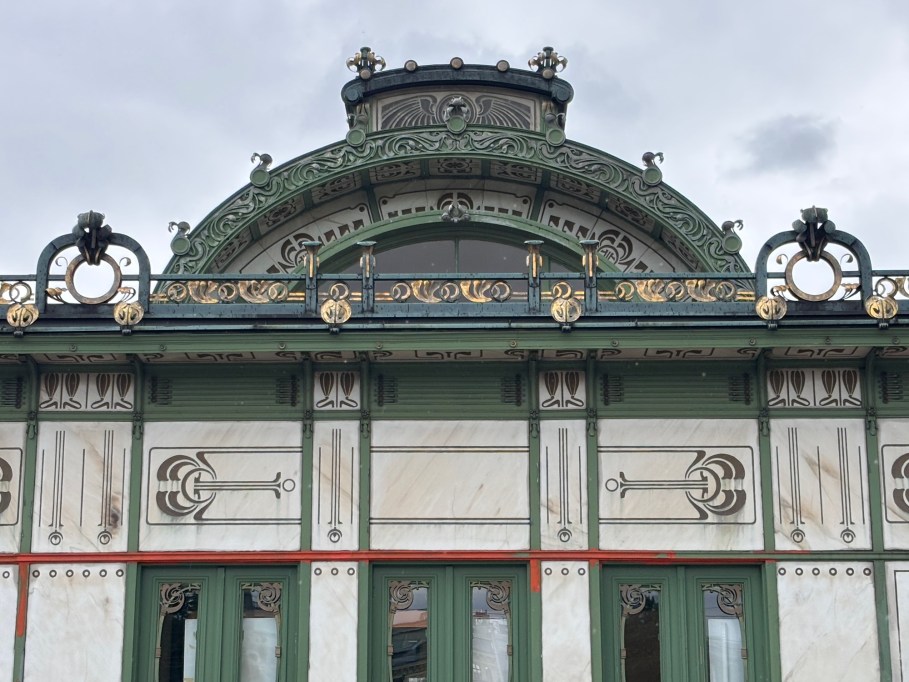
West pavilion, west side: at left is the entrance underground to U-Bahn lines U1 (red), U2 (purple), and U4 (green). Karlsplatz station is a junction for these 3 U-Bahn lines.
Detail of the western side.
West pavilion, east side: main entrance to the Wien Museum Otto Wagner Pavilion at Karlsplatz. At the surface, the museum is isolated from the U-Bahn junction station below ground.
Detail of the eastern face. For a civic construction of steel and concrete, there are plenty of floral and leafy motifs. For as much of the current U-Bahn signage solid in Helvetica or Sans-Serif font, there’s still life in the “old” lettering, bold and proud in Serif font.

I made all images above with an iPhone15 on 27 July 2025. This post composed within Jetpack for iOS appears on Fotoeins Fotografie at fotoeins DOT com.

25T71 Vienna’s city museum: permanent collection

E70, V18.

The Wien Museum at Karlsplatz extends its opening hours on Thursdays to 9pm, which gives everyone a better appreciation for its permanent collection in the examination of the city’s history that spans almost 8 centuries. The museum’s permanent collection is free of charge, but there is a charge to view the museum’s temporary exhibitions. The collection includes paintings, sculptures, posters, photographs, metalwork, various kinds of mementos and documents, and other forms of human keepsakes.


“The city of Vienna’s historical museum”
“Young Mother”, by Egon Schiele (1914). Schiele was a key figure in the early 20th-century Vienna Modernism cultural movement.
“Emilie Flöge”, by Gustav Klimt (1902). Klimt was another key figure in the early 20th-century Vienna Modernism cultural movement.
From 1904 to 1938, the three Flöge sisters operated their fashion and clothing shop in the Casa Piccola building on Mariahilfer Straße.
“Lady in Yellow”, Max Kurzweil (1899). The bright blue dot is a reflection of floor lighting.
The model for the painting was the painter’s wife Martha Kurzweil.
Poster: “A cry for help: read Bettauer’s weekly newsletter”. Writer Hugo Bettauer (1872-1925) fought against Article 144 of the Criminal Code which at the time made termination of pregnancy punishable with jail time of up to 5 years. He also fought against anti-Semitism and for the decriminalizing of same-sex couples.
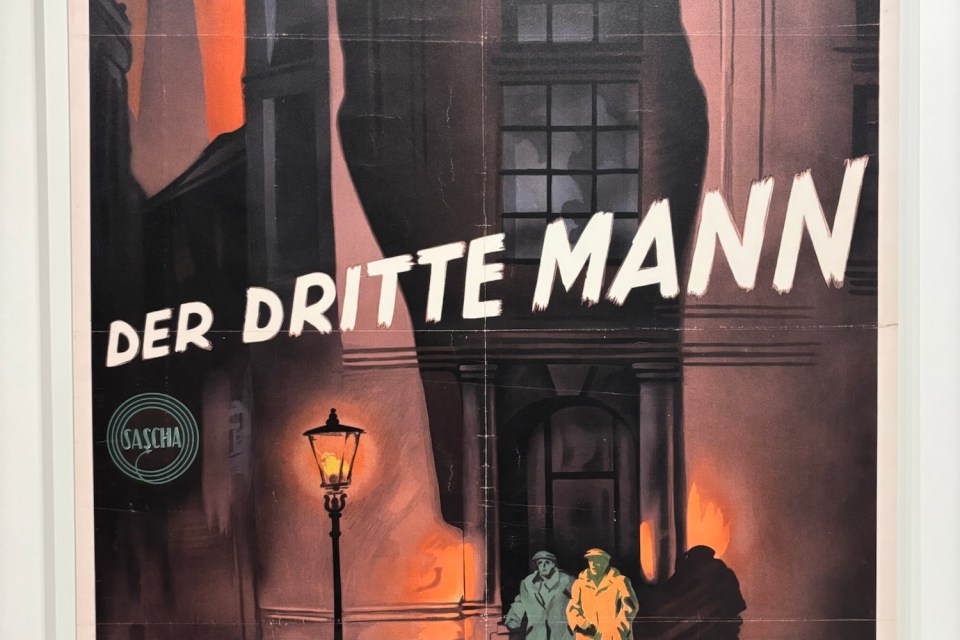
Poster for the classic movie “Der Dritte Man” (The Third Man) which was filmed in post-war Vienna. I saw this movie in a small room at Vienna’s Burg Kino cinema house in 2022.
The people: they come, they work, and no surprise, they want to stay. (Re. post-war labour requirements to boost productivity and the economy.)
In 2000, the City of Vienna officially unveiled its memorial to Jewish victims of the Holocaust with a sculpture by British artist Rachel Whiteread. Situated at Judenplatz, the memorial takes on the form of an “inverted library” whose books are placed spine facing inwards. The image shows a “row of books” in detail (1996) as a model for the memorial.
“Closing time … take me home.”

I made all images above with an iPhone15 on 17 July 2025. This post composed within Jetpack for iOS appears on Fotoeins Fotografie at fotoeins DOT com.

24T52 Vienna’s new-old City Museum at Karlsplatz

E51 V18

After a few years of expansion and renovation, Vienna’s city museum at Karlsplatz reopened to the public in late-2023. With more exhibition space, their permanent exhibition about the city’s origins and evolution over the past millennium is free to the public; there’s now even more room for temporary exhibitions. The city’s history including art, architecture, and archaeology are some of my sweet spots, and I’m more than happy to spend a few afternoons exploring their permanent exhibition: an obvious advantage of an extended stay.


North side.
Wien Museum.
Entry hall.
Historisches Museum der Stadt Wien / Vienna City History Museum (1x).
Foyer: ticketing to the right, gift shop to the left (0.5x).
A modern mash-up of Max Kurzweil’s famous painting which is in the museum’s permanent collection.
Six floors: permanent exhibition on the ground floor, 1st floor, and 2nd floor; temporary exhibitions on the top or 4th floor.
One of my favourite paintings is about bold colour, intensity, and defiance. “Dame in Gelb” (Lady in Yellow), by Max Kurzweil, 1899. Wien Museum permanent exhibition.
Museum entrance.
South side.
West side.
The “new” city museum from Karlskirche, at Karlsplatz.

I made the photos above with an iPhone15 on 27 and 28 Jun 2024. This post composed with Jetpack for iOS appears on Fotoeins Fotografie at fotoeins DOT com.

Vienna: Vollpension café, with love from Oma & Opa

Above/featured: Kühnplatz in the 4th district – 22 May 2022.

I never knew my grandparents, except for brief glimpses of mum’s mum, 阿婆, who died before I entered secondary school.

On a warm June day in 2022, I’m sitting in the basement of someone’s family home, lovingly decorated over decades by Omas and Opas. In Vienna’s 4th district, the idea behind Vollpension cafe is retirees do all the baking.

Upon arrival, a host seats me at a table where I’m presented with a “menu card” listing combination- and timing-options. Unlike other cafes in the city, one does not hang out or loiter here for hours, and that means there’s a maximum stay-duration for a specified combination purchase; that’s fine by me, as I choose one of the cake-and-beverage options. The server leaves to retrieve my cool drink, while I go up to the front counter and gauge the remaining options on Sunday mid-afternoon. I want something light on this warm late-spring day: Kardinalschnitt, made with sponge cake, meringue, and fruit jam. I order a slice of Kardinalschnitt mit Schlagobers (with whipped cream). Behind the counter is a kindly Oma to whom I relay in passable German I came all the way from Canada’s west coast to see this place. That impressed her enough that she asks me to come back for a 2nd but smaller piece.

There’s a good mix of ages among the staff. I chat briefly with one of the servers about what it’s like to work here at the café, the guests they’ve seen from different countries, and their favourite cake. Among some of the retired pensioners in house today, I have an additional conversation with a gentleman who has spent time with his family in Vancouver, Canada.

At the outset, some Viennese or Austrians might not seek this place out, although I can tell from surrounding conversations how much Viennese-German is being spoken. At any rate, this place works for me, and if I barely knew my grandparents, I can perhaps get a good taste and long look at life with Austrian grandparents, here at Vollpension in Vienna.


( Towards the end of this post is a 1-minute iPT6-video with a look inside the café. )

Vollpension, 4. Bezirk, Wieden, Wien, Vienna, Austria, Österreich, fotoeins.com

Inside Vollpension (X70).

Vollpension, 4. Bezirk, Wieden, Wien, Vienna, Austria, Österreich, fotoeins.com

Table 5 (X70).

Vollpension, 4. Bezirk, Wieden, Wien, Vienna, Austria, Österreich, fotoeins.com

Tables 6 and 7 (X70).

Vollpension, 4. Bezirk, Wieden, Wien, Vienna, Austria, Österreich, fotoeins.com

Table 8 (X70).

Vollpension, 4. Bezirk, Wieden, Wien, Vienna, Austria, Österreich, fotoeins.com

Front counter with daily offerings (X70).

Vollpension, 4. Bezirk, Wieden, Wien, Vienna, Austria, Österreich, fotoeins.com

Ameisen-Gugelhupf / Bundt cake with chocolate chips. No “Ameisen” (ants) were harmed or included in the cake-making process (X70).

Vollpension, 4. Bezirk, Wieden, Wien, Vienna, Austria, Österreich, fotoeins.com

Topfentorte / cream-cheese torte (X70).

Vollpension, 4. Bezirk, Wieden, Wien, Vienna, Austria, Österreich, fotoeins.com

Kardinalschnitte, made with sponge cake, meringue, and fruit jam (X70).

Vollpension, 4. Bezirk, Wieden, Wien, Vienna, Austria, Österreich, fotoeins.com

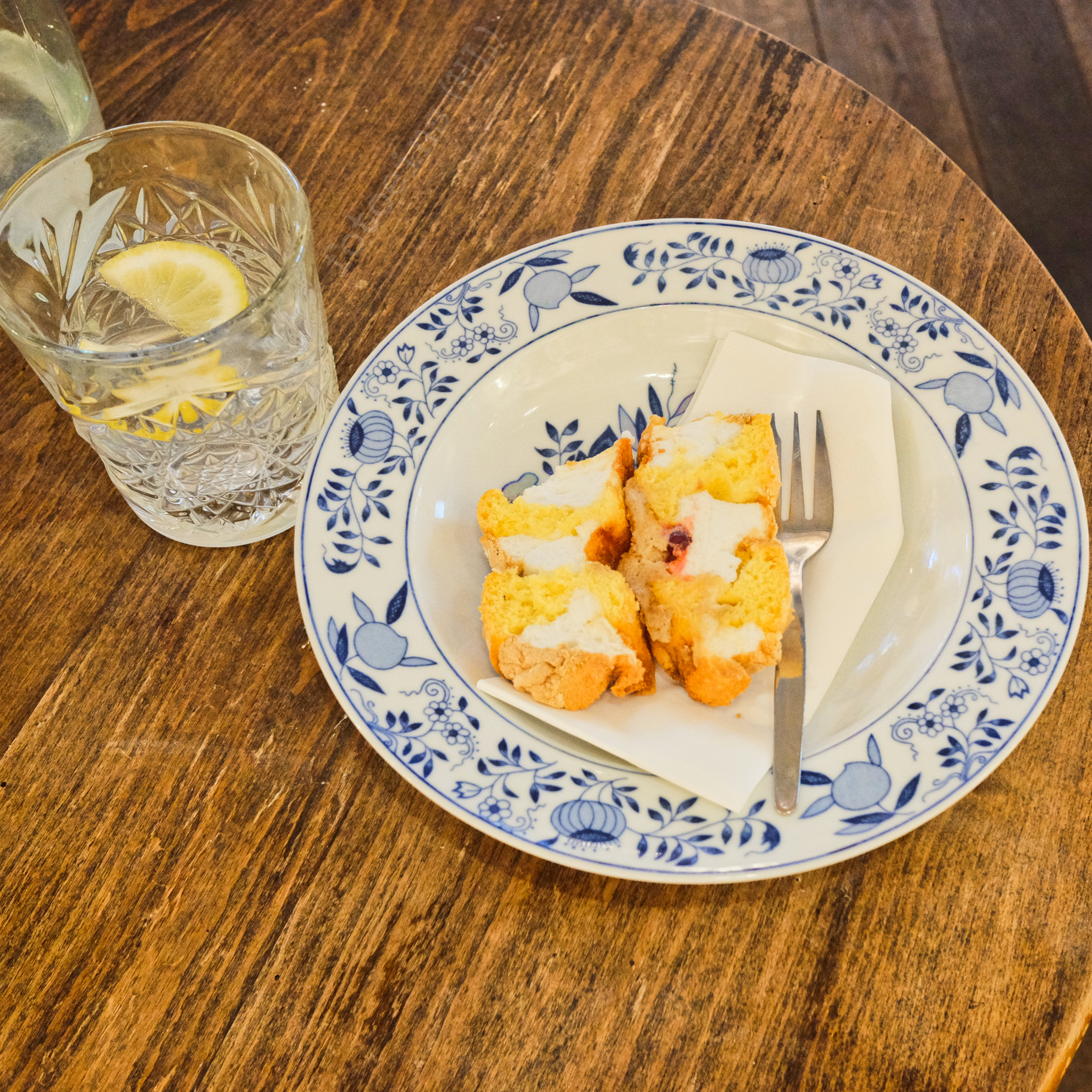
2nd, complimentary, but smaller slice of Kardinalschnitte, accompanied by cool unsweetened non-alcoholic lemon spritzer (X70).


Directions

Vollpension is centrally located on Schleifmühlgasse 16 with a second location at the MUK Wien (Music & Arts University of Vienna). Smaller versions of Vollpension might “pop up” elsewhere in the city during the summer season.

Public transport with Wiener Linien: in between U1/(U2)/U4 Karlsplatz and U4 Kettenbrückengasse; bus 59A to stop Schleifmühlgasse; or tram 1, 62, or Badener Bahn to stop “Paulanergasse.”

( View map location at OpenStreetMap )

My independent visit to Vollpension was neither requested nor supported. I made all images above on 22 May and 12 Jun 2022 with an Apple 6th-generation iPod Touch (iPT6) and Fujifilm X70 fixed-lens prime (X70). This post appears on Fotoeins Fotografie at fotoeins DOT com as https://wp.me/p1BIdT-n7U.

Vienna: Stefanie Herkner’s homestyle cuisine

I’ve been thinking a lot about my father who died in 2014.

What he passed onto me are: an appreciation for authentic dining with a minimum of pretence, interests in geography and history, and an enthusiasm for highway drives and road trips. He also loved woodwork, gardening, and tinkering with the family car. By contrast, I like to dabble with memories and the act of memory.

I’ve also been thinking about how he would’ve viewed my experiences in Vienna.

In Vienna’s 4th district, cook and author Stefanie Herkner owns and operates her restaurant, Zur Herknerin, as a living memory of her father, Heinz, and her family’s Slovenian culinary heritage. Much of her story has appeared in a variety of publications: how her dad’s famous restaurant, Zum Herkner, helped spark and redefine contemporary Vienna cuisine; how she went to London to study art-and-culture management; how her parents tried to dissuade her from the restaurant industry; and how she returned home to Vienna and opened her own restaurant in mid-2013.

That’s the kind of story to pique my curiosity.

With a reservation for the opening slot at weeknight service, I arrive 15-minutes early to moderate street-traffic and a set of open doors. The space is light, airy, uncomplicated, and welcoming. A couple of servers and kitchen staff are out and about, preparing for the dinner rush. Captaining the ship is Frau Herkner, her voice a firm, steady, and encouraging guide. I chat briefly with her: I’ve flown over 8000 kilometres across the world to have a meal here, and that my love of diners and small restaurants comes from Dad, who worked many years in many diners as cook and line-cook.

What’s familiar on the dinner table to many in this part of the world is relatively new to me. My order is a delicious introduction to the family’s central European background.

Krautroulade mit Petersilerdäpfel und Rahm (Serbian-style stuffed cabbage roll): ground beef and pork fried with bacon, tomatoes, bell peppers and carrots, diced onions; that extra fat is always the flavour enhancer. The meat-and-rice mixture is stuffed into large cabbage leaves, rolled and gently simmered with garlic and bay leaves. Add perfectly cooked cut-up potatoes served with parsley, and served with a dollop of sour cream.

Almdudler-Radler: cold draft beer mixed with Almdudler, Austria’s national and herbal lemonade. The combination is refreshing on a warm early-summer day, and I think its slight sweet-and-bitter “bite” goes well with the savory Sarma.

Apfel-Strudel: phyllo pastry filled with chunks of regionally-grown apples, with cinnamon and nutmeg; light but substantive; more apple than pastry. The last polish is a Melange for a smooth finish.

To achieve her goal of delivering family favourites to customers, she emphasizes:

“Unsere Zutaten sind biologisch, saisonal, regional oder vom eigenen Hof.”
(Our ingredients come from products that are natural, seasonal, regional, or from our very own farm.)

Before leaving, I catch Frau Herkner’s attention one last time. I tell her how much I enjoy the food, and how my experience feels like an accepted invitation into her family home with, if our faith allows, the spirits of our respective fathers, present in the kitchen and at the table.

Food and ambience.
Nourishing and warmth.
A lot of heart and muscle memory.
A lot of family memory and history.
I think Dad would’ve liked this.

Because I really did; I wanted to believe.


( Click here for images )