Fotoeins Fotografie

location bifurcation, place vs. home

Posts from the ‘UNESCO World Heritage’ category

World Heritage Sites designated and inscribed by UNESCO

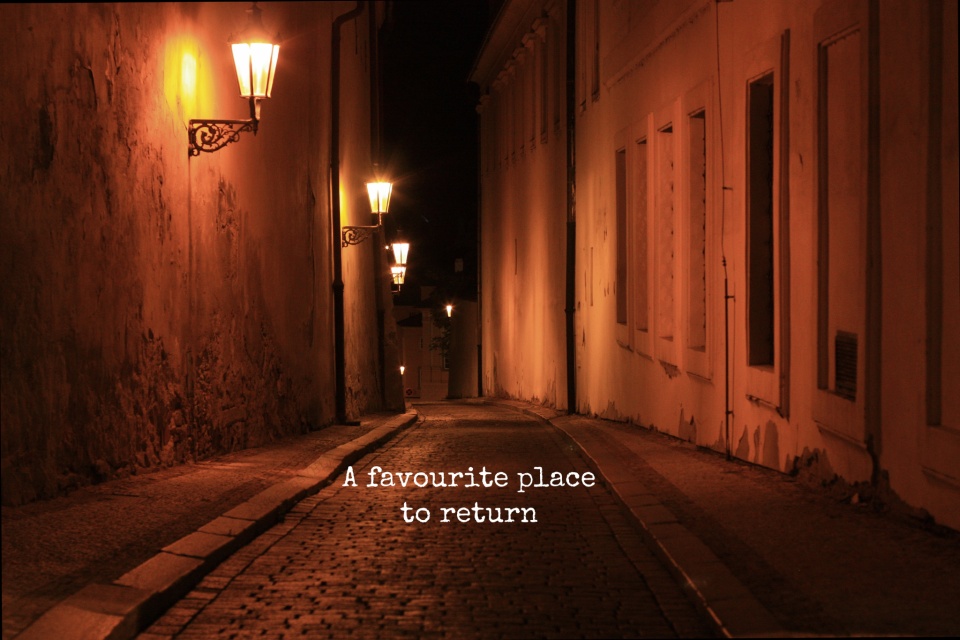
U Kasaren, Hradcany, Prag, Prague, Praha, Czech Republic, fotoeins.com

My Prague: a favourite place to return

Above/featured: U Kasáren from Loretánská, Hradčany – 30 July 2016 (HL).

On a personal level, the impact of this city can’t be gauged, measured, or quantified. What I know is I’ve roamed this place over countless little cobblestones. The sum of all strides led me to jumping continents and traversing nations with steps as large as my imagination could entertain and overcome.

And so, after the twelfth, fifteenth, or twentieth visit (I’ve lost count), I look at these images and ask why I surrender to the pull, why I return, and why the Czech capital city feels familiar. It’s about the old and the new, a colourful combination replacing what I’ve lost and amplifying what I’ve gained.

Prague is one of my favourite places to return.
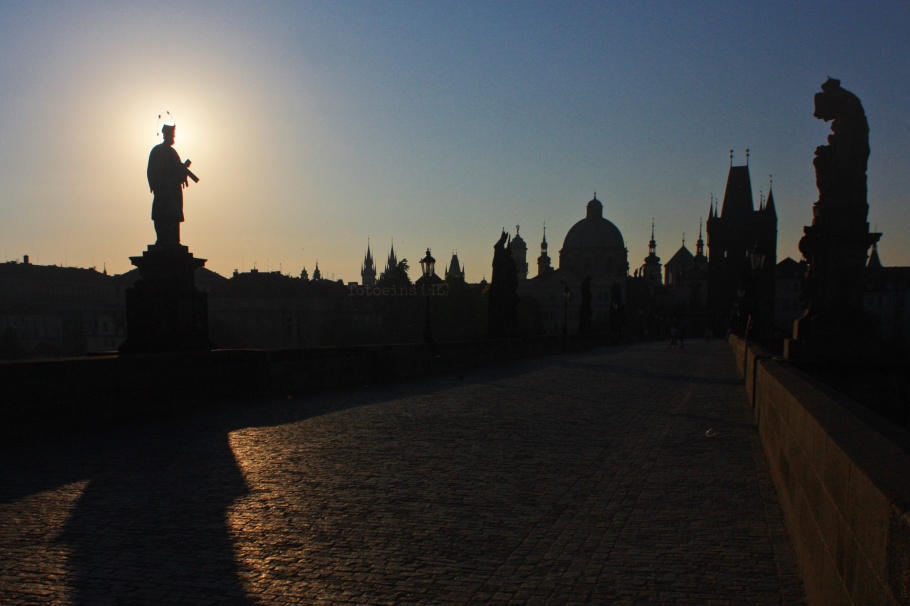
summer sunrise, sunrise, summer, Karluv most, Charles Bridge, Prag, Prague, Praha, Czech Republic, fotoeins.com

Daybreak and a halo for St. John of Nepomuk, Charles Bridge (Karlův most) – 28 July 2013 (HL).

National Monument, Vítkov, Zizkov, Prag, Prague, Praha, Czech Republic, fotoeins.com

Over the city to the west from the National Monument on Vítkov (Národní památník na Vítkově), Žižkov – 2 August 2013 (HL).
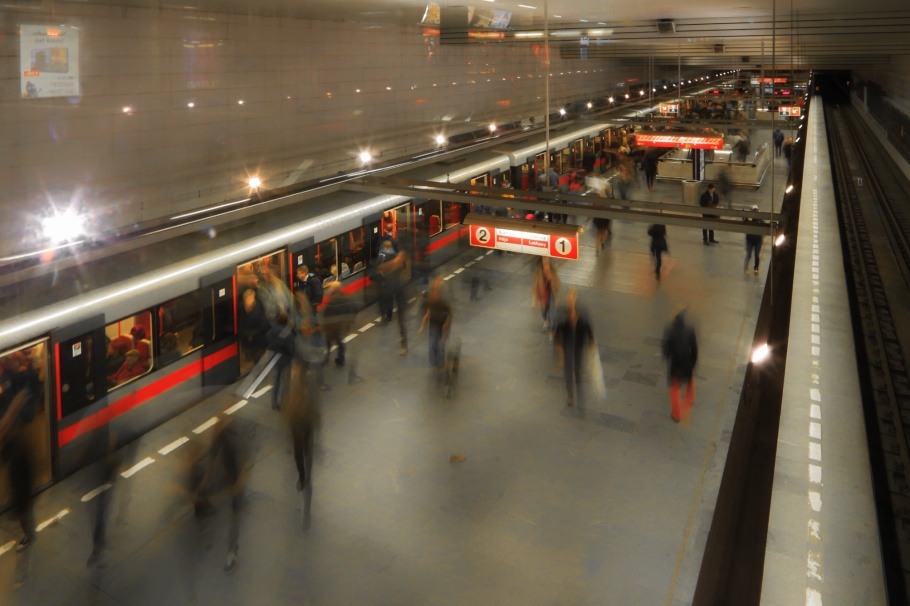
Muzeum, stanice metra, metro station, DPP, Prag, Prague, Praha, Czech Republic, fotoeins.com

Metro line C commuters at Muzeum station – 8 November 2016 (HL)

Ginger and Fred, Fred and Ginger, Dancing House, Tančící dům, Prag, Prague, Praha, Czech Republic, fotoeins.com

Dancing House (Tančící dům) with streaking northbound streetcar, Nové Město – 6 November 2016 (HL)

I wrote a “love letter” to Prague, which as many have discovered also includes “the night watch.”

I made all of the above images in 2013 and 2016. This post appears on Fotoeins Fotografie at fotoeins.com as https://wp.me/p1BIdT-bCs.

Kea, alpine parrot, Homer Tunnel, Milford Road, South Island, Te Waipounamu, Aotearoa, New Zealand, fotoeins.com

Waitangi Day (6 Feb): 15 images from Aotearoa

Above/featured: The kea is the world’s only alpine parrot and on the endangered list; on Milford Road near Homer Tunnel.

On the 6th of February, I’ll be humming “E Ihowa Atua” and “Pokarekare Ana”.

Waitangi Day is a national holiday in New Zealand to commemorate the signing of the Treaty of Waitangi on 6 February 1840. As the founding document of the country, the Treaty of Waitangi (Te Tiriti o Waitangi) is an accord agreed upon by representatives of the Crown (British Empire) and of indigenous Māori iwi (tribes) and hapū (sub-tribes). The agreement is named after the name of the location in the Bay of Islands where the Treaty was first signed. Despite continuing disagreements between the two parties about contemporary extent and redress, I think the conversation and interactions between the communities are at a more advanced stage of integration within the nation’s fabric by comparison with Australia and Canada.

For Aotearoa, the New Zealand government approved in October 2013 formal names of the two main islands in Māori and English:

•   Te Ika a Māui (“the fish of Māui”) for the North Island, and
•   Te Wai Pounamu (“the waters of greenstone”) for the South Island.

I highlight Aotearoa with 15 images of the following locations:

  1. Akaroa
  2. Auckland
  3. Dunedin
  4. Franz Josef Glacier *
  5. Greymouth
  6. Hapuku (Seaward Kaikouras)
  7. Homer Tunnel *
  8. Lake Matheson *
  9. Milford Sound *
  10. Queen Charlotte Sound
  11. Queenstown
  12. Southern Alps *
  13. Waimakariri River
  14. Wellington City
  15. Wellington Harbour

Asterisks identify locations within the Te Wāhipounamu area in South West New Zealand which was inscribed in 1990 as UNESCO World Heritage Site that includes four national parks: Aoraki/Mount Cook, Fiordland, Mount Aspiring, and Westland Tai Poutini.

( Click here for images and more )

Koblenz: 1st and 2nd Deutsches Eck (German Corner)

Above: West view to Deutsches Eck from Ehrenbreitstein. 2015 photo by Taxiarchos228 (Wladyslaw Sojka). I’ve added the following labels: (1) Seilbahn/Gondola, (2) St. Kastor Basilica, (3) Deutschherrenhaus, (4) first Deutsches Eck, (5) Memorial to German Unity (Kaiser Wilhelm Memorial), (6) reclamation in the late 19th-century, (7) second Deutsches Eck.

Many will know, have seen, or have read about the Deutsches Eck (German Corner) in the German city of Koblenz. The river city has plenty to provide: visitors wander into the vineyards to sip on crisp white wine from local grapes, vacation on long cabin-boats to enjoy the river scenery, or explore the surrounding Upper Rhine River Valley.

But Koblenz is also well known by virtue of its name after the junction where the rivers Moselle and Rhine meet. By the first-century AD/CE, the Romans had built for strategic protection a fort1 called “Castellum apud Confluentes“, Latin for “the castle at the confluence”. What most commonly acknowledge as the Deutsches Eck (German corner) is not the original location. Half concealed among the trees some 200 metres back near the Deutschherrenhaus is the first location of the Deutsches Eck.

What follows:

  • a map to the area and my photos from the present-day,
  • a short history of the “Deutsches Eck,” and
  • archival images from the mid-16th century to early 20th century.

( Click here for images and more )

Wittenberg UNESCO WHS: St. Mary’s Church

Above: West side illuminated by afternoon sun, 30 Oct 2016 (HL).

The Stadtkirche Sankt Marien (St. Mary’s Town and Parish Church) is the oldest building in Wittenberg, and is one of four sites in town as part of the town’sasx inscription as UNESCO World Heritage Site since 1996. Not only is this the location where Luther preached, the church also contains important relics by the Cranachs highlighting the young Reformation movement. The Cranach and Luther families were close, as well as contemporary colleagues.

The east chancel (near the main altar) was part of the original St. Mary’s chapel built around 1280. By the early 15th-century, the chapel was incorporated into a triple-naved structure with two towers in the late-Gothic style at the west end of the new church; the Gothic tops were removed and replaced by octagonal shapes by the mid-16th century. The original pulpit from which Luther delivered his sermons has survived the centuries, and is now located in Wittenberg’s Luther House (Lutherhaus).

( Click here for images and more )

Eisleben: Luther’s birth and death sites, UNESCO WHS

Above/featured: Luther monument by Rudolf Simmering at Eisleben’s market square. The monument was inaugurated in 1883 to mark the quatercentenary of Luther’s birth year (1483). At left and upper-right are the Hotel Graf von Mansfeld and St. Andrew’s Church, respectively.

With a population over 25-thousand people, Eisleben is a quiet town in central Germany in the federal state of Saxony-Anhalt. But the South Harz region holds a special place in German and European history: Martin Luther came into the world in Eisleben in 1483, spent his childhood years in Mansfeld, and, on a trip home from Wittenberg to negotiate a local dispute in Mansfield, died in Eisleben in 1546. As shown in the map below, a number of important locations in Eisleben are associated with Luther and the Reformation, including the Luther monument in the town’s market square, St. Peter’s Church, St. Andrew’s Church, and St. Anne’s Church. Specifically, two sites in town constitute a part of the inscription for UNESCO World Heritage Site since 1996: (1) the house where Luther was born, and (2) the museum on Luther’s death.


( Click here for more )