Fotoeins Fotografie

location bifurcation, place vs. home

Posts from the ‘Urban Photography’ category

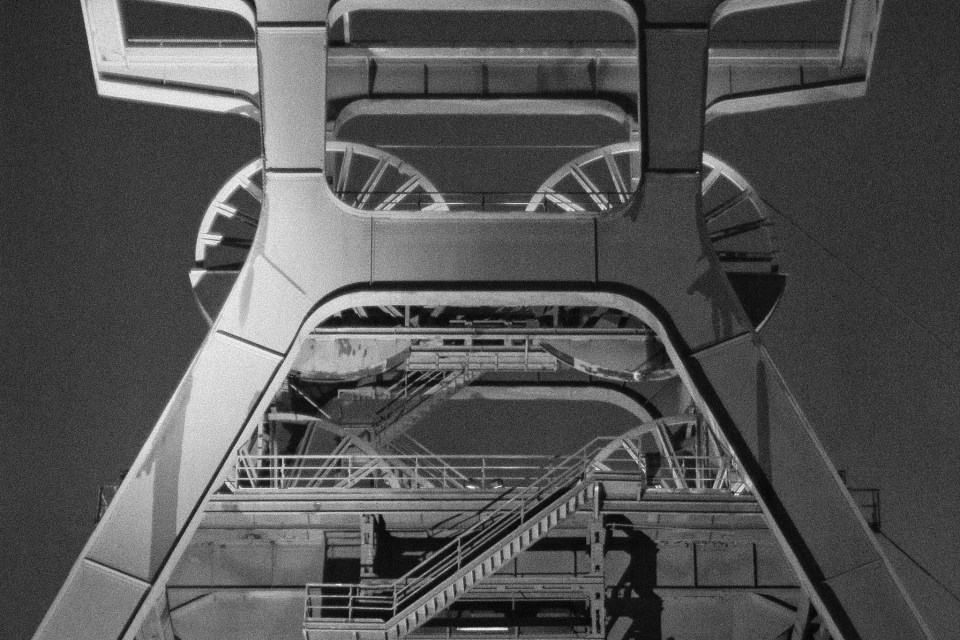
Zollverein Colliery, Essen, Ruhrgebiet, Germany, Deutschland, Welterbe Weltkulturerbe, UNESCO, World Heritage, fotoeins.com

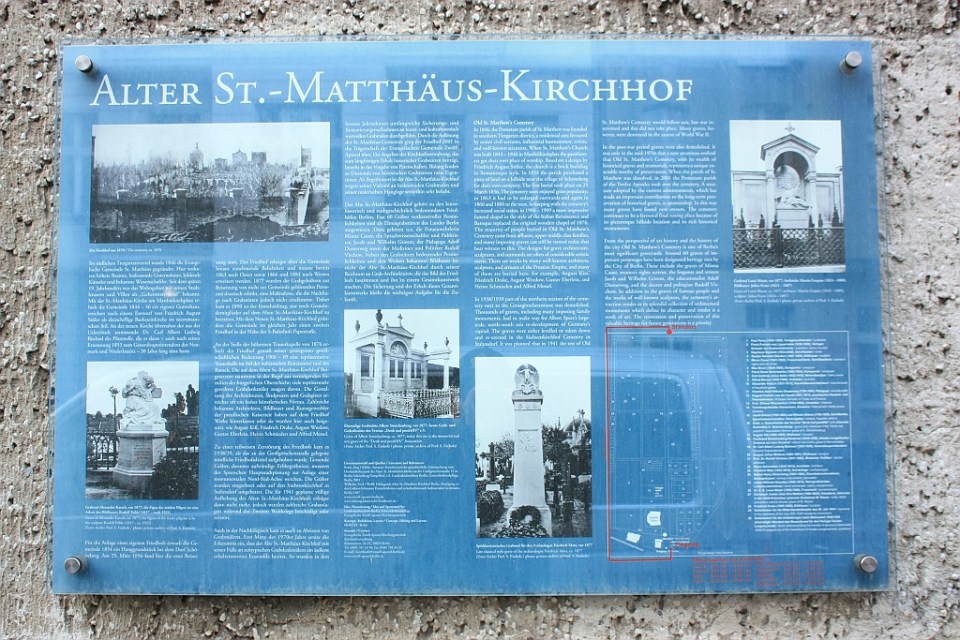
Essen UNESCO WHS: Zollverein and Coal-Mining History

A desolate former coal-mining industrial region isn’t a usual candidate for a place to visit. However, the Zollverein coal mine in Essen, Germany provided the impetus to seek out aspects of industrial photography. There’s something special about the way light strikes metal which brings out various aspects of shape, form, and texture.

I’m beginning to understand the historical significance of coal-mining to the people and to the economy in the Ruhrgebiet (Ruhr river region). Over decades, a cloud of “grey” hung over the region, as air- and water-pollution took its toll, and the economic influence of coal began to diminish.

To mark its importance to the modern industrial development and history of the region, the Zollverein Coal Mine Industrial Complex was listed as a UNESCO World Heritage Site in 2001. The entire refurbished complex now houses space for art, design, and cultural exhibitions, and is also home to the Ruhr Museum, shedding light on the industrial history of the Ruhrgebiet, providing historical accounts of the economic importance of coal mining and its consequent decline, as well as descriptions of existing and future economic redevelopment plans for the Ruhr region.

Essen was designated as one of three European Capital Cities of Culture for 2010; a number of projects, sites, and monuments throughout the Ruhrgebiet were on display, including the Zollverein.
( Click here for images and more )

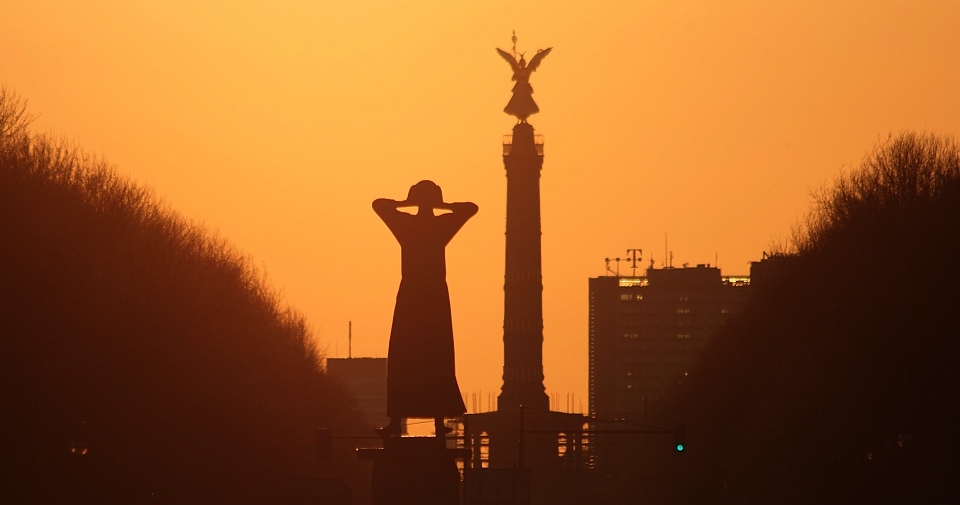
The Crier, Tiergarten, Berlin, Germany, fotoeins.com

The Crier: from Berlin to Perth

In this post, I wrote about how I discovered the statue called “Der Rufer” (The Crier) in Berlin’s Tiergarten:

The statue in the foreground is called “Der Rufer” (The Caller or The Crier). Created by Gerhard Marcks in 1966, a cast of the bronze statue was purchased and erected here in place in the former West Berlin in May 1989. The statue was placed deliberately so that the “caller” faced East Berlin. At the sculpture’s base is a quote by Italian poet Francesco Petrarch (1304-1374): “Ich gehe durch die Welt, und rufe ‘Friede Friede Friede'” | “I wander through the world, and cry ‘Peace, Peace, Peace.'”

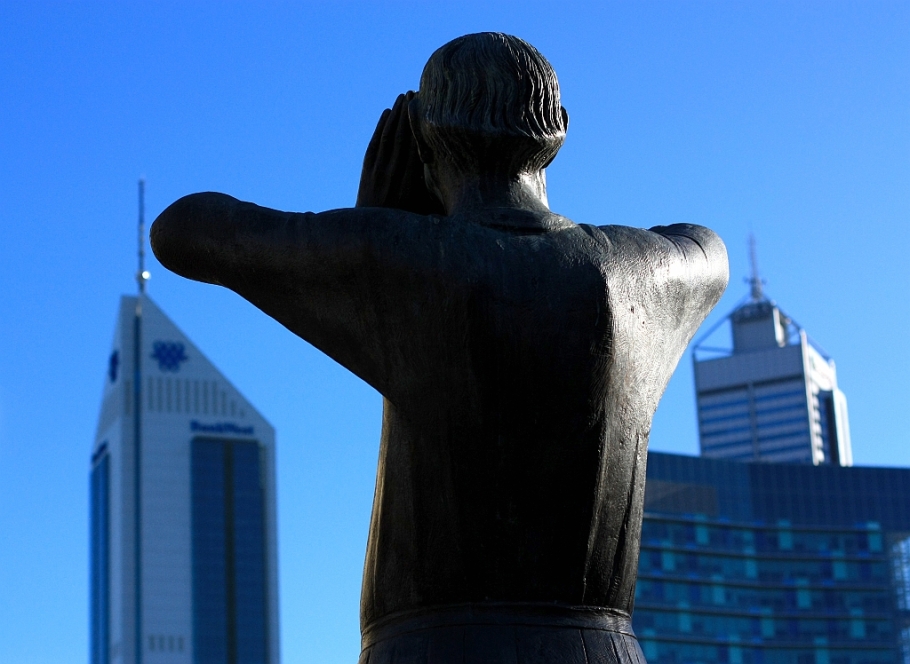
On 12 September 2012, some 18 months after making the above photo, I discovered the same statue by accident at the Cultural Centre in Northbridge, Perth, Australia.

The Crier, Art Gallery of Western Australia, Perth, WA, Australia, fotoeins.com

The Crier (Perth)

Sculptor Gerhard Marcks (1889-1981) did not intend to convey a specific message or meaning to his piece of work. However, the version of the sculpture in Berlin was dedicated to a call for peace, whereas the casting in Perth was dedicated to the victims of torture.

I made the photos shown above with a Canon EOS450D: the first (Berlin shot) with EF-S 18-55mm f/3.5-5.6 IS kit-lens, and the second (Perth shot) with the 50mm f/1.4 prime-lens. This post appears on Fotoeins Fotopress at fotoeins.com as http://wp.me/p1BIdT-2og.

Christchurch, Canterbury, New Zealand

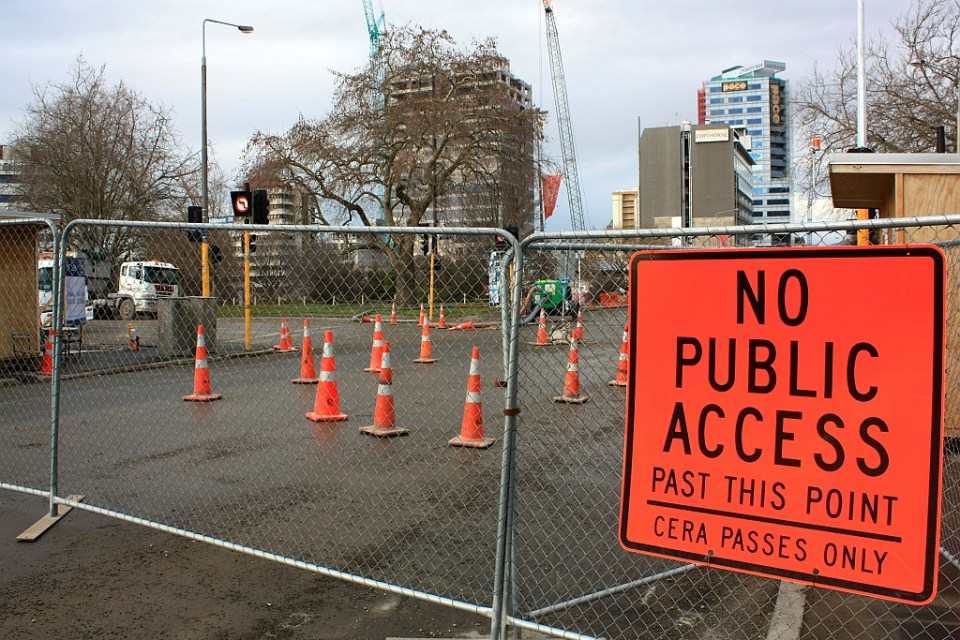
New Zealand: Christchurch red zone post-quake

The sight of overhead cranes.

The clang of jackhammers.

The constant rumble of dump trucks filled with debris.

The dust clouds surrounding sites slated for demolition or new buildings under construction.

After four earthquakes since 2010, over half of the buildings in Christchurch’s Central Business District (CBD) were destroyed or have been condemned; the number I got from informal conversations was 70 to 80 percent. The expected cost to the local economy and for reconstruction will be in the billions of dollars. These are staggering numbers. Before reconstruction can begin, there are buildings to take down, and mountains of rubble to take away.

( Click here for more )

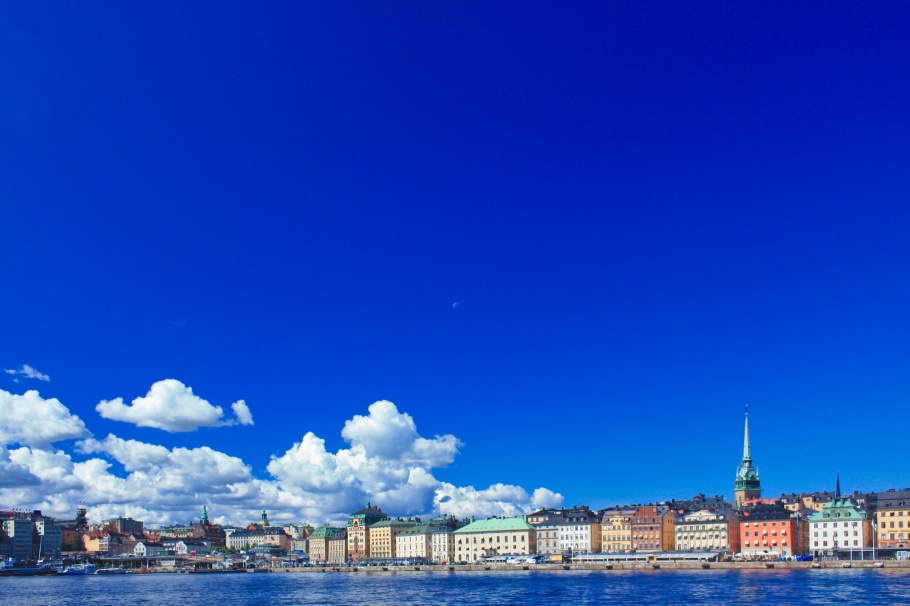
My Stockholm: the colours of Gamla Stan

Buildings with bright beautiful colours.
Narrow cobblestone alleys.
Street signage with few consonants.

This is Gamla Stan: Stockholm’s Old Town.

I love the mystery of trying to parse a different language, even when I’ve twisted my tongue into unrecognizably knotted grunts.

With the summer solstice in late-June, the days are long, and skies remain lit until the wee hours of the morning. You can walk through the streets of the old town by day, like other visitors who’ve come to enjoy the place. But I highly recommend you navigate the streets at night. By mid-evening, activities wind down, and eventually, you’ve basically the quiet streets all to yourself.

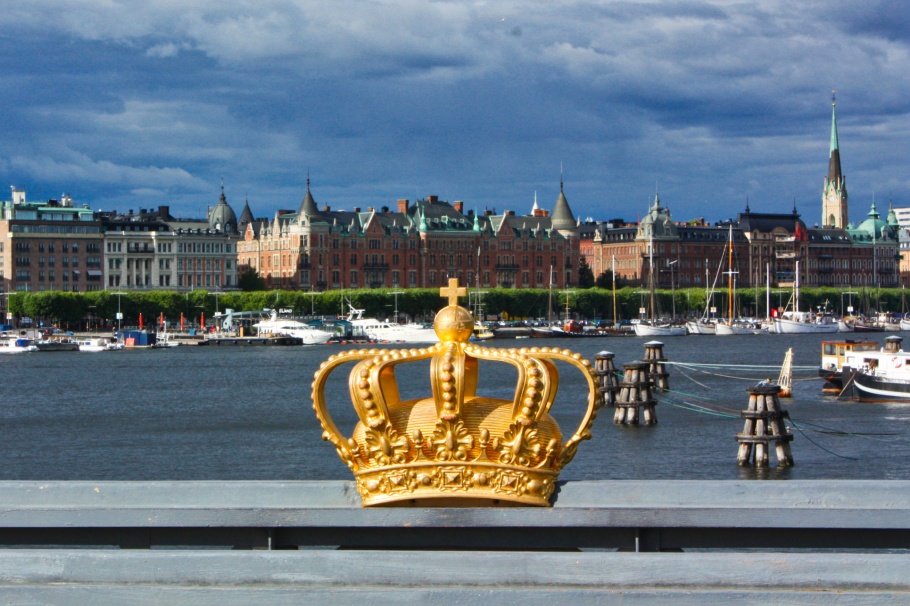
Gilded crown, Skeppsholmsbron, Skeppsholmen, Stockholms ström, Stockholm, Sweden, fotoeins.com

View of the Stockholms ström inner harbour from Skeppsholmsbron (Skeppsholm island bridge).

Högvaktsterrassen, Hauptwachsterrassen, Main Guard Terrace, Gamla Stan, Stockholm, Sweden

From Högvaktsterrassen (Main Guard Terrace): Riddarhuset (House of Nobility, left); Mynttorget (Coin Square, centre foreground); Riksdagshuset (Parliament House, centre background)

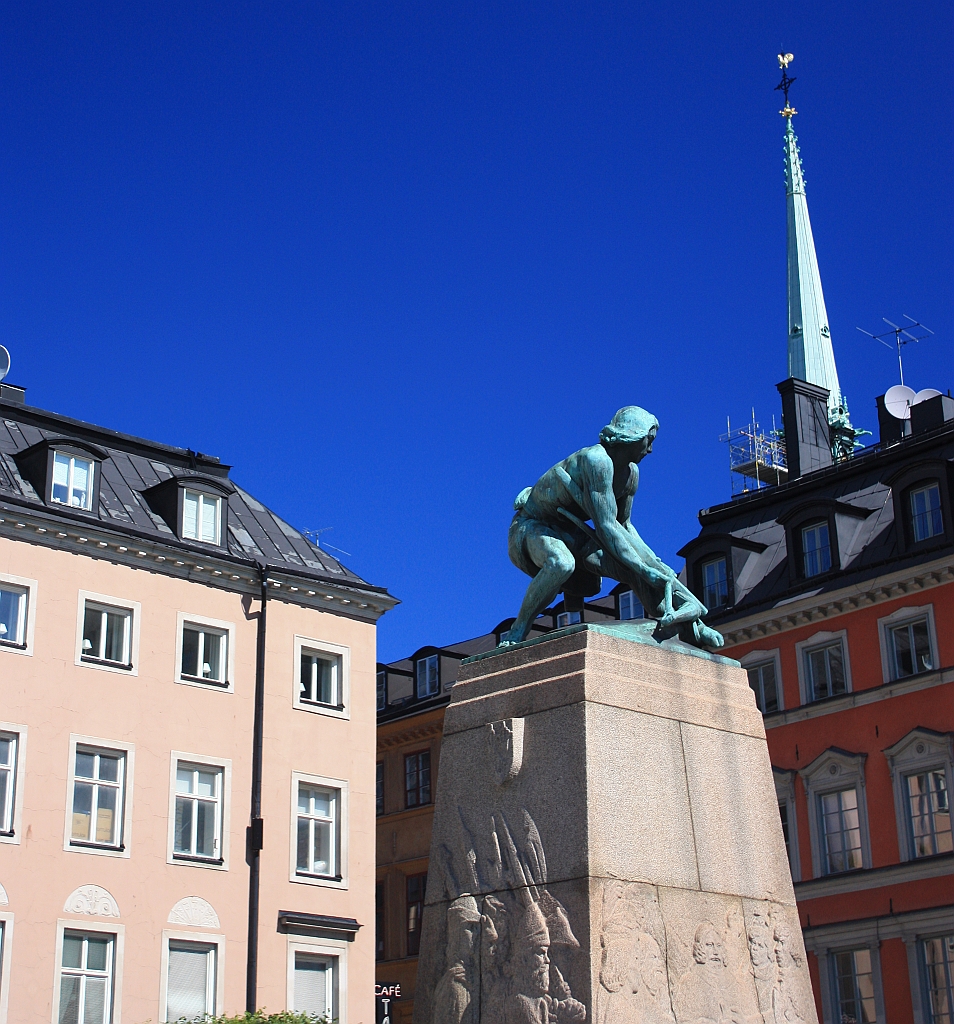
Kornhamnstorg, Gamla Stan, Stockholm, Sweden

Statue of Engelbrekt Engelbrektsson at Kornhamnstorg (Grain Harbour Square)

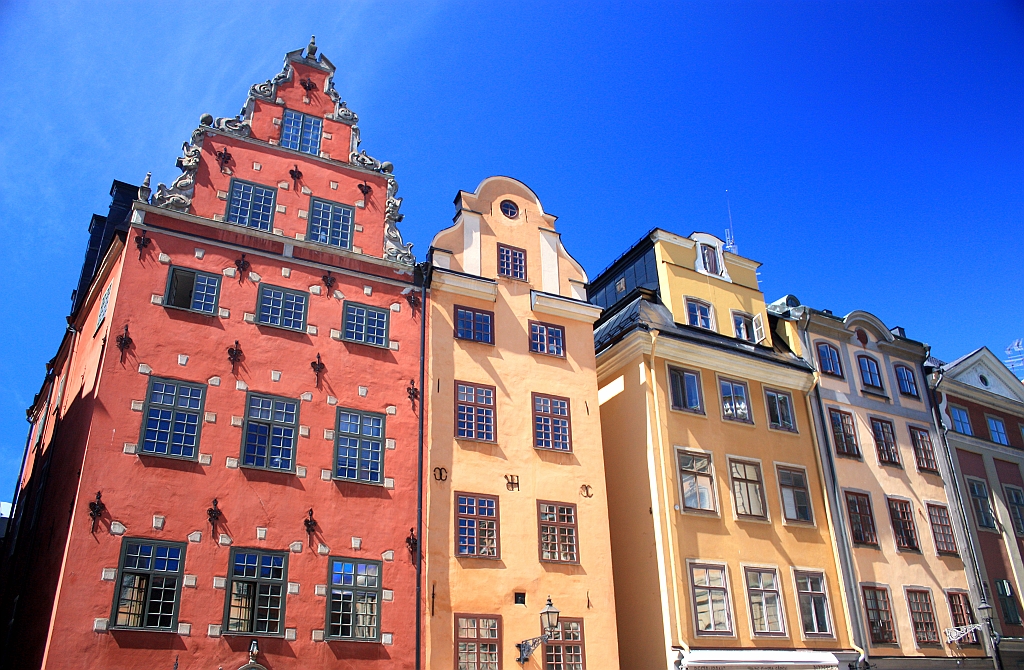
Stortorget, Gamla Stan, Stockholm, Sweden

Standing tall, at Stortorget (Great Square)

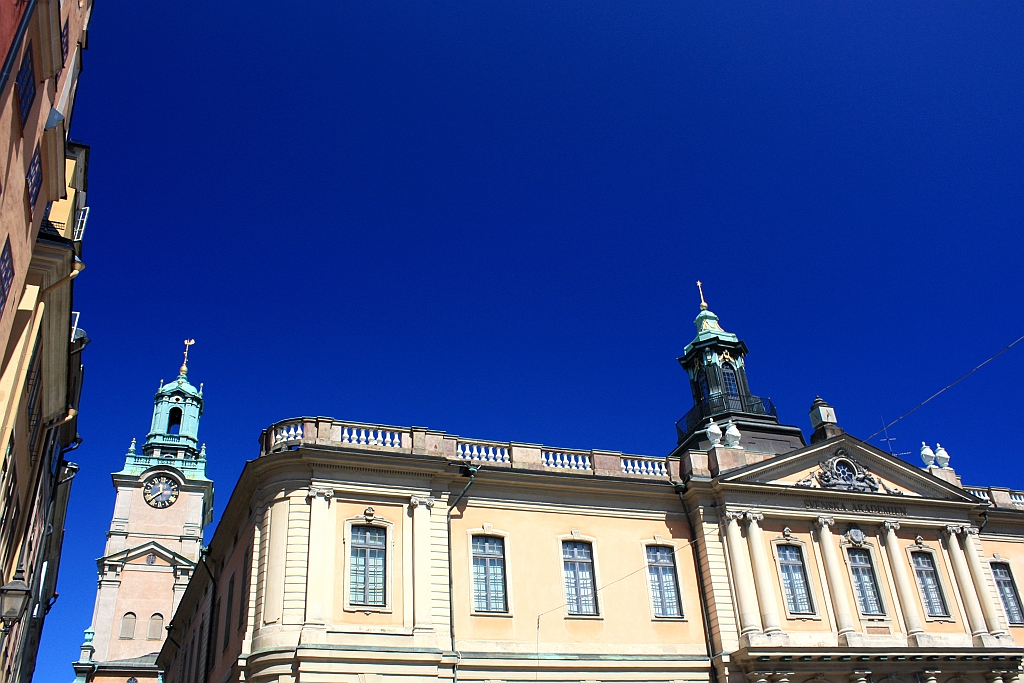
Mårten Trotzigs Grand, Gamla Stan, Stockholm, Sweden

At Stortorget: Storkyrkan (Grand Church); Börshuset (Stock Exchange Building), now Nobel Museum

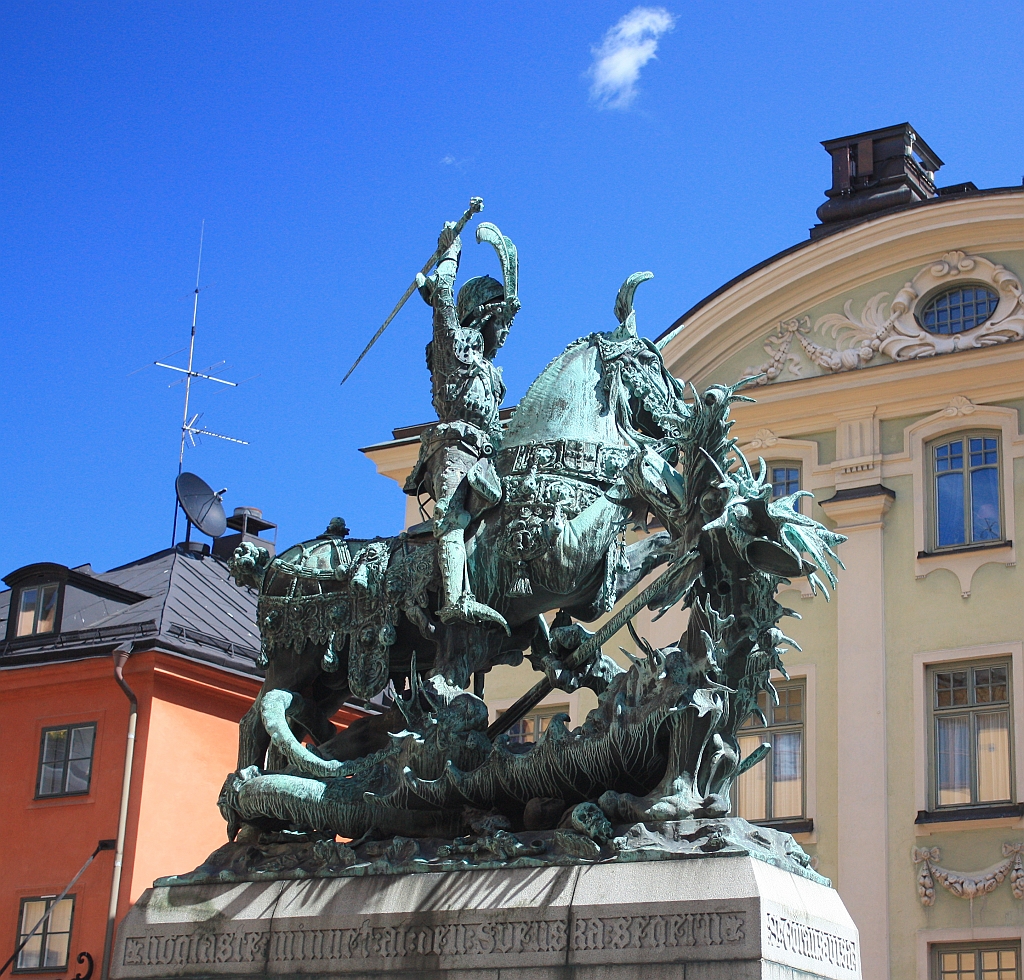
Sankt Göran och Draken (St. George & the Dragon), Köpmanbrinken, Gamla Stan, Stockholm, Sweden

Sankt Göran och Draken (St. George & the Dragon), at Köpmanbrinken (Merchant’s Slope)

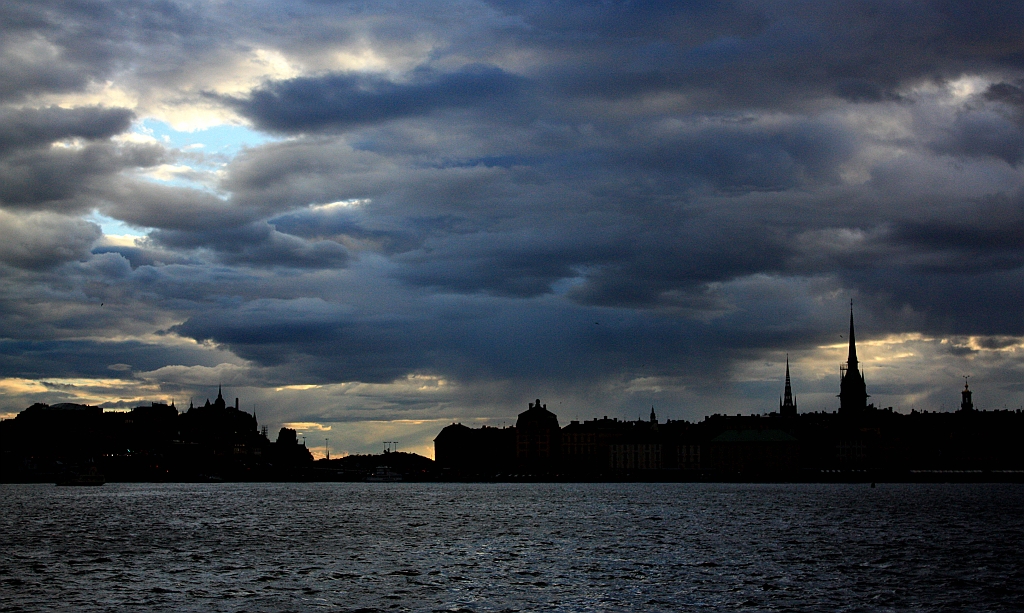
Gamla Stan from Skeppsholmen, Stockholm, Sweden

Grey rainy skies over Gamla Stan, from Skeppsholmen island

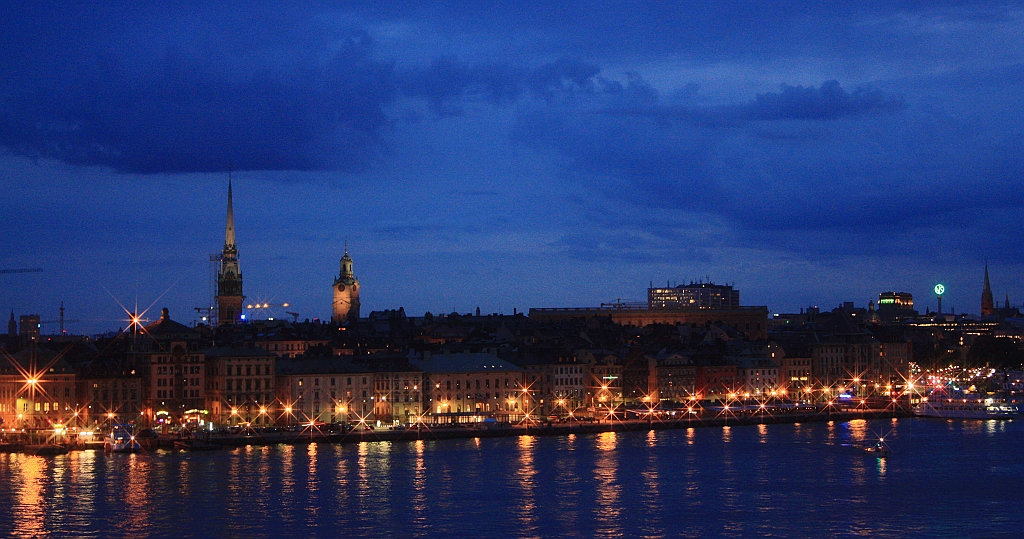
Gamla Stan and Strömmen, from Katerinavägen, Södermalm, Sweden

Gamla Stan and Strömmen, from Katerinavägen, Södermalm : 1130pm

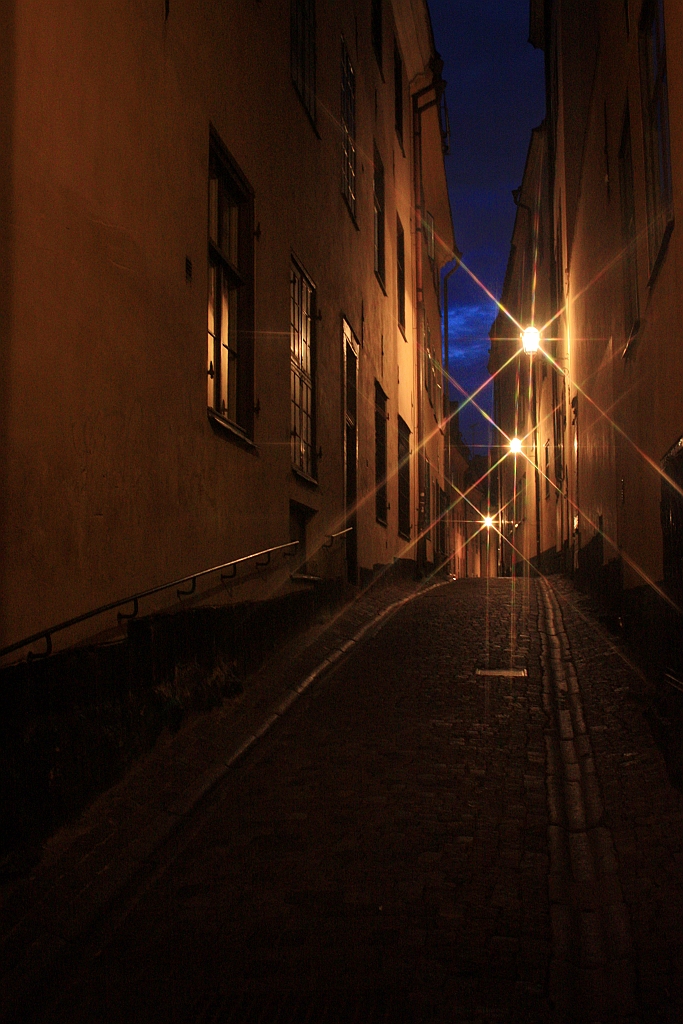
Tyska Brinken at Prästgatan, Gamla Stan, Sweden

Tyska Brinken at Prästgatan : midnight

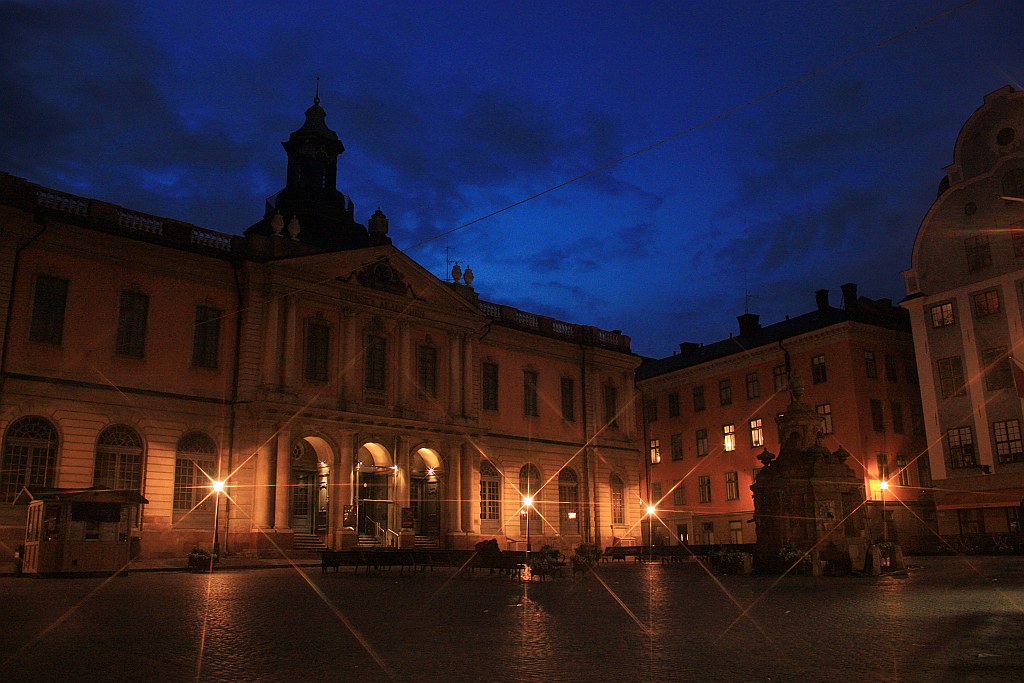
Börshuset, Nobelmuseet, Stortorget, Gamla Stan, Sweden

At Stortorget : Börshuset / Nobelmuseet, minutes after midnight

Please do yourself a favour — go to Stockholm in the summertime. Yes, it’s expensive compared to other European destinations, but worthwhile things to see and do await in Gamla Stan, Östermalm, Södermalm, Djurgården, Skogskyrkogården, and in the archipelago (e.g., Vaxholm by boat).

More

•   Daytrip to Vaxholm in Stockholm’s archipelago
•   Say “Hej!” (and to food) at Lisa Elmqvist in Östermalm’s Saluhall market hall
•   Greeting Greta Garbo in the Skogskyrokogården

I made the photos above on 25 to 27 June 2008, just after northern summer solstice. This post appears on Fotoeins Fotopress at fotoeins.com at http://wp.me/p1BIdT-JI.