These photographs are a set of personal observations outlining places I’ve been and places where I want to be. The people appearing in these photographs are essentially proxies in my exploration of isolation and urbanity, and the universal concept of home. Over many years, I’ve wrestled against many demons, and in the present age of social media, the race to the most “looks, clicks, and likes” isn’t providing a healthy solution. Ultimately, what I dream is that a destination will offer some finality for the simple requirements of understanding and acceptance.
Detachment and atypicality have always been personal benchmarks carrying me from one location to the next. The privilege of living in Europe and South America have provided a palette of colour and flavour variations throughout my time as research scientist. Rationality and creativity always competed for supremacy, until I realized they could feasibly share the same stage. When I traveled around the world for a full year after leaving science behind, I hadn’t stopped running from research, from my birth-city, or from the person I had become. While running suggests an escape from something, running also implies there’s some endgame which is how writing and photography have helped shape my ongoing journey.
Above/featured: Mural of the Helios structure, Köln Ehrenfeld, 9 Jan 2013 (450D).
Why is there a lighthouse located in the middle of the city? That makes no sense!
Did the Rhine river once flow here? Is that why there’s a lighthouse?
Is the structure some kind of forgotten remnant of the past?
Maybe that’s not a lighthouse, but rather a beacon that lets people know about a fire somewhere in the neighbourhood.
These are some of the questions and statements posed by Cologne residents when asked if they know anything about the lighthouse in their midst.
Located in the Ehrenfeld1 borough of Cologne is a red brick 44-metre (144-foot) high lighthouse. But why is there a lighthouse at all in the “middle” of Cologne? The Rhine river flows through the city, but the river is hardly visible from the lighthouse at a distance of about 3 kilometres (2 miles). The structure is not an actual operating lighthouse; it’s a symbol of early 20th-century enterprise from what was once one of the most important companies in Europe and marking the location of a big factory that once manufactured electrical equipment including maritime lights.
Founded in 1882, Helios2 established their presence in the town of Ehrenfeld before the latter was incorporated into the greater city of Cologne in 1888. The company once boasted a staff complement of over 2000 people, with products sold in Germany and Europe ranging from electrical generators and transformers, light bulbs, light fixtures in public spaces, and electrical streetcars. Helios also built light towers for the North and Baltic Sea coastlines, including ones at Roter Sand (Weser river estuary), Borkum and Wangerooge (East Frisian Islands), and Sylt. The onsite lighthouse in Ehrenfeld was constructed as a testing facility and never used as a navigational aid or marker. The company overextended its financial reach until Berlin’s AEG3 purchased Helios in 1905. Manufacturing operations in Ehrenfeld ceased in 1930, bringing a final end to Helios’ business presence in Cologne.
The present-day buildings which remain are used as office- and art-space. As historical landmark, the “Helios Leuchtturm” remains as part of the urban heritage in Ehrenfeld and Cologne. If the people in both borough and city have any final say in the matter, the lighthouse will never have to go out.4
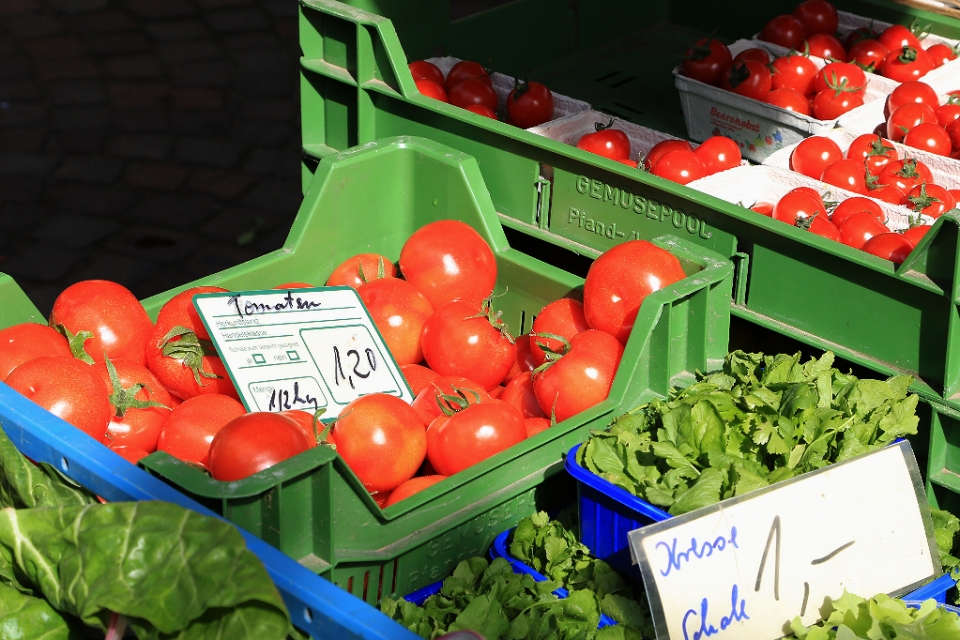
In Heidelberg, the farmers’ markets are held regularly throughout the week at a number of locations throughout the city and region. One of six Saturday markets takes place across the Neckar river in Neuenheim. Most visitors in town will visit the Saturday market in Heidelberg’s Marktplatz, which leaves the other five Saturday markets pretty much “clear and free” to residents. And as I arrive at the market square in Neuenheim, it’s clear I’m in the minority, literally and figuratively. This is not criticism and it’s not a negative, as I used to come here occasionally when I lived here. I say as much to the various vendors, when I buy a cup of coffee, some cherry tomatoes, a piece of cake, and three empanadas.
Fresh fruit and vegetables, grown locally and imported from around Europe. Fresh bread and baked goods from a regional bakery. Fresh herbs, grown locally; fresh flowers, grown locally. Honey harvested from bees at a regional apiary. “Empanadas Argentinas”, by a woman from Córdoba who’s lived in Germany for over ten years. And there are fresh cuts of meat, tubs of olives, and glorious varieties of cheese from around Europe.
It’s time to stop eating and leave, when the vendors begin to pack. Another market, another day.
When I leave Heidelberg, no small measure of wistful longing remains; these are my streets, and this is one of my markets.
When I lived in Germany, I remembered the ads for Radeberger Pilsner, and I wondered about some of the venues shown. I realized the buildings were in the famous city of Dresden on the Elbe river in southeast Germany, and the city of Radeberg was only 15 kilometres from Dresden. Images of the Dresden’s landmarks have been an important part of Radeberger brewery’s advertising campaign to show the beer’s exceptional quality and to associate that very same quality by (physical) proximity with the symbolism of Dresden’s historic landmarks.
Dresdner Wahrzeichen (Dresden Landmark)
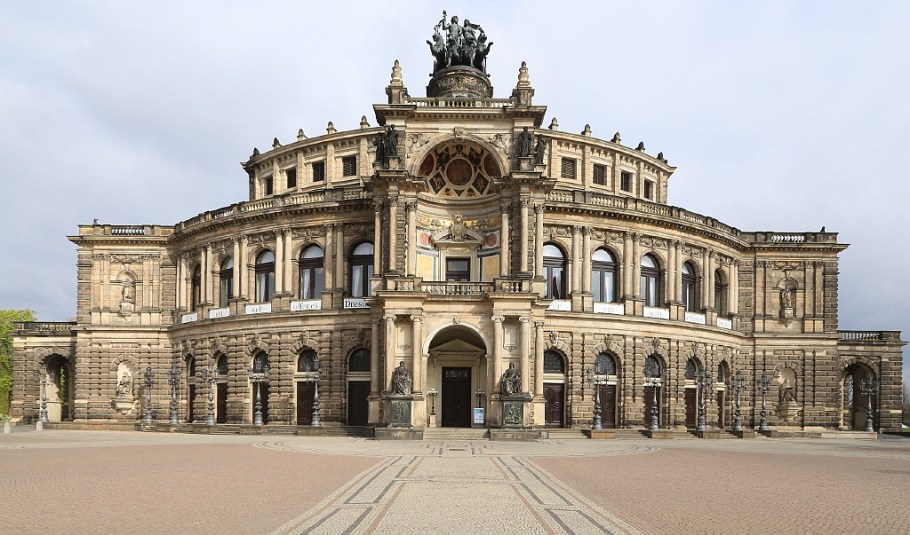
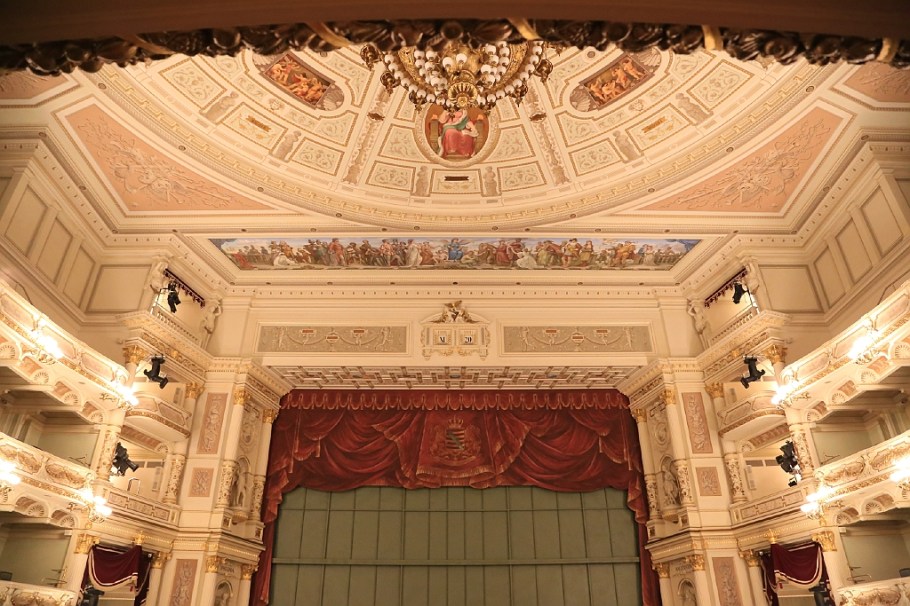
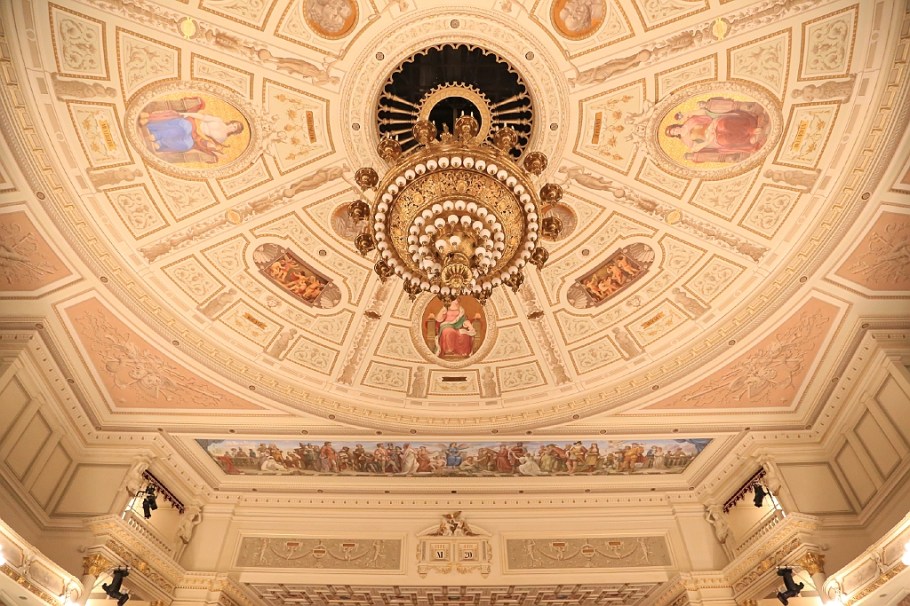
As one of the city’s most well-known landmarks, the Semperoper (Semper Opera House) appears in countless images representing Dresden. The Semperoper is the showpiece structure at Theaterplatz (Theater Square) looking over the river Elbe in the city’s Altstadt (Old Town). The first version of the building opened in 1841 with the design provided by Gottfried Semper. After destruction by fire in 1869, the second version of the building, also to Semper’s design, was completed in 1878. Only the Semperoper’s outer facade remained in 1945 during the final stages of the Second World War. Built once again to Semper’s original designs, the third and present version of the Semperoper opened to great acclaim on 13 February 1985. The interiors were reconstructed according to original plans and designs, whereas stage machinery and technical and engineering requirements are all updated to the best standards in audio quality.
With the leading title “Sächsische Staatstheater-Staatsoper und Staatsschauspiel Dresden”, the opera house is home to the Saxon State Opera, the Saxon State Theatre, the Semperoper Ballet, and one of the world’s oldest orchestras, the Staatskapelle Dresden, founded by Prince Elector Moritz von Sachsen in 1548.
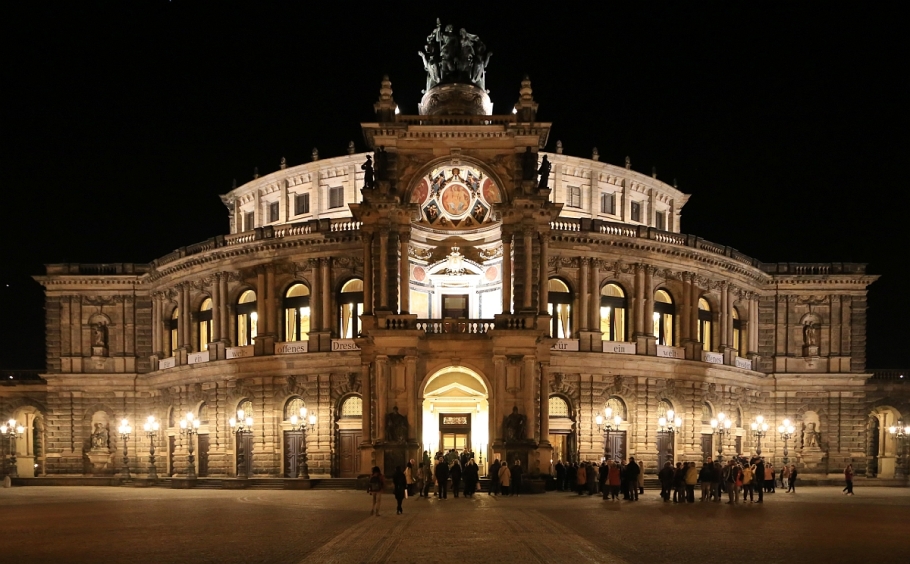
The Semper Oper is a natural part of any walking tour of Dresden, as Theaterplatz is minutes from the Zwinger, Residenzschloss, and the Frauenkirche. I’m awed by the night tour, a chance to see up close the building’s Baroque style exterior and the classic ornate interior. Everybody speaks in calm hushed voices, the unspoken agreement to be mindful and respectful of this venue. Despite the presence of other people in other tour groups, it feels like I have the Opera House to myself at 11pm.
Classic shot of the front by day
Classic shot of the front at night; also featured on the “night watch”
Ceiling mural
Some columns real marble (cool to touch); some faux-marble plaster (warm to touch). Full replacements were too expensive for the GDR/DDR at the time
S. Kurpiers, one of the stage managers and our guide for the evening
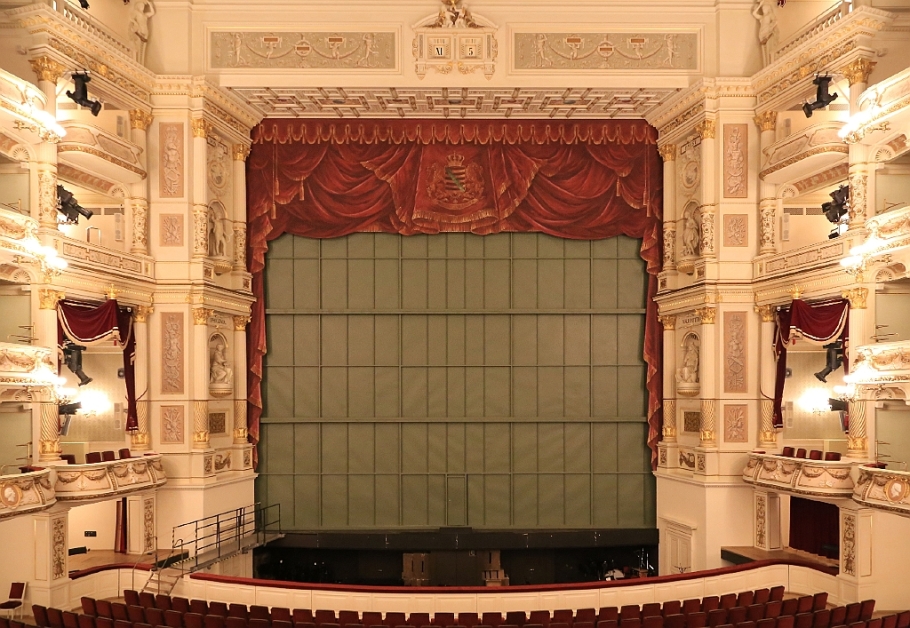
Main stage & orchestra, from central box section in the 1st balcony (Loge, 1. Rang). Clock at top-centre reads “XI 5”, or 1105pm
“Box” seats normally reserved for representatives and guests of the German federal state of Saxony
Separate guided tour to our left; there are 4 balconies
Another tour to the right
Looking up; lip of the 2nd balcony appears at top
Massive central chandelier light-fixture overhead; clock reads “XI 20” (1120pm)
Thanks to Semperoper for opening their facility to the public at night, and thanks to S. Kurpiers who kindly guided our tour of the venue. Thanks also to Germany Tourism, Saxony Tourism, and Dresden Tourism for their support and hospitality. I made all of the photos above on 22 April 2015 with the Canon EOS6D. This post appears on Fotoeins Fotopress at fotoeins.com as http://wp.me/p1BIdT-7sx.
The following is an advertisement for Radeberger brewery from 2014. The advert for their Pilsener ends with an image of Dresden’s Semper Oper at night and the slogan “schon immer besonders” (always special).
“Yes, but by design, there’s a lot of green foliage integrated within and around the building.”
“But why is the building pink?”
“That colour irritates a few people, particularly some at the big bank next door and even some at state government offices nearby.”
Wouldn’t that be fitting for Hundertwasser, who declared straight lines as “godless” and called his final work “an oasis for humanity and nature in a sea of rational houses”?
In art and in architecture, there’s no mistaking an inevitable clash between what’s “fanciful” and what’s “functional”. Not only has this conflict always been around in some shape or form, it’s a sign there’s change, disruption, or rebellion against the staid of the contemporary. What’s also true is that what’s believed to be “common” has rarely been universal, by place or in time.