Fotoeins Fotografie

location bifurcation, place vs. home

Posts from the ‘Photography’ category

Links to photography blogs, information, sites

UN FAO International Mountain Day. International Mountain Day celebration 2015 in Chile/Brazil: photo by College João Paulo of Brazil and the University of Magallanes (UMAG).

11 December: International Mountain Day

Since 2003, December 11 is International Mountain Day as designated by the United Nations General Assembly. Annually, the Food and Agriculture Organization of the United Nations (FAO) observes the day:

… to create awareness about the importance of mountains to life, to highlight the opportunities and constraints in mountain development and to build alliances that will bring positive change to mountain peoples and environments around the world.

•   Mountains cover almost one-quarter (22 percent) of the Earth’s surface.
•   Mountains host about 50 percent of the world’s biodiversity hotspots.
•   Up to 80 percent of the world’s freshwater supply comes from mountains.
•   One in eight people (13 percent) around the world lives in the mountains.
•   Mountain tourism accounts for almost 20 percent of the worldwide tourism industry.

The following provides a glimpse to the mountain environments around the world and to the challenging conditions our ancestors would have faced and endured.


( Click here for images and more )

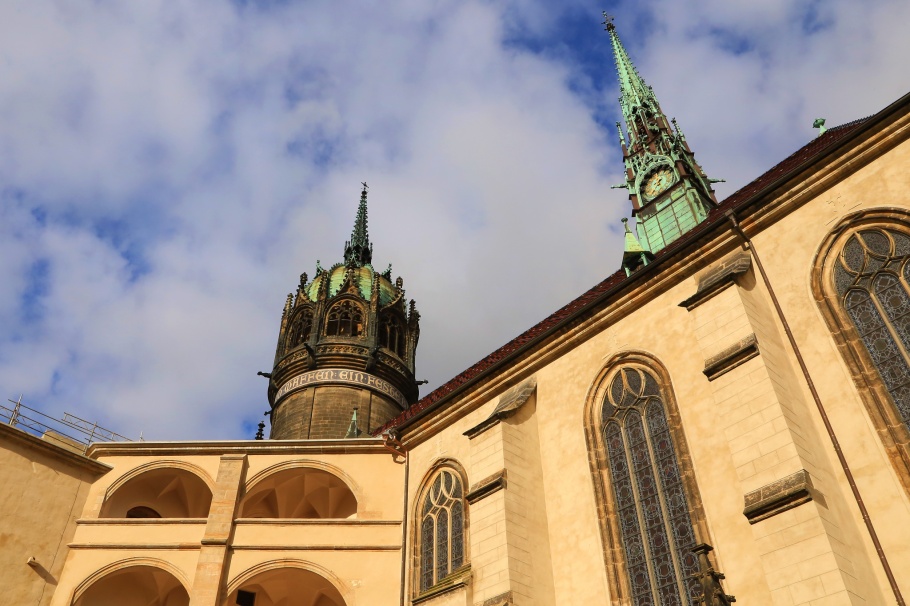
Wittenberger Marktplatz, Rathaus, Lutherdenkmal, Stadtkirche Sankt Marien, Marktplatz, Lutherstadt Wittenberg, Sachsen-Anhalt, Wittenberg, Saxony-Anhalt, Germany, Deutschland, UNESCO, World Heritage Site, Welterbe, Weltkulturerbe, fotoeins.com

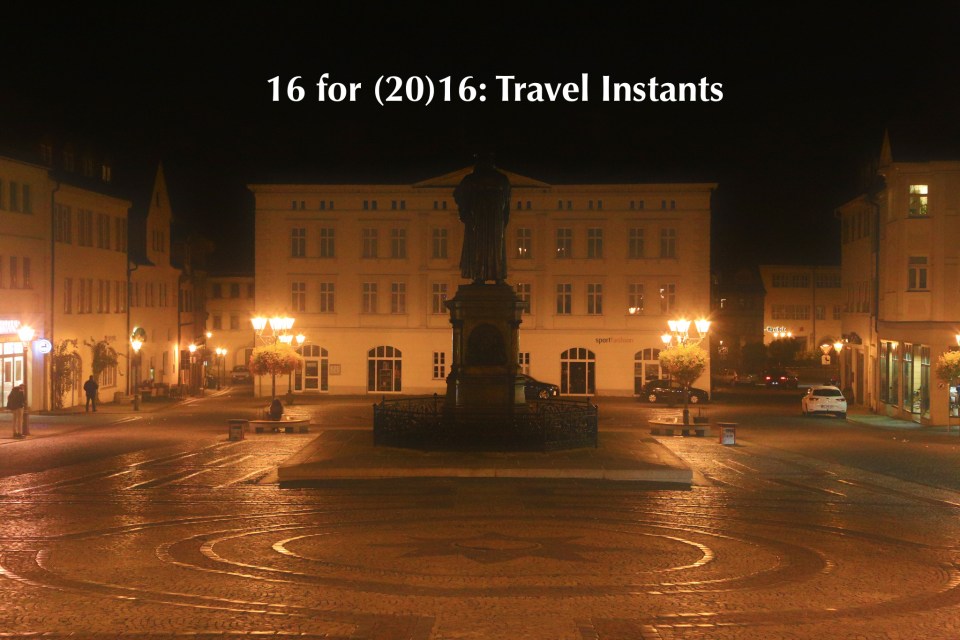
The Saxony-Anhalt 5: Luther & Bauhaus

(October 2016)

As motivation to trace Martin Luther’s footsteps for the 500th anniversary of the Reformation in 2017 and to learn more about the impact of the Bauhaus art and design movement for the centenary in 2019, I embarked on a press-trip in the autumn 2016 to the German federal state of Saxony-Anhalt.

(( The description of this trip would be a continuation of a consecutive annual streak going back to 2001. I’ve set foot inside Germany at least once every year since 2001. I’d already claimed another consecutive year with a short stint at “home” in the HD earlier in the spring, but autumn in-country* solidly confirmed a 16th consecutive year in the country. ))


( Click here for more )

Fraser River, Port Mann Bridge, Coquitlam, Port Coquitlam, BC, Canada, fotoeins.com

World Rivers Day: 50+ rivers from around the world

Above: Fraser River, east from Port Mann Bridge, between Coquitlam and Surrey, BC (HL).

The fourth Sunday in September is World Rivers Day. The University of Oxford’s Dictionaries defines ‘river‘ as:

“a large natural stream of water flowing in a channel to the sea, a lake, or another river.”

A river has always been water supply and demand: daily use and consumption; farming and agriculture; and where the waste goes, often back into the same supply. A river has always been about transport: trade and delivery of goods; shuttling people between places; and with people travelling, the exchange of language and culture. Throughout history, the establishment of towns and cities and the subsequent development of rivers have been about a mix of urban and rural elements, and about the relationship and interactions between people and their waterways.


( Click here for images and more )

Spinnerei, Leipzig, Sachsen, Saxony, Germany, fotoeins.com

Leipzig Spinnerei: from cotton mill to arts centre

The Leipzig Spinnerei is a former cotton mill (Baumwollspinnerei) in the western industrial suburb of Plagwitz. The massive site at an area of 10 hectares (over 1 million square feet) with rows of factory buildings began operation in 1884 and eventually became the largest cotton mill in Europe with thousands working and living on-site. After the site ceased to produce spools of cotton thread shortly after reunification, artists took advantage of the cheap empty space, and transformed the area into studios, galleries, and exhibition halls. Much has been written about the impact and examples of art and space on Leipzig as the “new Berlin” as well as the “New Leipzig School.” The site as art and culture space opened its doors in 2005.

( Click here for images and more )

Home eye: a return to Vancouver streets (2013-2014)

What is “street photography”? How is street photography defined? Should it be defined? Who, if any, has the authority to define and maintain the definition? I presently subscribe to Eric Kim’s definition, but it’s important for people to photograph as they wish and desire. Whatever people think in terms of their streets is entirely up to them.

When I returned to my hometown for an extended period, I returned to the streets to became familiar with them again. Street names have remained unchanged for the most part, although many buildings have long since been demolished and replaced by something else. When I first picked up a camera, I rarely turned the lens onto people. It’s been a slow evolving process to shift my camera onto scenes with people. With that in mind, I’m fortunate to have some shots with people in decent scenes mixed with good timing.

( Click here for images and more )