Fotoeins Fotografie

location bifurcation, place vs. home

Posts from the ‘Camera Gear’ category

Nuremberg: Fuji(film)-Store

“Home of X Photography”

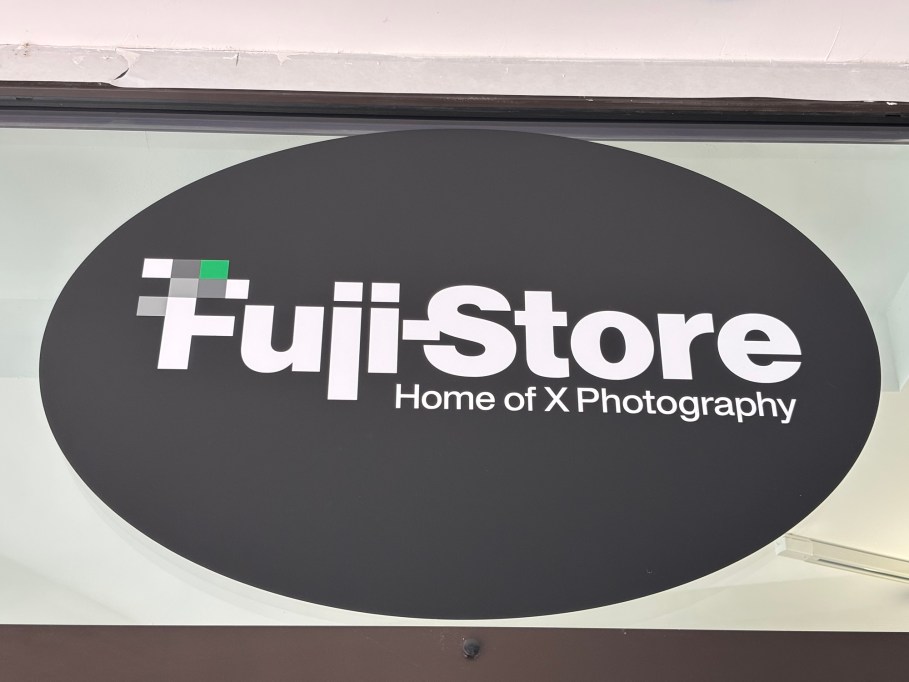
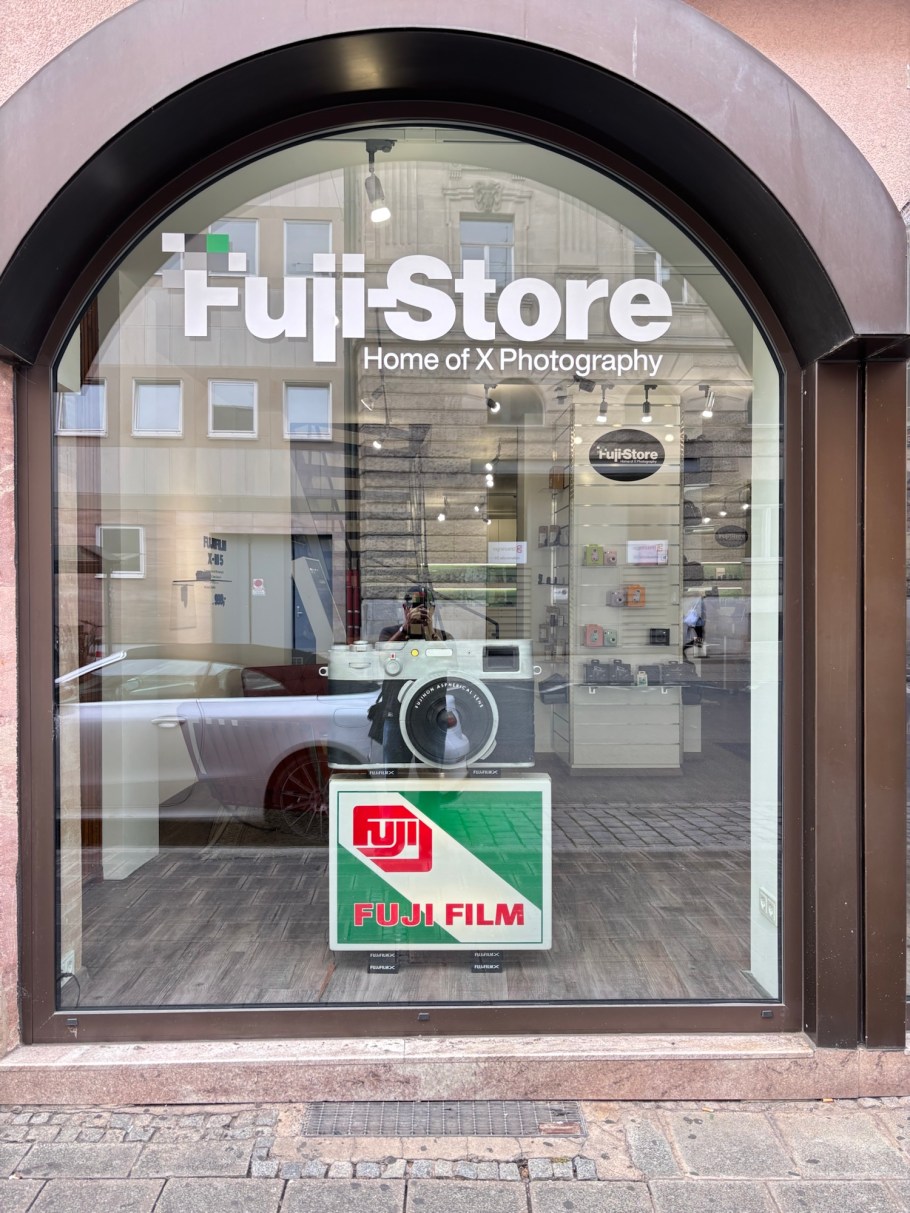
It’s a busy active crowded Saturday in Nuremberg’s city centre. There’s a big music festival with acts ranging in size from solo artists to 3-piece bands. But as I walk across town, I see a big Fujifilm sign, and as I approach, I can see this is no ordinary camera shop.

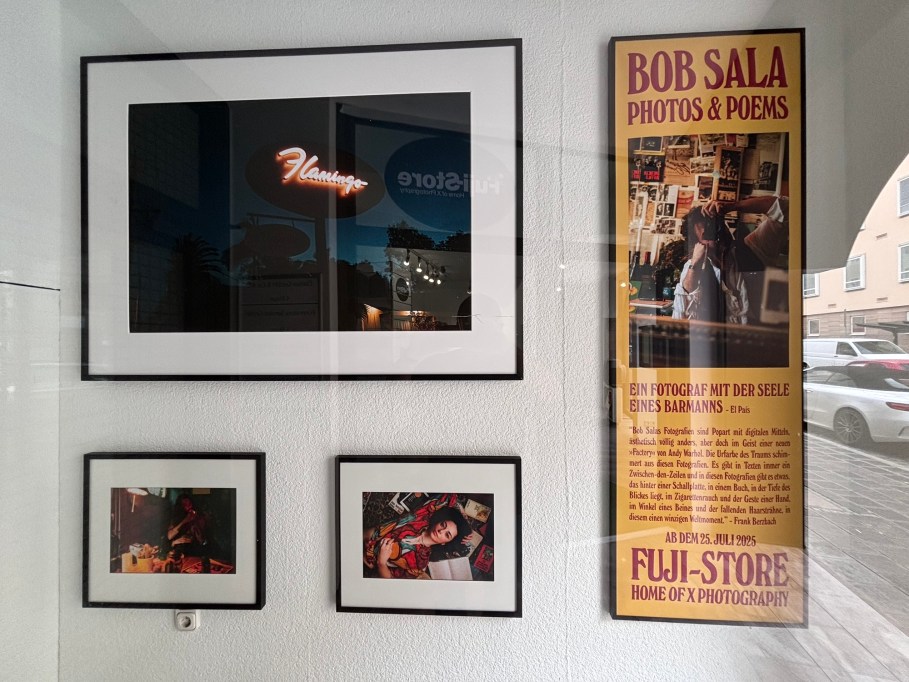
I learn there’s been a Fuji shop in the city for a number of years, and only this past February did they move to this new location. Judging by layout and the upstairs gallery, the Fuji shop has a feel similar to aLeica shop. That’s because the owner of Nuremberg’s Fuji-Store created the shop based on their experience operating the city’s Leica shop nearby. I chat with Peter, the gentleman in the shop about what’s out now and what else might be expected. We agree to a common wish: to have Fuji fill a current niche with a compact portable point-and-shoot at the right price point. How about an X80 product variant?

I’ve done my fair share of drooling (but no buying) at Leica shops in Frankfurt and Vienna, and I enjoyed doing the same to available X-models on display at Nuremberg’s Fuji-Store. Did I buy? No. Am I thinking about life after the X70? Yes.

I can also see Fuji X Weekly having some fun here in the shop.
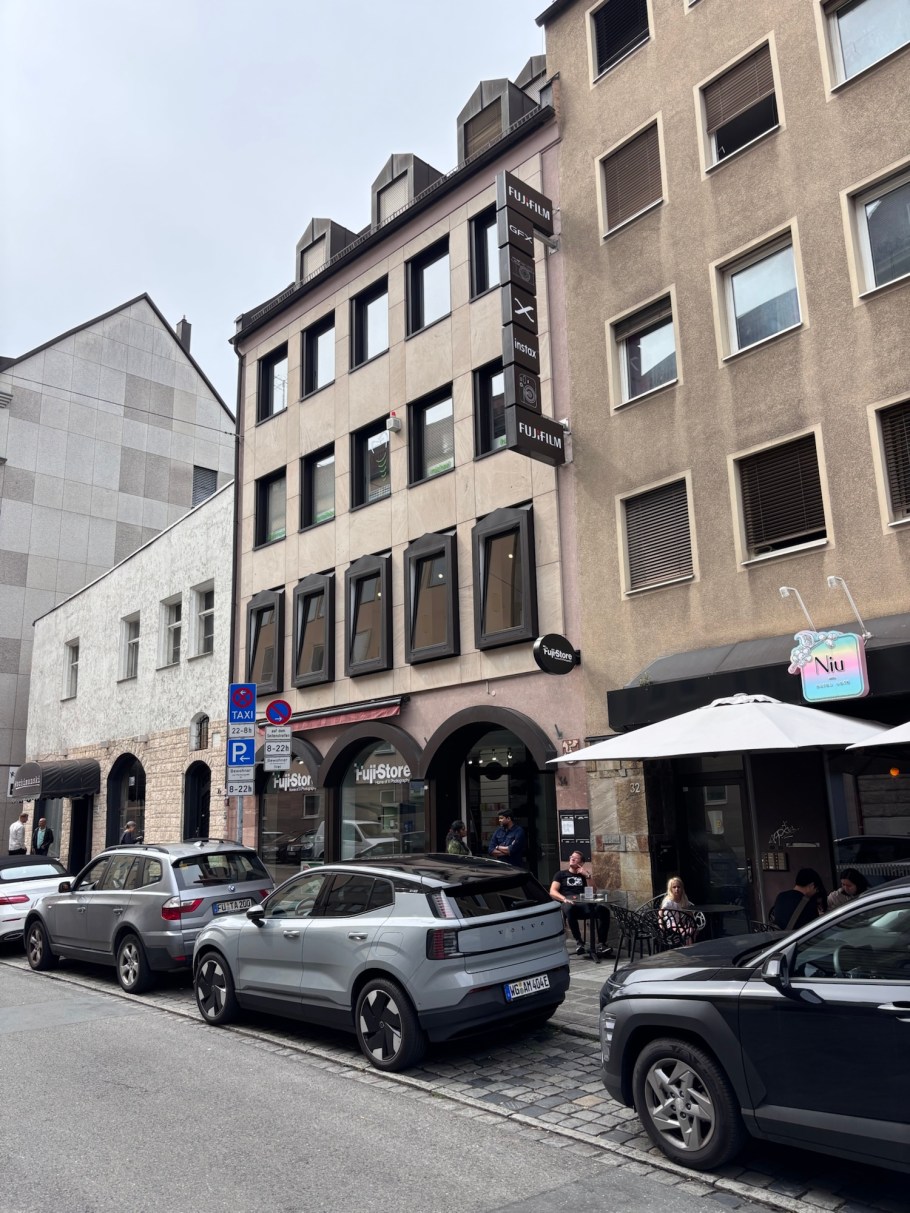


I received neither support nor compensation for this piece. I made all images above with an iPhone15 on 2 August 2025. This post composed within Jetpack for iOS appears on Fotoeins Fotografie at fotoeins DOT com.

My Fuji X70: Portra Sunset (XTrans2 recipe)

Above/featured: Morning light in San Francisco’s Financial District. Photo, 29 Mar 2025.

The Fujifilm X70 mirrorless fixed-lens prime camera has added a lot to my approach to photography for projects in both domestic and international settings. To satisfy my curiosity about Fujifilm’s analog-film simulation (film-sim) recipes, I’ve provided examples of X70 images with the following recipes:

•   CineStill 800T
•   Ektachrome 100SW (saturated warm)
•   Fujichrome Slide
•   Kodachrome 64
•   Kodacolor
•   Kodak Color Negative
•   Kodak Platinum 200
•   Monochrome Red

What follows are images made with the “Portra Sunset” recipe, which Yon Pol describes in their YouTube video.

This recipe is for X-Trans II sensors and the built-in availability of “Classic Chrome”. The settings on my X70 are:

  • “Classic Chrome” built-in film-sim
  • Dynamic Range: DR200, but I’ve set this to DR400
  • Color: +2 (High)
  • Sharpness: -1 (Medium-Soft)
  • Highlight: -1 (Medium-Soft)
  • Shadow: -1 (Medium-Soft)
  • Noise Reduction: -2 (Low)
  • White Balance: Daylight; +3 Red, -5 Blue
  • ISO: Auto, up to 3200

I assigned this recipe for an “all-purpose or daytime” setting as 1 of the 7 camera’s custom presets. The following JPG images are “almost” straight-out-of-the-camera; only minor adjustments to brightness level and a crop to a predefined image size have been applied, with no corrections to colour, contrast, geometric distortion, or rotation.

Just like the Kodachrome 64 recipe, Portra Sunrise uses the Classic Chrome film-sim in-camera setting that produces accentuated reds and an overall orangey-flavour. Blues seem more “subdued”, until foreground objects are illuminated against a clear blue sky. There’s more “diffuse washout” when I point closer to the sun. I imagine I’d get similar results with the Standard Provia film-sim under a clear sky with higher dust- or smoke-content in the atmosphere.

( Click here for images )

My Fuji X70: Kodak Color Negative (XTrans2 recipe)

Above/featured: Taunusanlage train station, Frankfurt am Main – 18 Jun 2023.

The Fujifilm X70 mirrorless fixed-lens prime camera has added a lot to my approach to photography for projects in domestic and international scope. To satisfy my curiosity about Fujifilm’s analog-film simulation (film-sim) recipes, I’ve provided examples of X70 images with the following recipes:

•   CineStill 800T
•   Ektachrome 100SW (saturated warm)
•   Fujichrome Slide
•   Kodachrome 64
•   Kodacolor
•   Kodak Platinum 200
•   Monochrome Red

Here I show images made with the “Kodak Color Negative” recipe, which Ritchie Roesch describes in Fuji X Weekly:

… The aesthetic that I was hoping to achieve with this recipe was Kodak Portra 400. I don’t believe that I succeeded in faithfully mimicking that (sometimes there’s a similarity); however, it does seem to produce a Kodak-like color negative film look, perhaps more like Ultramax, but not exactly that, either. Whatever it does or doesn’t resemble, I personally really like the aesthetic produced by this recipe …

The recipe is for X-Trans II sensors and the built-in availability of “Classic Chrome”. The settings on my X70 are:

  • “Classic Chrome” built-in film-sim
  • Dynamic Range: DR200
  • Color: +2 (High)
  • Sharpness: -1 (Medium-Soft)
  • Highlight: -2 (Soft)
  • Shadow: -1 (Medium-Soft)
  • Noise Reduction: -2 (Low)
  • White Balance: Incandescent; +6 Red, -7 Blue
  • ISO: Auto, up to 3200

I assigned this recipe for my “indoor” setting as 1 of the 7 camera’s custom presets, but the recipe’s versatility allowed for additional tests at outside locations. The following JPG images are “almost” straight-out-of-the-camera: only minor adjustments to brightness level and a crop to a predefined image size have been applied, with no corrections to colour, contrast, geometric distortion, or rotation. The blue (“cool”) colour-cast is very real, which is especially evident on images made outdoors under sunny conditions.

( Click here for images )

My Fuji X70: Monochrome Red (XTrans2 recipe)

Above/featured: Gateway Gardens station, Frankfurt am Main – 11 May 2023.

The Fujifilm X70 mirrorless fixed-lens prime camera has added a lot to my approach to photography for projects in both domestic and international scope. To satisfy my curiosity about Fujifilm’s analog-film simulation (film-sim) recipes for varying “looks” and “palettes” applied to images, I’ve provided examples of X70 images with these recipes:

•   CineStill 800T
•   Ektachrome 100SW (saturated warm)
•   Fujichrome Slide
•   Kodachrome 64
•   Kodacolor
•   Kodak Platinum 200

I examine the Monochrome+R film-simulation recipe, which Ritchie Roesch describes in Fuji X Weekly:

… Back when I shot black-and-white film, I usually used a color filter to manipulate the shades of grey, and for landscape photography the Red filter was my most-used option. You cannot use these filters on your Fujifilm camera, but Fujifilm does provide you with three faux filters: +Y, +R, and +G. These mimic the aesthetic of using a Yellow, Red, or Green filter (sort of). In my opinion, +R doesn’t actually replicate the use of a Red filter very well; it’s more like an Orange filter. This recipe is intended to produce a look more similar to a Red filter on black-and-white film, which means that it will darken blues and lighten reds.

This recipe is for the X-Trans II sensor. My X70 settings are:

  • “Monochrome+R” built-in film-sim
  • Dynamic Range: DR400
  • Color: —
  • Sharpness: +1 (Medium-Hard)
  • Highlight: -1 (Medium-Soft)
  • Shadow: +2 (Hard)
  • Noise Reduction: -2 (Low)
  • White Balance: Fluorescent1 (day); -4 Red, +7 Blue
  • ISO: Auto, up to 6400

I had assigned this recipe as “general black and white”, with which I experimented in a variety of locations and settings. The following images are almost straight-out-of-the-camera; only adjustments to brightness level and size (2048 by 1365 pix) have been applied, with no corrections to colour, contrast, geometric distortion, or rotation.

( Click here for images )

My Fuji X70: CineStill 800T (XTrans2 recipe)

Above/featured: Archangel Michael dispatching the devil: St. Michael’s Church, Vienna – 1 Jun 2023.

The Fujifilm X70 mirrorless fixed-lens prime camera has added a lot to my approach to photography for projects in domestic and international scope. To satisfy my curiosity about Fujifilm’s analog-film simulation (film-sim) recipes for varying “looks” and “palettes” applied to images, I’ve provided examples of X70 images with these recipes:

•   Ektachrome 100SW (saturated warm)
•   Fujichrome Slide
•   Kodachrome 64
•   Kodacolor
•   Kodak Platinum 200

Here I show images made with the “CineStill 800T” recipe, which Ritchie Roesch describes in Fuji X Weekly:

… CineStill 800T is Kodak Vision3 500T motion picture film that’s been modified for use in 35mm film cameras and development using the C-41 process. Because it has the RemJet layer removed, it is more prone to halation. The “T” in the name means tungsten-balanced, which is a fancy way of saying that it is white-balanced for artificial light and not daylight. … Even though the film that this recipe is intended to mimic is Tungsten-balanced, the recipe can still produce interesting pictures in daylight. It’s a versatile recipe, but it definitely delivers the best results in artificial light.

The recipe is for the X-Trans II sensor; the settings on my X70 are:

  • “Pro Neg Std” built-in film-sim
  • Dynamic Range: DR400
  • Color: -1 (Medium-Low)
  • Sharpness: 0 (Medium)
  • Highlight: +2 (High)
  • Shadow: +1 (Medium-High)
  • Noise Reduction: -2 (Low)
  • White Balance: 4300K; -3 Red, -3 Blue
  • ISO: Auto, up to 3200

I assigned this recipe for the “nighttime” setting as 1 of the 7 camera’s custom presets, but I also experimented in daylight at a variety of locations. The following JPG images are “almost” straight-out-of-the-camera; only adjustments to brightness level and a crop to a predefined image size have been applied, with no corrections to colour, contrast, geometric distortion, or rotation. I agree with Roesch’s statement about getting “best results” after dark in artificial light, but I got some interesting images in daylight as well.

( Click here for images )