Fotoeins Fotografie

location bifurcation, place vs. home

Posts from the ‘Europe’ category

My Berlin: Bornholmer Strasse, first through the Wall

By today’s appearance, it’s easy to overlook the bridge at Bornholmer Strasse (also known as Bösebrücke) as an historic landmark. On the night of 9 November 1989, the Berlin Wall opened here first, at the Bornholmer Strasse bridge border-crossing between East Berlin and West Berlin.


( Click here for images and more )

Wittenberg UNESCO WHS: St. Mary’s Church

Above: West side illuminated by afternoon sun, 30 Oct 2016 (HL).

The Stadtkirche Sankt Marien (St. Mary’s Town and Parish Church) is the oldest building in Wittenberg, and is one of four sites in town as part of the town’sasx inscription as UNESCO World Heritage Site since 1996. Not only is this the location where Luther preached, the church also contains important relics by the Cranachs highlighting the young Reformation movement. The Cranach and Luther families were close, as well as contemporary colleagues.

The east chancel (near the main altar) was part of the original St. Mary’s chapel built around 1280. By the early 15th-century, the chapel was incorporated into a triple-naved structure with two towers in the late-Gothic style at the west end of the new church; the Gothic tops were removed and replaced by octagonal shapes by the mid-16th century. The original pulpit from which Luther delivered his sermons has survived the centuries, and is now located in Wittenberg’s Luther House (Lutherhaus).

( Click here for images and more )

Mansfeld: Martin Luther’s childhood home town

Above: View of the town from Mansfeld Castle; numbered labels are described below.

I approach the ledge, and what appears is a typical yet modest German town: red roofs, a church steeple, green pastures, and endless hills rolling to the horizon. But this is no typical town. Five centuries ago, a young lad grew up in this town and ran through these streets. Though the area was dominated by mining activity, Dad was grooming the boy to become a lawyer, but the latter would make a life-changing decision. How was the boy to know his decision and subsequent work would eventually change religion, governance, literature, and culture in Europe.

Mansfeld is a town of about 9000 people in the southwest corner of the German federal state of Saxony-Anhalt. The town is dominated by the Mansfeld Castle situated on a rock spur above town. With origins to regional nobles, first mention of the town in official documents occurred in the late-10th century, erection of the castle’s foundations began in the 11th-century, and full charter rights of a city were granted to Mansfeld in the early 15th-century.

In 1484 one year after he was born and baptized in Eisleben, Martin Luder’s parents, Hans and Margarethe (née Lindemann) Luder1, moved the family 10 kilometres northwest to the town of Mansfeld. Hans Luder earned good wages in a region rich with mineral ore and covered with mines. Hans first worked in the quarries, and worked up to managing smelting furnaces, and eventually, to owning individual mine shafts and smelters. Martin wandered these streets until he left town at age 14 in 1497 for further education. His parents stayed in Mansfeld for the rest of their lives, whereas Martin moved to Magdeburg, Eisenach, Erfurt, and settling in Wittenberg.

1 In his thirties, Martin changed his surname from “Luder” to “Luther”, because the noun “Luder” had unsavory meanings and “Luther” was similar to the Greek word “Eleutherius“; see also Deutschlandfunk interview with Dr. Jürgen Udolph in German on 9 May 2016.


( Click here for images and more )

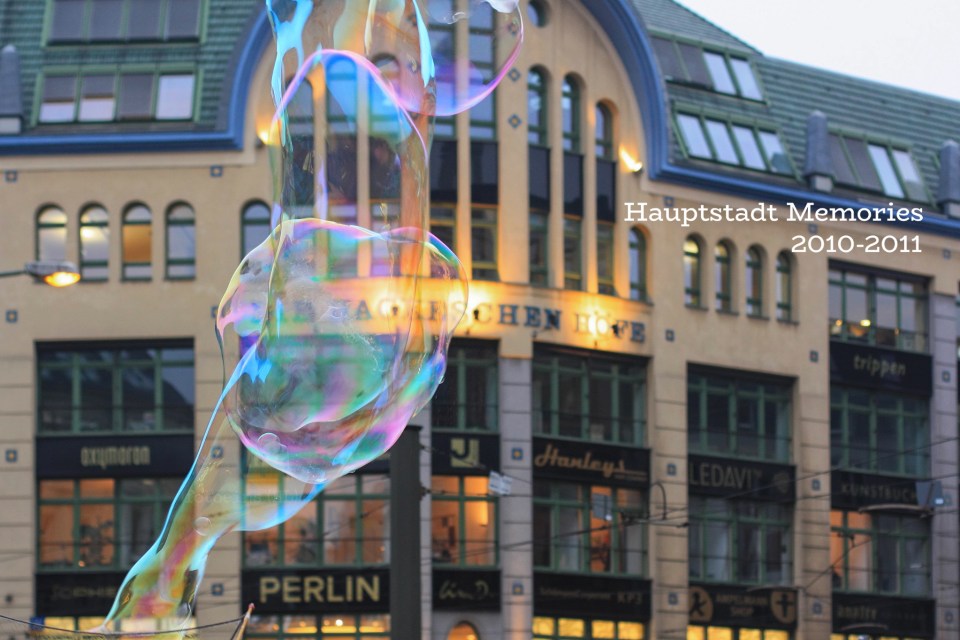
Perlin, Hackesche Höfe, Hackescher Markt, Berlin, Germany, fotoeins.com

My Berlin: Hauptstadt Memories, 2010-2011

Featured: “Pe(a)rlin’ in Berlin”, Hackescher Markt – 16 March 2011 (HL).

Berlin is one of my favourite cities in the world. From the moment I stepped foot inside the German capital city for the first time in 2002, it’s been an ongoing love story. I’m convinced the “Hauptstadt” will always be worth photographing; it’s my “long game.” Naturally, there are a massive number of sights throughout Berlin, and I’ve always combined public transport with plenty of walking. In fact, traveling 10 to 20 kilometres per day throughout the city is pretty much the norm. These photographs are personal observations and measurements of location, geometry, and motion.

The pictures and memories may be from years past, but all of the them retain their contemporary nature: images which include quiet snowy Christmas, an important memorial, and pieces of architectural design.

( Click here for images and more )

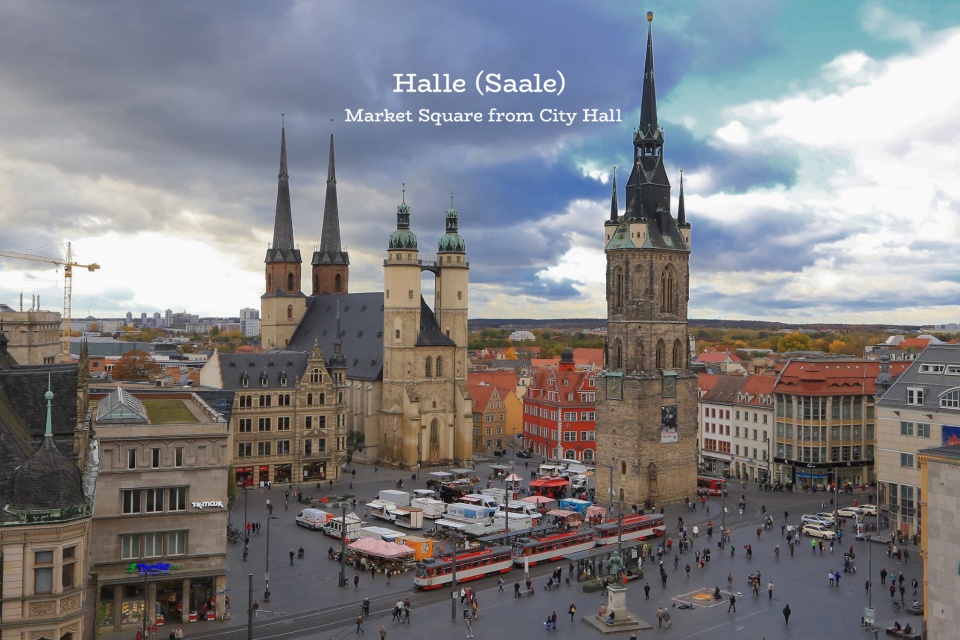
Halle an der Saale, Halle, Saale river, Saale, Sachsen-Anhalt, Saxony-Anhalt, Cultural Heart of Germany, Germany, fotoeins.com

My Halle (Saale): 12 highlights in the Händelstadt

Featured: “5 towers” with 4 (spires) from St. Mary’s Church (left-centre) and 1 from the Red Tower (right-centre). Händel monument is at lower centre.

You’re visiting Halle to learn and discover:

  • why salt also known as “white gold” was critical to the city’s development;
  • how Martin Luther and the Reformation left their mark in the city;
  • composer Händel’s birth house, his upbringing, and how he learned the organ;
  • the oldest German chocolate factory continues producing “Halloren Kugeln”; and
  • how the Museum of Prehistory houses the world’s oldest depiction of the night sky.

Located in the present German federal state of Saxony-Anhalt, the city of Halle along the Saale river is one of the larger cities in east-central Germany. Making salt was of great historic and economic importance that the name of the city “Halle” is derived from the old Celtic/Brythonic word hal, meaning “salt”. The name of the river “Saale” is derived from the old German word for “salt”1. With salt bringing wealth to the city through trade, Halle became a trade city or “Handelsstadt.” With the birth and upbringing of composer Händel in the city, Halle also became a cultural city or “Händelstadt.”

Halle’s present-day population at 240-thousand people is neck and neck with the 241-thousand people in the the state capital city of Magdeburg, 75 kilometres to the north. But proximity means Halle is also connected with Leipzig, only 31 kilometres to the southeast in the state of Saxony. Halle and Leipzig are connected with the S-Bahn Mitteldeutschland train service, and the two cities share an airport located about halfway in-between.

1 The Welsh word for salt is “halen”, and the German word for salt is “Salz”. See also “Celtic culture: a historical encyclopedia,” Volume IV (M—S), pg. 1555. Editor J. T. Koch (ABC-CLIO, 2006).


( Click here for images and more )