Fotoeins Fotografie

location bifurcation, place vs. home

Posts from the ‘Culture’ category

“Science is an integral part of culture. It’s not this foreign thing, done by an arcane priesthood. It’s one of the glories of the human intellectual tradition.” – S.J. Gould.

My Prague: the night watch

With visits to the city numbering well into the double digits, Prague started me on a different path, and eventually, to a change in my life.

According to legend, the city’s name, Praha, is derived from the Czech word, “práh” for “threshold” or “steps”. With the city’s geographic location within the European continent, it’s hard to recount the chronicles of Central Europe without mentioning Praha. History and significance permeates the city in the cobbled stonework, centuries of architecture, and stories of struggle and change.

I believe the city is one step of many on my journey and transition from my past as research scientist to a future that remains under continuous construction. Prague has been and continues to be an important part of this process. I’ve fallen in love with Praha – she means a lot to me.

As day passes to night, many parts of the city become quiet and empty, with only the yellow glow of the street lamps for company. Many are taught not to go into areas unknown, poorly lit, or vacant.

But I know Praha enough to see her differently.

I’ve done the legwork by day, scouting out and noting various locations around the city, and imagining their appearance in the dark. With a newly crafted road map in my head, I stand in the hotel lobby. I close my eyes in a mental walkthrough of my map, breathing deeply, slowly. I open my eyes again and step out into the night, guided by the lights of Staré MÄ›sto, and across the Vltava over to Mal´ Strana.

I’m on the “night watch” with Rembrandt’s painting high in mind. The city and its streets don’t care who we are or from where we come. They lie still, in wait around the next corner.

In this place I’m always on the verge of something new; it’s a set of new ideas, much of them extraordinary, romantic, and meaningful. The meanings signify truth on a personal level for those willing to listen and heed the signs.

“Prague never lets go of you … this little mother has claws.”
— Franz Kafka (1883-1924).

( Click here for images and more )

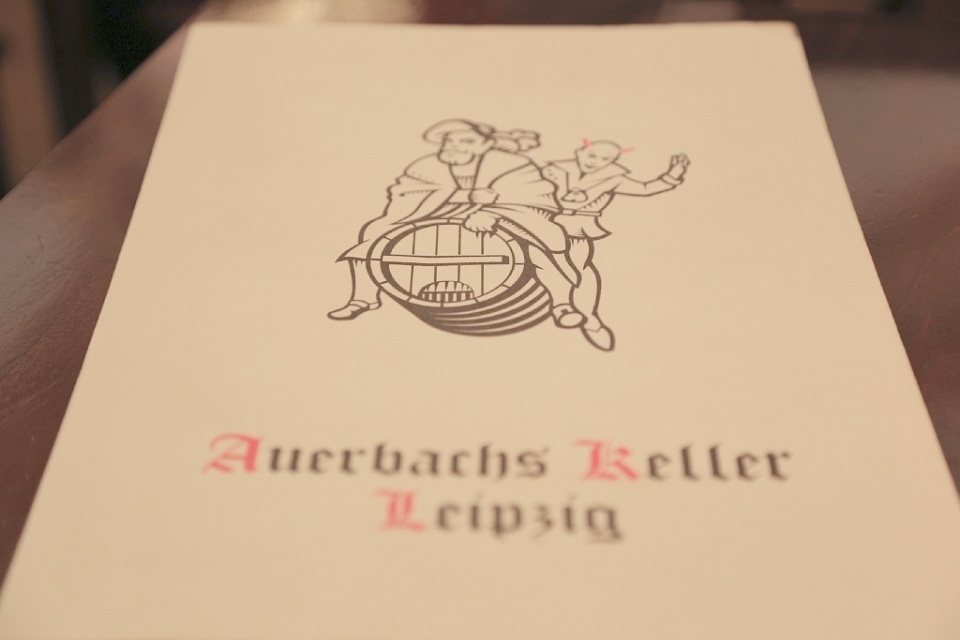
Auerbachs Keller, Leipzig, Germany, fotoeins.com

Leipzig’s Auerbachs Keller: devilishly comfortable

Goethe’s Faust meets Saxon comfort

If I didn’t know any better, I’d think I was giving away my soul for a good warm Saxon meal.

In the city of Leipzig, Germany, the name and influence of Johann Wolfgang von Goethe doesn’t stray far from conversation. Three more words are at the tip of the tongue: Faust. Pact. Devil.

Near the city’s central square at Markt, the Mädler-Passage beckons with bright lights and the promises of goods and riches within the shopping arcade. At the arcade’s north entrance, all are greeted by statues representing figures from “Faust”, the most famous published work by Goethe.

Signs to Auerbach’s Cellar lead downstairs on either side of the main passage. One thought remains as I walk into the basement. Am I sealing my own deal with the devil, setting foot in the Cellar’s chambers to sign away my freedom for some food, drink, and hospitality?

I’m sure the evening won’t be that dramatic. But the moment I walk in the door, I’m in the midst of culinary and literary tradition spanning many centuries.

( Click here for more )

Cafe Burkardt, Heidelberger Altstadt, Germany, fotoeins.com

My Heidelberg: Cafe Burkardt in the Old Town

I’m often “home” in Heidelberg to visit friends who are in the city to work for the university or one of the many institutes in town. An important component for any visit to Heidelberg is Untere Strasse in the Altstadt (Lower Street in the Old Town). The narrow cobblestone street includes cafes, pubs, and shops with a neighbourhood feel attracting not only university students for “pub crawls” but also city residents for their favourite hangout spots.

( Click here for more )

Weihnachten, Backwaren, Cafe Gundel, Karlsplatz, Hauptstrasse 212, Heidelberg, Germany, fotoeins.com

My Heidelberg: Café Gundel’s Christmas cakes & cookies (Weihnachtsgebäck)

Short sensory list

•   Sights of the Weihnachtsmarkt: bright lights; Christmas pyramid; red and yellow stars; unveiling of the Backwaren (backed goods) made especially for the holiday season.

•   Sounds of the Christmas market: the klang of full mugs distributed and empty ones collected, shouts of laughter from conversations scattered throughout the area.

•   Smells and tastes of the Christmas market: candied almonds, cashews, and peanuts; roasted chestnuts; balls of fried dough with powdered sugar; mugs of hot mulled wine, available in several fruit flavours; grilled bratwurst; fried potato pancakes with apple sauce.

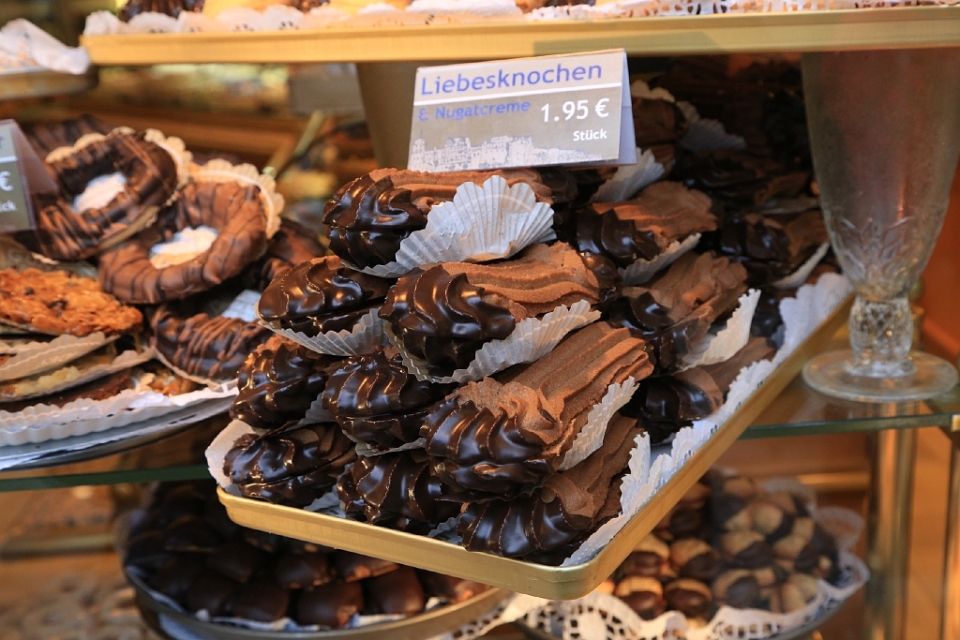
When the Christmas season brings out special baked goods, it’s time to pay attention. In Heidelberg, my favourite café in the university town doesn’t hold back as photos of the “Backwaren” (baked goods) show. There’s something for everybody at Café Gundel.

And on it goes: small lifetimes can be spent, seeing, smelling, and sampling the entire collection.

A short exchange

“Noch einen Wunsch?”

“Something more?“, asks the lady behind the counter when I’ve ordered a few of this and a few more of that.

“Das war’s. Komm ich wieder morgen …”

“That’s all. I’ll come back tomorrow …” I reply, with the sound of hope and promise in my voice. I’m sure she’s heard it all before. And yet, she humours me with a smile and a chuckle.

“Wir sind noch für Sie da …”

“We’ll still be here …”


( Click here for images and more )

Anatomiegarten, Hauptstrasse, Heidelberg, Germany

My Heidelberg: science at Anatomiegarten with Bunsen & Kirchhoff

It sounds like an unusual pairing, for science and Christmas to come together in a place called Anatomiegarten, or Anatomy Garden, in the German university town of Heidelberg.

During the Christmas season, the Anatomiegarten is host to one of the key Christmas market locations along Heidelberg’s main street (Hauptstrasse). Prominent are two names from a historical and scientific perspective: Bunsen and Kirchhoff.

( Click here for images and more )