Fotoeins Fotografie

location bifurcation, place vs. home

Posts from the ‘Culture’ category

“Science is an integral part of culture. It’s not this foreign thing, done by an arcane priesthood. It’s one of the glories of the human intellectual tradition.” – S.J. Gould.

Karluv most, Charles Bridge, summer dawn, Prague, Praha, Prag, Czech Republic, UNESCO World Heritage Site, fotoeins.com

Praho, miluju tě | I love you, Prague

“Foreward”

With visits numbering well into double digits, my affection for the Czech capital city of Prague remains undiminished, even in the midst of surging summer or winter crowds. When I’ve been in danger of being swamped, I veer off to a side street or quiet park; I’ll also wait for the relative solitude of nightfall or dawn. The magic is knowing I haven’t strayed very far from the big sights.

How I ended up chasing dreams over cobblestone streets, past the thousand spires and ornate facades, and across centuries of European art and history, has exceeded the limits of my imagination.

( Click here for more )

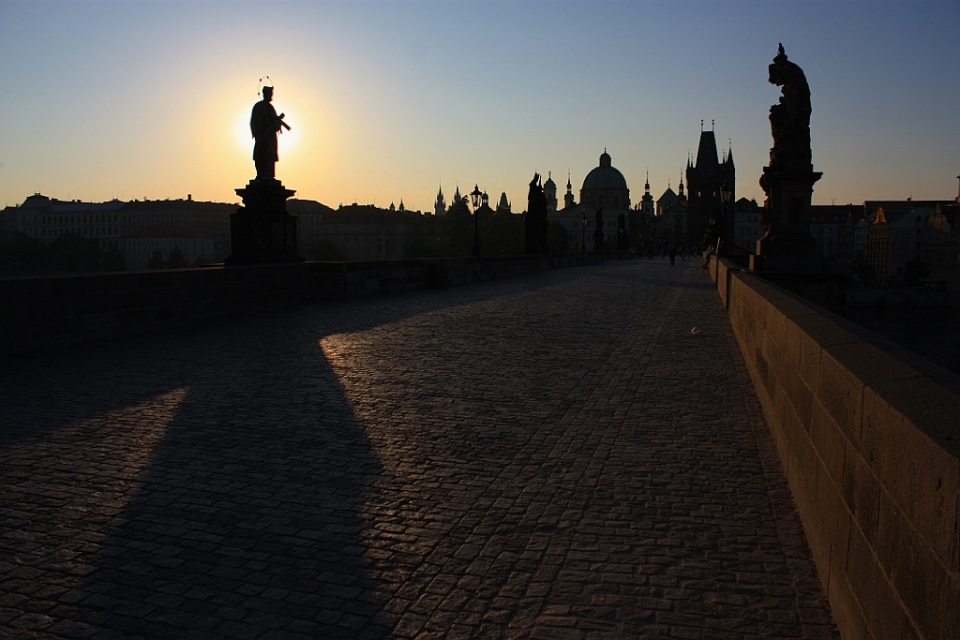
Karluv most, Charles Bridge, dawn, Prague, Czech Republic, UNESCO World Heritage Site, fotoeins.com

The shape of things to see and spot

Come here early enough, and it’s just a few early risers, dedicated runners, and well, me. There’s plenty of space to move around and change the angle of how I’m seeing things. Sure enough, there’s a bright circular halo surrounding the famous St. John of Nepomuk statue. With the rising sun in the background, the back-lit view has other bridge fixtures, some buildings, and the tall sharp dual spires of the Church of Our Lady Before Týn in silhouette. Image: 1/640s, f/8, ISO100, 18mm focal length (29mm full) with Canon EF-S 18-55mm f/3.5-5.6 IS II lens.


Shape” is a noun whose meaning is synonymous with:

form, appearance, configuration, formation, structure; figure, build, physique, body; contours, lines, outline, silhouette, profile.

It is one of the many “pieces” of good photography, and when the separate pieces come together, there’s something beautiful to behold, even perhaps, thought-provoking and inspiring.

I’m not going to pretend my photographs are absolute “championship” quality, but I know and understand my photographs are often worth a good long look. Here is a small selection of shapes I’ve seen from around the world with my trusty Canon EOS450D (XSi) camera (which has since given way to the 6D).

(Click here for more)

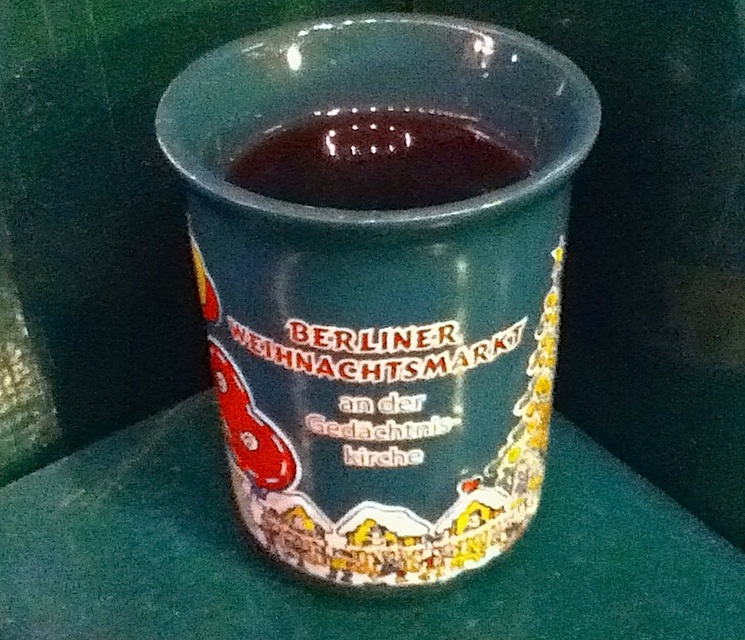
Berliner Weihnachtsmarkt an der Gedächtniskirche, Berlin, Germany

Christmas markets: Glühwein smarts

Above/featured: Christmas market at Berlin’s memorial church – 6 Dec 2012 (450D).

It’s easy to underestimate how much “punch” is delivered in a single Glühwein drink at a Christmas market. If I’m not careful and drink Glühwein too quickly and without food to soften the blow, I’ll encounter the very repeatable experience of “mind-body separation”.

What is this magically mysterious Christmas concoction called “Glühwein”?


( Click here for more )

Alter Synagogenplatz, Altstadt, Heidelberg, Baden-Württemberg, Germany, fotoeins.com

My Heidelberg: Synagogue Square and Pogromnacht

It happens every time without fail.

My spirit breaks a little more every time I see a memorial, another example of the depths to which our species have plumbed.

Does feeling this way make me weak? Or am I resembling a human being after all?

I often hear a common chorus:

history is hard, history is boring, why should I care?

I can’t decide what’s worse: the rise of the far-right or blatant willful ignorance.


A Mob of Broken Glass

From the evening of 9 November to the following morning of 10 November 1938, Kristallnacht (“the night of broken glass”) was a “pogrom”, a coordinated series of violent attacks by Nazis against the Jewish people and their property in Germany, Austria, and Czechoslavakia’s Sudetenland. Pogromnacht (or Reichspogromnacht) is a truer description; the “prettier sounding” Kristallnacht hides the brutality of “the night of (broken) crystal” referring to broken shattered glass from windows to synagogues, homes, and stores owned by Jews. Aside from a few who intervened, most stood aside and watched people and property burn.

The word “pogrom” is a late 19th- to early 20th-century Russian word (“погром”), derived from the verb “gromit” (громи́ть) meaning “to destroy with violence.” While “pogrom” is used generally to describe mob violence by one ethnic or religious group on another, the term is used in this post to describe attacks on the Jewish community.

The numbers across the country were appalling: at least 90 dead, hundreds injured, 30000 arrested and detained in concentration camps, up to 2000 synagogues burned, over 7000 Jewish businesses damaged or destroyed. With one more insult, the Jewish community was forced to pay for damage to their own property. The outbreak of coordinated actions against Jewish people marked the beginning of state-sanctioned violence. With the Pogromnacht, the state no longer hid their hate and escalated their savagery as a turning point directly leading to the Holocaust.

( Click here for more )

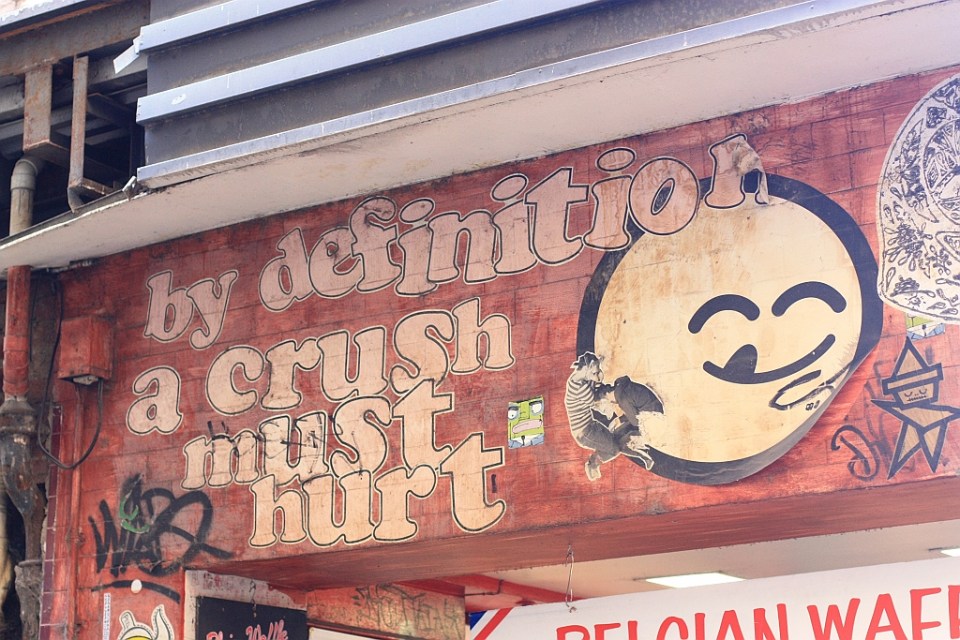
Melbourne, Australia, myRTW, fotoeins.com

Navigating Melbourne’s lanes for street art

In an earlier post, I’ve shown some work on display as street art in Adelaide in South Australia.

Over a period of four days in Melbourne, I wandered through lanes and streets to look for some representative street art in the Victorian state capital, some works which spoke of the people who live there. Would it be the same kind of art and/or messages I’d seen earlier in Adelaide? As always, the set of artists and their respective work hold unique value in each of the cities.


( Click here for images and more )