Fotoeins Fotografie

location bifurcation, place vs. home

Posts from the ‘Food and Drink’ category

The Pi(e) in Pie Town (US-60)

Above/featured: Welcome to Pie Town. The 2018 Pie Festival was held on 8 September.

The two words reach your eyes and enter your brain.

Pie Town.

The questions are immediate.

What? Who? Why? How do I get there? Is there really pie?

A sense of calm eventually prevails, and that’s when planning begins. Because there’s firm promise: “oh there will be pie.”

Fast forward to our drive through the American Southwest over three weeks in October 2018, and our adventure is drawing to a close.

With morning sun and excellent conditions, we’ve departed Tucson for a long drive for which there are three goals. One, we must arrive in Santa Fe by tonight to catch our flights out the next day. Two, we have to stop in Albuquerque for a return visit and chomp on a spicy stuffed sopapilla at Mary & Tito’s Cafe before they close at 8pm. Three, we’re desperate to visit Pie Town which by design is on the way to Santa Fe. We’re on the road for over 300 miles (480 kilometres) through Arizona, into New Mexico, and to Pie Town, and that’ll be followed by another 220 miles (350 kilometres) to Santa Fe.

The car continues to roll along the paved undivided two-lane highway on a stretch of lonesome landscape with short stubby hills and tall grassy fields for company. US-60 is nowhere as famous as its northerly US-66 counterpart; both are historic national highways. As some have noted, driving present-day US-60 comes very close to similar conditions on US-66 in the latter’s bygone heyday.

The miles add up, and the hours tick by. Isolation is punctuated by farms, ranches, and small towns. We’ve made notes about the towns, because there’s always a need for fuel: gas for the car, snacks and drinks for the occupants. Small towns may not look like much on first approach, but I know the welcome greeting and warm atmosphere are in store as soon as we step inside a shop or restaurant.

Our destination in New Mexico isn’t “nowhere.”

Because there, pie awaits.

( Click here for images and more )

Phnom Penh Noodle House, International District, Seattle, WA, USA, fotoeins.com

My Seattle: good tasty eats

Above/featured: Cambodian-Chinese cuisine, with seafood special on jasmine rice, and crispy shrimp rolls at upper-right. Phnom Penh Noodle House (CID) – 7 Feb 2017.

How far would I go for food?

The distance between Vancouver BC and Seattle WA is 232 kilometres (144 miles) which is a 2.5- to 3-hour drive or a slightly longer trip with the bus or train. Seattle is older than Vancouver by 27 years as incorporated cities (1869 vs. 1886), but despite relative proximity, I’m fascinated by the different paths by which both cities have evolved.

Seattle is famous for its coffee and for her people’s love of a good brew in a cup. With good coffee people want good food. And what’s even better is that these examples won’t bust your wallet.

CAUTION: The following photos from Seattle (2020) you are about to see may cause sudden pangs of hunger. If you get a terrible case of the drools, I claim total responsibility.


( Click here for images and more )

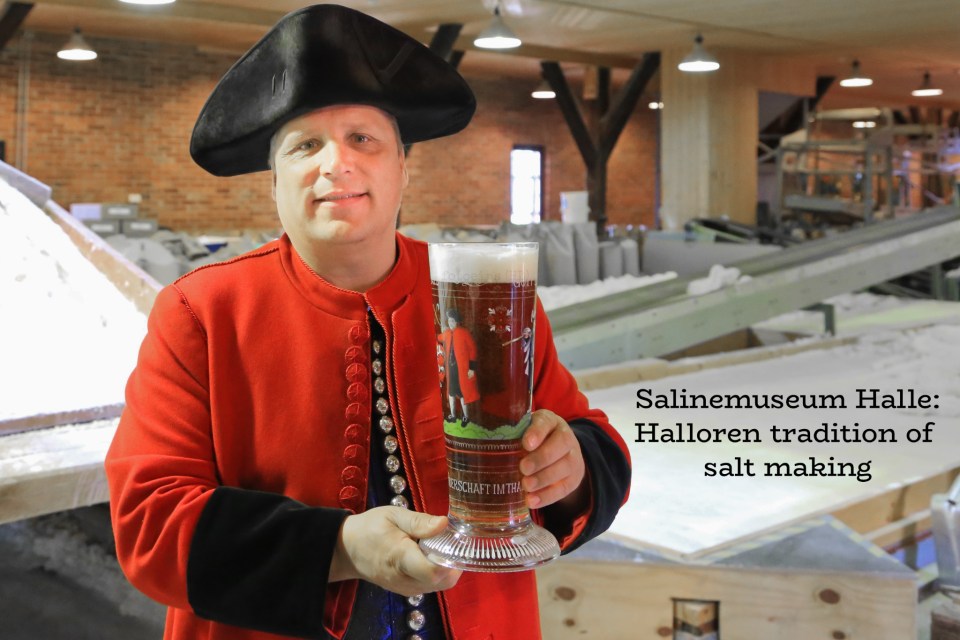
salt-making, Halloren- und Salinemuseum Halle, Halloren, Salinemuseum, Halle (Saale), Halle, Saxony-Anhalt, Sachsen-Anhalt, Germany, fotoeins.com

My Halle (Saale): Making White Gold Since 3000 BC

What do the following six towns and cities have in common?

  • Hall in Tirol, Austria
  • Hallein, Austria
  • Hallstatt, Austria
  • Schwäbisch Hall, Germany
  • Bad Reichenhall, Germany
  • Halle an der Saale, Germany

Hall, more than a large covered room

With “hall” in their names, all six towns listed above are historically associated with salt production1,2,3. The word “salt” is represented in Greek as hals and in Celtic (Brythonic) as hal. In pre-Roman Europe, the towns of Halle, Hallstatt, and Hallein were three centres for salt-evaporation4 which eventually became salt-making centres for the surrounding regions of Prussian Saxony, Salzkammergut, and Salzburg, respectively. Archaeological finds around Halle and along the Saale river5 uncovered evidence of heated brine (at Doläuer Heide) from the mid-neolithic age (about 3000 BCE) and briquetage ceramic vessels from the late-Bronze age (about 1000 BCE).

Mark Kurlansky wrote1: “… Salt is so common, so easy to obtain, and so inexpensive that we have forgotten that from the beginning of civilization until about 100 years ago, salt was one of the most sought after commodities in human history.

Once a rarity, salt was a unique additive to improve quality of food preparation and consumption. Food preservation with salt also became a critical measure for survival, but also for improving the quality of food preparation and consumption. Whoever controlled salt production, sales, and distribution held power, wealth, and prestige.

German sayings with salt:

•   “Freundschaft ist des Lebens Salz.” (Friendship is the salt of life.)
•   “Das Essen ist versalzen, du bist verliebt.” (The food is too salty; you must be in love.)

( Click here for images and more )

Halle an der Saale, Halle, Saale river, Saale, Sachsen-Anhalt, Saxony-Anhalt, Cultural Heart of Germany, Germany, fotoeins.com

My Halle (Saale): 12 highlights in the Händelstadt

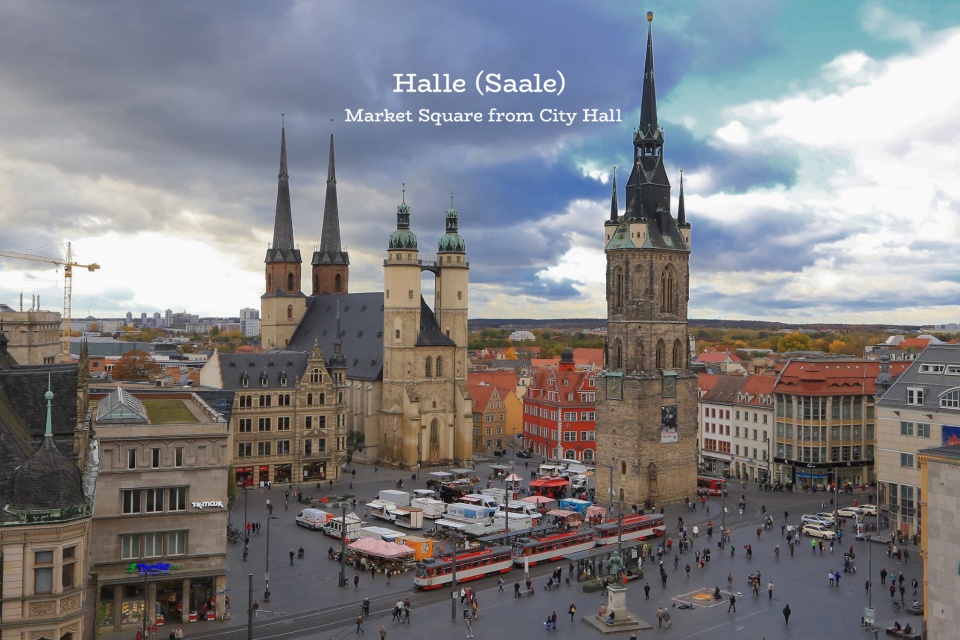
Featured: “5 towers” with 4 (spires) from St. Mary’s Church (left-centre) and 1 from the Red Tower (right-centre). Händel monument is at lower centre.

You’re visiting Halle to learn and discover:

  • why salt also known as “white gold” was critical to the city’s development;
  • how Martin Luther and the Reformation left their mark in the city;
  • composer Händel’s birth house, his upbringing, and how he learned the organ;
  • the oldest German chocolate factory continues producing “Halloren Kugeln”; and
  • how the Museum of Prehistory houses the world’s oldest depiction of the night sky.

Located in the present German federal state of Saxony-Anhalt, the city of Halle along the Saale river is one of the larger cities in east-central Germany. Making salt was of great historic and economic importance that the name of the city “Halle” is derived from the old Celtic/Brythonic word hal, meaning “salt”. The name of the river “Saale” is derived from the old German word for “salt”1. With salt bringing wealth to the city through trade, Halle became a trade city or “Handelsstadt.” With the birth and upbringing of composer Händel in the city, Halle also became a cultural city or “Händelstadt.”

Halle’s present-day population at 240-thousand people is neck and neck with the 241-thousand people in the the state capital city of Magdeburg, 75 kilometres to the north. But proximity means Halle is also connected with Leipzig, only 31 kilometres to the southeast in the state of Saxony. Halle and Leipzig are connected with the S-Bahn Mitteldeutschland train service, and the two cities share an airport located about halfway in-between.

1 The Welsh word for salt is “halen”, and the German word for salt is “Salz”. See also “Celtic culture: a historical encyclopedia,” Volume IV (M—S), pg. 1555. Editor J. T. Koch (ABC-CLIO, 2006).


( Click here for images and more )