Fotoeins Fotografie

location bifurcation, place vs. home

Posts from the ‘First Nations Indigenous’ category

Seattle: Licton Springs indigenous landmark

This is “líqtəd”, commonly known today in Seattle as Licton Springs.

This place is the city’s first indigenous landmark.⁣⁣

⁣⁣In a corner of Licton Springs Park, a couple of wood bridges cross over small creeks. Despite encroachment by urbanization over many decades and the pressure of being squeezed between Aurora Avenue and the Interstate-5 freeway, the water flow has essentially continued from the time before white/European colonization. Four springs and their emergent creeks flowed south into what is now called Green Lake. One of these springs, the “iron sulphur spring”, remains visible with its outflow merging downstream with a larger creek, as iron-oxide mud stains the ground red. The word “líqtəd” in the Lushootseed language means “red paint”. A recently installed cement ring-collar provides some protection around the spring as an attempt to preserving this historic location. As sacred site once used for medicinal and cultural activity, the Duwamish people camped and built sweat lodges near these springs; they bathed in the mineral-rich waters and used the brightly coloured mud to make paint. The second main spring, “white magnesium spring” at the park’s southern end, is no longer visible after having been capped under another existing pond.

⁣⁣On 16 October 2019, the city of Seattle’s Landmarks Preservation Board approved the designation of the indigenous Duwamish site. Licton Springs Park received official historical recognition as the city’s first indigenous landmark.

( Click here for images and more )

Memorial for the Kamloops Residential School, Robson Square, Vancouver, BC, Canada, fotoeins.com

Vancouver: Memorial for the Kamloops Residential School

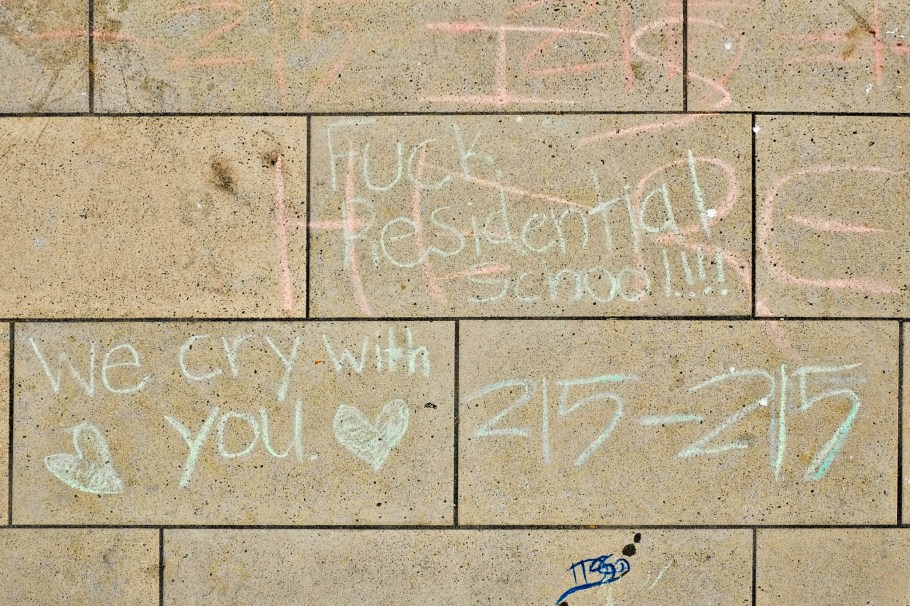
In late-May 2021, the Tk’emlúps te Secwépemc First Nation announced the discovery of 215 children buried in a mass grave at a former residential school near Kamloops, British Columbia; ground-penetrating radar was used to locate the remains.

During a period of 160 years, the Government of Canada in concert with churches constructed residential schools in a state-sponsored process of “aggressive assimilation” to make children of Indigenous people “less aboriginal and more white” with instruction in English and Christianity in order to erase the children’s traditions and cultural ties.

More than 150-thousand children were sent to some 130 residential schools across Canada between 1830s and the 1990s. Forcibly removed from their homes and parents, children of Indigenous peoples were forced into the schools where they faced neglect and physical and sexual abuse. Physical records indicate a total of over 4000 children deaths; the actual number is very likely much higher. Many children were not buried properly, parents were not notified about what happened to their children: many children who were forced into residential schools never returned home. For years, survivors have told their stories about what happened inside those schools: there is every expectation more mass graves and more children will be found.

The systematic removal of indigenous children from their families disrupted, divided, and destroyed living generations of indigenous families, robbing people of their respective culture and language and the wealth of lived experiences shared between generations. According to the terms and definitions laid out in the 1948 United Nations’ Convention, Canada committed genocide against their Indigenous Peoples. The destructive effects of white colonialism upon Indigenous Peoples in the country is not only historical but continues today with inequity, intransigence, obstruction and obfuscation, and injustice.

A makeshift memorial was quickly created at the steps of the Vancouver Art Gallery at Robson Square. It’s worth noting the Art Gallery is presently housed in the former provincial court house which opened in 1911 and would have served as a “legal” instrument of white- and settler-colonialism. That this National Historic Site is the location of an improvised tribute to the loss of life and dignity caused by state-sponsored acts of genocide is an enormous juxtaposition.

June is National Indigenous History Month in Canada.
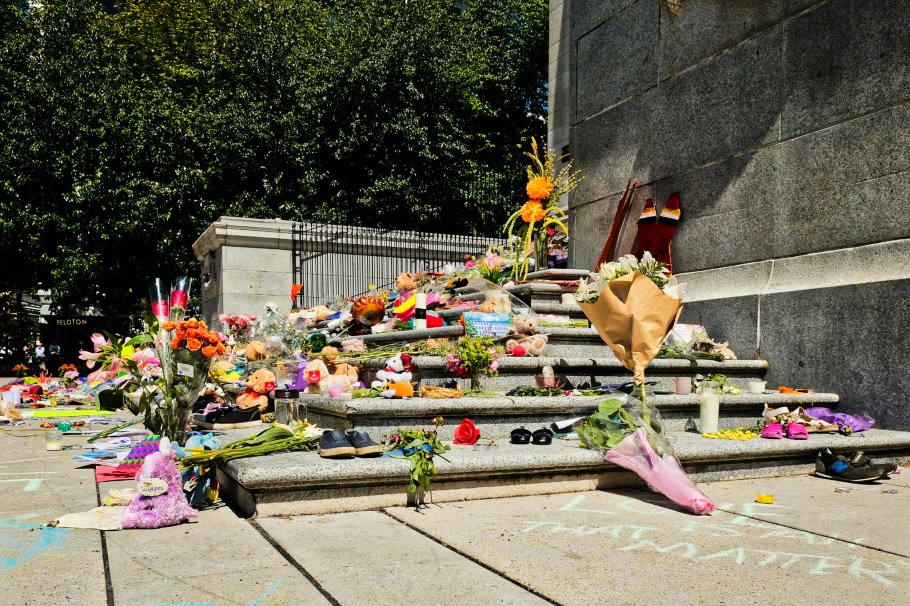

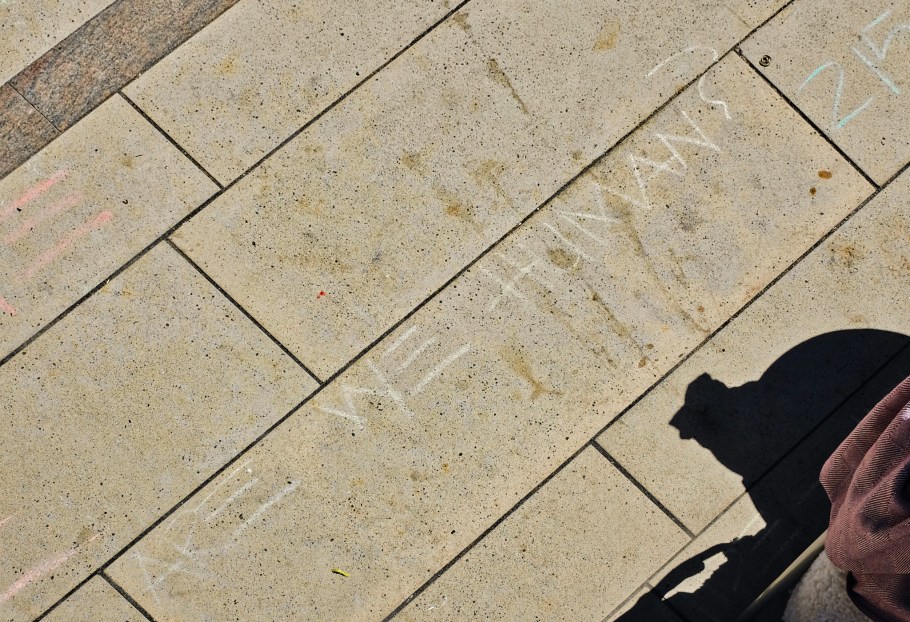
Memorial for the Kamloops Residential School, Robson Square, Vancouver, BC, Canada, fotoeins.com Memorial for the Kamloops Residential School, Robson Square, Vancouver, BC, Canada, fotoeins.com
Memorial for the Kamloops Residential School, Robson Square, Vancouver, BC, Canada, fotoeins.com

“Are we human?”

Memorial for the Kamloops Residential School, Robson Square, Vancouver, BC, Canada, fotoeins.com

“Bring our children home.”

Memorial for the Kamloops Residential School, Robson Square, Vancouver, BC, Canada, fotoeins.com

As a resident of Vancouver, I’m a guest on unceded traditional territory and land of the Coast Salish First Nations: Sḵwx̱wú7mesh (Squamish), Stó:lō and Səl̓ílwətaʔ/Selilwitulh (Tsleil-Waututh), and xʷməθkʷəy̓əm (Musqueam). I made all images above on 1 June 2021 with a Fujifilm X70 fixed-lens prime. This post appears on Fotoeins Fotografie at fotoeins DOT com as https://wp.me/p1BIdT-l2C.

Seattle: 10 S-spots, free of charge

In thinking about things to do for free in Seattle, I thought about some of the city’s sights labelled with the letter ‘S’. There’s plenty of alliteration to follow.

I could have listed two obvious choices with the Space Needle and the Smith Tower. They are free to admire from the ground, but both require an admission charge to enter and reach the top of each respective structure for sweeping views of the city.

Here below are other arts and culture spots in Seattle that don’t cost a penny to visit or see; all locations are easily accessible with public transport.


( Click here for images and more )

1-day drive, US: Santa Fe to Taos

Above/feature: In the background at right-centre is the sacred Pueblo Peak (Taos Mountain) with a light dusting of autumn snow.

The following takes place entirely on travel day 8 in our visit of the American Southwest.

In a daylong trip from Santa Fe, we’re in Taos for the first time where we meet with nature photographer Jim O’Donnell, whose writings also appear locally in The Taos News. We also marvel in the hamlet of Embudo the collection of paraphernalia associated with American automobile culture at the Classic Gas Museum.

Our drive is on the Low Road, there and back. It’s no real surprise we’re in the Taos area longer than anticipated, but we leave the area a little earlier to catch a couple of sights back in Santa Fe as we must depart the following day for Arizona. It’s curse and benefit, wanting (or needing) to stay in one place for an extended duration with the anticipation of a return, because there’s much more to see and learn.


( Click here for images and more )

Albuquerque: highlights in the Duke City

To begin our journey through the American Southwest, one of our first destinations was the International Balloon Fiesta. The largest balloon festival in North America is held every October in Albuquerque, the most populous city in the American state of New Mexico. Located roughly in the centre of the state and bisected by two major interstate highways I-25 and I-40, Albuquerque has seen its fair share of human activity and history:

  • Inland trade road between Meso-America and southern Rocky Mountains, c. 1000 AD/CE.
  • El Camino Real de Tierra Adentro established between Mexico City and Santa Fe for the colony of New Spain.
  • City founded 1706 AD/CE, in a wooded area along the east bank of the Rio Grande river.
  • City named after Viceroy of New Spain who was the 10th Duke of Alburquerque; 1st ‘r’ dropped to ease spelling and pronunciation.
  • City population: over 560-thousand, metro area over 910-thousand.
  • City elevation, average: 1.6 kilometres (1.0 mile).
  • City shaped by Spanish presence, railroad, University of New Mexico, Route 66, Sandia National Laboratories, TV- & film-production.

Having arrived from our respective cities at sea-level, we needed about a day or two to adjust to 20% less atmosphere# at the city’s mile-high elevation. Not only did the balloon festival exceed our expectations, we’re happy to share some of our favourite moments and places in and around “The Duke City”. With a limited number of days in the city, a rental car is the easiest way of getting around the city.

( Click here for images and more )