Fotoeins Fotografie

location bifurcation, place vs. home

Posts from the ‘Christmas’ category

Austria’s Silent Night: 200+ years, 300+ languages

One of my early childhood memories surrounding Christmas is learning and singing “Silent Night”. This humble melodic carol is known around the world and sung in over 300 languages and dialects. 2018 is the 200th anniversary of the hymn’s first public performance, and that’s why I’m on a train traveling north from Salzburg to the Austrian town of Oberndorf.

With over 5000 residents, Oberndorf lies opposite the German town of Laufen along the winding flow of the Salzach river. Laufen-Oberndorf was once a single community whose people derived their greatest business and wealth with salt carried on barges from upstream in Hallein and transferred onto larger ships for transport downstream to the Inn river and Passau. After the arrival (and departure) of Napoleon’s French troops, the river became a border, and the town was split in two after over 1000 years as a single community#. Although Oberndorf and Laufen remain in separate countries, the European Schengen treaty has helped reforge their common bonds with the abolishment of border controls.

Short History

Between 1817 and 1819, Joseph Mohr lived and worked in Oberndorf as curate, minister, and schoolteacher for the salt-barger community. The organist for Oberndorf’s St. Nicolas Church was Franz Gruber, a fellow schoolteacher and sexton at a parish in nearby Arnsdorf. Mohr and Gruber tended to spiritual and education needs for their towns, and with their common zeal for music, they quickly became friends. On Christmas Eve 1818, Mohr brought his song to Gruber who added the melody. That very evening after evening mass at Oberndorf’s St. Nicholas Church, Mohr’s completed song, “Stille Nacht, Heilige Nacht” was performed for the first time with Gruber on his guitar as the only accompaniment.

Over years and decades, the song had generally been considered to be Tirolian in origin, but handwritten letters show Joseph Mohr composed the song by 1816 when he lived in Mariapfarr, a town 120 kilometres southeast from Salzburg. The original German-language version of the song has six verses; the English version has three which are translations of verses 1, 6, and 2.

At Oberndorf’s Stille-Nacht-Platz (Silent Night Square), the two key elements are the Stille-Nacht-Kapelle (Silent Night memorial chapel) and the Stille Nacht Museum. The original St. Nicholas church was in bad shape and torn down in 1906. To maintain the memory of the first performance of the Christmas song, construction began in 1928 for a chapel at the same location, and the townspeople celebrated the chapel’s inauguration in 1937. With the museum’s opening in November 2016, exhibits describe the history of how the song came to be, highlight the lives of Mohr and Gruber, explain the context of culture and place of the times in the late-18th to early-19th century, illuminate the importance of the salt trade on the neighbouring Salzach river, and celebrate the song’s longevity and popularity around the world.

Every year, evening mass on Christmas Eve from the Silent Night memorial chapel is broadcast to the world on webcam.

# The 1814-1815 Congress of Vienna enforced the Salzach river as the border and separation between the nation-state of Bavaria (Laufen) on one side and the Austrian Empire (Oberndorf) on the other side.


( Click here for images and more )

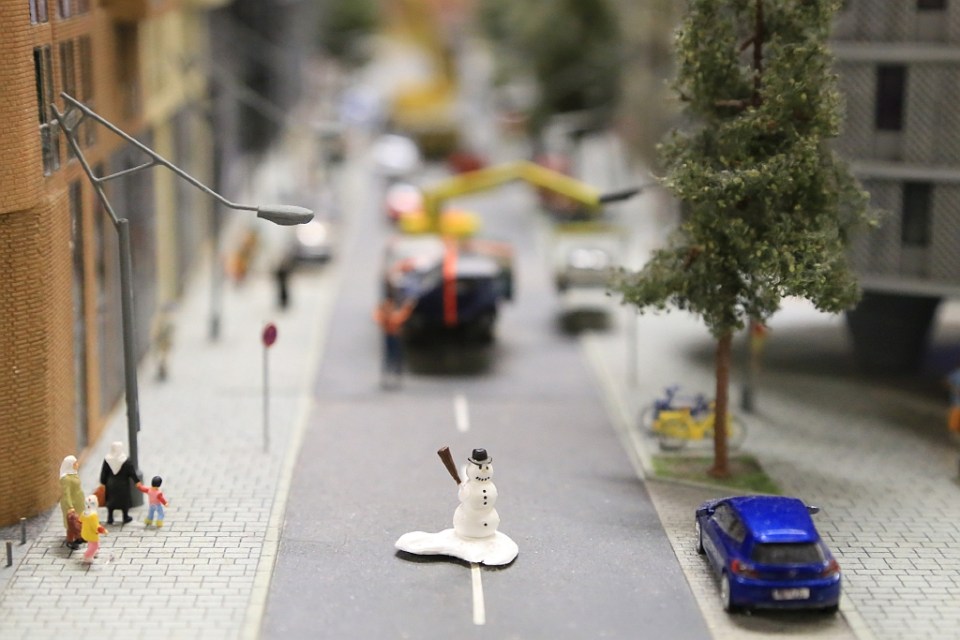
Easter (Xmas) eggs, Miniatur Wunderland, Speicherstadt, Hamburg, Germany, fotoeins.com

Hamburg: Miniature Wonderland’s Christmas eggs

Above/featured: “Stranded.”

Since 2001, Miniatur Wunderland has been delighting children of all ages in the northern German city of Hamburg with the world’s largest miniature railway set, attracting a total of 12 million visitors so far. After many visits to the city over the last decade, I’ve somehow managed to stay away, but it’s finally high time curiosity wins the day.

The Urban Dictionary describes “easter eggs” as: “hidden items placed in a movie, television show, or otherwise visual media for close watchers”; see also here. Plenty of details in the form of “easter eggs” await visitors at various sections in the museum. With a few shorts weeks before Christmas, the designers have cleverly inserted many Santa Claus and other Christmas- or winter-related figures throughout the entire venue.


( Click here for more )

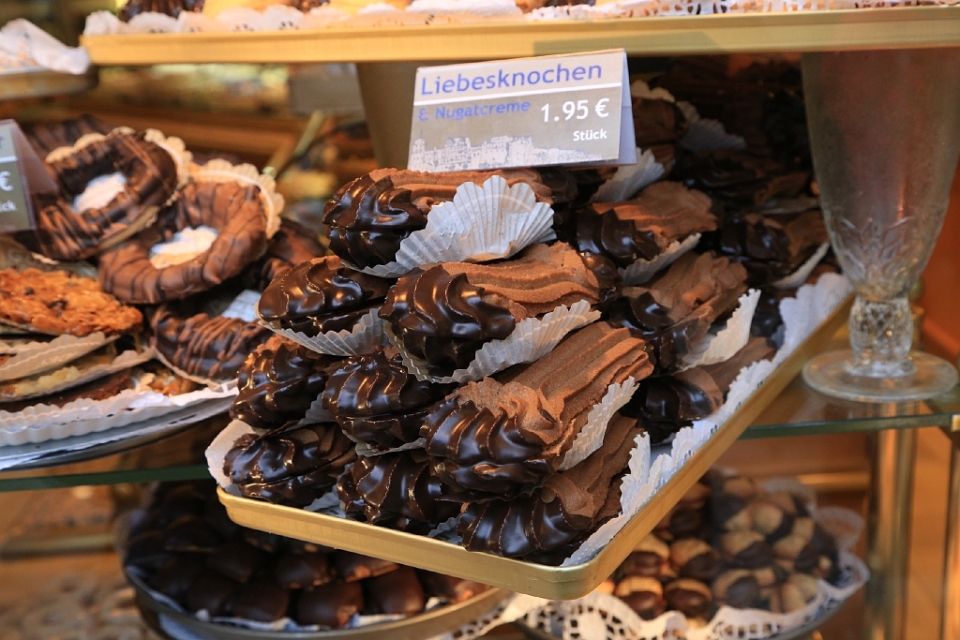
Weihnachten, Backwaren, Cafe Gundel, Karlsplatz, Hauptstrasse 212, Heidelberg, Germany, fotoeins.com

My Heidelberg: Café Gundel’s Christmas cakes & cookies (Weihnachtsgebäck)

Short sensory list

•   Sights of the Weihnachtsmarkt: bright lights; Christmas pyramid; red and yellow stars; unveiling of the Backwaren (backed goods) made especially for the holiday season.

•   Sounds of the Christmas market: the klang of full mugs distributed and empty ones collected, shouts of laughter from conversations scattered throughout the area.

•   Smells and tastes of the Christmas market: candied almonds, cashews, and peanuts; roasted chestnuts; balls of fried dough with powdered sugar; mugs of hot mulled wine, available in several fruit flavours; grilled bratwurst; fried potato pancakes with apple sauce.

When the Christmas season brings out special baked goods, it’s time to pay attention. In Heidelberg, my favourite café in the university town doesn’t hold back as photos of the “Backwaren” (baked goods) show. There’s something for everybody at Café Gundel.

And on it goes: small lifetimes can be spent, seeing, smelling, and sampling the entire collection.

A short exchange

Noch einen Wunsch?

Something more?“, asks the lady behind the counter when I’ve ordered a few of this and a few more of that.

Das war’s. Komm ich wieder morgen …

That’s all. I’ll come back tomorrow …” I reply, with the sound of hope and promise in my voice. I’m sure she’s heard it all before. And yet, she humours me with a smile and a chuckle.

“Wir sind noch für Sie da …”

We’ll still be here …


( Click here for images and more )

Anatomiegarten, Hauptstrasse, Heidelberg, Germany

My Heidelberg: science at Anatomiegarten with Bunsen & Kirchhoff

It sounds like an unusual pairing, for science and Christmas to come together in a place called Anatomiegarten, or Anatomy Garden, in the German university town of Heidelberg.

During the Christmas season, the Anatomiegarten is host to one of the key Christmas market locations along Heidelberg’s main street (Hauptstrasse). Prominent are two names from a historical and scientific perspective: Bunsen and Kirchhoff.

( Click here for images and more )

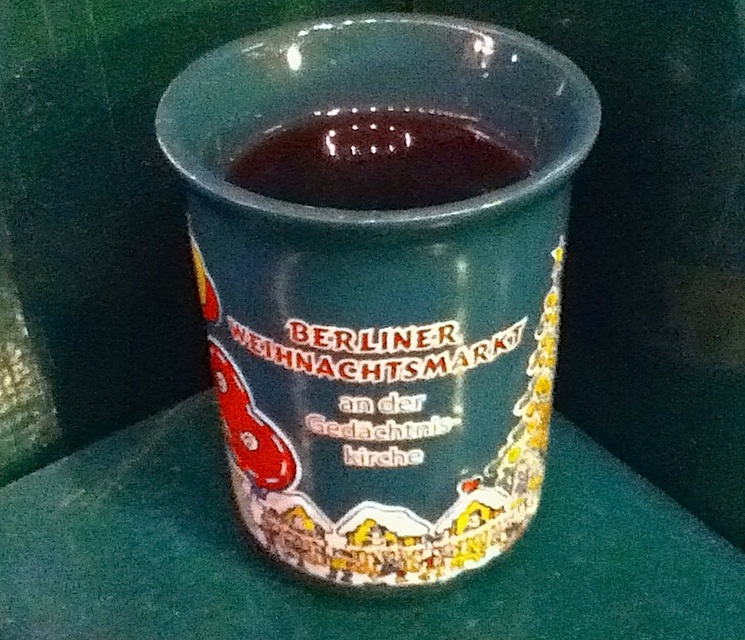
Berliner Weihnachtsmarkt an der Gedächtniskirche, Berlin, Germany

Christmas markets: Glühwein smarts

Above/featured: Christmas market at Berlin’s memorial church – 6 Dec 2012 (450D).

It’s easy to underestimate how much “punch” is delivered in a single Glühwein drink at a Christmas market. If I’m not careful and drink Glühwein too quickly and without food to soften the blow, I’ll encounter the very repeatable experience of “mind-body separation”.

What is this magically mysterious Christmas concoction called “Glühwein”?


( Click here for more )