Fotoeins Fotografie

location bifurcation, place vs. home

Posts by HL fotoeins

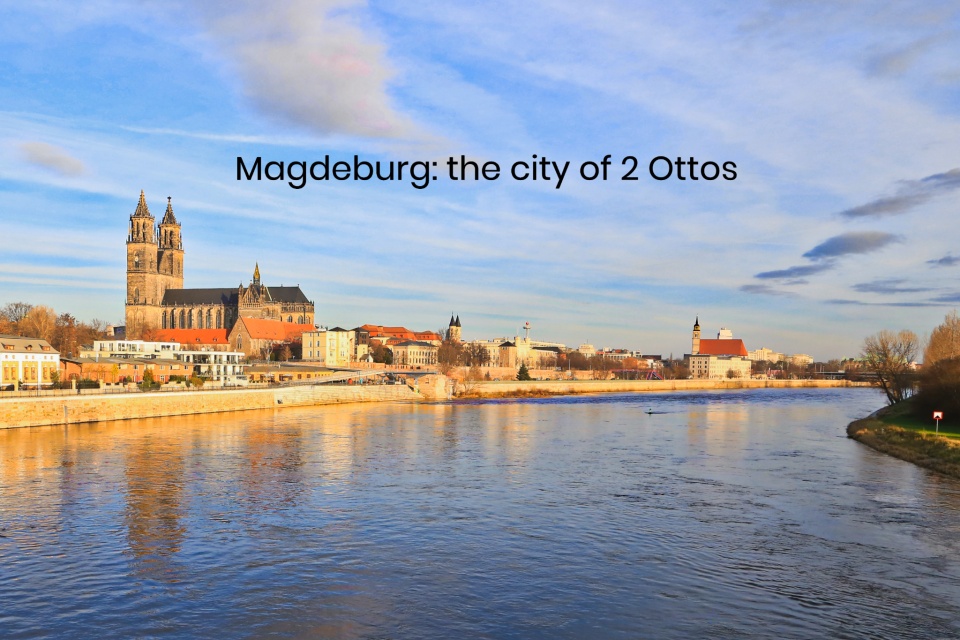
Magdeburger Dom: oldest Gothic cathedral in Germany

As the largest Gothic church in northern Europe, Cologne’s Cathedral gets a lot of love in words and pictures for its size and splendour. But the distinction of oldest Gothic church in Germany goes to Magdeburg. The church is the city’s landmark and the church’s benefactor is part of the city’s nickname as “Ottostadt”. The full name of the church is “Dom zu Magdeburg St. Mauritius und Katharina”, or Magdeburg Cathedral of Saints Catherine and Maurice, reflecting the history at this very location since the 10th-century.

Magdeburg Cathedral is important because:

  • it’s the burial place for Otto the Great, the first German Holy Roman Emperor,
  • it’s the first church constructed in Gothic style on German soil, and
  • it’s the largest consecrated space in east Germany.

( Click here for more )

Morning view, Morgenblick, city view, Stadtblick, Hubbruecke, Elbe river, Romanesque Road, Strasse der Romanik, Magdeburg, Sachsen-Anhalt, Saxony Anhalt, Germany, Deutschland, fotoeins.com

Magdeburg: the Otto city where Romanesque meets Luther

Above/featured: From Hubbrücke bridge over the Elbe river, churches left to right are Dom, Kloster Unser Lieben Frauen, and Johanniskirche, respectively. Photo on 3 Dec 2015.

I’ve seen the city on the map, lying halfway between Hannover and Berlin. Over the last 15 years, there’ve been far too many ICE trains along that very same stretch, bypassing the heart of Saxony-Anhalt. Curiosity eventually wins, and I’m on a train to Magdeburg.

Magdeburg is the capital city of the German federal state of Saxony-Anhalt, home to two famous Ottos, a centre for the state’s Romanesque Road, and one of the stations for (Martin) Luther Country. Founded by Charlemagne in 805 AD/CE, the city is one of the oldest German cities, celebrating their 1200th anniversary in 2005. Magdeburg was an important medieval city in the Holy Roman Empire, a member of the Hanseatic League and important trade centre along the Elbe river, a welcome settlement for Jews in the 10th-century, and one of the first places to begin separating church- from civic-rule of law in the 13th-century with the Magdeburger Recht (Magdeburg Rights).


( Click here for more )

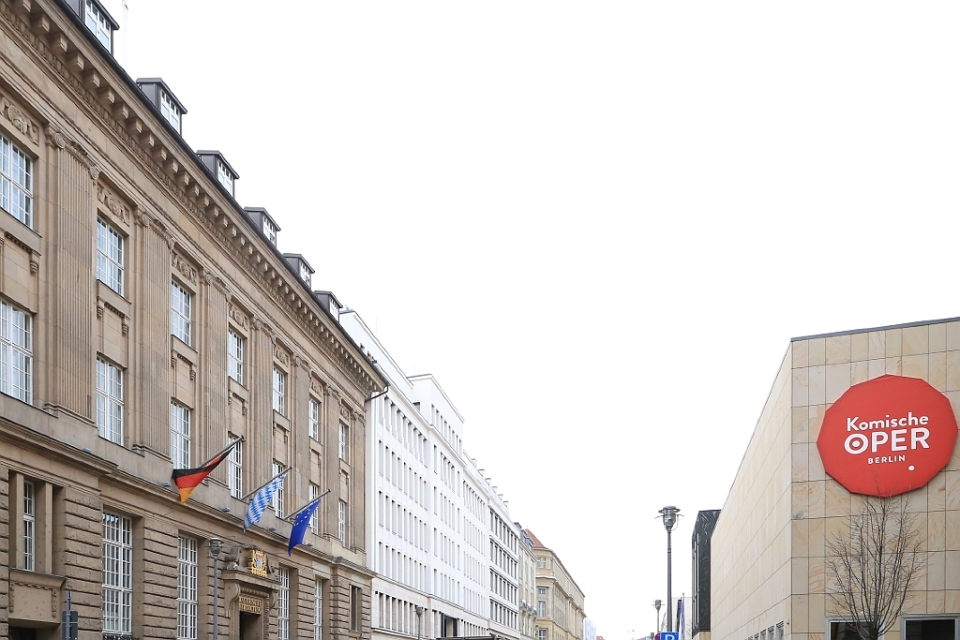
Bayerische Vertretung, Behrenstrasse 21, Euler-Haus, Berlin Mitte, Germany, fotoeins.com

Berlin Mitte ‘Math’: where Euler lived for 23 years

In Berlin Mitte at address Behrenstrasse 21 is the Bayerische Vertretung, whose functions are described as “… die Aussenstelle der Staatskanzlei in der Bundeshauptstadt,” or “branch office of the Bavarian State Chancellery in the German capital.”

Swiss scientist Leonhard Euler spent some 20 years (1743-1766) in Berlin, living in this very building and working at the Académie Royale des Sciences et Belles-Lettres de Prusse (now, Berlin-Brandenburg Academy of Sciences). Euler’s name is very familiar to anyone who’s encountered and studied mathematics and physics. He is well known for his study and work in the fields of physics, astronomy, and engineering. But for his contributions to notation, functional analysis, number theory, and graph theory, Euler is considered one of the greatest mathematicians in history. Euler departed Berlin in 1766, accepting an invitation from Russia’s Catherine the Great to return to St. Petersburg where he remained for the rest of his life.

( Click here for more )

Berlin & 125 successive weekends

The first weekend begins Friday, August 9, 2013, in the German capital city of Berlin.

To the unmistakable sounds of low rumble hustle of traffic and the happy chirps and tweets of birds. That’s strange, because I’m asleep; aren’t I? It’s much better if I’m not, a warm and gentle possibility in the spotlight of my mind.

My eyes struggle to open, brilliant morning light streaming through the open balcony windows and past the billowing room-high drapes. I pad slowly to the source of the light, and part the drapes to see what’s outside. I’m on the 5th-floor apartment of an “Alt Bau” in the city’s Westend. The apartment’s windows face north which means plenty of summer morning light.

I open the bedroom door. She smiles at me, her gaze warm and alive as a summer breeze. “Good morning.”

From that August weekend, I’ve kept a single promise to let her know I’m thinking about her. I’ve sent a text-message every single weekend without fail. Except for one weekend about a year ago when I missed my schedule, and she promptly sent an e-mail asking – no, demanding to know – if things were all right, if I was all right. There’s busy and there’s her kind of busy, and I understand all of it. Her urgent message strikes something solid, commencing the melt for the first time in a very long time.

On December 9, 2015, she asks me to stop.

( Click here to read more )

Rothenburg ob der Tauber: Jewish history since 1180 AD/CE

After their stop in town, most visitors depart Rothenburg ob der Tauber with memories of a romantic medieval town that seems almost frozen in time.

But a careful measured walk also produces a deeper examination of the town’s history with clear signs to an historical and centuries-old presence of Jews. A Jewish settlement goes back to at least 1180 AD/CE in written records with the appearance of the name of Samuel Biscopf, a Jew from Rothenburg ob der Tauber (“erste Erwähnung eines Rotenburger Juden”: [ℵ1], p. 136; [ℵ2], pp. 133-135).

The centuries are marked with a growing thriving Jewish community, persecution, violent death, explusion, and a return to life.

Summary Timeline:

•   1180 AD/CE, first mention of Jewish community in Rothenburg; 1st Jewish quarter and synagogue at present-day Kapellenplatz.
•   1250-1286, Rabbi Meir ben Baruch, teaching life and times in Rothenburg.
•   1298, Rintfleisch-Pogrom!: 450 Jews killed in Rothenburg; total 5000 Jews dead in Franconia.
•   1339, some of the first set of graves buried at the Jewish Cemetery, at present-day Schrannenplatz
•   1349, Pogrom! and persecution, Jews accused of poisoning wells with corpses due to the Black Death.
•   1370, Establishment of 2nd Jewish quarter, around Judengasse.
•   1404, 1st Synagogue converted to St. Mary’s Chapel.
•   1407, 2nd Synagogue constructed close to burial ground, at present-day Schrannenplatz.
•   1520, Theologian Johann Teuschlein incites anti-Jewish hysteria, forcing expulsion of all Jews from Rothenburg. No Jews allowed in the city for next 350 years; 2nd Synagogue and Jewish cemetery destroyed.
•   1861, all Jews allowed to settle anywhere in Bavaria.
•   1870-1875, Jews begin returning to the city.
•   1872, Equality granted among Jews and Christians, after the 1871 constitution of the new German Empire.
•   1888, Prayer hall (“3rd synagogue”) at present-day Herrngasse 21.
•   1875, 2nd Jewish cemetery at Würzburger Strasse and Wiesenstrasse.
•   1938, Rothenburg declared “free of Jews” on 22 October, as last remaining 17 Jews driven out, two and a half weeks before the Reichspogromnacht.
•   1942, 2nd cemetery desecrated and destroyed. Few, if any, descendants of early 20th-century community remain or known to be alive.

! The word “pogrom” is a late 19th- to early 20th-century Russian word (“погром”), derived from the verb “gromit” (громи́ть) meaning “to destroy with violence.” While “pogrom” is used generally to describe mob violence by one ethnic or religious group on another, the term is used in this post to describe attacks on the Jewish community.


( Click here for images and more )