Fotoeins Fotografie

location bifurcation, place vs. home

Posts tagged ‘Wolfgang Amadeus Mozart’

Berlin U5-Museumsinsel: Mozart, Schinkel, & Dudler

Above: Museumsinsel U-Bahn station entry-exit ‘A’. Photo, 17 May 2025 (P15).

The Berlin U-Bahn metro station Museumsinsel adjacent to the world renowned Museum Island is located on the U5 line which connects the city’s central station (Hauptbahnhof) with Alexanderplatz and the city’s eastern neighbourhoods. Construction for the station began in 2012 and lasted over 8 years. For the station interior at track level, architect Max Dudler was inspired by Karl Friedrich Schinkel’s 1815–1816 design of the stage for the Mozart opera “Die Sauberflöte” (The Magic Flute). For the appearance of the Queen of the Night, Schinkel imagined a large dome-like space like the overhead starry night sky. Over each of the two tracks in the U-Bahn station, Dudler designed a dark blue barrel-shaped vault embedded with thousands of white point-sources of light.

The fully-completed U5 extension from Hauptbahnhof to Alexanderplatz opened to the public on 4 December 2020, which at long last connected the Hauptbahnhof with Berlin’s U-Bahn city transport system. The Museumsinsel station on the U5 line opened on 9 July 2021. In addition to the city’s bus network, the station now allowed visitors to use the U-Bahn metro to reach the Museum Island complex, inscribed by UNESCO as World Heritage Site in 1999.

Artist and architect Karl Friedrich Schinkel (1781–1841) has his “fingerprints” on many of the city’s early- to middle 19th-century architecture, including in the immediate vicinity of the station the Neue Wache (New Guard House), Schlossbrücke (Castle Bridge), Friedrichswerder Church, Bauakademie (Building Academy), and the Altes Museum (Old Museum).

( Click here for images )

Vienna’s St. Marx Cemetery, Biedermeier style

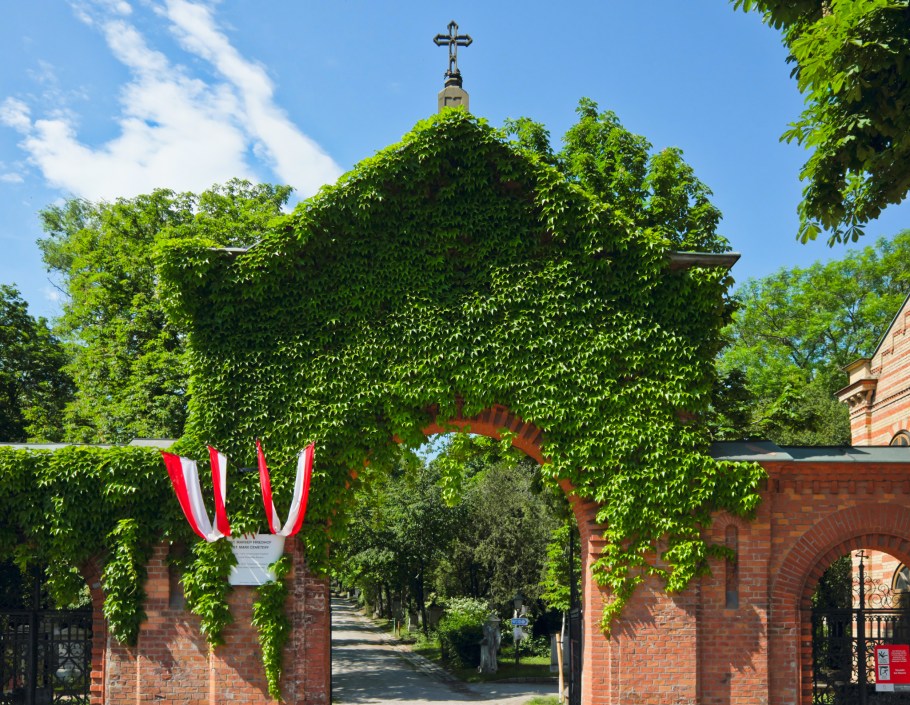
Above/featured: Morning visit to the city’s Biedermeier cemetery – 20 May 2022.

In Vienna’s 3rd district, the St. Marx cemetery is the only surviving Biedermeier cemetery in the city. A visit now is a jump into the frozen past. The cemetery opened with its first burial in 1784. Closure of the city’s multiple neighbourhood cemeteries began in 1873 with the final burial at St. Marx taking place in 1874. Subsequent funerary functions were transferred to the newly constructed Zentralfriedhof located farther out from the city centre. The very leafy avenues and “leafy gate” are what’s left of the city’s only remaining 18th-century cemetery that is now open to the public as a city-administered park.

Why Biedermeier

Biedermeier in Vienna corresponds to a cultural period during the first half of the 19th-century marked by increased industrialization in rapidly urbanized areas and strict censorship with the elimination of dissenting political voices. Instead of looking outward to change, the artist and design community moved to safer spaces in nature or to their homes. While innovation might have given way to a modest yet graceful and functional style, Biedermeier architecture in its neoclassical spin provided inspiration for subsequent Art Nouveau (Jugendstil) and Secession movements. An important Viennese architect of the period was Josef Kornhäusel who designed many buildings in the city. Important music from this period was composed by, for example, Beethoven, Chopin, Liszt, Schubert, Schumann. One of the largest collections of Viennese Biedermeier art is in the Belvedere’s collection. St. Marx cemetery is a reflection of both city and age from the 19th-century.

St. Marxer Friedhof, St. Marx cemetery, Biedermeier cemetery, 3. Bezirk, Landstrasse, Wien, Vienna, Austria, Ă–sterreich, fotoeins.com

Cemetery entrance. Photo, 5 Jun 2023.

St. Marxer Friedhof, St. Marx cemetery, Biedermeier cemetery, 3. Bezirk, Landstrasse, Wien, Vienna, Austria, Ă–sterreich, fotoeins.com

Main gate. Photo, 20 May 2022.

St. Marxer Friedhof, St. Marx cemetery, Biedermeier cemetery, 3. Bezirk, Landstrasse, Wien, Vienna, Austria, Ă–sterreich, fotoeins.com

Address: Leberstrasse 6–8. Photo, 20 May 2022.

St. Marxer Friedhof, St. Marx cemetery, Biedermeier cemetery, 3. Bezirk, Landstrasse, Wien, Vienna, Austria, Ă–sterreich, fotoeins.com

Information stone with visiting hours by month. Photo, 20 May 2022.


( Click here for images and more )

Vienna Central Cemetery: living city of the dead

Above/featured: The cemetery’s gate 2. Photo, 20 May 2018.

Where: Vienna Central Cemetery (Wiener Zentralfriedhof).
Who: Beethoven, Boltzmann, Falco, Lamarr, Schütte-Lihotzky, Strauss I and II, and many more.
Why: Cross-section of cultural and economic history for capital city and nation.

In Vienna, tram 71 begins in the Old Town; goes around the western half of the inner ring past City Hall, national Parliament, and the Opera House; and heads southeast to the city’s main cemetery or the Zentralfriedhof. Because coffins to the cemetery were once transported on the tram, there’s a saying particular to the city’s residents, a phrase which means they’ve died by “going to the end of the line.”

Sie haben den 71er genommen.
(They took/rode the 71.)

( Click here for images and more )