New Zealand: sounds of a sunset on the South Island
What does a sunset sound like?
Does the question make any sense at all?
How can a sunset “sound” like anything?
I used to think that way, until I visited the South Island in New Zealand.
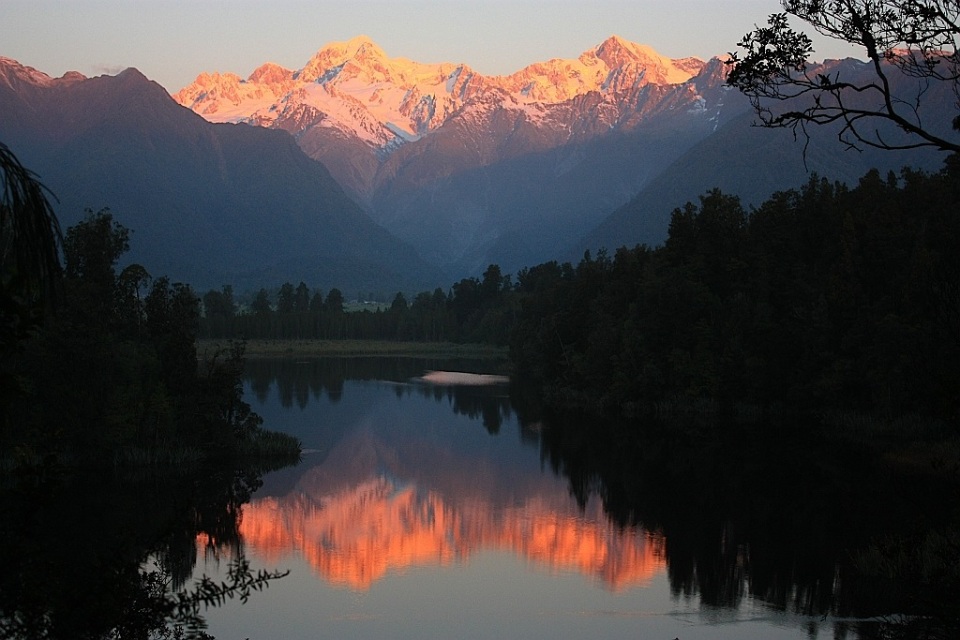
What does a sunset sound like?
Does the question make any sense at all?
How can a sunset “sound” like anything?
I used to think that way, until I visited the South Island in New Zealand.
Something about the city breathes colour and magic.
Wide open plazas, yet compact feel for the town.
Cobblestone streets, the narrow sidewalks.
The vibrant colours of the buildings in the style of Mexican baroque.
Art, lots of it – which would fit in Mexico City just as well as New York City.
Cozy bars and restaurants of all kinds : our excellent finds include great spicy Thai at Venus Lounge, breakfast (and an expat centre?) at Juan’s Cafe, Sri Lankan at Dila’s, German and Belgian beer at Berlin Bar & Bistro.
The rich and the poor, the backpacker, and the nouveau riche. Really riche.
The sounds of spoken English heard frequently around town …
What may be unusual is the number of retirees from Canada, USA, Europe, and Mexico City, mixed with and yet separated from local residents. What’s definitely unusual is the real estate for which some places reach seven figures in sticker price. As my friend wisely suggested: rent an apartment in Manhattan, but buy a winter house here in town.
Born in this town, Ignacio Allende helped to shape the independence movement from Spanish colonial rule to create the United States of Mexico. For its historical and architectural significance, the town was declared a UNESCO Heritage Site in 2008.

Calle Umaran by morning light

We buy gold

Calle Umaran by morning light

Posada de las Monjas (Inn of nuns)

Packing and mailing

Vivoli Cafe

Casa Linda … how true …

Dusk at Jardín Principal, west
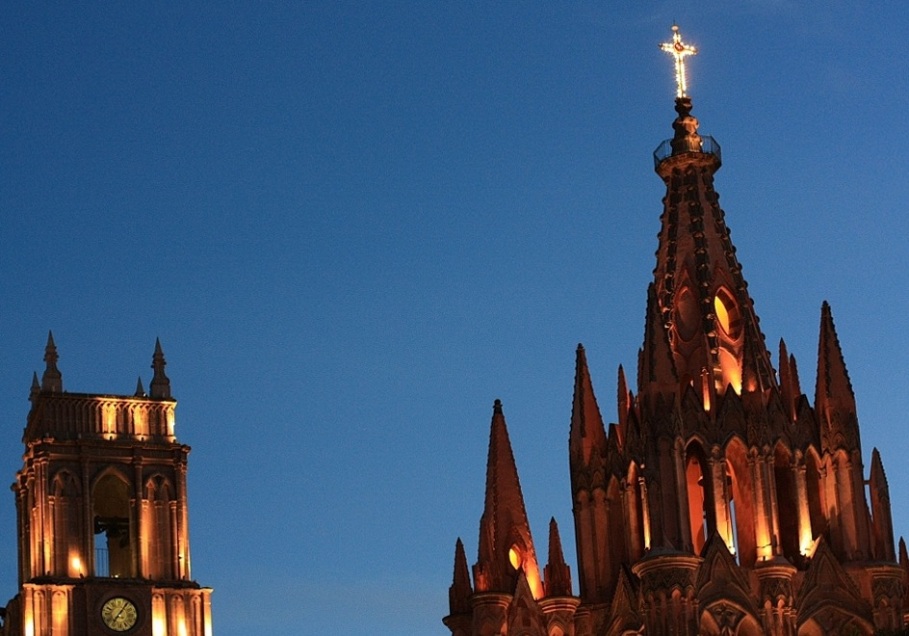
Dusk light over the Cathedral : Jardín Principal, south

Dusk light at Jardín Principal, northwest

Plaza Colonial, Calle Canal

Light fixture, Conde de la Canal

Flowers in, people out (Esquina de Calle Canal y Calle del Dr Ignacio Hernandez Macias), 3 Mar 2012.

Templo de la Inmaculada Concepcion

Juan’s Cafe
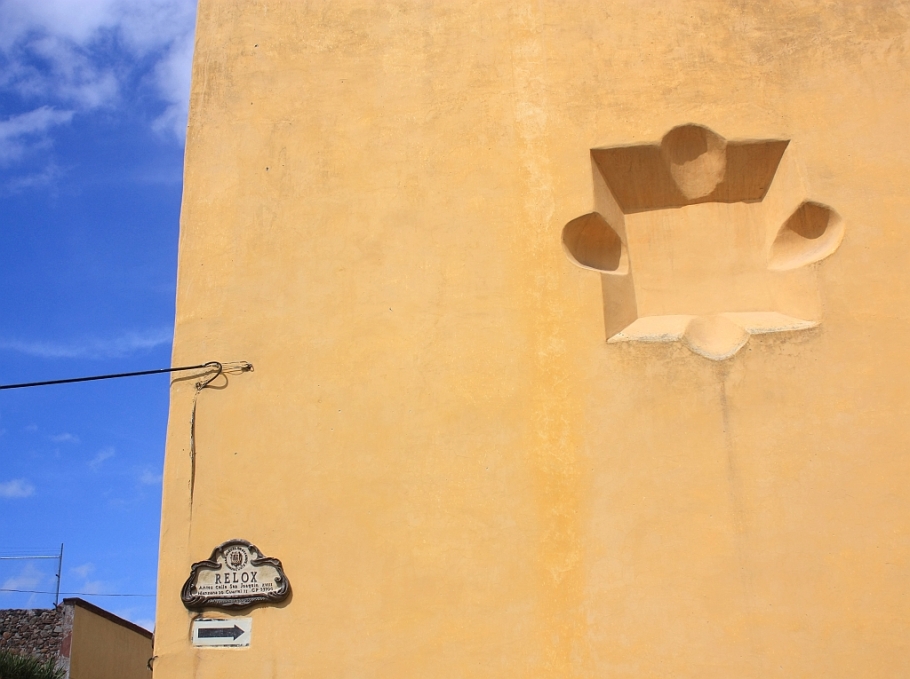
Calle Relox y Calle Insurgentes

Anachronism or necessity?

La Crepe, Calle Hospicio

Balcony

Calle Quadrante

Calle Cuna de Allende (at Calle Cuadrante), 4 Mar 2012.

Front

Tu y yo (you and me)

Cruz del Pueblo

Parroquia de San Miguel Arcangel

Santa Escuela de Cristo (Templo de San Rafael)

Jardín Principal, at night
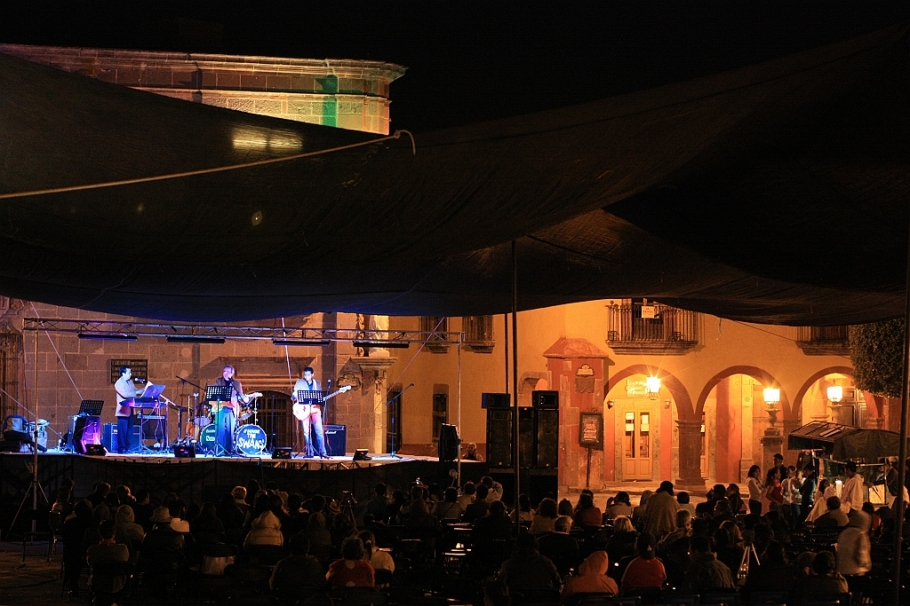
The Swans in performance, Jardín Principal

Night scene on Calle Correos, facing east from Diez de Sollano y Dávalos – 4 Mar 2012.

Berlin Bar & Bistro, 4 Mar 2012.

Calle Umaran at night
San Miguel de Allende can be reached by car or bus in about three to four hours travel-time northwest from Mexico City.
I made the photos between 3 and 5 March 2012 inclusive. This post is published on Fotoeins Fotopress at fotoeins.com as http://wp.me/p1BIdT-1wL.
I’m happy to be inside the Czech capital of Prague whenever the opportunity arises. With great timing of an early-October visit and a very positive weather forecast, I’m awake well before scheduled sunrise, and I stumble out to Karlův most (Charles Bridge) to catch the light of sunrise on the city. Seeing and photographing the warm sunrise glow on the old parts of the city makes the early wakeup call worthwhile. Prague is effectively an “open-air museum”; the warm colours at sunrise combined with the changing colours of the surrounding deciduous canopy magnify the visual intensity.
And no, I don’t think there’s enough orange or red to cover this UNESCO World Heritage Site …
The Skogskyrkogården, or Woodland Cemetery, is located about 15 minutes by metro, south from central Stockholm in Sweden. For its unique design, aesthetic character, and expanse both vertically and horizontally, the forest cemetery was declared a UNESCO World Heritage Site in 1994.
I had read that Greta Garbo was buried here, and I wanted to find out for myself.

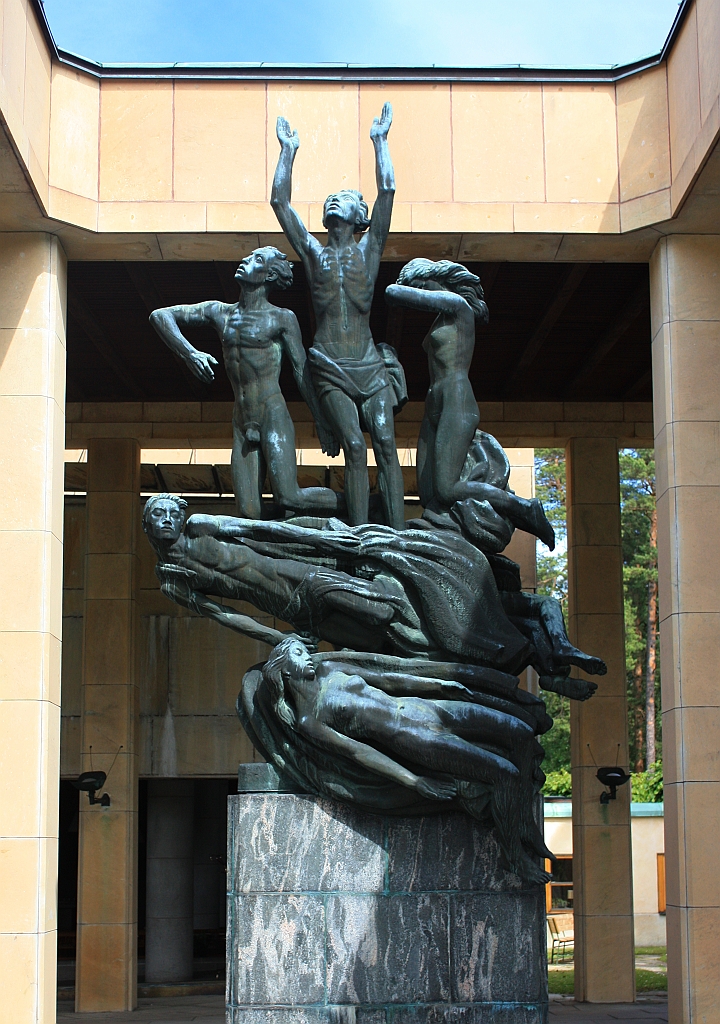

Skogskappellet (Woodland Chapel), with golden copper “angel of death”.
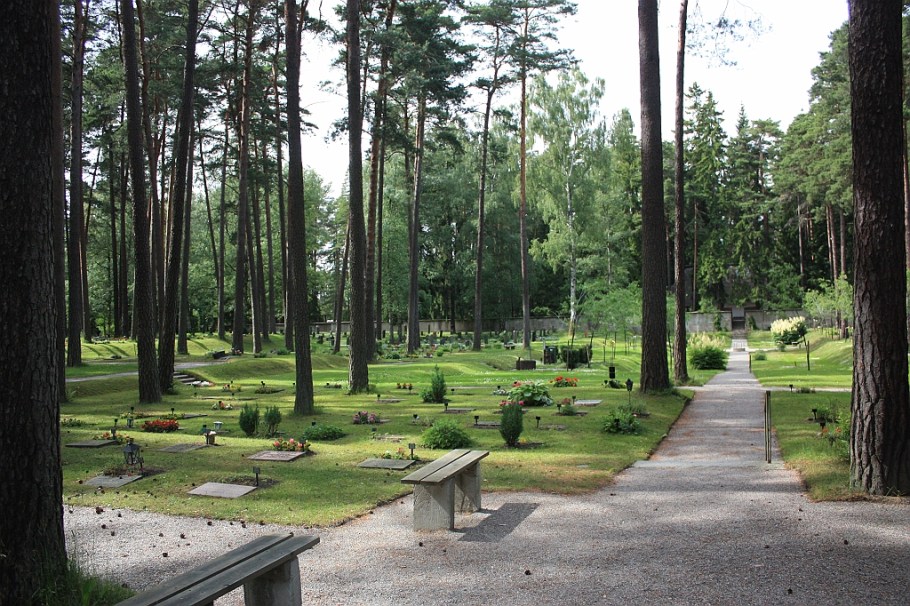
Skogskyrkogarden (Woodland Cemetery).
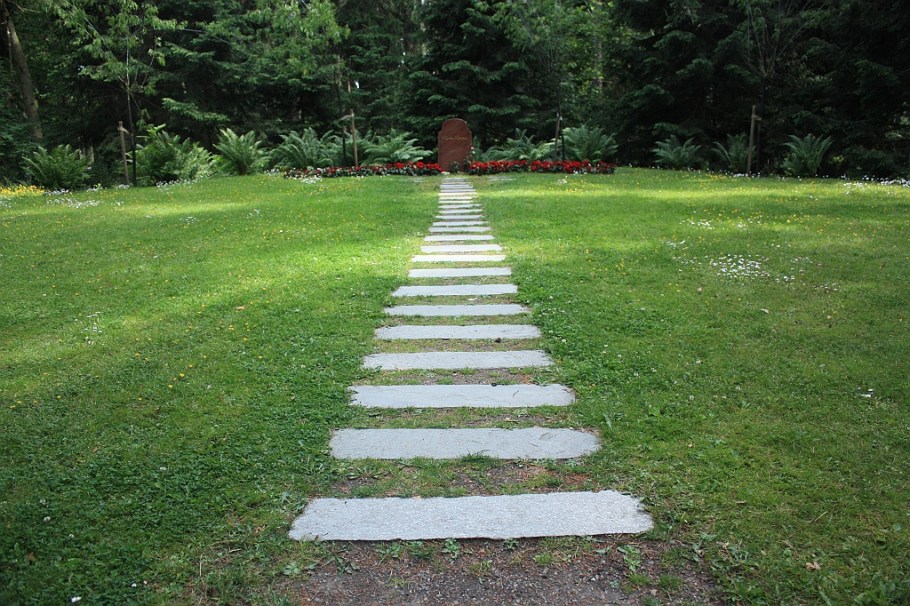
Lead up to Greta Garbo’s grave.


Born Greta Lovisa Gustafsson in Stockholm in 1905, Greta Garbo was discovered at the age of 17. She was honoured with four Academy Award nominations for her work which transitioned successfully from silent-films to “talkies” in what is now considered the “Golden Age” of filmmaking. Even now, she is considered one of the most beautiful women and one of the most important actresses ever to appear on the big screen. After only 27 films between 1924 and 1941, she retired to private life, away from celebrity spotlight. After her death in 1990 and subsequent legal issues, her cremated remains were buried in 1999 at Skogskyrkogården in the city where she was born.
In the 1955 biography “Garbo” by John Bainbridge, Garbo is quoted as saying:
I never said, ‘I want to be alone.’ I only said, ‘I want to be left alone.’ There is all the difference.
To reach the forest cemetery from Stockholm’s city centre, take the Tunnelbana green metro line 18 southbound in the direction “Farsta strand” to the stop called “Skogskyrkogården”. There is no charge or fee to enter Skogskyrkogården. Garbo’s grave is located south of the Skogskappellet (Woodland Chapel).
• The colours of Gamla Stan, Stockholm’s Old Town
• Say “Hej!” (and to food) at Lisa Elmqvist in Östermalm’s Saluhall market hall
• Daytrip to Vaxholm in Stockholm’s archipelago
The publicity photo above of Greta Garbo is by Clarence Sinclair Bull for MGM in 1939 (Wiki). I made the remaining photos above on 25 June 2008. This post is published on Fotoeins Fotografie at fotoeins DOT com as http://wp.me/p1BIdT-vP.

