Fotoeins Fotografie

location bifurcation, place vs. home

Posts tagged ‘U-Bahn Station’

Berlin U5-Museumsinsel: Mozart, Schinkel, & Dudler

Above: Museumsinsel U-Bahn station entry-exit ‘A’. Photo, 17 May 2025 (P15).

The Berlin U-Bahn metro station Museumsinsel adjacent to the world renowned Museum Island is located on the U5 line which connects the city’s central station (Hauptbahnhof) with Alexanderplatz and the city’s eastern neighbourhoods. Construction for the station began in 2012 and lasted over 8 years. For the station interior at track level, architect Max Dudler was inspired by Karl Friedrich Schinkel’s 1815–1816 design of the stage for the Mozart opera “Die Sauberflöte” (The Magic Flute). For the appearance of the Queen of the Night, Schinkel imagined a large dome-like space like the overhead starry night sky. Over each of the two tracks in the U-Bahn station, Dudler designed a dark blue barrel-shaped vault embedded with thousands of white point-sources of light.

The fully-completed U5 extension from Hauptbahnhof to Alexanderplatz opened to the public on 4 December 2020, which at long last connected the Hauptbahnhof with Berlin’s U-Bahn city transport system. The Museumsinsel station on the U5 line opened on 9 July 2021. In addition to the city’s bus network, the station now allowed visitors to use the U-Bahn metro to reach the Museum Island complex, inscribed by UNESCO as World Heritage Site in 1999.

Artist and architect Karl Friedrich Schinkel (1781–1841) has his “fingerprints” on many of the city’s early- to middle 19th-century architecture, including in the immediate vicinity of the station the Neue Wache (New Guard House), Schlossbrücke (Castle Bridge), Friedrichswerder Church, Bauakademie (Building Academy), and the Altes Museum (Old Museum).


( Click here for images )

25T33 Berlin’s U7: 4 stations,`80s rule, baby!

E32, B27.

In West Berlin and still hemmed in by the surrounding Berlin Wall, new residential developments established to the city’s northwest, and by the late-1970s many recognized the great need to extend the underground lines to service the new residents. The U7 line in the northwest extended to Rohrdamm by 1980; and by 1984, the section from Rohrdamm to Rathaus Spandau officially opened for public service.

Are these designs a sign of the times (i.e., the 1970s and 1980s)? What more can I say: I’m a product of the `70s and `80s, and these patterns and colours seem “natural” to this greying traveller. 🫶🏽
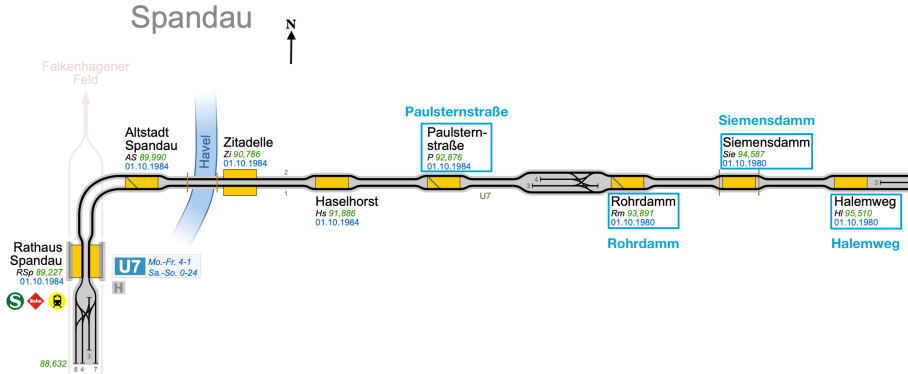

Close-up of the U7 track map in Spandau, by Christian Stade on www.gleisplanweb.de (CC BY-NC-SA). I’ve highlighted in blue the stations featured here in alphabetical order: Halemweg, Paulsternstrasse, Rohrdamm, Siemensdamm.

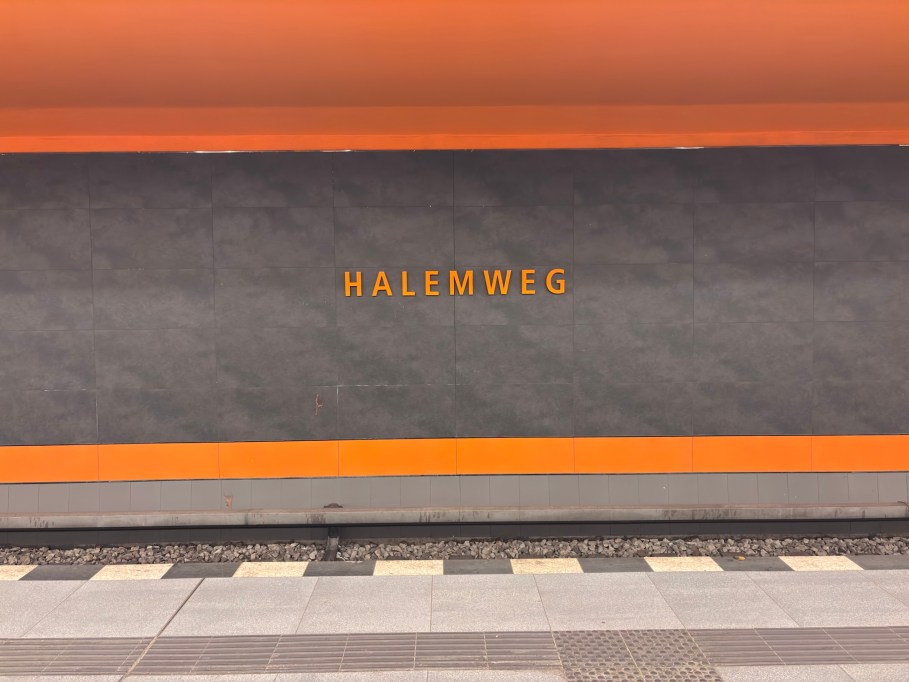
Halemweg

U7 station Halemweg, track level. The station opened for public service on 1 October 1980. (Now technically, Halemweg is in Charlottenburg-Nord, but close enough.)
Halemweg: how orange is now?
Station signage: U-Bahn line by number and colour, near-side train direction (to Rathaus Spandau), closest station-exits.

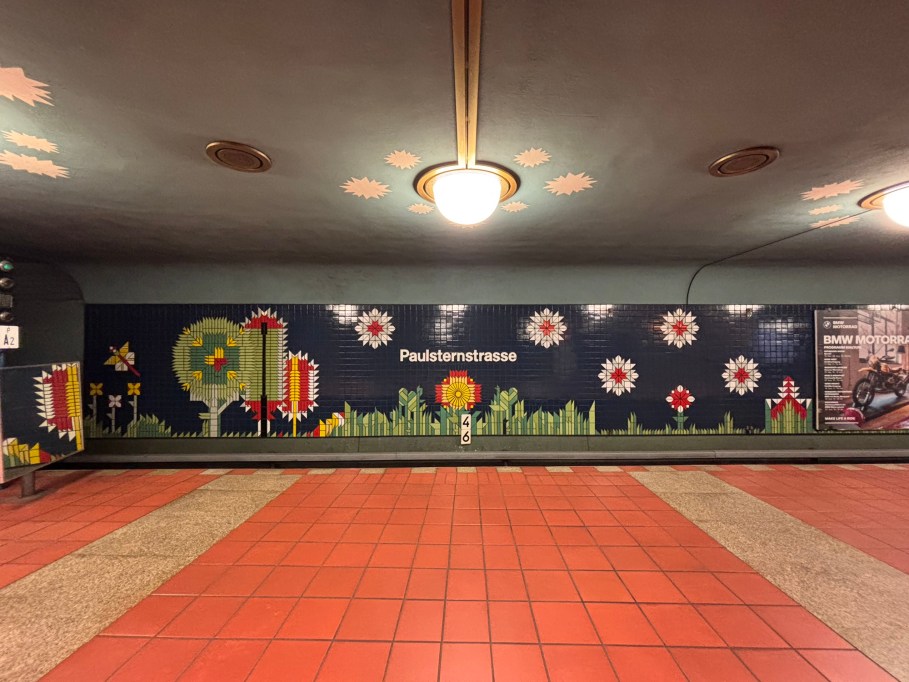
Paulsternstrasse

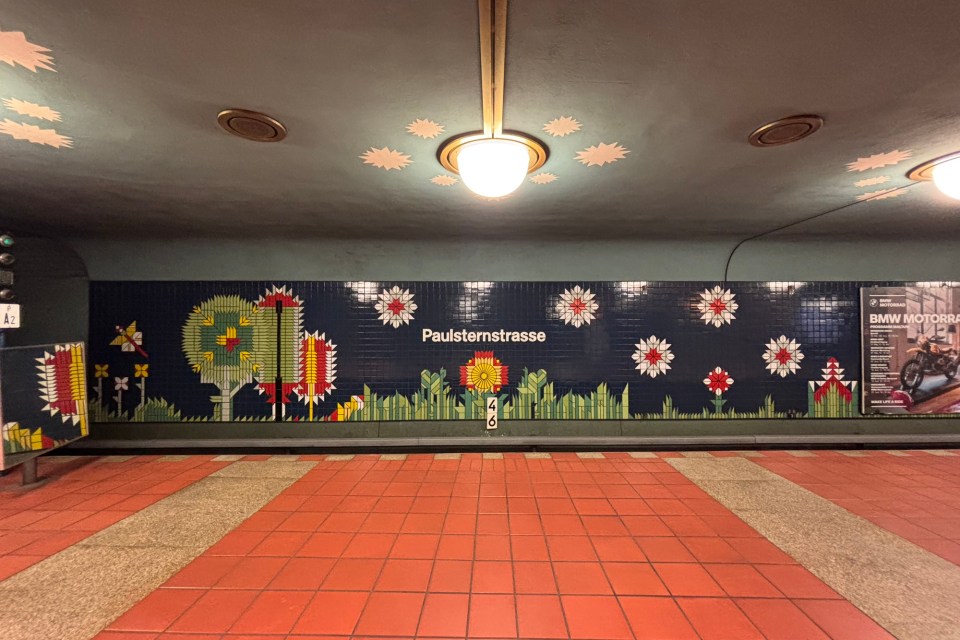
U7 station Paulsternstrasse, track level. The station opened for public service on 1 October 1984.
“Look at the stars, look how they shine for you …”
Station signage: U-Bahn line by number and colour, near-side train direction (to Rathaus Spandau), closest station-exit and additional transport connection.
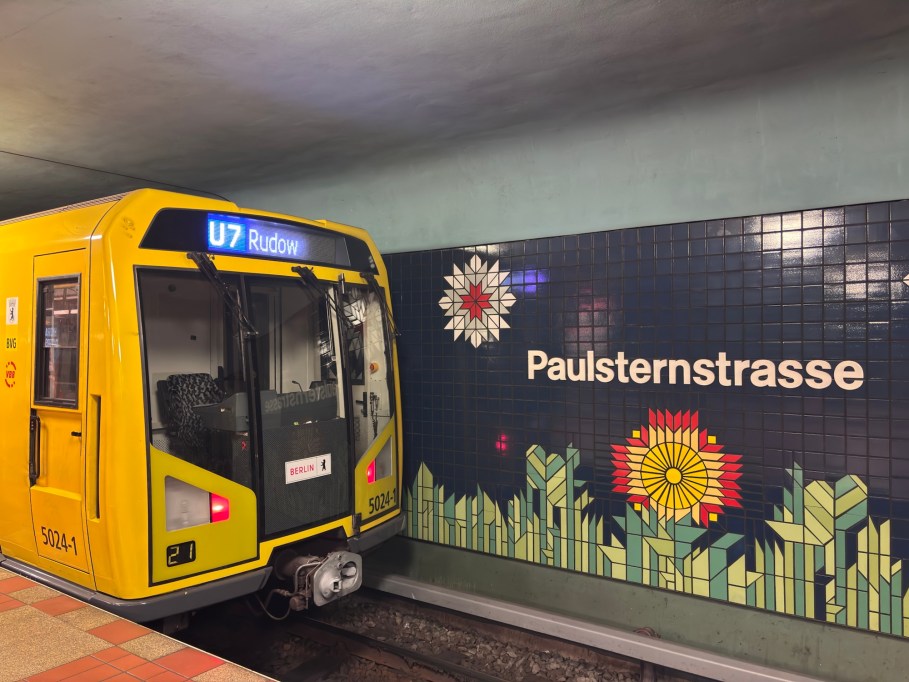
U7 train departing Paulsternstrasse for Rudow.

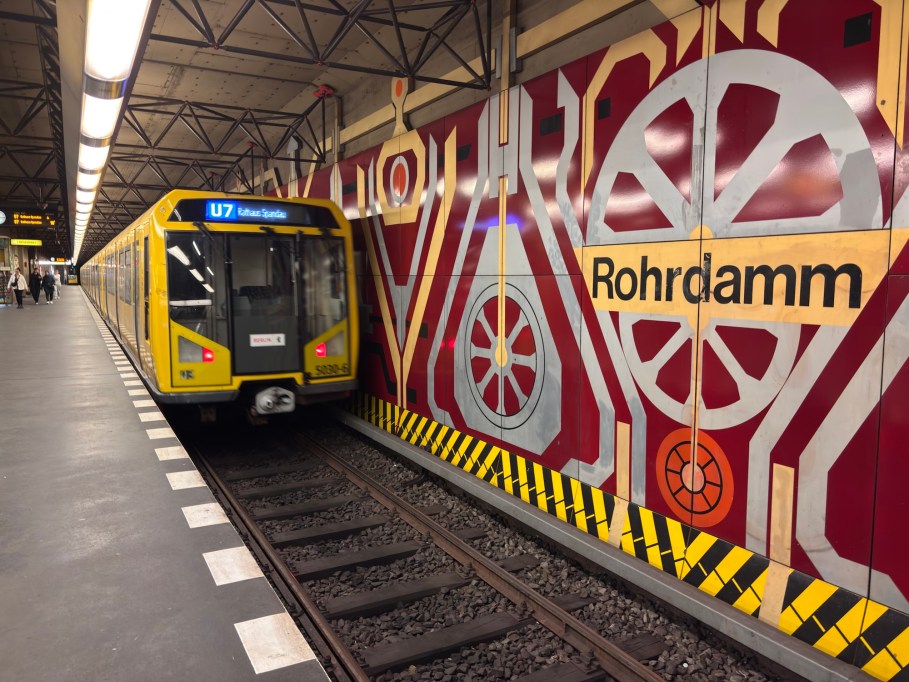
Rohrdamm

U7 station Rohrdamm, track level. The station opened for public service on 1 October 1980.
Station signage: U-Bahn line by number and colour, near-side train direction (to Rudow), closest station-exits and other transport connections.
U7 train departing Rohrdamm for Rathaus Spandau.

Siemensdamm

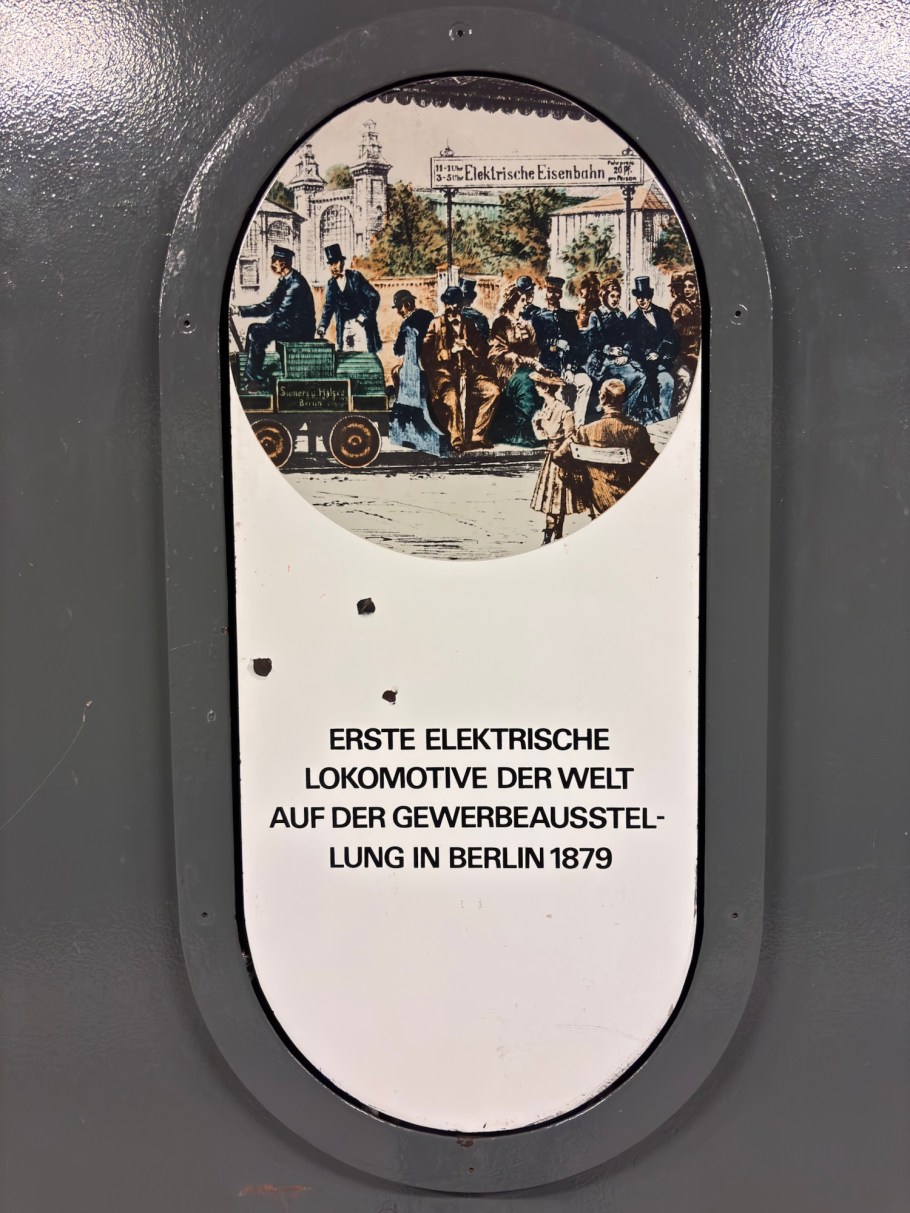
Erste elektrische Lokomotive der Welt auf der Gewerbeausstellung in Berlin, 1879 / The world’s first electric locomotive at the 1879 trade fair in Berlin: oh look, it’s Berlin company Siemens & Halske in the picture.
Fotografisch verfremdeter Halbleiterspeicher / Photographically altered semiconductor memory.
U7 station Siemensdamm, track level. The station opened for public service on 1 October 1980. The Siemens family and business(es) have had a massive impact on the engineering and economic development of Berlin and Germany.

I made all images above with an iPhone15 on 9 June 2025. This post composed within Jetpack for iOS appears on Fotoeins Fotografie at fotoeins DOT com.