In Vienna’s Museum of Science and Technology, I get to nerd out over things like cameras, calculators, radios, televisions, and telephones: all of which are now contained in some compact form within a mobile “smart” phone. Much of the history for the development of gadgets large and small is both long and fascinating.
But there’s also regulation of the Danube river, fresh- & waste-water management, computers & data management, bookmaking & block-type, print-making & lithography, tools & equipment “at home”, national radio & television broadcasting, telegraph & telephony, power generation, engines & automobiles, aircraft & airports, industrial-scale smelting, elevators & funiculars, transport signals, hygiene practices, et cetera, et cetera.
No surprise, really, that it’s a wae difficult to see everything available in the museum’s general collection inside a single visit.
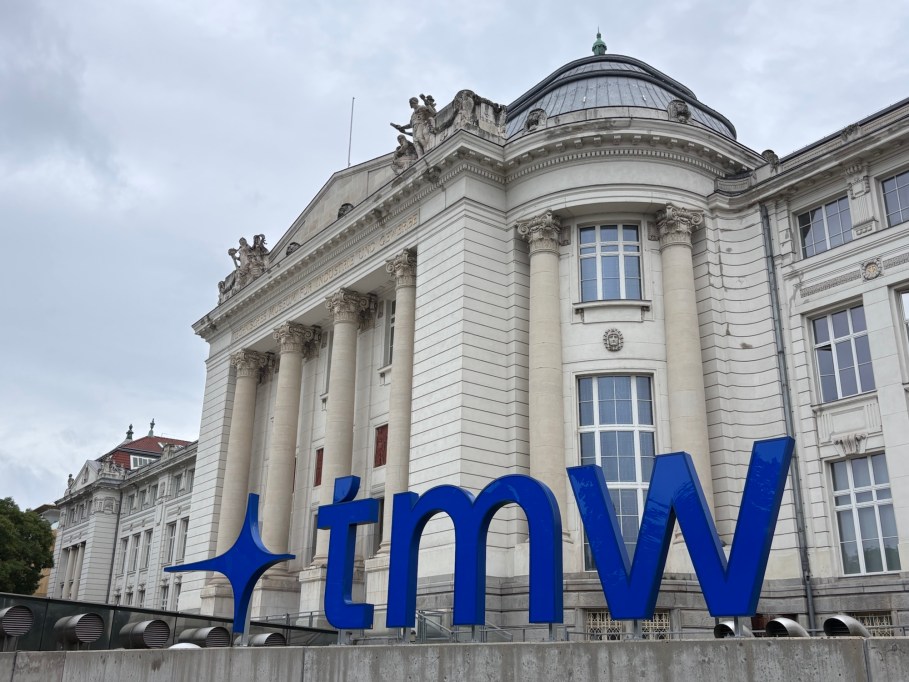
TMW: Technisches Museum Wien.
Ebene 4 (4th level).
Ebene 3 (3rd level).
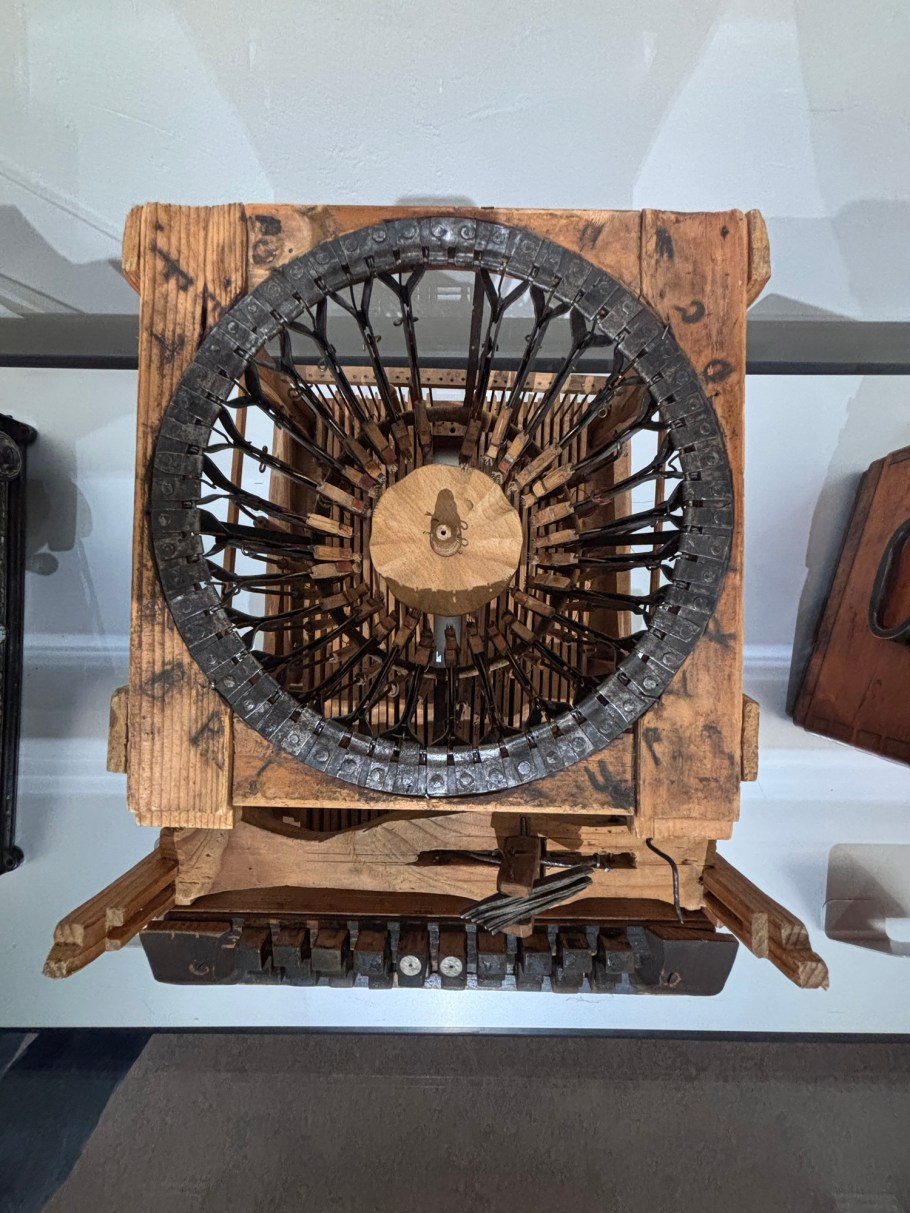
Typewriter: one of the earliest prototypes, by Peter Mitterhofer in Partschins (Italy) in 1864.
Top view: one of the earliest typewriter prototypes, by Peter Mitterhofer in Partschins (Italy) in 1864.
Arithmetic (mathematics) book from Johann Hemeling, printed in 1678 by Johann Görlin in Frankfurt, Germany. At right is an example of compound interest of 5-percent applied annually over 20 years on a principal of 10 million; that is, 10^7 * 1.05^20 =26532977.
Hewlett-Packard HP-35 electronic pocket scientific-calculator: USA, 1972.
Texas Instruments SR-40 electronic pocket scientific-calculator: USA, 1975.
Rolleiflex reflex camera with cut film adapter: Franke & Heidecke, Braunschweig (Germany), around 1929.
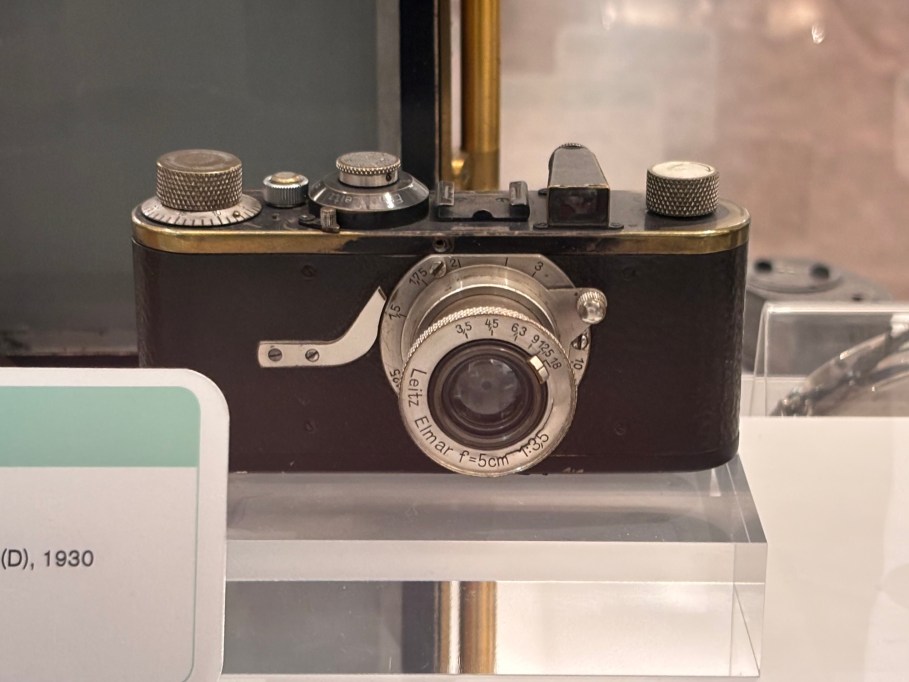
Front view, Leica I 35mm-camera: Ernst Leitz GmbH in Wetzlar (Germany), 1930. The word “Leica” is constructed from “Leitz” and “camera”.
Top view, Leica I 35mm-camera: Ernst Leitz GmbH in Wetzlar (Germany), 1930.
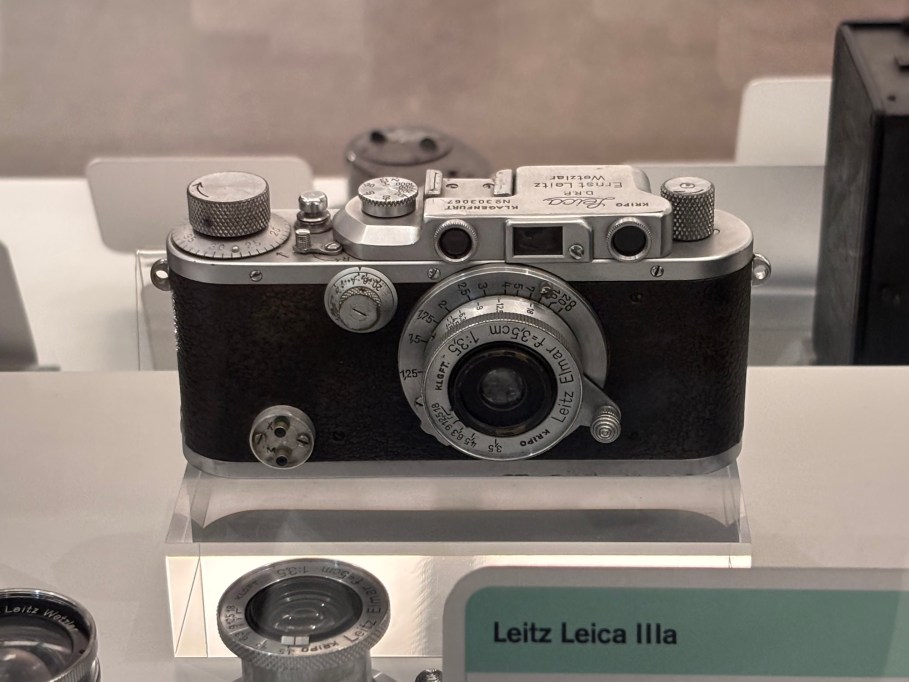
Front view, Leica IIIa 35mm-camera: Ernst Leitz GmbH in Wetzlar (Germany), 1938.
Top view, Leica IIIa 35mm-camera: Ernst Leitz GmbH in Wetzlar (Germany), 1938.
Left: Western Union, internal memo, 1876. Right: purple Telekom/Magenta telephone booth with a large digital screen and webcam.
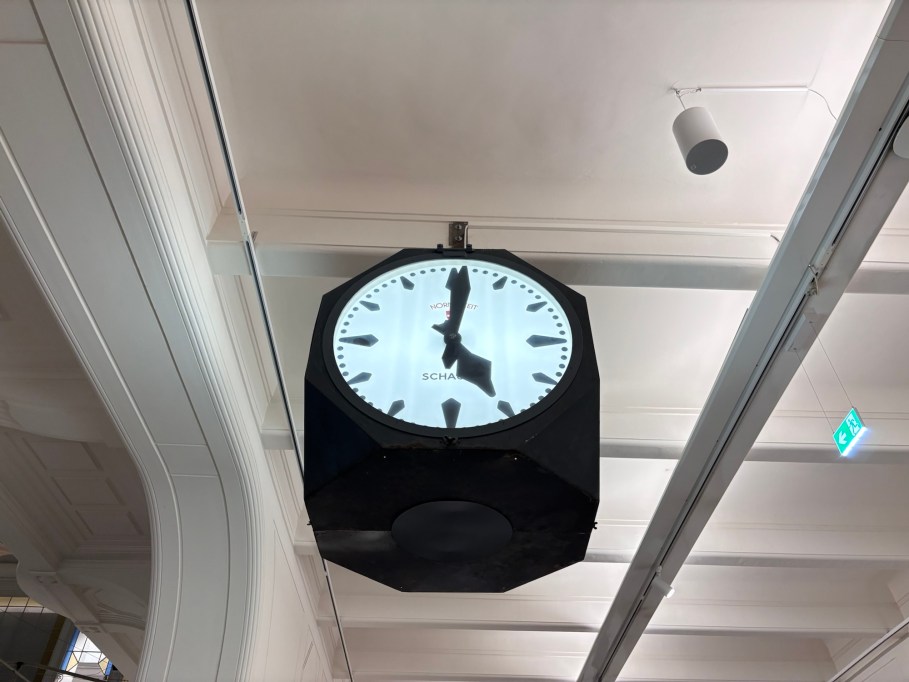
Würfeluhr (Viennese cube-clock), 1930 to 1960s. This style of city clock can be found throughout the city of Vienna.
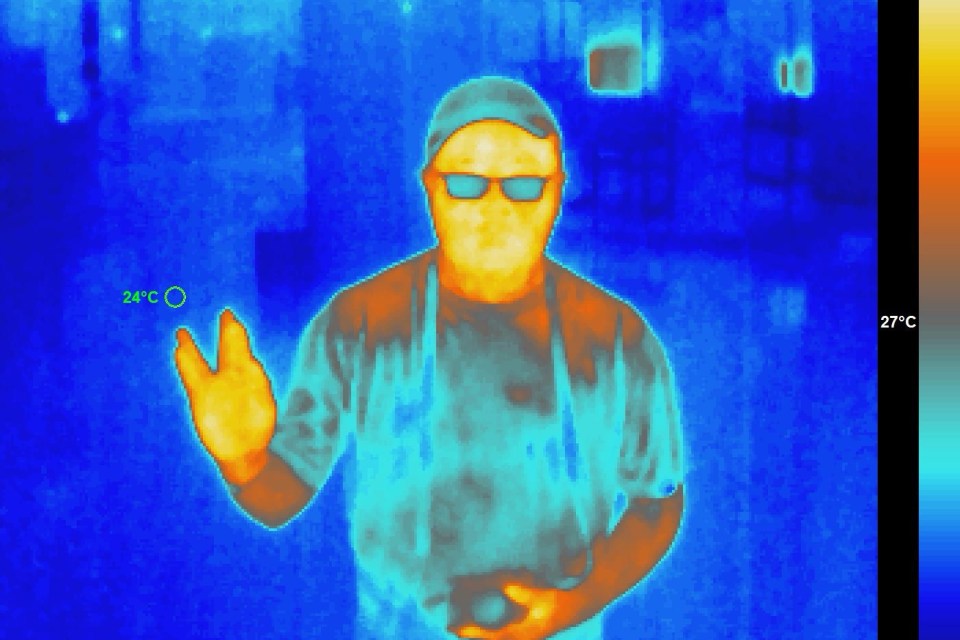
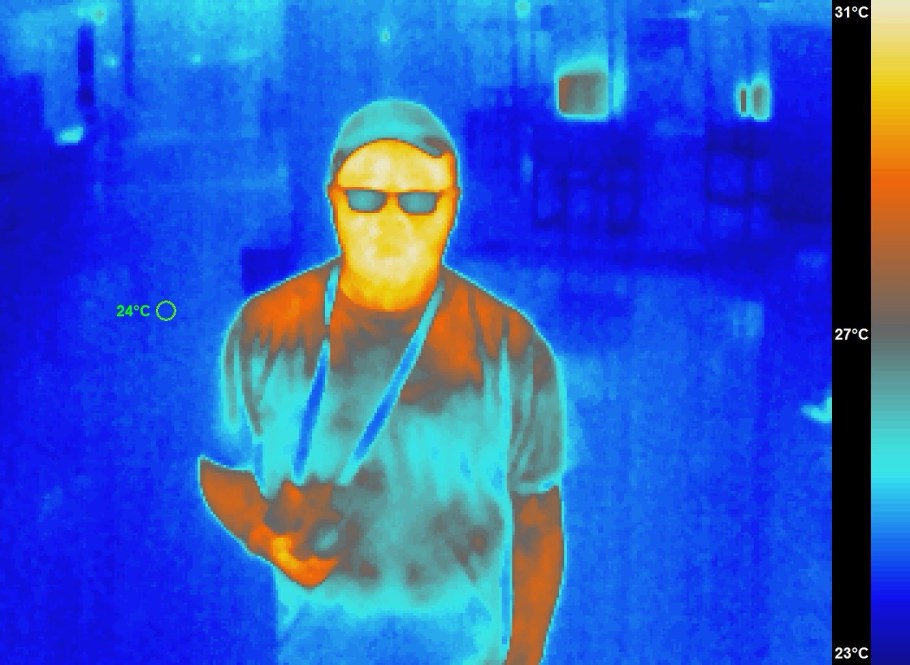
On Ebene 1 (level 1), the public can make their own thermograms: images in the thermal infrared at wavelengths around 10 microns. Red to orange are the warmest temperatures.
The hope is real: to live long and prosper (in the thermal infrared) with my trusty X70 (in the optical/visual). Thankfully, my glasses and camera remain “cool”.
I received neither support nor compensation for this piece. Except for the final two frames, I made all remaining images with an iPhone15 on 8 July 2025. This post composed within Jetpack for iOS appears on Fotoeins Fotografie at fotoeins DOT com.








 Fotoeins Fotografie