What appears to be a plate of slow simmered beef is anything but “simple”.
“Tafelspitz is a dish with a lot going on,” said Austrian chef Kurt Gutenbrunner to the New York Times in 2002. “It’s hot, cold, spicy, creamy, crunchy and soft.”
Eaten daily by Habsburg Emperor Franz Joseph I (1830-1916), the dish is well-known among Vienna favourites. Among members of the Jewish community of the time, the Tafelspitz was a beloved symbol of assimilation in late 19th-century/early 20th-century Vienna.
Reading about the description for Tafelspitz brings about a sharp childhood memory of a soup made by Mum. Tender chunks of chuck roast, accompanied by carrots, potatoes, celery, shards of ginger root, and often with apple to provide extra sweet; cooked slow and simmering in a huge pot on the stovetop for hours. The resulting soup was a meal on its own, or served as a final course at dinner.
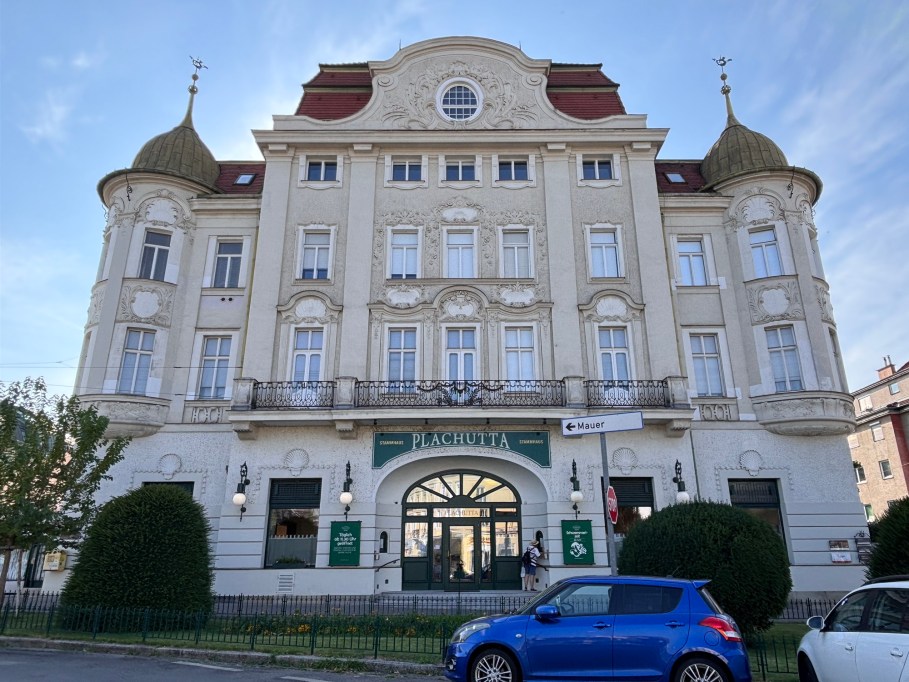
Plachutta is well-known among the Viennese for making some of the best Tafelspitz in the city. A big Plachutta is located centrally in the inner city, but I head west to the city’s 13th district for their original Stammhaus location in Hietzing. It’s fitting somehow that the Hietzing location is close to the Habsburg summer palace at Schönbrunn.
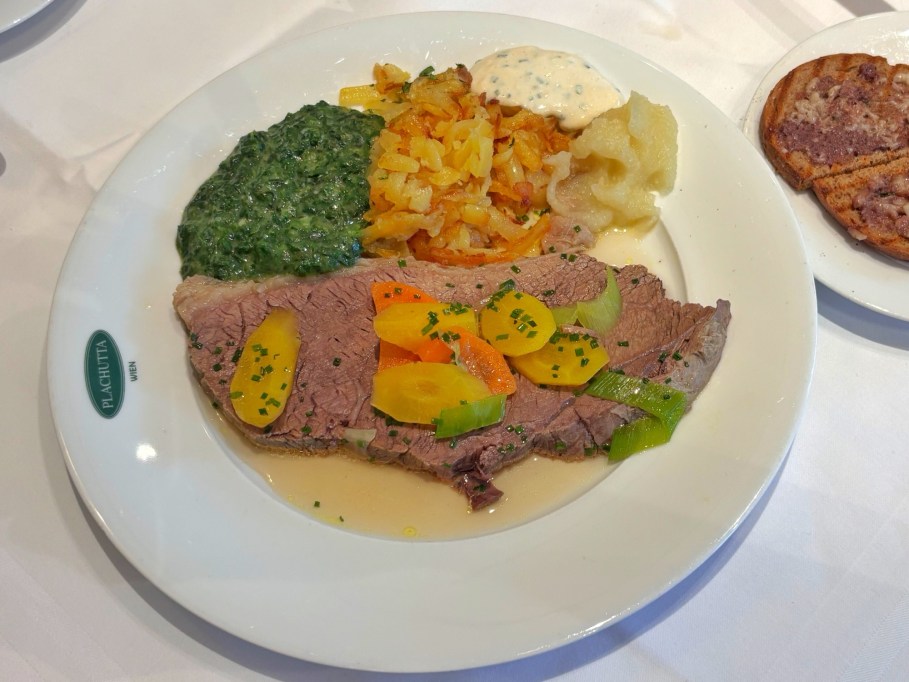
The images show a wonderful spread with the Tafelspitz dish with my choice of the Tafelspitz or rump steak cut. I started with the long slow simmered soup broth, ladled out into a bowl with big chunks of egg frittata. And provided within a bowl of soup are specific details of family dinner: nourishing, caring, satisfying.
After a section of slow-cooked bone is presented, I spread the soft gelatinous marrow onto slices of toasted dark bread, with a light sprinkle of salt and pepper. Next, slices of moist tender slow-cooked beef are laid onto a plate, along with crunchy fried potatoes, creamed spinach, apple-horseradish sauce, and chive sauce.
Certainly, I paid more for this meal compared to others, but the Plachutta Tafelspitz was a great dining experience, providing a new memory of Viennese cuisine, combined with family memories of home-cooked food.
( Click here for images and more )
48.186802
16.298412




 Fotoeins Fotografie