Above: Museumsinsel U-Bahn station entry-exit ‘A’. Photo, 17 May 2025 (P15).
The Berlin U-Bahn metro station Museumsinsel adjacent to the world renowned Museum Island is located on the U5 line which connects the city’s central station (Hauptbahnhof) with Alexanderplatz and the city’s eastern neighbourhoods. Construction for the station began in 2012 and lasted over 8 years. For the station interior at track level, architect Max Dudler was inspired by Karl Friedrich Schinkel’s 1815–1816 design of the stage for the Mozart opera “Die Sauberflöte” (The Magic Flute). For the appearance of the Queen of the Night, Schinkel imagined a large dome-like space like the overhead starry night sky. Over each of the two tracks in the U-Bahn station, Dudler designed a dark blue barrel-shaped vault embedded with thousands of white point-sources of light.
The fully-completed U5 extension from Hauptbahnhof to Alexanderplatz opened to the public on 4 December 2020, which at long last connected the Hauptbahnhof with Berlin’s U-Bahn city transport system. The Museumsinsel station on the U5 line opened on 9 July 2021. In addition to the city’s bus network, the station now allowed visitors to use the U-Bahn metro to reach the Museum Island complex, inscribed by UNESCO as World Heritage Site in 1999.
Artist and architect Karl Friedrich Schinkel (1781–1841) has his “fingerprints” on many of the city’s early- to middle 19th-century architecture, including in the immediate vicinity of the station the Neue Wache (New Guard House), Schlossbrücke (Castle Bridge), Friedrichswerder Church, Bauakademie (Building Academy), and the Altes Museum (Old Museum).
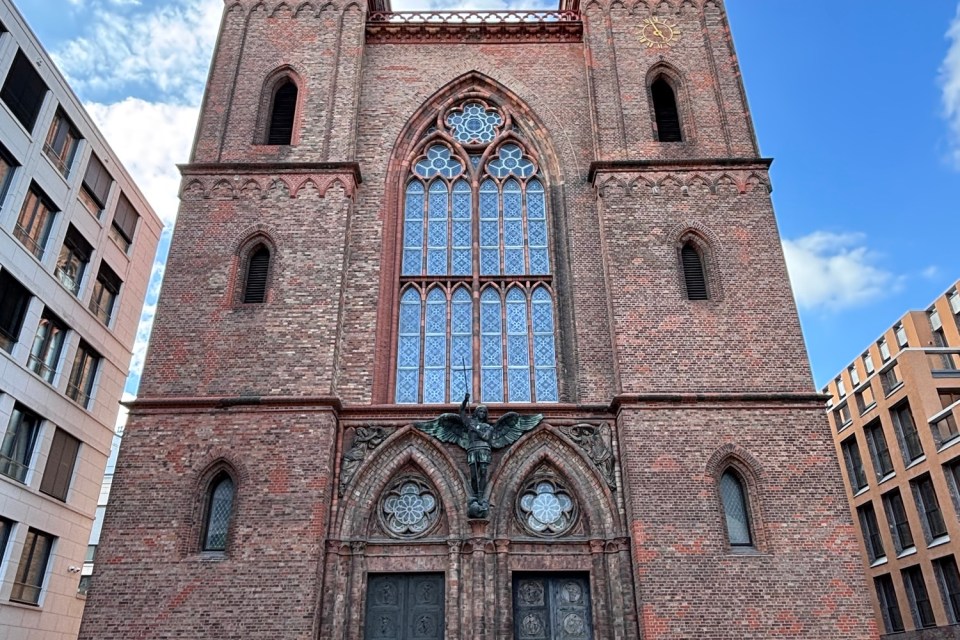
Hopping out from Berlin’s U5 Museumsinsel station onto street-level, this view south on Niederlagstrasse is towards Berlin’s 1st neo-Gothic brick building that is the Friedrichswerder Church, completed in 1830 with designs by architect Karl Friedrich Schinkel. Schinkel’s fingerprints are all over late-19th century Prussian Berlin.
I made the image above on 17 May 2025 with a Fujifilm X70 fixed-lens prime and these settings: 1/60-sec, f/14, ISO1000, and 18.5/28mm focal length. This post appears on Fotoeins Fotografie at fotoeins DOT com as https://wp.me/p1BIdT-vsy.
Karl Friedrich Schinkel (1781-1841) is one of the most important German architects in early 19th-century Berlin, where most of his works are located. They include: Altes Museum, Friedrichswerder Church, Konzerthaus, Neue Wache, Schlossbrücke, and the Humboldt Schloss (known also as Tegel-Palais or Schloss Tegel).
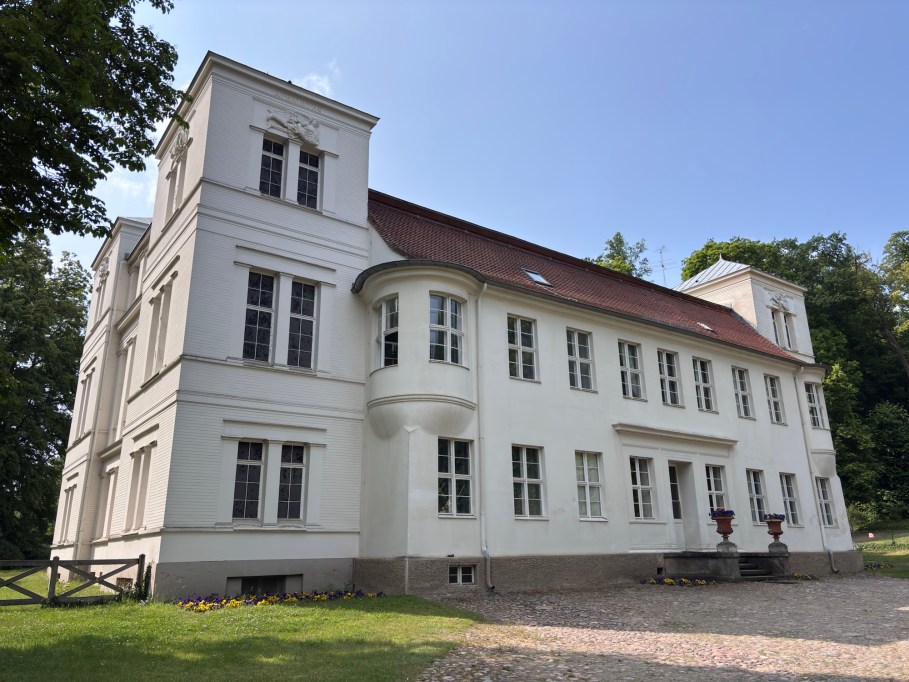
There’s a modest patch of Humboldt family history in Tegel, about 10 km northwest from Berlin city centre. What started as a mid-16th century manor house would by the mid-18th century be owned by the Humboldt family. Brothers Wilhelm and Alexander Humboldt grew up in the house in the (17)70s and 80s. Many years later in 1819, Wilhelm commissioned Schinkel to rebuild the palace in the Classicist style. Inside there are many Greco-Roman decorative elements, reflecting the years Wilhelm and his wife, Caroline, lived in Rome. Schinkel would also go on in 1829 to design the family burial site on the palatial grounds.
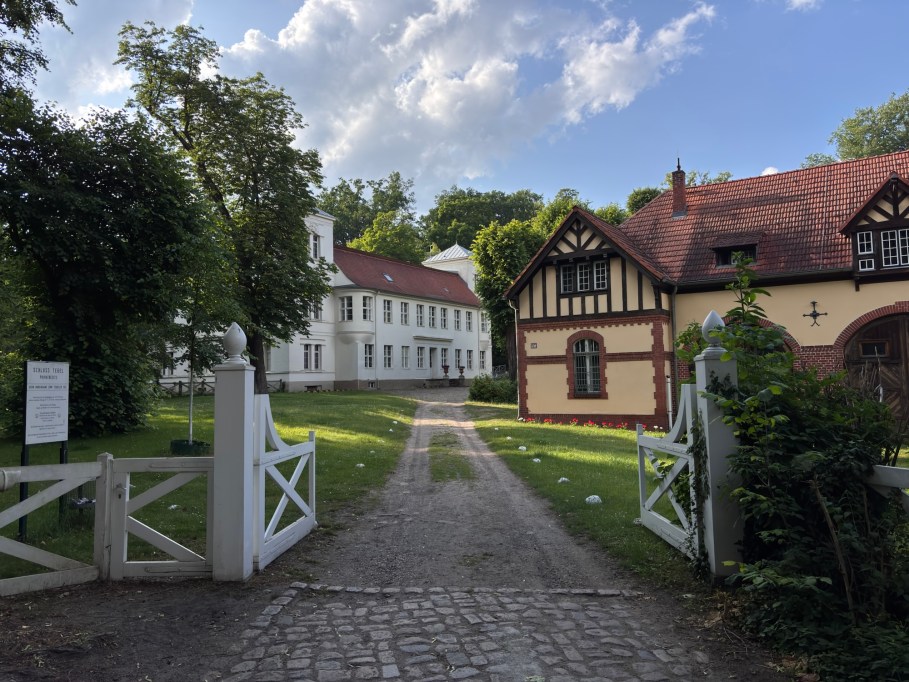
Humboldt-Schloss (Tegel-Palais): entering the property.
The property is under private ownership, and the only access is a guided-tour of the house on Mondays from early-May to the end of September. There’s an admission charge for the 1-hour tour in German; neither photos nor video allowed inside. The tour is not for the casual visitor, but for those who’re serious to learn more about the Humboldts, Schinkel’s architecture, and their respective impact on Berlin history.The info here was useful.
Main entrance, east side of the house; the west entrance is off-limits. The ticket counter is on the north side of the building.
About 600 metres on a sandy path west from the palace is the Humboldt family cemetery, designed by Schinkel.
At the top of the central column is a copy of “Spes” (Roman goddess of hope) by Bertel Thorwaldsen (1817). Favoured by Caroline Humboldt, the original sculpture for the column is inside the Humboldt palace and visible during the guided tour.
Wilhelm Humboldt: diplomat, linguist, philosopher; born 22 June 1767, died 8 April 1835.
Alexander Humboldt: ecologist, geographer, natural historian; born 14 September 1769, died 6 May 1859.
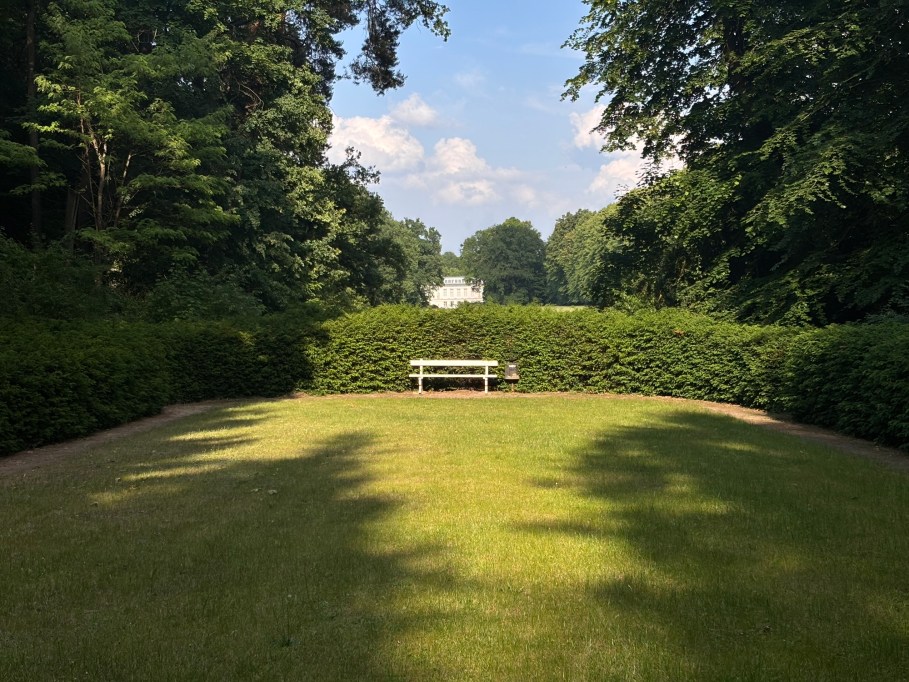
The Humboldt family palace in the background, as seen from the family cemetery.
View of the palace from the west, in late-day sun.
Sign at entrance to the property.
I made all images above with an iPhone15 on 2 June 2025. This post composed within Jetpack for iOS appears on Fotoeins Fotografie at fotoeins DOT com.
Karl Friedrich Schinkel (1781-1841) is one of the most important German architects in early 19th-century Berlin, where most of his works are located. They include: Altes Museum, Königin-Luise-Mausoleum, Konzerthaus, Neue Wache, Neuer Pavillon, Schlossbrücke, Schloss Glienicke, Tegelpalais (Humboldt Schloss), and Friedrichswerder Church.
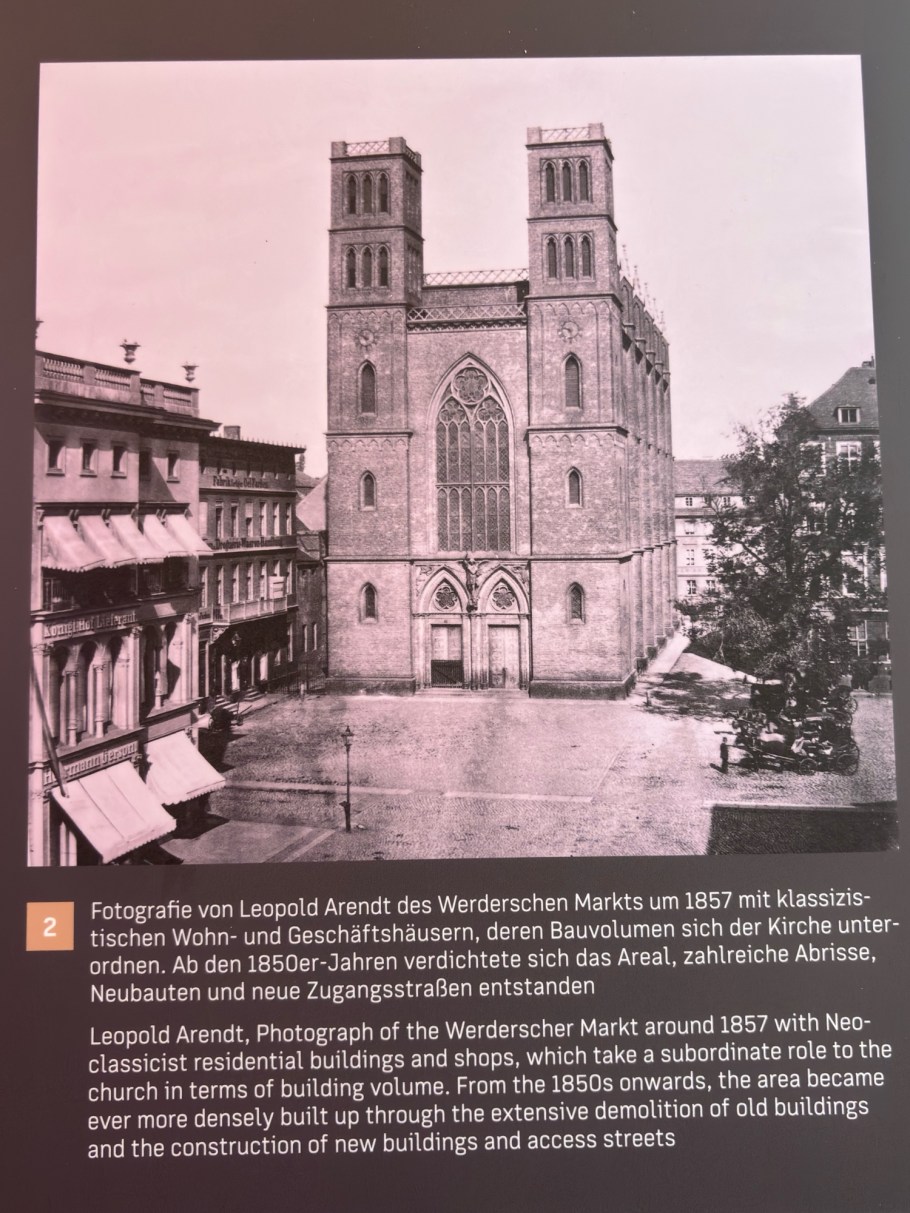
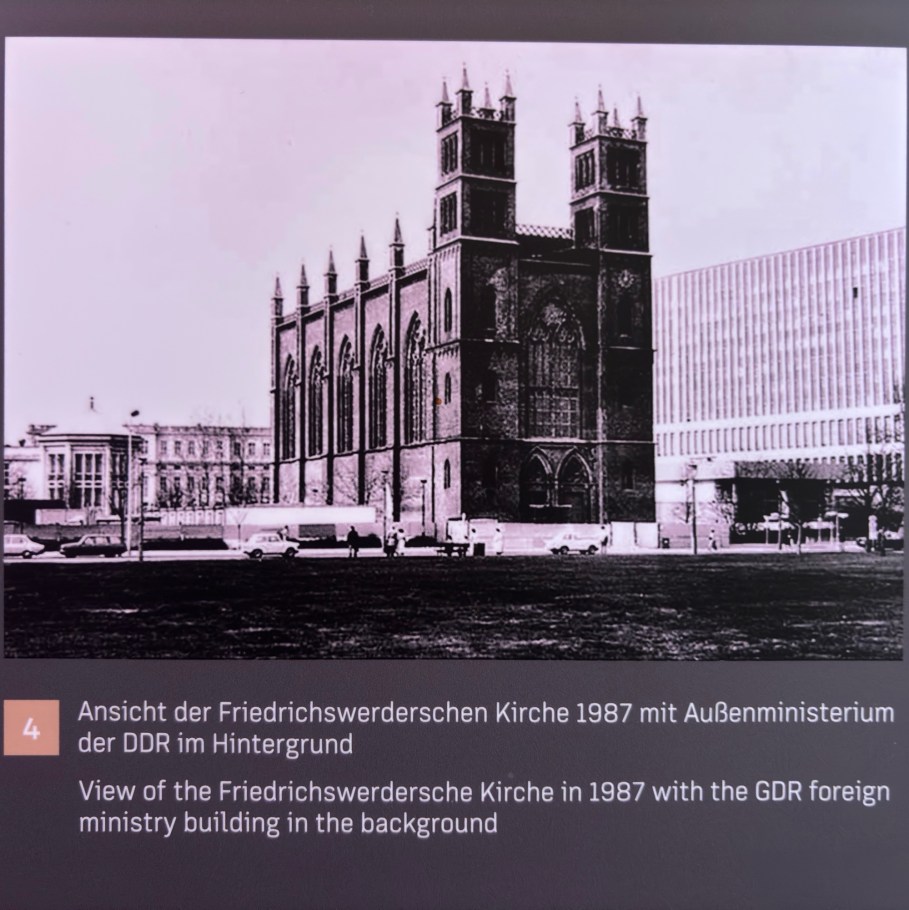
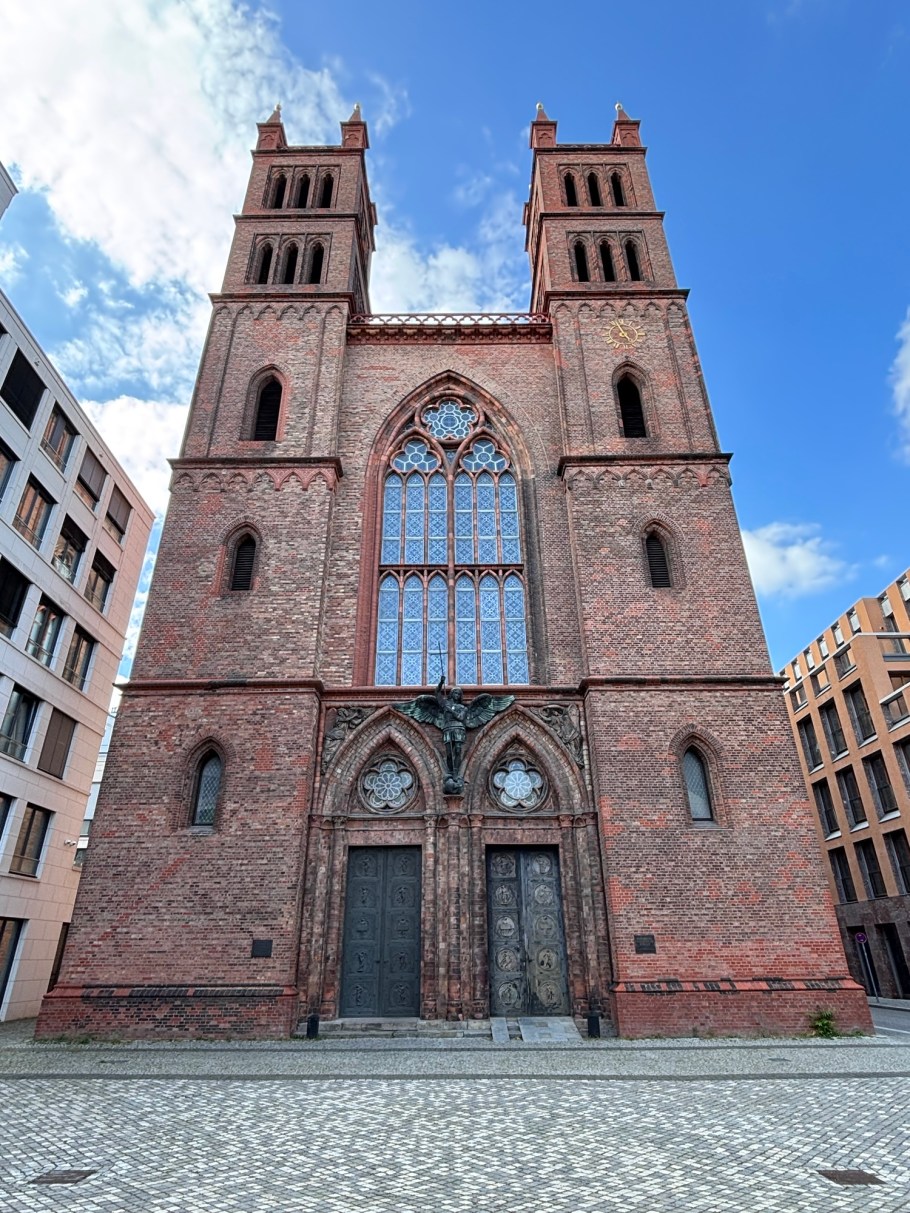
After Napoleon’s French forces came and went, the Prussians decided to tidy up with fresh building projects, especially those with a connection to Gothic or neo-Gothic. Construction of Friedrichswerder church began and ended in 1824 and 1831, respectively. With a total rebuild and renovation after WW2 and a communist dictatorship, the entire space reopened entirely as art space, with the lower floor exhibiting sculptures from the city’s Alte Nationalgalerie (Old National Gallery), and the upper floor dedicated to the life and work of Schinkel. The venue is open to the public free of charge.
A decent “sacred” hall to exhibit late-18th & 19th-century sculptures.
Photograph from c. 1857, by Leopold Arendt.
Photograph from c. 1885, by Albert Schwarz.
Photo from 1987.
Schinkel marble statue from the portico of Berlin’s Altes Museum. By C.F. Rieck and completed by Hermann Wittig; marble copy by F. Tübbecke, 1884-1899.
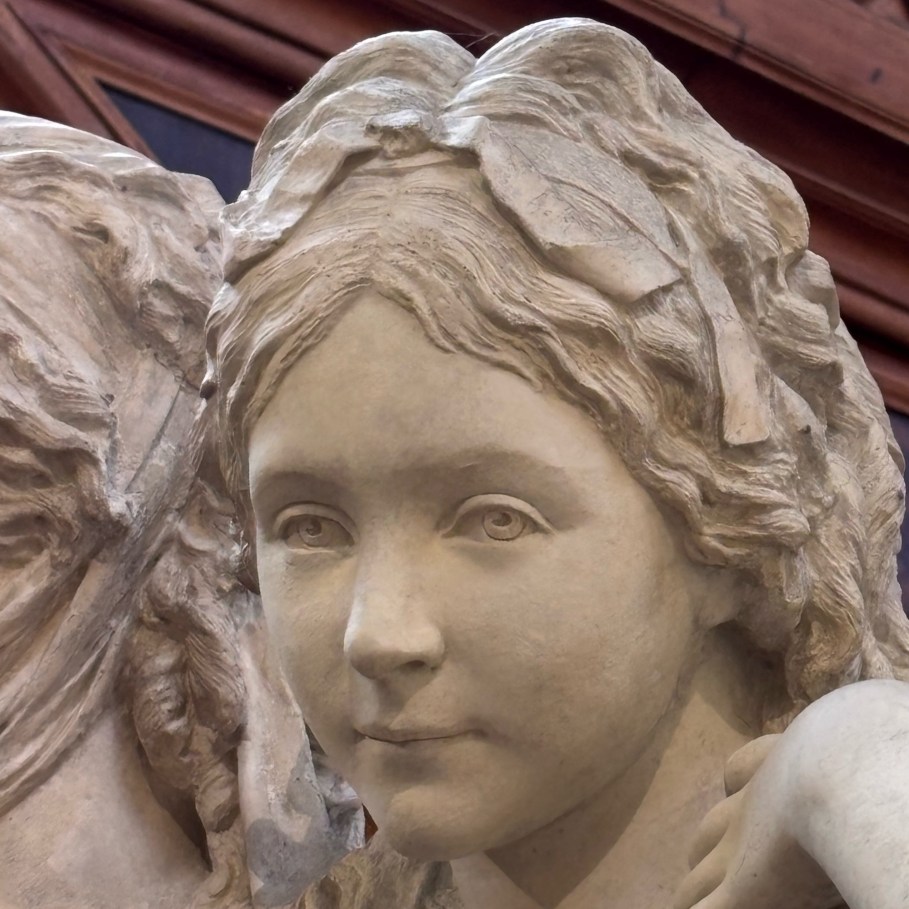
Prussian neo-classicism: double statues of Princesses Luise & Frederike of Prussia, by J.G. Schadow, plaster model, 1795.
Princess Luise of Prussia: by J.G. Schadow, plaster model, 1795.
Princess Frederike of Prussia: by J.G. Schadow, plaster model, 1795.
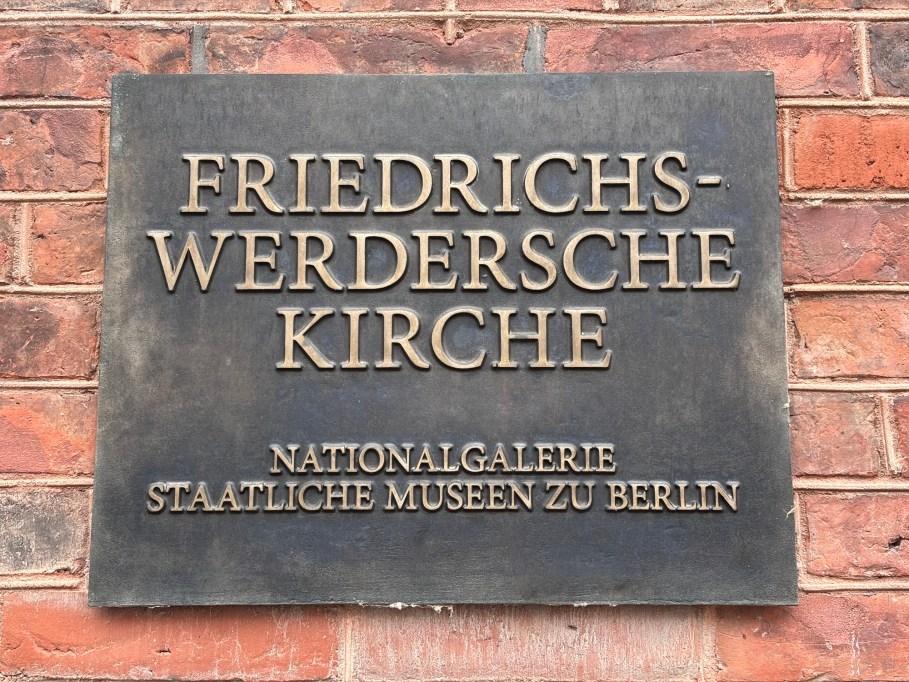
Commemorative plaques near the front entrance: “Friedrichswerder Church: National Gallery, State Museums of Berlin.”
Commemorative plaques near the front entrance: “Built 1824 to 1830 to the designs by Karl Friedrich Schinkel / destroyed 1944-45 / rebuilt 1982-1987.”
South facade, from Werdescher Markt.
I made all images above with an iPhone15 on 17 and 30 May 2025. I received neither request nor compensation for this content. This post composed within Jetpack for iOS appears on Fotoeins Fotografie at fotoeins DOT com.