Fotoeins Fotografie

location bifurcation, place vs. home

Posts tagged ‘Heidelberg’

My Heidelberg: 40+ Highlights from Home

Above/featured: From Philosophenweg: across the Neckar, over the Altstadt, and up to Königstuhl – 21 May 2016 (HL).

Heidelberg is “eine adoptierte Heimatstadt” (an adopted hometown). Some have called this place “scenic, natural, and spectacular”; some call it “boring, provincial, and extortionate”. I could be referring to Vancouver, but that’s a subject for another time.

I’ve long struggled with questions of place: what defines “home”? Can those definitions and qualities change with time? Do people have choice(s) and do they apply their choices in their search? Can people find meaning with “home”? Must “home” be restricted to only one place, or can different needs be met from different places?

Images can provide access to memories of having lived in a new country, experiencing the shock of the new, and settling into the mundane. I remember advice someone once gave me which became constant companion and reminder: that I was inhabiting a place at the same latitude as my birthplace, 8000 km in distance and 9 time zones apart on the other side of the planet, a place that’s seen its compact share of activity with flair and impact.

Most recall is naturally connected to sight. Occasionally, it’s a rush of the senses: the quick breeze on the skin, the ankle-spraining undulations of the cobblestone, how fog clings like a cold clammy cloak, the sing-song of birds among tall trees in the forest on the hill, the smell of grilled sausages in town by day, and the satisfying late-night noms of a spicy Dürüm Döner with a cool Ayran. And other times, human history leaps out and buries its claws, when the unthinkable must be acknowledged and understood in a synapsis of memory and senses.

In the autumn of 2001, I moved to Germany and Heidelberg: both sight unseen and without having learned any of the language. I stayed in town for a little under two years. What’s astonishing is I have no pictorial record of my time in Heidelberg, Germany, and Europe: I had no camera before the dawn of the smart-phone.

I have some great memories, even if time is casting long shadows. What I lost (no, gave away) was some part of me that actually has little to do with the “Schlager” hit song “Ich hab mein Herz in Heidelberg verloren“. It might be a piece of the heart, a part of the soul, or simply a scrap of good sense; but what it is precisely still remains undefined and shapeless. Finding solid answers about what I’ve surrendered might take years. And so, for the sake of clarity, I’ve returned many times since leaving town in 2003. A sharper focus comes through the post-departure blur whenever I step off the train in town.

I couldn’t have possibly known the experience of moving to and living in Heidelberg would be life-changing. Time so far has been kind, because it didn’t take long for me to adopt Heidelberg as “home”.

( Click here for images and much more )

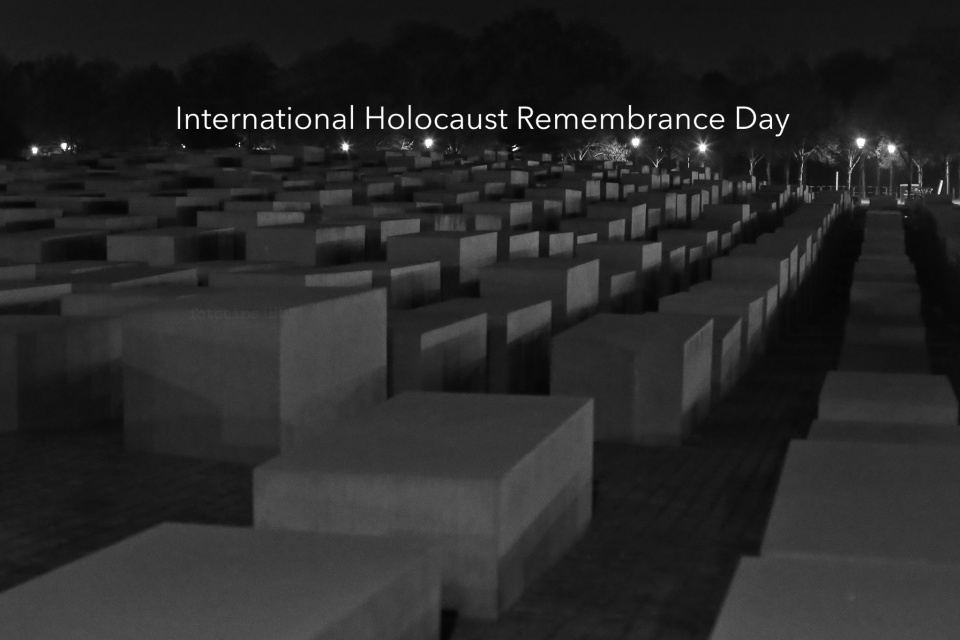
IHolocaustdenkmal, Berlin, Germany, fotoeins.com

International Holocaust Remembrance Day: observations from Germany

Primo Levi, Italian-Jewish author, chemist, and Auschwitz survivor, delivered a set of essays about life and survival in Nazi extermination camps in his 1986 book “The Drowned and the Saved”. Levi wrote:

… For us to speak with the young becomes even more difficult. We see it as a duty and, at the same time, as a risk: the risk of appearing anachronistic, of not being listened to. We must be listened to: above and beyond our personal experiences, we have collectively witnessed a fundamental, unexpected event, fundamental precisely because unexpected, not foreseen by anyone. It took place in the teeth of all forecasts; it happened in Europe; incredibly, it happened that an entire civilized people, just issued from the fervid cultural flowering of Weimar, followed a buffoon whose figure today inspires laughter, and yet Adolf Hitler was obeyed and his praises were sung right up to the catastrophe. It happened, therefore it can happen again: this is the core of what we have to say.

On 27 January 1945, Soviet Red Army troops liberated the Nazi concentration and extermination camp at Auschwitz-Birkenau in south-central Poland. Over 1 million men, women, and children were murdered.

The United Nations declared January 27 as International Holocaust Remembrance Day; the designation came during the 42nd plenary session of the United Stations when resolution 60/7 was passed on 1 November 2005.

Accepting and openly stating responsibility are critical first steps, but spending time, money, and effort to ensure the simple motto of “never again” is also an ongoing reality that isn’t solely up to the citizens of Germany. It’s a collective responsibility that we all should have to remain vigilant; that we all have to recognize and bolster actions which encourage and strengthen the universality of human rights, and reject the erosion and withdrawal of those rights.

I believe responsible tourism also includes paying appropriate respect at a memorial, especially the Holocaust Memorial in Berlin. It’s my view this important memorial is not (supposed to be) a playground.

And yet, there’s something to be said about what it means to have freedom in the early 21st-century, allowing people to laugh and frolic in the public space, an undulating sculpture of featureless massive grey cement blocks, a testimonial to the systematic murder of millions of people.

Naturally, you have the freedom to play here, take selfies, and have a grand time. But it doesn’t mean I’m gonna laugh with you; for example: Yolocaust art project (DW 2017).


( Click here for more )

street art, mural, Herakut, Metropolink, Heidelberg, Germany, fotoeins.com

My Heidelberg: Herakut street art for Metropolink

It’s amazing what gets discovered after going the wrong way.

I head straight for a full city-block before realizing my error, that I should’ve turned right about 5 minutes ago. I bow my head, and release a deep breath in frustration. I raise my head to the sky, when I catch sight of something out of the corner of my eye.

What’s that across the street?

I have to reach my destination which I know isn’t far.

But I am coming back here to get the shot.


( Click here for images and more )

Martin Luther: tracing his steps in 16 German cities

Above/featured: “Luther war hier. (Luther was here.)” Eisleben, Germany. Photo, 27 Oct 2016.

In pre-teen years, I attended a Catholic elementary school by weekday, and a missions-oriented Protestant church by weekend. I already had multiple questions running around my pre-scientist brain, like electrons appearing and dissipating in a fuzzy halo. When various disparate elements began to settle with few satisfying answers, I left behind the churches and their respective religions. But one thing that’s remained is my love of history. History has never been boring, because I carry the past (as offspring of immigrants), and I’m determined to bring history’s lessons into the present.

Even in youth, I had to ask: why was one set of churches called “Protestant”? What was under protest? How did one man help spark a movement that would help merge and create a version of a language that continues today, that would bring accessible means to literacy for the public, and that would begin to change rule by religion to rule by law?


Martin Luther: Luder’ name at birth

From his birth in Eisleben; to formative years in Mansfeld, Magdeburg, and Erfurt; to the bulk of his working and teaching years in Wittenberg; to his death in Eisleben, Martin Luther set upon a course that helped change language, education, culture, religion, and governance. In many ways, Luther had much to thank Jan Hus for the latter’s efforts to reform the Catholic Church in Bohemia one hundred years earlier.

Every year on the 31st of October, a number of cities, regions, and federal states in Germany mark an important event in this movement. It’s widely understood Martin Luther walked up to the Castle Church in Wittenberg and pinned his 95 Theses to the church doors on 31 October 1517. Even if direct evidence Luther actually posted papers to the doors is debatable, what’s not is that 2017 marks the 500th anniversary of the Reformation in Germany.

Martin Luther, Reformation, German Reformation, Wittenberg, Marktplatz, Saxony-Anhalt, Sachsen-Anhalt, Germany, Deutschland, fotoeins.com

The illuminated Luther memorial stands tall in front of Wittenberg’s town hall at Market Square. As UNESCO World Heritage Site, the town hosts 4 sites: Luther House, Melanchthon House, St. Mary’s Town Church, and the Castle Church. 2017 is the 500th anniversary of Luther’s Reformation in Germany. Various German federal states, regions, and cities will mark the quincentenary throughout the year. Photo at Wittenberg Marktplatz on 30 Oct 2016.


( Click here for images and more )

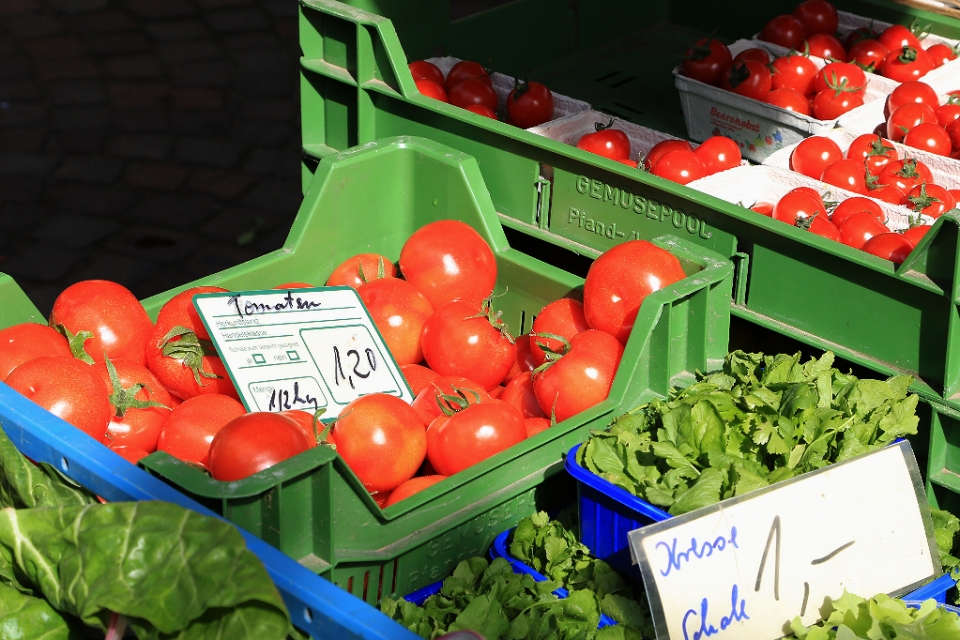
Wochenmarkt, Saturday farmers market, Neuenheimer Markt, Markplatz, Neuenheim, Heidelberg, Germany, fotoeins.com

My Heidelberg: Saturday farmers’ market in Neuenheim

In Heidelberg, the farmers’ markets are held regularly throughout the week at a number of locations throughout the city and region. One of six Saturday markets takes place across the Neckar river in Neuenheim. Most visitors in town will visit the Saturday market in Heidelberg’s Marktplatz, which leaves the other five Saturday markets pretty much “clear and free” to residents. And as I arrive at the market square in Neuenheim, it’s clear I’m in the minority, literally and figuratively. This is not criticism and it’s not a negative, as I used to come here occasionally when I lived here. I say as much to the various vendors, when I buy a cup of coffee, some cherry tomatoes, a piece of cake, and three empanadas.

Fresh fruit and vegetables, grown locally and imported from around Europe. Fresh bread and baked goods from a regional bakery. Fresh herbs, grown locally; fresh flowers, grown locally. Honey harvested from bees at a regional apiary. “Empanadas Argentinas”, by a woman from Córdoba who’s lived in Germany for over ten years. And there are fresh cuts of meat, tubs of olives, and glorious varieties of cheese from around Europe.

It’s time to stop eating and leave, when the vendors begin to pack. Another market, another day.

When I leave Heidelberg, no small measure of wistful longing remains; these are my streets, and this is one of my markets.

( Click here for more )